Selling Power – Top 20 Sales Training Companies for 2018

Recently I learned that Tyson Group received recognition as Selling Power’s Top 20 Sales Training Companies for 2018. I’m honored that our company has received such accolades. But I also have to acknowledge the effort and the commitment that my team has made to bring about this accomplishment.

The landscape of sales is changing. I recognize that our industry is constantly undergoing evolutionary changes but recently, with the advent of digital technology, it seems as if the changes have become revolutionary.

Customers have the ability to perform instant price comparisons. Google and Bing allow customers to “shop” for what they want down to the color on the front right panel. Our prospects can get recommendations and referrals through their social and referral networks.

These changes combine to create an extinction level event for salespeople who rely on order fulfillment and use activities practiced before the turn of the century. In this digital age, the salespeople who are successful are flexible in their approach. They play chess instead of checkers, positioning themselves strategically. And they build affinity with their prospects by establishing rapport and building trust quickly.

A New Sales Landscape Requires a New Training Mindset

I bring this up because I recognized that if salespeople are required to undergo a revolutionary change, then as trainers and coaches, we were also required to undergo similar changes, delivering services that help salespeople address the new challenges in this ever-changing landscape.

In my training sessions, I teach sales teams about the value of flexibility, innovation, strategy, teamwork, and leadership. How together, everyone works to achieve a common outcome.

This achievement of being mentioned by Selling Power magazine is no different.

This Selling Power recognition would not have been possible without the commitment from our sales team dedicated to selling our services and our account management team committed to client services excellence. An accomplishment of this magnitude would not have happened without the hard work from the team managing our internal processes and the creativity from our training team.

And it definitely wouldn’t have been possible without the support and feedback from our clients.

Without all of these individuals, this achievement would not have been possible.

We had a wonderful year in 2017. We’ll be working to make 2018 even better!

Good Selling!

Customizing the Buying Experience

What This Means for You
With this increased involvement from consumers, the sales process has changed and needs to be tailored in similar fashion. The buyer is going to be concerned about how much things cost, whether their opinion will be taken into account, and if they even have the time to listen. And the buyer is going to be armed with more information than they would have been in the past, which is going to make them a lot more confident than they once were.

As a result, sales professionals need a strategy—a sales process—that takes into account all of those pieces of the buyer’s mindset. It has to be flexible enough that they can tailor it to individual clients, but sturdy enough that it can be scalable and repeatable. There needs to be an element of predictability in the process despite the unpredictable consumer and their concerns.

Be Strategically Prepared
Once you are thinking strategically about the sales process, you can incorporate the tactics and skills you will need to use throughout the process. How? You’ll think in terms of if this, then that. If I get someone’s voicemail, what do I say? How do I deal with an objection about price? How do I give my impact statement? How do I present things in a logical fashion?

You’re also going to be developing skills that apply in any process: things like verbal brevity, resolving objections, being able to facilitate, selling over the phone versus selling in person. Remember, the sales process is simply the buying process in reverse.

In today’s marketplace, being a forceful, charismatic salesperson will not do the job. Consumers are different. They’re savvier, armed with more opinions based on the good and bad information. You need to have a repeatable system to address these and other complexities in today’s market. Learn more about what this proven and repeatable sales process is by visiting, the Tyson Group website or by purchasing your copy of, Selling Is An Away Game: Close Business And Compete In A Complex World.

Separating the Good Data from the Bad

Good Data, Data Management, and Facts Matter
People tend to believe just about anything they read on the internet, especially when it’s shared on a reputable site. Here’s an example. My Inside Sales Manager once showed me a former Tyson Group employee’s LinkedIn profile, in which he claimed he won Rookie of the Year at my company. Trouble is, we don’t have a Rookie of the Year award. I sent him a note apologizing for missing the ceremony with a P.S. explaining that he might want to represent himself accurately.

Sometimes, it’s easy to simply accept what you find in an online forum or on a popular website.  These inaccuracies and outdated information impact a salesperson’s performance. This means a salesperson has to be asking the right questions at the right time in live conversation or through thorough research. It’s critical throughout the sales process for your salesperson to constantly ask if the information they are getting correlates with the body of knowledge they already have in their information management system.

Buyers Require Useful Data and Better Data Management
Not only has the role of sales professionals changed after meeting with a prospect, but the time and effort it takes to get to that meeting has also increased. Identifying an opportunity, pre-approach, and initial communication, are the most time-consuming parts of the sale process .

In B2B sales it takes six to eight touches to get someone interested enough to even talk with you and another six to eight touches to get time on someone’s calendar. Those touches can come through LinkedIn, Twitter, even postal mail.

Making these critical milestones with potential buyers not only requires a steady, strategic sales process, but it also requires transparency. In a recent Inc. article, they cite a 2016 Label Insight Transparency ROI Study which confirms the need for more transparency from companies and their representatives because of the following reasons: consumers want to know everything about a product; consumers want to know about more than just your product; and if your company isn’t providing the transparent information, consumers will look elsewhere to get it.

Run a Winning Offense Strategy

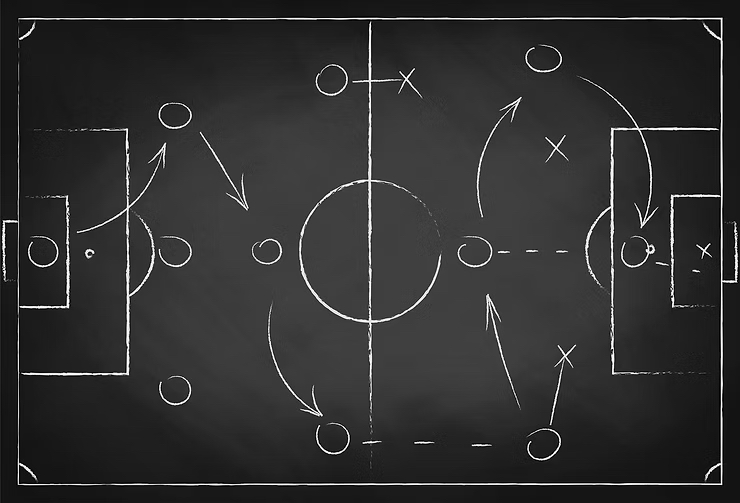
Every team needs a winning offense strategy. Some of the top franchises in sports turn to Tyson Group to help their sales teams move to the next level. Fenway Sports Management (large naming rights and sponsorship sales), the Dallas Cowboys (sponsorship, premium new stadium), the New York Yankees (premium space), the Boston Red Sox (tickets) and the University of Notre Dame (gifting and donor) are just some of the organizations we work with.

Despite the varied sports, our approach is one they all understand and easily adapt: when they adapted our process with an offensive strategy, they are successful. Whether it’s selling suites to Fortune 500s, closing multi-million-dollar naming rights deals, or selling tickets to the masses, it really doesn’t matter because it is the exact same process.

That’s the crossover power of our process that makes Tyson Group so successful. Throughout the years, I’ve worked with many of the same individuals who move from franchise to franchise and the feedback is this, “What you did at the Browns I want you to do at the Padres. What you did at the Cavs I want you to do at the Vegas Golden Knights. What you did here in San Diego I want you to do at Tampa Bay.” Regardless of the sports franchise, the process has been proven time and time again through a series of six steps that can be customized in a thousand different ways. Simple is genius.

Running an Offense Strategy Regardless of Your Industry

Last time I was in Salt Lake, I was with insurance brokers working with them on sales. We plug the same offense and process into tech, insurance, or financial as we do for major sports organizations. What these sales professionals—across all industries—learn is the same offensive strategy each of our major sports organizations leverage – a strategy and approach built on solid sales management, sales leadership and what I’ve referred to previously as, “grit.”

Like a top football, basketball, or baseball team, you can coach skills and knowledge all day long; however, the most successful sports stars have an “it” factor of persistence and grit. We not only help our clients the necessary sales skills, we help them access the grit within themselves—the element needed for true success in an offensive sales strategy.

There’s an exercise I like to do with management teams and salespeople in which they list attributes that would make their replacements successful. “If you had to hire somebody for your job and would get a bonus of 20 percent of your salary, what are things you would hire on?” I ask.

They will make a list of twenty or thirty things. But it comes down to three broad categories forming a triangle. At least 60 percent of success is based on attitude—things like grit, endurance, and perseverance. Another 20 percent to 30 percent revolves around skills like goal-setting and communication.

No matter your industry, when you approach your sales process with a proven offensive strategy—built on effective sales management, skill, and grit—your sales professionals will be unstoppable. Learn more about applying our proven offense strategy to your sales organization in my book, Selling Is An Away Game: Close Business and Compete in a Complex World.

Sell How People Buy

Matching Your Sales Process to Your Buyer’s Buying Process

Think about the steps in your buying process when you buy something—a pair of sneakers, for instance. Something in your world gets your attention and you come to the conclusion: I need a new pair of sneakers. You start to go out and look, try a couple pairs on, go to the store, go to Amazon, etc. In that process, you remove doubt, because you’re actively looking. Then you start to consider it, lay it out and say, “Jeez, do I really need these? What pair do I need?” Ultimately, you buy a pair.

That’s a simple buying process.

In most sales, especially business-to-business sales, it’s more complex. In a previous blog, I’ve likened the sales process to a trip to the doctor’s office. Regardless of the product or service though, there’s a way to be successful: match up your sales process to the buyer’s buying process. In short, sell how people buy. Do this and you’ll be successful. Sound simple? It is and isn’t at the same time.

The Science and Art of Sales

As a sales professional, you take action to get somebody’s attention. You need to qualify them to see if they would fit business parameters. You have to engage the prospect in some kind of request for their time, ask them a series of questions that are really for their benefit, and get the buyer in a scenario where you can present them with an idea in order to start creating an opportunity where one did not exist before. Then you present something that removes their doubt and gets them saying, “This is a decent fit for me.” Finally, you get into dialogue with them to remove any objection and close.

There’s no shortcut to the process, no way to cheat the sales process—whether solicited or unsolicited. At the end of the day, sales is a science—a series of yeses:

  1. Can I talk to you? Yes, I’ll talk to you.
  2. Can I ask you some questions? Yes, you can ask me questions.
  3. Can I present an idea to you? Yes, you can present to me an idea.
  4. Have I resolved your objections? Yes, you resolved my objection.
  5. Are you ready to buy? Yes, I’ll buy.
    It’s an algorithm of questions. Each question a stage in the process. Each question followed by a yes to get to the next stage.

    But sales is also an art—one that requires a deep understanding of why someone is looking to buy and how to help them understand you have the right solution. Practiced at a high level, the profession combines creativity with a process for predictable results.

Sales Success Ultimately Requires a Repeatable Sales Process

I have been a sales professional, entrepreneur, and have trained other salespeople since the 1980s. Selling vacuums door-to-door in college; leading the largest franchise for Dale Carnegie Training outside Taiwan and Hong Kong; building Tyson Group as the go-to sales trainers of professional sports and entertainment as well as insurance organizations; training over one thousand sales executives and sales managers annually.

In all these years of selling and working with organizations of all sizes, the key to successful sales can be distilled down to a six-step process applicable to any product, service, industry, and solution. This process works. It’s a process that will benefit any high performer—from entrepreneur to sales professional to manager trying to boost team performance—and anyone who wants to improve their sales effectiveness. Because at any point, it can be closely aligned with the buyer’s buying process.

Learn more about what this proven and repeatable sales process is by visiting www.tysongroup.com, OR by purchasing your copy of, Selling Is An Away Game: Close Business And Compete In A Complex World.