
No Crying Allowed: Only Results Matter

A Shift in Attitude and Behaviors is Key to Building a High-Performing Sales Team

Does someone on your sales team wear their heart in their sleeve? While a certain level of openness, transparency, and vulnerability can be a good thing and are all signs of a high sales EQ, too much unfiltered expression can work against you. Passion and intense enthusiasm can easily cross the line to become moodiness and outright excitability when the pressure’s on. Nobody likes a crybaby. And in the business world, those who become particularly disappointed or discouraged when unanticipated issues arise are viewed as undeserving of a seat at the grown-ups’ table.

If you’re a sales manager and have any team members who suffer from too much emotional transparency, encourage them to reflect on which situations tend to trigger feelings of anger or frustration. Have them monitor their tendency to overreact in the face of setbacks. For example, if they wake up to a bunch of annoying emails, tell them to avoid responding immediately. Wait until they have had some time to calm down. Likewise, if someone makes an irritating comment during a team meeting, encourage them to control their reaction and keep calm.

While they can’t exactly go from being Woody Allen to the Dalai Lama overnight, they can be coached to avoid stressful situations and inhibit their volatile reactions by being aware of their triggers. And to increase sales performance in your team overall, start working on tactics that help them become aware of their emotions in real time, not only in terms of how they experience them, but more importantly, in terms of how they are being experienced by others.
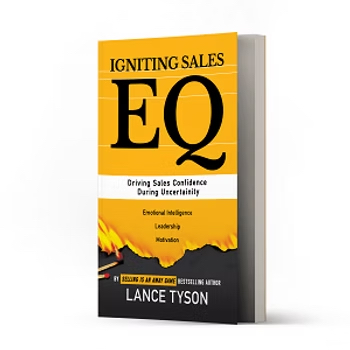
For additional ideas on using Sales EQ to build a high performance sales team, get your copy of Igniting Sales EQ, available online at Amazon.


Put Yourself in the Buyer’s Sneakers

Leverage Empathy to Build a Strong Sales Team

Think about the steps you take when you buy a pair of sneakers. Something in your world gets your attention and you come to the conclusion: I need a new pair of sneakers. In that process, you remove doubt because you’re actively looking. Then you start to consider your options, lay them out and say, “Jeez, do I really need these? What pair do I want?” Ultimately, you buy a pair. That’s a simple buying process.

With most sales—especially B2B sales—it’s more complex, but the gist is the same: selling is just the buying process, inverted. Sales effectiveness stems from reverse-engineering the buying process to make a sale. But to do that, successful sales talent know they need to exercise empathy. They are able to leverage their EQ by putting themselves in the buyer’s sneakers.

The ability to recognize how others feel is important to success in your life and career. The more skillful you are at discerning the feelings behind others’ signals, the better you can control the signals you send them. An empathetic person excels at:

  1. Service Orientation — anticipating, recognizing, and meeting clients’ needs
  2. Leveraging Diversity — cultivating opportunities through diverse people
  3. Understanding Others — discerning the feelings behind the needs and wants of others

Selling is not the kind of situation you will solve with the force of your personality, no matter how charismatic a salesperson you are. You need to pull the skill of empathy from the sales playbook to get in alignment with what’s in the buyer’s mind, and that requires igniting your EQ.

Sales Isn’t Always About You—It’s About Them

Taking an Other-Centric Approach to Increase Sales Performance Metrics

Have you ever wondered why people sometimes form inaccurate impressions about you? Do they rush to judge you too quickly? This limited view we have of ourselves, and of others judging us only on what they see of us is called the Iceberg Effect. It’s based on our perception of who we are (identity), and of how others see us (reputation).

For most people, there is a disparity between identity and reputation that can cause them to ignore feedback and derail their efforts. Real self-awareness is about achieving a realistic view of one’s strengths and weaknesses, and of how those strengths and weaknesses compare to others’. For instance, most people rate their own EQ highly, yet only a minority of those individuals will be rated as emotionally intelligent by others.

Turning self-deception into self-awareness will not happen without accurate feedback, the kind that comes from data-based assessments such as valid personality tests or 360-degree feedback surveys. Such tools are fundamental to help us uncover EQ-related blind spots, mostly because other people are generally too polite to give us constructive feedback.

One of the best things sales managers can do when building a strong sales team is to keep self-deception in check by fostering an other-focused atmosphere. Developing an other-centric approach starts with a basic appreciation and acknowledgement of team members’ individual strengths, weaknesses, and beliefs. Brief but frequent discussions with team members will lead to a more thorough understanding of how to motivate and influence others. Such conversations might be difficult at first, but over time should inspire ways to create opportunities for collaboration, teamwork, and external networking.

The bottom line is: igniting your sales EQ means it’s all about them, not you!

Self-Regulate to Sell

High performing sales teams exhibit behavioral activity that matches those that they are dealing with, people who go out of their way to make that personal connection. That’s means having a high EQ.

But EQ isn’t just one dimension, one aspect of your personality. It’s so much more than being nice, opening the door for others, letting your colleagues hit the buffet line first, making someone laugh until they shoot wine out of their nose, or refusing to take the last grape tomato from the salad bar.

In fact, EQ is siloed into a handful of distinct categories. Here are details on one of the most important:

Self-Regulation

You often have little control over when you experience emotions. You can, however, have some say in how long an emotion will last by using a number of techniques to alleviate negative emotions such as anger, anxiety, or depression. A few of these techniques include recasting a situation in more positive light, taking a long walk, and meditation or prayer. Self-regulation involves:

  1. Self-control—managing disruptive impulses
  2. Trustworthiness—maintaining standards of honesty and integrity
  3. Conscientiousness—taking responsibility for your own performance
  4. Adaptability—handling change with flexibility
  5. Innovation—being open to new ideas

Raising EQ to be able to compete and close deals in a complex world is an effort sales talent has to make. The sales profession is so difficult. You get your ass kicked on a day-to-day basis. People say no to you nine times out of ten. People lie to you and act like your friend, then dodge your calls. At the end of the day, you’re going to get your ass kicked. And if you don’t increase sale effectiveness by igniting the power of EQ, then that will kick your ass, too.