Is Your Sales Process High-Performance or High-Maintenance?

Take Our Sales Team Science Assessment to Reveal Whether Your Sales Team is Among the Elite

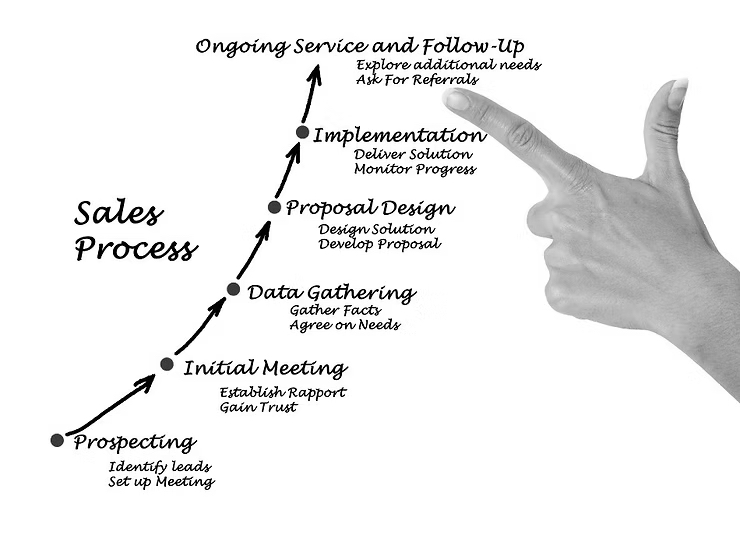
Getting your sales process down is one of the critical drivers of high-performance sales teams. We’re talking about your road map, your prospecting strategies, your agendas. And let’s not forget about presentations, product knowledge, marketplace opportunities, and pricing.

Does every member of your team know your IPP (Ideal Prospect Profile)? Is your sales process documented, replicable, and scalable? Can every member of your team identify their prospect’s issues, goals, and priorities?

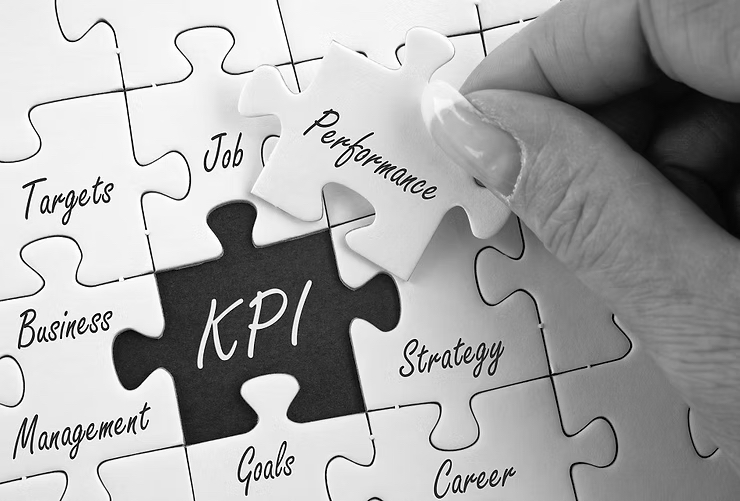
From your culture to your team’s expectations, from prospecting strategies to the philosophies that drive your KPIs, your sales team needs to excel to be able to compete and close. The good news is—as every great salesperson knows—gaps mean opportunities. And opportunities mean potential.

That’s where Sales Team Science comes in.

Using a six-part assessment targeting the 6 Drivers of High-Performance Sales Teams, we’re able to analyze your team’s metrics to determine what tools are needed to excel in their respective roles to help drive revenue.

Responses are then used to generate a customized scoring tabulation conducted through specialized software, with a perfect score set at 150 points. Armed with this information, we will evaluate and design a training playbook tailored specifically to the strengths and weaknesses of your existing sales team.

The result? Increased sales productivity. Reduced sales cycle time. Higher close rates. In 90 days or less.

Sales Management: Are You Hitting Key Performance Goals?

The Sales Team Science Assessment Can Reveal Whether Your Sales Teams is Among the Elite

Ahhh, Sales Management. Leads, pipeline, goals, tracking, reporting, KPIs, and compensation. All of these elements are no-brainers, right? Easily articulated, easily understood.

Would you say every member of your sales team can define their KPIs? Do you have a scoreboard so every member can see how the team is doing? Does every member take part in setting their goals and expectations? Do your sales leaders discuss pipeline, market, and product knowledge in every single sales meeting?

From your culture to your team’s expectations, from prospecting strategies to the philosophies that drive your KPIs, your sales team needs to excel to be able to compete and close. The good news is—as every great salesperson knows—gaps mean opportunities. And opportunities mean potential.

That’s where Sales Team 6 comes in.

Using a six-part assessment targeting the 6 Drivers of High-Performance Sales Teams, Tyson Group is able to analyze your team’s metrics to determine what tools are needed to excel in their respective roles to help drive revenue. Responses are then used to generate a customized scoring tabulation conducted through specialized software, with a perfect score set at 150 points. Armed with this information, we will evaluate and design a training playbook tailored specifically to the strengths and weaknesses of your existing sales team.

The result? Increased sales productivity. Reduced sales cycle time. Higher close rates. In 90 days or less.

To CC or Not to CC…There is No Question

High-Performance Sales Teams Leverage Multiple Decision-Makers to Close the Deal

In most B2B sales, you will need to deal with more than one decision-maker. To avoid getting limited by corporate politics and the whims of one decision-maker, you should enhance your entry efforts by contacting all decision-makers who can have an impact on your sales process.

Here’s an example of why you need to reach multiple decision-makers in your target company: Back when I ran a lead generation service, a salesperson contacted me about a call-management software suite. When he pitched me, he said that this software package would change the nature of my business for the better by making the calling team more efficient. I was intrigued, so I scheduled him to do a product presentation. When he arrived, I called in several members of my team to review the presentation:

  1. My VP of sales who led a team to sell our service
  2. My VP of Service who managed the team making the calls and building the meetings
  3. The Director of Technology who had to ensure the software wouldn’t cause friction for the people who had to use it

In the space of an hour, this sales rep had to address the concerns of everyone at the meeting. He was able to accomplish this within the time constraints, and he had time to address additional questions and gather more information. How? It wasn’t because of his scintillating personality or his flashy sales talk. Unbeknownst to me, he had reached out to each of these people and uncovered their challenges before he even contacted me. This salesperson got the opportunity to make his presentation because he had done his homework and created an internal support base.

The “cc” option in an email is there for a reason. Use it. A lot.

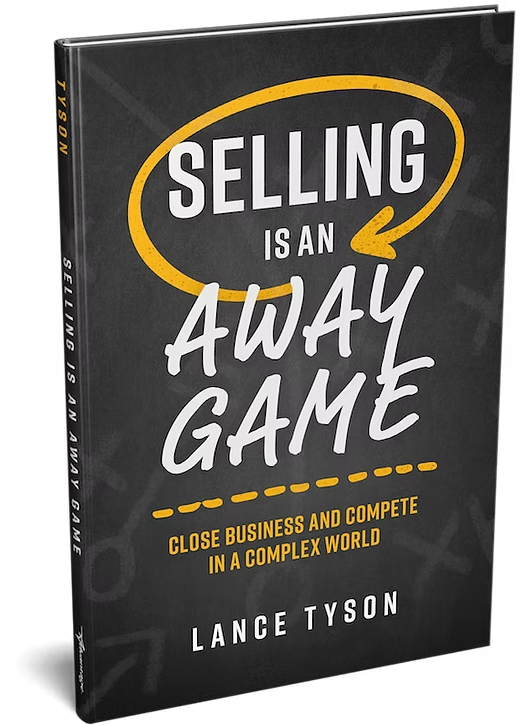
Learn more about Spiderwebbing and company prospecting in Lance Tyson’s book Selling is an Away Game, available online at Amazon now.

Selling Power Lists Tyson Group in Top 20 Training

With a nation struggling to go back to “business as usual,” sales training proves to be more important than ever.

Press Release: Tyson Group

Today, Tyson Group is pleased to announce it has been included on Selling Power’s Top 25 Sales Training Companies 2021 list for the fourth consecutive year.

According to Selling Power publisher and founder Gerhard Gschwandtner, sales training is more important than ever as salespeople adjust to selling during the COVID-19 pandemic.

“Sales training has shifted drastically in the last 14 months,” says Gschwandtner. “Each of the sales training companies included on this list was able to pivot quickly to deliver elite, engaging sales training virtually. Their efforts and expertise helped their clients to reach and exceed sales goals during a difficult economy.”

Whether it is filling stadium seats, vacation resorts, or getting people back into luxury dining, Tyson Group, led by Founder Lance Tyson, is helping organizations determine how to sell their way out of a crisis that includes efficient people management, establishing compensation structures in a down economy, creating new product offerings, and attracting more clients and customers in a virtual environment.

“The world of sales and training has changed dramatically. CEOs have no choice but to rebuild their sales force in new ways. This award benchmarks against the best in class,” says Tyson, President & CEO of Tyson Group.

Recently, Lance has been working directly with CEOs on diversity and inclusion efforts within sales organizations and how to manage outcomes in remote environments.

All companies to receive this distinction submitted a comprehensive application that included a detailed listing of their offerings for both training and retention, innovative solutions, their company’s unique contributions to the sales training marketplace, and their response to the COVID-19 pandemic.

About Tyson Group

Tyson Group’s mission is to coach, train, and consult with sales leaders and their teams to compete in a complex world — regardless of what the market looks like. Taking a diagnostic approach, Tyson Group strives to understand sales teams and addresses gaps through their Sales Team 6 Assessment. Using a six-part assessment targeting the 6 Drivers of High-Performance Sales Teams, Tyson Group is able to analyze any team’s metrics to determine what tools are needed to excel in their roles and help drive revenue. Then, they design a tailored playbook that defines an action plan to further develop team members and equip them with the desired skills for each marketplace.

Tyson Group is available for commentary.

Chip.stclair@tysongroup.com

B2B Sales Lessons From Black Friday

When thinking about Black Friday, your mind probably wanders to long retail lines and slashed prices on consumer goods and services.  Not Business to Business sales.   But there is a lot we can learn in professional sales from watching the trends we see with consumers and the way retailers are adapting.

Black Friday has been around since the late 19 century, and for the majority of that time it did not change much.It’s been a one day, brick and mortar event. Shoppers get up early the day after Thanksgiving to bear the rush and save big!

But over the last few years we have begun to see a shift.

Through the rest of this post we will explore how consumers are making buying decisions, what retailers have had to do to adjust, and what that means for the professional sales environment.

Business and Sales are being done online

In 2015, Thanksgiving night saw 41M people in the U.S. shop online — versus 34.6M in stores. On Black Friday, it was 75.3M online and 74.6M in stores.  Each year, more people are skipping the lines to stay home and do their shopping online. A lot of this is fairly logical. If you can sit with your family on Thanksgiving, grab your laptop, and buy a Kindle Fire for $35, most people would do that as opposed to drive to Best Buy and get the Kindle Fire there.

As a result, you’ve seen concepts like Cyber Monday — the Monday after Thanksgiving — become popular in the past 2-3 years.

What does this mean for professional sales? We’ll get into more specific advice later in this article, but first — be online.  Connect with prospects on social media, reach out via email or LinkedIn, send potential clients an article or white paper your marketing team put together.  Identify how your clients want to be communicated with and adjust your process.  Be present where your prospects are present!   But remember, sending isn’t selling and social media should not be the only way you are reaching out.

Buyers have more info prior to a sale

So we know people are buying online for the convenience factor.  But this also gives the consumer an interesting advantage over retailers and professional sales teams alike.  Consumers have more information that they used to before making a buying decision.

So what do retailers do? More than a week before Black Friday, Amazon unveiled a list of Black Friday deals, including reducing the price of some Barbies, Hot Wheels, and Fisher Price toys by 50%. You’re seeing this more and more.  Rather than unveiling prices day of, retailers are educating their consumers on price and product information.

In professional sales we need to the same.  You need to understand how much info your buyers have — and you need to be a knowledge source for them, as opposed to withholding information. It’s all about continual feedback loops, adjusting on the spot, and making sure you are playing chess, not checkers.

Buyers Also Take Longer to Make Sales Decisions

So we know that consumers are doing more research online, and that they are fueled with more information than they used to be.  What else does this mean?  Buyers are taking much longer to make decisions than they used to.

This is why retailers are starting to shift to week-long doorbuster sales; part of it is because they want to keep the momentum and revenue going, but part is because they know people in there on Thursday night might not be ready to make all their decisions.

How to deal?  The easiest way is to understand your prospects’ timetable — which you can do by simply asking them — and creating artificial timelines by challenging their status quo. With most prospects, there’s a real timeline and a created timeline. The closer you can move to understanding the real timeline the better position you’re in to make the sale.

Everything is becoming more competitive

The factors mentioned above have done one major thing.  It has empowered the consumer, which is a good thing.  But this has made the retail market much more competitive.

The growth of mobile and digital did two important things:  it removed the distance element that traditionally gave more power to retailers but it also made it insanely easy to reach a maximum amount of potential customers.

The ever-shifting nature of Black Friday is an example of how retailers have had to adjust. You constantly see prices being cut and incentives being added so that one retailer can become “the one” who captures the most purchases. Retailers have had to adapt due to the competitive nature.

Professional sales have become just as competitive, if not more competitive than the retail space. 15-20 years ago, most of B2B sales were happening in America and mostly at the local level.  That’s not true anymore. Not only are we competing nationwide for business, but it’s a legit global playing field out there.

How do you handle this? Assess the situation and adapt to your customers’ needs. Change your approach on the spot if you need to.  The sales process is longer, yes, but the longer and longer you let a prospect stretch, the more additional options they might be considering.  The competition is everywhere.

So what are the major sales lessons we can take away from this?

Tip 1: Know what you are doing online and how it fits in the sales cycle.  Are you conducting the whole transaction or just prospecting?

Tip 2: Take the temperature of the buyer.  Provide information they need and don’t push information they already have.

Tip 3: Always adjust for sales cycle times.

Tip 4: Play to win!

You Have to Move People, Not Your Product or Service

Increase Sales Performance Metrics by Appealing to What the Buyer Wants

Do you turn your selling game on and off like a light switch? Or do you use it outside the office, too? Guess what? You’re not alone. We all sell. Every one of us. Sometimes it’s our product or service. Sometimes it’s ourselves.

Let me ask you this: Have you ever taken a friend out to dinner before you asked for a favor? Do you compliment an acquaintance you hope to do business with? Ever comment on an influencer’s social media post hoping they might notice you? Ever name-dropped to get an edge? How about flashing a big smile to someone you’d like to know better? That’s selling.

Let’s say you’re at the airport and the flight isn’t full. You want an upgrade to first class. Do you have any bargaining power? Actually, you do. In today’s business world, customer satisfaction is king. Most businesses realize that an unhappy customer will eventually lead to an unhappy review. Which is read by everyone in the universe. And current research says that negative reviews can stop an average of 40 percent of buyers from wanting to do business with the offending company.

So in a sense, when you try to get that upgrade to first class, you’re technically selling. “This is my favorite airline for travel. Because the flight isn’t quite full this time, would I be able to get bumped up to first class? I’d be happy to leave a really positive review or take a survey.” Boom. How many gate agents are going to turn that down? If it’s not a fully booked flight, not many. Plus, you are appealing to that social condition we’re all subject to: helping one another. You get your upgrade while the gate agent gets their review and feels good about themselves.

Remember, whether it’s for your product, your service, or yourself, selling is about moving people.

You’ll find more ways to determine what your buyers want and becoming a better negotiator in Selling is an Away Game, available online at Amazon today.