Bridging the Gap: Asking Questions to Drive Your Prospects Interest

In the last post, we explored the potential of enhancing your evaluation process by asking sales questions. In this post, we’ll take a deeper dive into using the questioning process to build increased interest in your prospects.

Previously, we used a river as an analogy to develop a questioning model. In this river analogy, one bank represented the prospect’s current situation. The opposite bank represented the desired situation. And the river represented the gap that the prospect must bridge in moving from the current situation to the desired situation.

Use Sales Questions to Identify Where Your Prospect Lives Right Now

The questions a salesperson asks need to reveal the prospect’s current reality. They’re the “what” questions. They could be anything about the prospect’s current situation, or what has happened that brought them to this situation. They’re sales questions like: “Tell me about your company. Tell me about your role. Tell me about what brought you into the store today.”

Let’s look at an example. Let’s say you are going to your favorite business tech store to buy a new router. You currently have a router that performed flawlessly when you purchased it for your business 3 years ago. But as you know, things change. Technology changes. Your environment expands. Your business grows.

Away Game Selling Book Quote

So now, you find your router is having trouble handling your current day-to-day traffic. In addition, you want to add a few more employees, but you know that’s going to increase your internet traffic and exacerbate the problem. And to add insult to injury, your current employees are already blaming the “slow internet” as for why they can’t get things done.

Now when you go out looking for routers, you may not know all of the technical options available to you. There’s technology out there that that can shape and prioritize traffic, perform compression, and increase overall efficiency and usage effectiveness. A good salesperson could figure that out and could help you realize that there’s potential for a better solution. They will help you bridge your current situation to where you want to be by asking the right sales questions.

Good Sales Questions Diagnose the Current Situation

So, in diagnosing the prospect’s current reality, some questions the salesperson might ask are:

  • So, tell me about your current technology.
  • If you had to choose, what are the top 3 features you like about your router?
  • What are 2 shortcomings that you don’t like about your router?
  • If you had to change something about your current technology, what would you change?
  • What about your business environment?
  • How many users do you have?
  • What times do they start working?
  • What kind of activity do they perform online?”

As you can see, there are a variety of sales questions here. Some are open-ended while others are closed. Some allow the prospect to answer in a long, essay-type format while others provide for a multiple choice. The types of sales questions you have in your arsenal are important and we’ll deal with those in another post. What’s important here is the fact that the salesperson uses their sales questions to build credibility, build trust, and build out the prospect’s current situation.

Good Sales Questions Highlight Where the Prospect Wants to Be

Let’s say that you want higher download speeds. Then, the salesperson would probably ask questions around identifying and achieving your desired outcome. For example:

  • What are your growth plans for the next two years?
  • What will your business focus be in that timeframe?
  • How many employees do you plan on having in the near future?
  • What activities do you envision your people doing to build your book of business?
  • Do you plan on supporting your own technology inhouse or do you want to keep your people focused on your core business?
  • What if there are other options that will allow you to bring more people online? Would that be a viable option for you?”

Again, you can see a variety in the forms of the sales questions. But the salesperson uses these questions to build credibility and trust to get the prospect to open up about their future goals, where they want to be. Your job, in your questioning process, is to create as clear a picture as possible of their future, desired situation that will give them what they really want.

Remember, no one buys a quarter-inch drill bit because they want a quarter-inch drill bit. They buy a quarter-inch drill bit because they want a quarter-inch hole. Your questions should identify what having the hole will give them.

Who Is the Questioning Process For?

Now here’s something to keep in mind. When we survey salespeople in our sessions and consultations, we ask this question: “Who is the questioning process for, the seller or the prospect?”

Most of the time, salespeople will say, “The questions are for me, the seller.”

Here’s the shocker – they’re not. They’re actually for the prospect. The prospect should be central to your questioning process.

Remember, sales is an away game. It takes place in the mind of the prospect. And that’s where your questioning process has to take you – into the mind of your prospect.

We’ll come back to that in a bit. But first, let’s review our model again through another example.

Acknowledging the Gap in the Questioning Process

Let’s have a look at another example. If I were selling financial services, I might start by asking for their current situation. “Tell me a little bit about what your philosophy is on how you put money away for your future. What does your nest egg look like? Is it good, bad, or ugly? What’s your philosophy? What’s your current 401(k) look like?”

Then, I’ll bridge to the desired situation, a desirable future. “Let’s look a little bit in the future. You’re thinking about retirement. What should it be? What are you looking to do? When are you looking to retire?”

I’m going to ask these questions where I increase the awareness of these gaps between the current and desired situations. I’m going to start by asking for more current situation questions, and then move to asking for the desired situation.

That space between their current situation and their desirable situation is the gap that we have to sell to. The greater the gap, the bigger the opportunity. But be forewarned. There’s a reason that the gap exists. You have to bring awareness of the gap and the obstacles that exist in that gap to your client. If there were no obstacles standing in your prospect’s way, then moving from their current situation to the desired situation would be easy and they would have achieved their desired situation already.

Bridging the Gap

So you need to use your questioning process not only to identify your prospect’s current situation and desired situation, but it also has to make your prospect aware of the gap and the obstacles that live there. Just as you examined their current situation and the desired situation, your questioning process has to bring those obstacles out of the cloudy murk in the gap and into full daylight where they can be examined, challenged, and resolved.

Going back to our financial services example, I’ll ask the prospect about some things that are standing in their way. They might say, “I’ve got to meet my bills now, I can’t put 10 percent away.”

And that gives me the opportunity for more probing questions, getting them to further clarify the obstacle or to challenge it. “Well, what’s going to ultimately happen if you don’t start doing it now?”

They might say, “I’m going to be in a scenario where I’m not where I need to be. I’m going to be racing towards the end and I might run out of time if I don’t start doing it now.”

At the end, I might say, “If I’m hearing it right, you’d be comfortable if you had a plan to ramp up how to get toward retirement. So, you’d be open to that?”

Building the Relationship Through Interaction

This questioning process is our ability to interact with the prospect. In some complex sales processes, this could be a whole meeting. This could also be several meetings or more as the prospect adds decision makers, because complex B2B processes currently have anywhere from three to four influencers, sideliners, a champion, and then, ultimately, a buyer. We might be performing this evaluation over a few engagements, or it might be during the very first connection.

In review, your questioning process needs to generate interest on your prospect’s behalf by highlighting the challenges they face. As the salesperson, you do this through your questions that:

  • review their current situation
  • highlight their desired situation
  • and bring awareness to the obstacles in the gap between the two

Your questioning process also performs the critical function of building trust, framing issues, and shaping the mindset of the prospect. We’ll review that in the next post.

You’ll find more sales strategies for executing your sales process in Lance Tyson’s book, Selling Is An Away Game: Close Business and Compete in a Complex World available on Amazon. Get your copy today!

Boost Your Evaluation Process with Effective Sales Questions

Guiding the Evaluation Process Using Sales Questions

When was the last time you were in a car lot to shop for a car?

You and I both know you weren’t there by accident. You were there for a reason and more than likely, you planned it all out.

However, the first question most salespeople ask is: “Can I help you?”

That question is a brutal sales starter, because the buyer answers the same way each time: “Nope, just looking.”

A more effective question might be: “Have you ever been here before?”

Now, the buyer has to stop and think about where they are before responding either yes or no.

If the buyer says “yes,” the salesperson can reply, “Okay then! You would probably like to know about this sale, those cars that are on clearance, and these new vehicles over here.

But if the buyer says, “No, I’ve never been here before,” the salesperson could respond with, “Okay then! You would probably like to know about this sale, those cars that are on clearance, and these new vehicles over here.

You see, it doesn’t matter which response the buyer gives. If the salesperson has a predictable process with directional questions, he or she has the superior position tactically.

Asking questions like “Can I help you” shows that the salesperson thinks the questioning process is only for them.

However, asking, “Have you ever been here before” gives the salesperson control of the conversation and gives them the opportunity to direct the conversation where it needs to go.

That’s the difference between a good salesperson and a great salesperson. A good salesperson thinks they’re asking questions for their process. A great salesperson uses sales questions not just for their process, but also to guide the buyer’s process, thus turning the evaluation process into a tactical advantage.

Back to the Doctor’s Office for the Evaluation Process

Let’s head back to the doctor’s office for an example. If you recall, we used a visit to the doctor’s office as a process model for diagnosis and prescription. The second step in that process was the evaluation process.

A patient may go in for a checkup thinking they’re healthy, but their assessment may be flawed. Any number of ailments could be sending signals that something is not right. But the untrained patient will either miss or misunderstand them. A good doctor will ask questions to guide the patient through the evaluation process and reconsider their initial assessment. They’ll realize, “Maybe I’m not as healthy as I need to be.”

On the flip side, maybe a patient has some signs leading them to think they have a serious health issue. The doctor’s questions can lead them in the direction of thinking, “Hey, other people are experiencing the same symptoms and it’s something easily correctable. Maybe, I’m actually healthy.”

In both cases, the good doctor, or the medical team, is creating a gap between where a patient is now, including where they perceive they are now, and where the desired situation is. If the gap is very wide, they create a solution to get from one point to the other. Essentially, that’s what a good salesperson does as well.

Sales Questions Are Your Tools to Build Bridges in the Evaluation Process

At this point, tactical sales managers will tell their team to, “ask open-ended sales questions” to drive the evaluation process. But recognize that you have more tools at your disposal. Your evaluation process will include open-ended sales questions, closed-ended sales questions, essay questions, multiple choice, fill in the blank, and true/false questions. The key here is to create the environment in the prospect’s mind to ask the right sales questions.

Also note that as salespeople, we ask questions to understand the buyer’s current reality. We want to know the implications of taking immediate action and the consequences of procrastination. Overall, we want to highlight the issues involved, and the payout when those issues are resolved.

If the salesperson asks questions the right way, the buyer may provide suggestions on how to best present a solution to them. They may even give the salesperson their version of the ultimate solution.

Here’s an analogy that will help frame this. Envision a fast-moving river. One bank represents the buyer’s current situation. It’s where they are now. The other bank is the buyer’s desired situation. That’s where they want to be. And the river represents the obstacles facing the buyer. The purpose of your sales questions is to build a bridge from their current situation to their desired situation.

As salespeople, we are tasked with increasing the buyer’s awareness in these areas. Once they do, they’re open to being persuaded about anything, whether it be vehicles, financial planning, or their health.

In the next posts, we’ll review the various types of sales questions as well as moving the sale forward by asking the right questions.

For more ideas on using sales questions in the evaluation process, download Lance Tyson’s book, Selling Is An Away Game available in the Kindle format on Amazon.

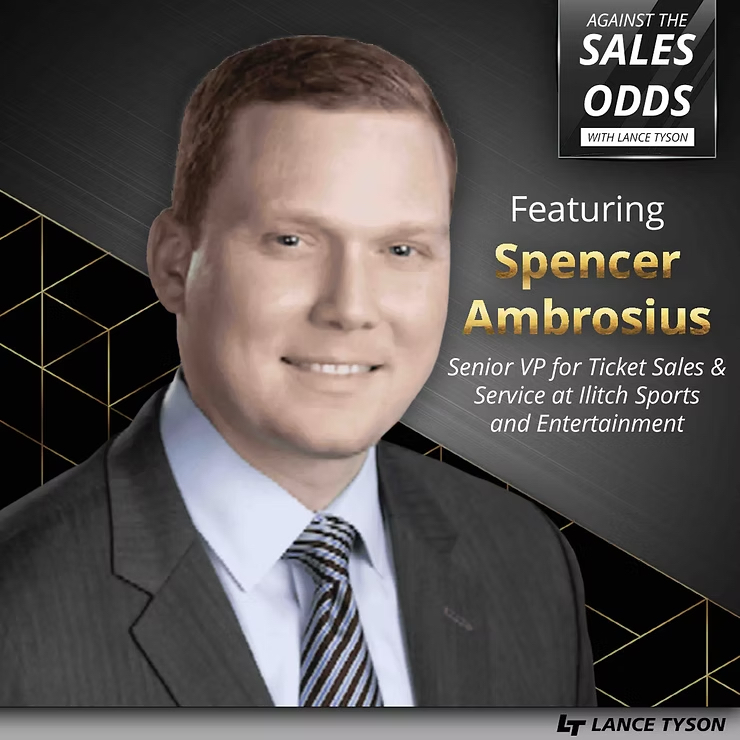
Strategies to Find the Right Talent with Spencer Ambrosius

Business is just like sports; you need the right strategies with the right people to succeed. In this episode of Against The Sales Odds, Lance sits down with Spencer Ambrosius, the SVP of Ticket Sales and Service for Ilitch Sports + Entertainment. Spencer walks us through his career and what has helped him succeed, from his time as a collegiate athlete to the business side of professional sports. Spencer has been through various roles in his career that have invoked many different qualities that have helped shape his leadership style. From mentors to creating his own style, Spencer is constantly looking for two things: hard work and coachability—two qualities that all leaders should take into account when searching for new talent.

Listen to the podcast here

Creating The Right Strategies To Find The Right Talent With Spencer Ambrosius

Hiring The Right People With Spencer Ambrosius: SVP Of Ticket Sales & Service With Ilitch Sports + Entertainment.

I am excited about this episode. I have Spencer Ambrosius, who is the Senior VP of Ticket Sales for Ilitch Sports + Entertainment, if you don’t know who Illitch is, that would be the Detroit Tigers and the Red Wings. Spencer, I love that you are on here. This is great.

Thanks.

We are going to talk about leadership, sales, and all kinds of things. I’m going to integrate the fact that I did some homework on Spencer, a Quarterback in college. I want to know how that ties into some things. We got talking about that. Spencer, big role, SVP. How many people report to you?

There are about 150 total between the 2 teams. There’s also some ancillary private events business and some support functions there. We have a good crew here. It’s good people all the way through. We will talk more about that.

That’s important. Talent is the name of the game right now. How long in Detroit? How long have you been in this position?

I got here in 2019. I got a few months in before that pandemic shut down, and then we have been rebuilding since that 2020 period that everybody in this industry had to navigate through. We are back up and running. We have been back in the office full-time for a couple of years. It seems like it’s been quicker than that, but it’s been a great run so far.

I did some work up there, but 2 to 3 months into the pandemic before it started. Right at that last quarter is when you started.

At the time when I first came out, I was the Vice President of Ticket Sales for the Red Wing specifically. We had a couple of months run up until that first Red Wing season, and then everything changed. It was about half a year of thinking things were going to run the way a typical sports team or a sports business operates before everything changed. It could have been worse timing, but it was a blessing in disguise in a weird way. In 2020, the Red Wings were the worst team in hockey. The Tigers were the worst team in baseball. I say this half-jokingly.

If you are going to go through a true rebuild on the ice and the field, you might as well do it when fans can’t watch you play. On the business side, it allowed us to rethink the way we are operating and hit the reset button without going through that awkward change cycle of adoption on the fly. True reset button, back up and running, and it’s a little bit of a different operation now.

It sounds like what you are saying is in a little bit of a rebuild and reset. We will get to that. You are from where? How does Spencer get to SVP of two major brands? Where did you start? Where did you go to school? What was your first job coming out of school? What does that all look like?

I would call it a hometown team. I’m from four hours north in Traverse City, Michigan, the cherry capital of the world in the greater pinky region of the state of Michigan.

You can tell that you went to public schools because they teach everything about Michigan.

I did not. I went to a private school. The key part of the story, through that process, playing football growing up and getting exposed to some great people and great leaders through my youth, I went on to play football in college. I say that it was Division III football in Rhode Island, a small school called Salve Regina University. When I say I played football, I use that term loosely as well. I was a four-year varsity letter winner. Minimal action. A lot of great things that you can learn through playing sports as we know. Overcoming adversity, leadership, and a lot of the things that I learned through it.

Overcoming adversity and leadership are some of the things that you can learn as an athlete.

Through student-athletes, especially Division 3. Both my sons played Division 3. You are truly a student-athlete. It is a lot of work. You don’t get all the perks that you get in other places.

You got that right. That’s a big part of the discipline, the work ethic, and the teamwork. It could go on and on. As great of a school as that was. A lot of the things that I apply now are more from those days of grinding on a practice field for the chance to see action in a Division III football game. That was some real-life experience.

Yeah, because everybody plays D3. I’m not arguing it’s a different level of commitment. It’s a character thing because your crowds aren’t huge. You are not getting media time. You are probably, scholarship-wise, if anything, maybe there’s some academic stuff there, but it’s not like you are getting a big scholarship. I love scholarship but it’s not about that. It’s a different commitment to it. I would say there are different loves of the game.

Zero regrets from that time. A lot of great people I’m still in contact with, but when you are half-joking. I’m serious about this. I was not a good athlete. I was not very athletically gifted to be on that field. I don’t think I could have played another position besides quarterback realistically. I was usually the smallest, slowest, and weakest guy. My high school career was I was a game manager. At the college level, there are way better athletes, but if you can find a way to surround yourself with good people and put them in a good position to be successful and find a way to win as a team. I didn’t know it at the time, but the reason I have been able to find a leadership career path in this industry is from that mentality. Approaching sales management like a quarterback to me is one of the best analogies. It comes a little more naturally because that’s all I had in my playing days.

Find a way to surround yourself with good people and put them in a good position to be successful. Find a way to win as a team.

I love that because that’s what sales management is. I was talking to an executive in the MLS and we were talking about the factors that dictate success and sales management. There are probably seven factors to think about. You will look at the talent. You got to look at how you lead, but then you got to look at how you manage because that’s the accountability.

What process are we going to use? What offense are we going to run? What technology is going to help us win? There’s a big argument right now like, “How is AI going to affect things?” You have to play it out because it is the technology, it’s like using a new golf club, but how does that fit? Who asked the better question? It’s about seeing the field, no pun intended. When you left school, what was your first job out of school? What did you do?

I think a very stereotypical approach in this industry. I wanted to work in sports. Sales was not a passion of mine growing up. It was not a dream job, but I quickly found out that that’s where people are hiring and those of us with liberal arts educations.

I forgot to ask you that. What was the degree? I have the Liberal Arts too.

I have a Liberal Arts degree and Marketing.

Not a BS in marketing, but a BA in marketing.

BA in Marketing. I thought I wanted to do advertising and figure out who our fans are and how we get in front of them. Ultimately, that’s what I’m doing now. I do think there was a little bit of a method to the madness. I didn’t fully know how it worked at the time but it sure worked out to this point. I took an inside sales representative role with the Atlanta Hawks and joined that team surrounded by great people and great leaders.

Who was on that team at the time it seemed like a lot of you were together at that point. When I say a lot of you, a lot of our network, my network, and yours. Who are some of the people on inside sales then?

On the inside sales team. It was a team led by Corey Breton, Erik Platt, John Adler, and Chris Wettig I’m going to miss some people and I apologize for that.

Was Doss down there at the time?

Doss was there at the time. He was too big time for us.

I hope he’s reading this.

A lot of good folks were all over the place now. I just had a wedding. They were all there. That’s the best part about this industry. It was a giant networking event.

You and Corey Breton are like the Michigan mafia. There are a couple of you because he is a Michigan guy too.

Yeah, we all tried to get out, but I’m back.

There’s nothing wrong with that. Was Baldwin at Atlanta then too?

I missed Baldwin. I missed Travis Apple. I ended up working with Dave here in Detroit. You could probably keep naming folks.

What was the biggest thing there? What was that big learning thing? Inside sales? Did you get promoted there? Did you move somewhere else? What was that?

It was full immersion. I’m humble enough to admit I did not know what I was getting myself into. I had no previous training. I had never sold anything. I leaned on the basics. Corey told me before I started, “Just attack every day like it’s your interview.” I know he tells that to everybody. I internalized that and I made sure I was going to win a job. Every day, I came into the office.

What the Hawks do a great job of, and I know they still do, something I have taken with me and implemented, is hardcore training and development. They make sure you have all the tools you need. It’s that two-week onboarding before you ever start selling anything. Not just the product knowledge, but every situation you are going to encounter, you are briefed on it. Once you get started, there’s on-the-fly training and coaching.

Even though I’d never sold anything, I knew I was a coachable person and I knew I was going to outwork anybody. If you tell me the measurable KPIs that I need to hit, I am going to crush those. Even if there weren’t results, I would give you the most activity. I think that helped. It was not a natural process for me in any way, but I was savvy enough to know that if I do the things they are telling me, I’m going to find success.

There’s no doubt. There are a couple of things unpacked. One person, Erik, for instance, has moved over to sponsorship and he’s taken that same mentality, which is the right mentality even with his sponsorship team. Secondly, if you tune in to this, the biggest difference between playing sports, pro sports for instance, or college sports as opposed to being in sales is, that you spend 90% of your time in sports practicing and prepping and a limited amount of time playing when you put the ratio together. In sales, you spend 90% of your time playing the game, and then maybe 10% preparing. Any moment you can take to prep and prepare, you have to leverage that. If not, you are practicing in front of an opportunity. That’s not a good spot.

That’s exactly right. It’s a good way to at least be aware of it as you are going through it. There’s the initial training, the on-the-fly training, the self-training, and development, and then there’s leaning on your peers and learning from their mistakes. That whole approach of, “I’m going to make mistakes. I better hurry up and make them, learn from them, and vow to never make the same mistake twice.” Eventually, if you take enough reps, you will become more comfortable pretty quickly.

I got weird at that point. I thought everyone was doing this, but they weren’t. I would reach out to the directors, like Erik’s boss and Kyle Brunson, or whoever was part of the leadership group at that time. I would ask them, “If I came in early or if I came in at lunchtime, can I come to make phone calls in front of you and you give me on-the-spot feedback? We will put them on speakerphone, even though we are not allowed to call businesses yet. Let me start practicing my B2B calls and you coach me up.” College athletes do those types of things. Nowadays, I feel like it would be easy to stand out. It’s easier said than done. It’s not an easy or comfortable thing to do. As an inside sales rep, you shouldn’t be comfortable anyway.

No, you shouldn’t be. Sales are not comfortable. Like I said, I was at Crypto.com with AEG. It’s a tough market there. The market is annotated with hospitality options. What are you doing to stand out? There’s a group of, I would call them mostly the five-percenters that are in any team. I would count leaders who expect a little bit more from themselves. I don’t think it takes a ton to separate yourself from the average. It’s a couple of extra steps. It’s watching that film because, for pound per pound, I don’t see much difference in talent. Very rarely, you see somebody that blows you away with talent. It’s usually those little things. That’s why I believe salespeople and leaders at some point can be built. I don’t think it’s always a born exercise. That’s exactly what you are saying.

That was what I needed at least. There were people who were way more natural than me. Even now, kudos to them. I was never able to find success that way. To this day, if I’m going to be training somebody, I’m going to approach it as if they have no prior knowledge, and then get that baseline and build from there.

Creating The Right Strategies: When training somebody, approach it as if they have no prior knowledge and get that baseline instead of a master in the little things.

It’s like mastering the little things. There are little things that we all do well. If you can facilitate a sales meeting, you can facilitate a meeting with ownership, you can facilitate a meeting with clients, you can facilitate a meeting with your peers or people that report to you. There are carryovers to everything. From there, how long are you at the Hawks? What does the transition look like from there?

It’s been about three years. I took the new business sales route and immediately knew. I took more gratification in helping other people find success than my own sales number on the board. I was that rep who was helping the inside sales team. I went through their leadership training program a couple of times. It became pretty clear that that was the path I wanted to take. There was not an internal opportunity with the Atlanta Hawks to manage an inside sales team at the time. I had an opportunity in Cleveland with the Cavaliers. I jumped up to Cleveland and worked with some great people there.

Who were you reporting up to then? I’m trying to think when everyone’s crossed paths.

Mitch Reed, Erik Cloud, and Deanna Windler were there, and Brandon Lawrence was there at the time.

I was just with Danny. He’s with AEG now. That was the whole group there. How long were you in Cleveland?

I did that for a year. That was another one of those. I thought I would be there a lot longer. I managed an inside sales team by myself with sixteen people and this was the LeBron return year. There wasn’t a lot of Cavs help needed. There was more focus on the Cleveland Gladiators, the Lake Erie Monsters, and the Cleveland State University men’s basketball Canton Charge. It was an organizational approach for this inside sales team which taught me a lot about the balance and getting people to focus on the parts of the business that need the most help instead of just the easy inbound calls for the Cavs at the time. It was a fun situation to be in because you had that experience working for a good team. It was the last time worked for it.

It sounds like you were mission-oriented like, “You are sold.” You said, “Leadership is for me. This game management that I did in high school.” You knew early on that that’s the trend you wanted to go. I understand sales have sold. I have done it for a few years. I take great pride in helping people get there. Early on, you realized your leadership style or your leadership signature was what? What was it?

I used the example of Alabama football. If I could be Nick Saban, that would be a much more fun team for me to coach than my football, the Salve Regina University Seahawks. There are a lot more gaps you have to cover there. If you can get the best people however you can go invest in the best people. That was my cheat code to success. That’s the number one thing. We have to have the best people. What does that mean is it a whole other conversation?

Invest in the best people. That’s a cheat code to success.

There are levels of that. You can be looking for attitude. It could be competency. It can be a blend. It could be something very specific skill you are looking for that fits into the system.

You need a little bit of everything. In football, you have eleven players on the field who can’t all be running backs. You need each position to be the best. Alabama is known for having every position as the best player on the field. Once you have them, then you invest in them, make sure they know what to do on every play, and then put them in the best position to be successful while keeping them motivated and keeping them accountable. You will start stacking up wins that way.

Creating The Right Strategies: Invest in the best players once you have them. Ensure they know what to do on every play and put them in the best position to be successful while keeping them motivated and accountable. You’ll start stacking up wins that way.

Your selling then becomes about how well you recruit.

That’s it. That’s my biggest sale. The only thing I can brag about is being able to surround myself with great people, and then let them go to work. We had an awesome group in Cleveland. They did a great job of getting pulled in these different directions with the organizational approach there. That set them up for future success.

If you are going to use Alabama as an example, it is good because I have six Rs that I manage a company. It’s revenue, managing core relationships, recognition of the organization, and refinement, and one of them is recruiting. I have to be the Chief Recruiting Officer. I have to sell that dream. On the flip side of that, I believe in decentralized leadership. If we are going to describe it, you take Seal teams or any special operators. It’s all cover move. If you are going to cover a move, everybody has to know what their job is. Talk to that a little bit. It seems like you said to let them go three times.

You put in the guidelines and process. You manage very specific expectations, then you let them do their work. You let them do their jobs, and then your job is not to tell them what they are doing right or wrong. Your job is to be right there with them and help them change course when needed or to put the best leads in front of them. Whatever it may be, whatever the business is calling for, you are getting them going. Get them to be self-sufficient. You put fuel in the car but you still have to drive it.

With your style of leadership, you have to have a lot of trust. I find leaders trust two ways. It’s either I hire somebody and they incrementally can build trust with me, or you are the type of leader that says, “I will give you all the trust and you can chip away at it.” Which one are you?

It goes back to those characteristics you are looking for when you are hiring these people. They have to be people that you can trust. Until there’s a reason not to trust someone, I trust them.

You are hiring a character or a person that fits onto the team. You are giving them the KPIs because you brought it up before. You said, “I’m going to give the key forum indicators. That would tell them automatically what they are doing. I stay out of their way until needed unless they need me situationally.” It’s what you are saying.

For the most part. There is continuous development, but it’s not necessarily like, “Here’s what you are doing. You will make this many calls by this time, and then we will talk about it.” It’s not necessarily that.

Not at all, because then you are going against the grain because most people that you would interview, I’m always coaching people all the time. You will appreciate this. You hired a good guy named SJ who we both know. If I’m managing him or anybody else, I’m sitting there or I’m having breakfast with him early and saying, “How do you want to be managed? How do you want to be led? How do you want to be communicated to?” I bet within three questions, somebody like that goes, “I don’t want to be micromanaged.” That’s usually what it comes down to. It sounds like you air a little bit more not to micro-managing.

Yeah, but part of quarterbacking a team is you still have to keep a pulse on where everyone is at. It doesn’t mean you need to micromanage them. Even back when I was playing quarterback, I trusted that everyone in the huddle knew the play. I would still tell them to play. For certain individuals, I would remind them to snap count several times on the way up to the line of scrimmage. Just to ensure that everything’s going to go off without a hitch.

That’s being a maestro or an orchestra leader. That’s directing. I like what you said. The profound thing is that even though we are using sports analogies here, I trust everybody knows the play. I trust we all know the play because that’s different than having to play. We are all on the same page there. That’s well said. You go to the Cavs, you go to where, and then what’s the involvement? Now, you are starting to probably get into some bigger roles.

I was very happy in Cleveland at the time. A lot of good things going on. I was a young kid. I was in what I thought was a good role I aspired to be in. The Cavs went all the way to the championship. They lost in the finals to the Warriors that year, but that was such a fun ride to be a part of. I was pretty locked in there, then I got this call and it was from Corey Breton again whom I had such immense trust in that I had to take that call. He told me, “There’s this thing going on in LA. It’s part of Legends. It’s a startup MLS franchise.”

If anybody else calls me with that, I will probably stop right there because I’m not a soccer guy. I’m not a West Coast guy. I have fair skin. I don’t do well in the sun, but I trusted Corey. If he said, “You got to take a look at this.” I owed him that. I will never forget. I flew out to Los Angeles and it was true startup mode. This was out of one of Peter Guber’s closets from Mandalay Entertainment. There are eight people starting this thing. It was an opportunity for me. It’s now known as Los Angeles Football Club, but this was 2015. This was years before the first-ever game. There was no stadium. There were no players, teams, colors, or announcements even that this was happening. The whole pitch was, “I got to help start that from scratch.”

I was cocky enough at the time not to realize how daunting that is. I was like, “Sign me up for that.” It was amazing. Looking back now, some of the things we had to do were crazy at the time. It was the most gratifying thing ever three years later when that building was sold out, rocking, and the whole vision came together. Still, the most gratifying thing I have been through.

What was the biggest thing leadership-wise? That’s a whole different deal. That’s launching a startup almost and then scaling up. Leadership-wise, what happens?

The exposure was incredible because up to that point, I’m an inside sales manager and I’m running someone else’s play essentially. Here it was, I got exposure to the entire business because we were all in one room. Everything that went into building an initial marketing campaign, the design influences of the stadium, the venue operations. I was there the day we hired a first-ever HR person. That taught me so much about business.

Yeah, because you started getting this 360-degree view that you never got. You are not focused on the revenue piece. You are focused on total management at this point.

Designing a website. We all had to do more than our job title dictated because we were a lean entrepreneurial team with great visionaries and people like Rich Orosco and the marketing crew there with Corey and Kam Florence.

I can remember training there. We were in that closed room at that time. I remember the slide. Was it that time? It was that team.

The Legends Group. It was like the Rose Bowl. I remember that.

That was a while ago. We are getting old. You get this 360-degree view. When you did that and you got all this exposure, is there something you wanted more from there? Was it just like, “I got this experience? I’m going to put it back and fold it into how I think about things?”

That’s the beautiful part of Legends. I met a lot of people and learned a lot about all the projects and the concept of a new stadium project. We did have a lot of success by implementing a lot of the best practices that work everywhere else and applying them there. The next thing coming down the line was SoFi Stadium. That was my next step. It was more so to the Legends dynamic. We were white-labeling as LAFC employees essentially. Let’s do this again on a much bigger scale with SoFi Stadium.

My role at that time, here’s where it gets complicated, I was the general manager of the Los Angeles Chargers. I was the public-facing title, which is a very confusing title in this industry. It was overseeing the transition from San Diego to Los Angeles with that step in between the temporary stadium at Dignity Health Sports Park, but then the premium inventory,

You ripped that one off. Dignity Health. Do you remember that one?

The Chargers team only premium inventory at SoFi Stadium.

Who were you reporting up to then?

Todd Fleming.

You are reporting right to the team. That’s what I thought.

Then it was Jim Rushton with the Chargers. There’s a little bit of that sitting in the middle of that dynamic.

That was a day-to-day triage, I remember. Your whole crew with the transition, you were triaging priorities between Legends and Chargers.

Yeah, there was the Legends presence and Legends also was representing the Rams and dual team suites group. Greg Kish, Forrester, and then Kam Florence again. For some of these folks, I was in a different capacity while at the same time representing the best interest of the Chargers. It was very heavy, in those early days. We had to fill that temporary stadium while putting that plan in place for the bigger venue as messy as it was.

They may have just moved up from San Diego. Like a traffic cop, there are a lot of things flying. I’m not trying to say that’s all it was, but I remember conversations with Fleming. That was tough all in for you guys.

The scope of the project and everyone would acknowledge this. It was as challenging as it gets. Fortunately, for me, I wasn’t that far removed from those entrepreneurial days with LAFC. At least now we had access to significant resources. You have to make sure you are building a team of people who are versatile and can change on the fly because you are always getting pulled in different directions. I have nothing bad to say about that experience because when things get complicated now, it’s still not as challenging as some of the things that we encountered in LA.

If I’m listening to what you are saying and have a familiarity with the project, also with my company and myself being involved. I heard General “Mad Dog” Mattis say, and it’s the simplest thing I ever heard on strategy. He said, “Strategy is knowing your priorities.” What a way to know priorities. For everybody reading if you don’t understand this, I need to repeat what Spencer is saying. He’s working for an organization that is part of the Shield, so the Chargers. On top of that, they are moving from one city to another, which is unprecedented because it doesn’t happen all the time. It may have happened four times. He’s then working for a big agency that is representing them, Legends. That’s huge in and of itself.

On top of that, jockeying, negotiating, and positioning with another major sports brand. Not just one who is cranky that owns like the Nuggets, the Rockies, and the Rams. That’s why I’m saying he’s playing down what he did. What I’m telling you all, this is a major stuff. This is no joke. You have to know your priorities. Wouldn’t you agree with this? Conflicting priorities at all times.

When you put it that way, you make it sound a lot more.

You were in the mix, but just knowing, watching it, and being involved with a lot of it myself, a lot of those groups did not agree.

That’s where it comes down to what’s important now. It’s easy to get distracted by all of the complexities. Jim Rushton, I know he’s still with the Chargers. He was very good about making it clear what the priorities are. Ultimately, as the agency representative, that’s the client and what I would view as boss number one. Meanwhile, through Legends, I have another important boss, Todd Fleming, and the rest of that group. We have our priorities as an organization. It would come down to communication with my bosses. If I didn’t help manage the right information, it could be very confusing.

Agreed. You just said the most critical thing, it’s managing up. I know Jim and Todd. People get to that level, all of us have egos, and egos get away. Not in a negative way. I look at ego as a level of confidence in knowing who you are. Ego ties into EQ, but managing up is critical. Now, Spencer and I don’t even know this, going into this, that makes so much sense to the role you are in now. I know there are a couple of steps in between, but let’s get back to where you are here. You now also are at the spot where you have an organization. The Ilitch is a very successful business in restaurants. You can’t argue.

I just bought a lake house in Southern Ohio and Little Caesars is down there. It’s a mainstay. It’s a major corporation. On top of that, how successful that family has been and to have major properties that built a brand new arena in Detroit. If you haven’t been to Detroit, it’s not what’s in your head. Detroit has changed dramatically, and then another state.

Now, that makes sense as to how you can manage that because I didn’t think about that experience to go into this. How did your level, I guess my specific question is, and I don’t mean to over-commentary because I’m fascinated by the story. That job to here or whatever you want to mention in between there too because we have levels of leadership. How did that affect how you strategize things? Let’s talk about people too, because there’s a strategy around that.

It’s changed so much over the years. The exposure to all these different things. You learn pretty quickly by being in a high-pressure situation what type of people you want to surround yourself with. That people components, keeps coming back to that because you need people that are coachable and hardworking, but that can handle some adversity and that can handle that stress management. What are they going to do? What’s that fight-or-flight instinct?

Is that the number one thing you look for in somebody? Their critical problem-solving skills or can they handle stress in adversity?

It depends on the role, I would say, but it’s certainly up there. I’m going to stick with the basics. Number one, are you coachable and are you hardworking?

I don’t think you can coach unless you are coachable.

Those to me are the basic bare minimum. You have to check those boxes. Those other intrinsic characteristics are like, “Explain to me a time you have been through adversity and how you handled it.” That will tell me more than some of your standard interview questions. When things do get complicated, especially if I’m hiring a vice president of ticket sales, I need to know how they are going to react when everything goes wrong. When an organizational priority contradicts their individual goal, how do they let that affect the team, and how does that message get protected from certain people? If you can keep your sales team distraction-free, motivated, and hungry and you are fending off all of the potential distractions. That’s a big characteristic. That’s going to set you up for success.

Creating The Right Strategies: Keep your sales team distraction-free, motivated, and hungry.

You and I are very similar in this way because the hardworking thing, you get people to describe. Everybody’s dealt the hand they can deal with, and then the coachable thing is it’s hard to lead or be led if you are not coachable. There’s a big difference between being a good listener and being coachable. Can you take action?

The one thing you said that everybody should look for, in particular, and I’m not saying this is right or wrong, I look at stressful jobs. Air traffic controllers and servers are ranked the two most stressful jobs you can have multiple times. I look for people who are servers in their lives because I know if they could serve tables, they have a way to prioritize and things like that.

The other thing I think that’s missed and you probably do this at some level is, that I like to ask people, “How do you critically problem solve? What’s your process? Tell me your steps.” People who are good at it have a frame at some level. Probably good at defining the problem, the causes, and finding possible solutions. It’s something in that mix. You and I are a lot like that way. I love that.

For a few minutes, as we start bringing this down for a landing, there’s a war for talent out there. You are in a major metro. You are looking for people who meet baseline characteristics. You are probably looking for a very good diverse workforce and things like that. Give your prognosis because every leader I hear is like, “I can’t find good people.” What’s your answer to that? What’s your process? Talk about that for a second.

It certainly was easier. It seemed to be a lot easier a few years ago. I don’t think that means there aren’t good people out there. I just think that they are highly coveted and their priorities are different than they used to be. Back when I worked in the NBA, the NBA did a great job of teaching us what the trends are and what the motivators are for the up-and-coming graduating class if you are hiring people. At the time, money was the number four biggest motivator.

One of the biggest things is being a part of something bigger than yourself. It’s just like any other sales pitch, you need to know what’s important to them, and then you need to spend your time talking about those things and making sure they understand those opportunities that we have access to. Detroit to me is the epitome of being a part of something bigger than yourself. There is a renaissance going on here in the city.

One of the biggest things is being a part of something bigger than yourself.

The Ilitch family, the Red Wings, the Tigers, Fox Theater, and our other amphitheaters, are at the heart of it. In the district Detroit, you do have an opportunity to make a big impact here. I believe that the people that are coming from all over the country to be a part of this thing, align on that as well and they get fired up for that.

Ilitch is very mission-oriented when it relates to that. You don’t invest that in those properties without being mission-oriented to like I said, the Renaissance. I was with somebody in LA. I won’t name the person but she’s a manager. I was telling her, “We got going on in the marathon.” She goes, “I’m from Michigan. There’s an alliance and allegiance of Michigan and people from Detroit.”

We are a prideful bunch. We can work with that. We can channel that into selling sports tickets.

I like how you tie the way into that because as you and I are talking, it sounds like as a leader, recruiting is something you do. I believe you recruit people twice. Once to come there, and then the second time to stay.

I will call it what it is. I want everyone who works here to be well-known industry-wide. A lot of times what that means is they are going to get recruited externally regularly. That’s okay. Ultimately, that means something right is going on here and that we have good people. I am aware of it. I welcome it. Hopefully, they realize that there is a vision here and they will end up staying here. Some of the great people that we have here make my job a lot easier, but they are empowering that next generation and there’s a lot of good stuff happening.

I love our interview. As we bring this down to the landing, when I do these selfishly, I get to know people a lot better. The only thing that’d be better is if we were sitting at a bar getting to know each other like this. Wherever or having a cup of coffee somewhere. I love this mission-oriented. Number one, you said without a shadow of a doubt, “I had to get better at everything. I took jobs that maybe didn’t always fit this, but I knew I wanted to be in leadership and leverage what I did.”

The other thing is the evolution of all that and especially that crux. The crux of moving your career is, to go back to that part of the interview. Think about major brands that were conflicting and you are in the line of fire. As simple as that sounds, as simple as genius, managing up and knowing priorities, I think you said it in a very subtle way, “I got good at that.” It immediately proposed to me like, “Now, I get why Spencer has moved up in another 2 major brands and 2 major leagues with a major owner that has other businesses all of a sudden.

I don’t take that word, I said anybody lightly triage is your ability, like an emergency room. That nurse has to decide who is the priority. I love that. It’s something that you can acquire too, but I think it’s dealing with stress and pressure. The last couple of questions. I ask everybody this. Speed round. Besides my books, if you don’t gift books, what book do you gift the most?

I do gift books. All of our up-and-coming leaders, I make them read Leadership and Self-Deception. If I’m giving one, it’s that one. I don’t know if I need to say any more about that.

Leadership and Self-Deception: Getting Out of the Box

Anybody should get that book. I have two copies here. Scotty O’Neill first exposed me to the book. It takes how to win friends and puts it on a level of steroids. With EQ in it, there are so many dimensions of it.

Self-realization. It’s huge.

The second thing, if you had a song for sales or leadership for you that was a pump-up song, what’s your jam? Just for yourself. What’s on that playlist? What’s your go-to?

Don’t Stop Believing. That’s our song here in Detroit.

It is. Little Journey. It’s on mine too. I was growing up when it came out, so it still does it for me. Let’s end with this. I didn’t ask you. If you don’t mind me to get personal. Do you have kids?

I do. I have two little ones.

Think of your kids or maybe nieces or nephews and you got to put them in an age bracket. Say they are 7, 8, or 9, so they are just starting to form this mentality. They said, “What does it need to be successful?” Remember, you have to speak to a 7, 8, or 9-year-old, so you can’t give this great quote. It has to be a 7, 8, or, 9-year-old.

I’m trying to picture my kid as a seven-year-old. It’s hard. He’s only two.

That would be very hard. Think of a niece or nephew if you had one or remember when you are first or second grade.

What is success? It’s being proud of your accomplishments. That’s scalable.

No matter where you are.

If you can be proud of something you accomplished, then you are successful at that.

You are successful if you can be proud of something you accomplished.

It’s a great interview. I’m so excited to have you on. I hope we continue our friendship here. This is good. This is great to learn about you.

Important Links

Ilitch Sports + Entertainment – LinkedIn Leadership and Self-Deception Crypto.com

About Spencer Ambrosius

Spencer Ambrosius was promoted to Senior Vice President of Ticket Sales and Servicess for Ilitch Sports + Entertainment (IS+E) in September 2022.

Ambrosius leads all ticket and premium sales and retention efforts and private event sales and service across Ilitch Sports + Entertainment companies and properties, including the Detroit Red Wings and Detroit Tigers.

Ambrosius grew up in Traverse City, Mich., and previously held the title of Vice President of Ticket Sales and service with the Red Wings.

Ambrosius has more than 10 years of professional sports ticket sales and service experience. Before joining IS+E, he served as General Manager at Legends, managing the agency’s work with the Los Angeles Chargers. He was also the Director of Ticket Sales and Service for Los Angeles FC (LAFC)/Legends and manager of Inside Sales and Organizational Recruiting for the Cleveland Cavaliers. He began his full-time career in ticket sales and service roles with the Atlanta Hawks.

Ambrosius earned his Bachelor of Arts in marketing from Salve Regina University in Newport, RI, where he was a four-year letterwinner and quarterback on the football team. Ambrosius and his wife, Melissa, reside in Metro Detroit with their two young children, Max and Madison.


Don’t be Blockbuster: A lesson in AI for sales leaders

The tale of Blockbuster is a stark reminder of the unforgiving cost of ignoring innovation. Sales leaders today can’t afford to repeat the same mistakes.

THE RISE OF AI: THE FUTURE, TODAY

Today, a new frontier of innovation beckons: artificial intelligence (AI). This powerful technology has the potential to revolutionize sales and customer interactions—but only for those sales leaders who decide to embrace it.

Read the full article by Lance Tyson on Fast Company’s Website.

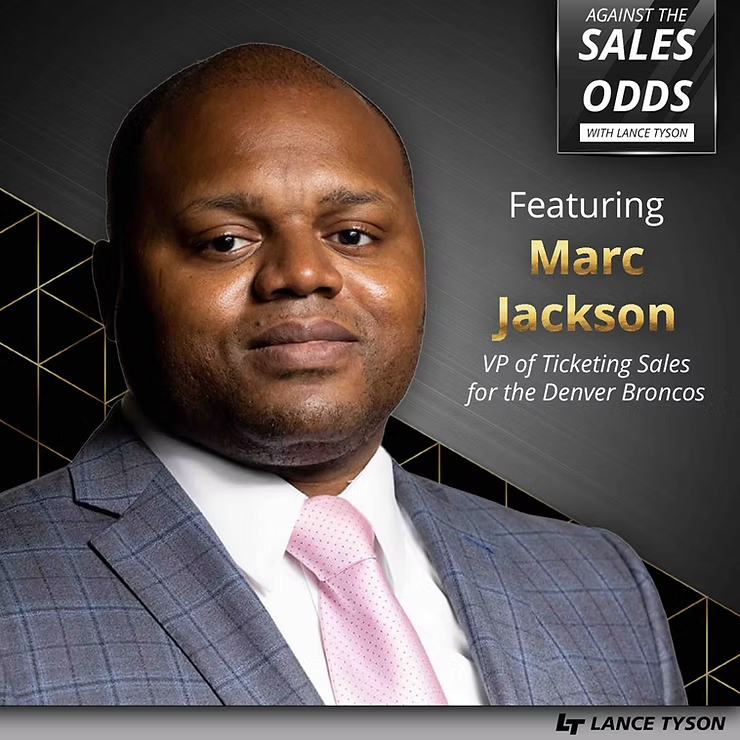
The Obstacle Is The Way: Lessons On Success With Marc Jackson

Success is tasteless without the sweetness and bitterness of the journey. The obstacle could be the way to your success. In this episode, Lance Tyson sits down with the Vice President of Ticketing, Sales and Service for the Denver Broncos, Marc Jackson, to take us across his journey as a collegiate athlete who played football at The University of Illinois. Marc talks about the work ethic and lessons he learned on the field and how they translate to the business side of professional sports in his current and past roles. Through his experience, he indulges us with great advice and his definition of success while bringing many lessons that have been passed down from family and mentors to help him succeed in his career. Marc brings so much value to this conversation, so let’s hit that play button and be inspired to move forward beyond the obstacles.

Listen to the podcast here

The Obstacle Is The Way: Lessons On Success With Marc Jackson

I’m excited about this episode of the show because our guest is a personification of Against The Sales Odds with the way he approaches his business. I got Marc Jackson on. He’s the Vice President of Ticket Sales in service for the Denver Broncos. He is a dear friend of mine. I spent days before COVID and all of COVID with him. He was my guy. He was the last meeting before COVID. We started it. We were at that little tiny table in New York together, and we were making fun of COVID that we didn’t even think it was real. Within 24 hours, they shut the NBA down. That was how it went down with us.

It was a quick 180. We hear the reports one thing or another and it was like, “This is real.”

It was 24 hours. It was your last vendor meeting. I landed in Columbus from New York City, and they shut the NBA down. You were at Madison Square Garden at the time. It was the Big East Tournament. They started shutting games down that day. I will always remember Marc from that, and then we spent a lot of time together in COVID virtually.

In fact, there’s a lot bad that came out of COVID, but for us professionally at the Garden, with our sales skills, we developed that at an accelerated rate in large part due to the partnership with the Tyson Group. It felt like I was back at school in camp. It was 2 a day or 3 a day. We were repping. It was groups. It was inside. It was seasons. It was fun.

It was so hard during that time.

We did not let that time go to waste. We leaned into training and development, and made sure we came out stronger.

We switched everything over to virtual learning. That was the whole thing. We were testing what we were going to do and making these 180s. Marc was at Madison Square Garden at the time and the VP there. We converted everything over and went hard. We mastered the 60 to 90-minute session and got out of there. Anything more than that, everybody’s head was going to explode. That was in COVID. Since then, you’ve taken a bigger role with the NFL and the Denver Broncos. Tell everybody about your job and who reports up to you, and go from there.

If there’s a seat with a number on it, that’s me. I do ticketing sales and service for the Denver Broncos. That’s suites. That’s season tickets. That’s all ticketing opportunities. That’s service. That’s operations. That’s suite services, customer service, and club services from the field all the way to our 500-level and everything in between.

What does that total revenue look like for your team?

It’s high, without getting too technical. It’s not as high as I would like it to be. It’s certainly not as high as it was at the Garden because that was multi-property whereas this is just one. We’ve got our eye on the number one spot here in Denver, and we are going to chase it.

There you go. I love it. Tell about the group that reports to you. What does that look like? How many people are in that org chart up underneath you?

There are three directors. There’s a senior director of premium sales and service, a director of customer service, and then a senior director of ticket operations. Underneath them, there are a number of managers as well like club service managers. We’ve got some managers in ticketing operations as well. From there, it’s the most important people, which are the individual contributors and the people that make this thing work.

We have 5 club service reps, 3 premium service reps, and 10 reserve customer service reps. In our operations team, we have a total of 6 people. That includes the senior director and some of the managers as well. Those are the most important people within my group. I’m the least important. They’re the most important. They’re the ones that make things happen. It is roughly about 33 to 35 people.

From a business standpoint, we’re going to do a deeper dive. By the time you were brought into the Broncos and picked a couple of things, sales weren’t where they needed to be.

It was the middle of COVID. The folks that brought me in, their grand design was to elevate not only our strategies and processes but also the customer experience. Something that made me a good fit for this organization at the time is as you’re well aware of the work that we did together in New York, as well as Charlotte, the thing that I focus on is training, development, strategy, process, and maximizing every opportunity in between all of those buzzwords while also elevating the fan culture.

That’s your culture and your superpower. I want to get into that. If one theme came out of this with Marc, it is his ability to build a culture of coaching, learning, and training. Not every organization has that. Some people check that off the list or they do it when they need to. That’s built into the mentality of any team I’ve ever worked with you on. At this point, you and I are going on 15 to 20 years that we worked together with three different organizations. Charlotte was Bobcat at the time.

Bobcats, Hornets, and then Madison Square Garden.

Let’s go backward. Everybody that tunes in to this is like, “How does Marc get here? What does that journey look like?” Tell a little bit of background coming out of school, what you did in school, and maybe that first job.

I was a student-athlete. I went to school at the University of Illinois. I was a student-athlete there. I was a football player there during the Ron Turner era. I was fortunate that my brother was on the squad with me. My father was on the staff, as well on the opposite side of the ball. Coming out of school, I was less prepared because I had most of my eggs in one basket that ultimately didn’t pan out.

Was the goal to play football?

Correct, but that doesn’t always happen. When it came time for me to put my cleats on a wire like Marshon, I had to figure some things out. Luckily, for whatever reason, I’ve been able to build relationships throughout my life. Some of my friends whom I would consider family were working in Cleveland with the Cavaliers organization. They helped me build a resume, which got it over to the folks in Phoenix Suns in the hands of Mike Tomon, Jeff Ianello, and Drew Cloud, that organization or that regime at the time in Phoenix. After hearing about what they were all about and the program that they had in place, I was like, “It was either move back to Chicago or pack my things and move out to Phoenix, Arizona.” I didn’t know anybody out there, but it was a gamble I was willing to take. It was a calculated risk, if you will.

This is an important part of the story. I am fortunate enough to know you. I know your pop’s had a dramatic impact on how you played football and you and your brother’s mentality. We’ve talked a lot about your dad over the years. I know how it translated on the football field because you don’t play at high a level without it. I can imagine that. With what he taught you, how did that carry over into business?

It had a different lens and a different language. My nephew is a registered freshman at Oregon. He is a linebacker. He’s doing great. I try to talk to him about some of the things. I know that his father, my brother, gives him a football perspective. I talk to him using the language of business, but I’m relating it to football. It was something that my dad did well with me using both sides of the coin.

Your dad had a solid career in football. He knew the business side of football too. That’s the thing that I got from you about your dad. It was a couple of years ago that you lost your dad. Talk about that lens.

He was the one that pushed me to go. He was about to move to New Jersey to coach with Schiano at Rutgers. He was like, “This is going to be scary. It’s going to be humbling. You’re going to have some tough challenges, but you should go.” Mom was not happy with me going out west to Phoenix by myself, but he was a strong supporter of it. In his own way, he would tell me, “You’ve done this at a high level. You might’ve been playing in it on a different court, a different surface, or a different field. The arena might look different, but what you did to be successful at being a student-athlete, apply the same things to this opportunity. That’s extra championship lifts, extra workouts, and more treatment if you’re ailing.

Make sure that you invest in your body and your resources. As a student-athlete, that’s one of the most important ones you have. Watch film. As student-athletes, we have to watch films not only with ourselves, but with our teammates, our position, the defense, our position coach, our coordinator, and all of those things. I applied all of those things towards ticketing.

Make sure that you invest in your body and resource.

I’d come in early. I’d stay late. I would watch films if you will, taking reps or taking reps with Corey Breton or anybody. That helped me because this was one of my first real-life experiences as an adult, not being an athlete no more. It allowed me to have a familiar transition from something that I had been intimately familiar with from the second grade to something completely new. It helped me transition into that.

You go to Phoenix. It’s that hard work mentality or that threat mentality. You looked at the system or the process, or what they were building in Phoenix. What did you notice about it that you’re like, “This is a good fit for me.” There are some players there, Tomon, Drew Cloud, and Ianello, who we were talking about in our pre-game. You and I both have Tomon and Coleman.

Nic Barlage’s and John Walker. There were dawgs everywhere. Kyle Hudson. Karlis Kezbers. There were absolute sharks that were out there like Michael Wandell all throughout that organization. To me, it was familiar with a different language. It was about the team. It was about hard work. It was about putting in the time and effort. Even if you didn’t succeed, it was about the champion, the guy, gal, or teammate who was making plays, so I could relate to that. Eugene Wilson would make a play. I didn’t make it, but I’m cheering him on. It was very familiar to me with how Tomon, Drew, and Io built the culture. It reminded me of the locker room that I left.

Every one of those hard strikes on Tomon and Io, they are prep guys. I was with AEG and Michele Kajivara. She got Tomon later. She goes, “I learn more from Tomon and his principle-based leadership and what to look for.” Tomon was all about the prep side. That was his game and still is. You go inside sales there. How are you as a salesperson? Rank yourself straight up from the beginning.

Let’s be honest. I came from the locker room to the phone. I was not good. I was probably an HR nightmare. This was my first rundown, taking earrings out of my ear, cutting off corn rows, and jumping into inside sales. I’m very thankful for how patient Ianello, Tomon, and Drew Cloud are. A big shout out to Corey Breton because he helped me tremendously.

There is no doubt. Corey is solid.

They helped me polish some of the rough edges around what was going on with me. When I first started, I was trash, but I was willing to put the work in. I was like, “This is what I got to do. I’m going to do it, but I’m also going to be a sledgehammer with it. I’m coming in like Jack Ham or Night Train Lane.” It was one speed and there was zero finesse. Over time, I started to learn how to position myself. I learned a different language in the sense of how to articulate words differently and position them differently. It’s still English, but I mean the sales language.

It’s a sequence too. Sometimes sales language is reverse language because you’re starting off from somebody else’s view as opposed to your own view. How long were you in that inside team? Where did you go from there?

Obstacle Is The Way: Sometimes, sales language is a reversing language because you start from somebody else’s view.

I was there for nine months. I became an account executive. I did that for a year and became a senior account executive. Tomon takes an opportunity with Greg Economou in Charlotte.

You were there for three years.

I was in Phoenix for three years.

Before you hop on this next piece, you become what as a salesperson? Take a sentence and freaking describe that. You go from what and you become what?

I started off as overwhelmed. By the time I left, I was a dawg.

I asked about it before this interview. I’m not going to tell you who, but I heard somebody say it was blunt-force trauma in the beginning, and then you became the tip of a sword.

That’s what I mean. They used the phrase dawg.

I understand completely what you’re saying.

This is for anybody tuning in. It’s like Justin Simmons, safety, Broncos, dawg. It’s like PS2. That’s the frame of reference that I’m using here. I became very skilled at this as an individual contributor.

I also like the verbiage. I listen to a lot of leaders and individual contributors as a way to describe a teammate. You don’t always have to be in leadership. There are individual heroic contributors, and that’s what that is. You start setting your eyes on Charlotte because Tomon makes the move there. Did you get recruited there?

Yeah. I had some opportunities to assist with helping future inside sales classes come in and develop. We had programs to allow us some elementary leadership opportunities with some of our other properties in Phoenix. I gravitated towards that. I’m not sure if it’s because that’s what I consider the family business. I didn’t have a whistle around my neck, but it was coaching. It was development. It was training. It was helping people aspire and ascend to greater heights and do it quickly. That opportunity presented itself and I jumped at it. This is in early ’08.

You had done some of that stuff at Phoenix. You were starting to get into mentoring and coaching some of the younger folks that were coming in, and then that opportunity started to open up in Charlotte.

It opened itself up in Charlotte, so I jumped. Tomon had an opportunity available, so I was ready to jump on it. I took on that opportunity. Let’s say the directive was overhauled. What we wanted to do was not just replicate what we did in Phoenix, which was frankly a replication of Cleveland to an extent.

There was a similar playbook going on.

We wanted to create our own version of it. We had a lot of talented people come through those doors like Dino and Agnes. Nic Barlage didn’t report to me. He was a partner in helping rebuild everything. Dino, Greg Allen, Jamie Weinstein, Cam Florenson, and Yao Williams, and Mike Lahey. There’s plenty that I’m not naming because we don’t have enough time for it.

For those folks that aren’t in the pro sports, at least half of the people Marc’s naming are in some significant leadership role at this point with a sports team or a sports franchise, which is a big deal. These are big brands.

Our leadership changed over not only at the top from Bob Johnson to Michael Jordan, but we also had leadership change over as well. Tomon left and Flemming came in. He left, and then Flavil Hampsten came in. That was also a game-changer. It is like we had Bill Walsh and then all of a sudden, we had Bill Parcells. Those are two different trees or whatnot, but also highly successful. Having seen multiple different ways of performing in this business at a consistently elevated level was also extremely beneficial because it gave me some diversity. It gave me a different way to approach and break down and build things back up.

At this point, how would you define your leadership signature? You described figuring out how to sell and starting to get into more of this leadership piece. How would you define it? Even if you use a comparison with an analogy with a coach, who do you become?

I’m not going to make an analogy because I have too much respect for the coaches and things of that nature. I’m still trying to chase Chief. I’m still trying to chase my pops. He was the best coach I’ve ever been around. I’ve been around football for a long time. He is who I’m aspiring to be as a professional.

Who was he as a coach?

He knew the Xs and Os. He knew he could break everything down. In fact, that’s what we used to do. As kids, instead of outside playing tag or whatnot, we were breaking down football strategies. The Xs and Os were still always secondary. It was always about the team. It was always about the individual. It was like, “How do we invest in individuals in a way that trust becomes second nature?” The level of trust is so high that it enables us to do great things together.

You know you’re the priority. You need to have that in order to get individuals. Like football, we’re recruiting people from all over the country who have various diverse backgrounds, priorities, and all of those other things. We have to get them to shed those individual agendas for the collective good. That is what being a football coach is. It is then putting them in a position to make plays.

Xs and Os are secondary. It becomes about trust.

That takes time. That takes investment. That takes resources. You can’t have a transactional outlook in terms of relationships with teammates. You can, but it’s not sustainable. I’ve always tried to invest in people. I get calls.

Trust takes time, investment, and resources. You can’t have a transactional outlook in terms of relationships with teammates because it’s not sustainable.

It’s your number one priority. I’m not talking from a training standpoint. I’m talking about spending time with them. It’s an investment. Training is a piece of the bigger picture.

I had lunch with somebody who’s got his first inside sales manager opportunity out here in Denver from New York. I had the honor and privilege of helping him through that process and being a sounding board. I was not telling him what to do or anything like that, but being an ear and giving him some, “Think about it this way,” or “Have you thought about it this way?”

I get more geeked up about that than anything. That’s why I’ve been able to be successful so far in this business. With my limited success, I attribute it to that. That’s the type of coach my pops was, and that was the type of man he was. It was always about like, “We are going to work hard. It’s going to be difficult. There are going to be good days and bad days, but we are going to do it together. We are going to watch the film. We are going to celebrate or we are going to make corrections. We are going to turn the tape off and we are going to go to work again.” That’s who I aspire to be as a leader.

From our extensive conversations, you taught me the practice coach and game coach. I forget what day it was, but you were saying it one day and I was taking notes. I’m like, “That’s what it is.” That has to be a commitment to the player because it’s not about the game. It’s about the other stuff. It’s that investment.

This is 2008, 2007, and 2009. You take off from here because you move right up into the Charlotte organization. Michael Jordan has taken over the team at this point. You move up and skyrocket up. Talk about the next three roles you had. When I met you then, at that point, Flavil had taken over the organization.

I got there as a manager. When I left, I was vice president of all of the new sales groups. I was running with my guy Jacob Gallagher who was overseeing groups and service at the time. He is now the CRO there. Opportunities presented themselves because we were invested. We did the work. We were committed. We put the time and the effort in, and the results happened. We weren’t successful with every initiative that we did, but we were far more successful. I credit a lot of that to Fred Whitfield for giving us the direction and opening up the lane.

Pete Guellie was as important in that entire process for all of us. He was EVP at the time, and then Flavil as well who was more hands-on with us. I don’t know what I did in the form of life, but I’ve always had super strong leadership. I’ll put that against anybody else in the biz of what I had in Charlotte and what I had in Phoenix. Everybody bought into it, so it gave us the opportunity to earn that success.

I would challenge you on one thing that you’re not giving yourself enough credit for. You manage up. I don’t think you’re compliant. You’re committed. I’ve always seen it this way. Even watching you and KB work together, you force who’s above you to engage with you. You would not last in an organization if somebody wasn’t willing to engage with you. It’d be lights out.

That’s a fair statement. I don’t like doing things with one foot in and one foot out.

I talked to you enough about jobs where you’re like, “That isn’t going to work for me.”

That’s a priority for me. It’s not only the vision, but the relationship that I would have and that individual would have with said direct report and owner. It’s highly important.

You go to an executive position here though. You get this basis of your dad’s signature and strategy that Xs and Os are second and people are first. Ultimately, you want to build trust, and that will get us to the Xs and Os. I see that as a line that comes backward on it. Everybody thinks it’s about this, but it’s about that.

You create the gap.

That’s exactly right. You worked your way up in the organization. What’s that timeframe?

It was pretty quick. I was in Charlotte for eight years. When we set the foundation, 8, 9, 10, and then once we had had a couple of seasons to set the foundation, it took off like a rocket. The thing that I am most proud of is the people that came through and that are still doing it at a high level, but also that what we built has lasted. They’re continuing to have success on the business side.

There are people still there. That’s a foundation. That’s one organization where people have stayed there. You get a shot big time. I can remember a conversation with you early on. You’re hell-bent. You’re like, “I’m bringing every principal, even knocking on doors in New York City.” You get recruited by arguably the most famous arena.

It’s the most famous arena in the world.

Nothing trumps Madison Square Garden.

I’m biased, but it’s the biggest platform and stage in sports and entertainment.

Obstacle Is The Way: Madison Square is the biggest platform on stage in Sports and Entertainment.

For everybody, if they are not in sports because people tuning in to this are in sports, help them understand all the brands that are the heart of MSG. I don’t think everybody understands all the brands. When I started to work with you, I didn’t even understand all the brands. I’m like, “Holy moly.” MSG in and of itself is a brand.

MSG itself as a venue is a brand. The ones that people are most familiar with are the New York Knicks and the New York Rangers. At the time when I got there, the New York Liberty was also part of that. The Westchester Knicks is the G-League Team. When I was there, there were about 280 events at the Garden on the main floor annually. There were somewhere between 40 to 50 in the Hulu Theater at the time. I don’t know what it is now called. In the theater underneath the Garden, there were about 40 to 50 of those a year. Sometimes, it was running congruently with the stuff that was above it.

On top of a railroad station.

On top of Penn Station. Also, don’t forget that we had the Christmas Spectacular. It was 200 events in 8 weeks from Thanksgiving to the last week of December. You’ve got Radio City Music Hall. You had the Beacon Theater. They had an interest in several other properties. At the time, they had other venues in Chicago, LA, and Boston. It’s massive. I can’t speak to the portfolio now because I’ve been away for a couple of years, but it was massive. It was the largest project that I had ever done at the time and still have ever worked on.

You got hired into what role there, and what year was that?

This was 2016. I got hired under the same title. It was the vice president of ticketing. I’m overseeing new sales for the Knicks, the Rangers, the Liberty, and then all operations for Westchester. I am being a support for some of the other things like venue tours, groups, and suites. I’ve got counterparts that lead those various departments. My team helps with those services, operations, strategies, and all the stuff that I’m helping support.

What was the business challenge there? I’m trying to think back and I know what it is. There were some challenges there. You weren’t just pressing the accelerator and picking up where they left off. You had to go into a little bit of a reset with some things. Not to air dirty laundry, but there were some things going on there.

The nice part about New York though that was different than Charlotte was that it had a track record of strong leadership. When we got to Charlotte, we had to strip it down and start from scratch. At the Garden, we didn’t have to do that. We had to put some guardrails up. We did have to press reset on people’s lenses and outlooks. It was more that than anything.

You had some hiring to do too. You had to fill a lot of seats.

I was in New York from ‘16 to ‘20. When I started there, I had something like 30 people that I was reporting to. By the time I left, it was over 60. Ultimately, we did have to do a ton of recruiting and things of that nature. There were pieces of a puzzle in place, and we had to reset the board. Even to what they’re doing now, the transition when I was there to where Brendan Long and Jamie are doing, which Jamie’s sitting at the head, it is in the best position it’s been at including me. It’s probably running better than it has under the last 2, 3, or 4 regimes due to Jamie.

I love Jamie. Also, there’s a bedrock there that you laid and a foundation. Your philosophy starts to evolve here. At least what I saw is you start going from building salespeople, but then you put a hard bent on you were developing leaders. I’m not saying you didn’t do it at Charlotte. You did it, but you start to get laser-focused and say, “I’m going to draw oil from the top down.”

You spent a lot of effort in there. You and I laid out all kinds of plans for that. That affected positively situational awareness. The other thing I want to mention too, and I want to overtake what Marc is saying here. Not only was it the biggest platform and the portfolio was big, but the expectations from ownership are high. They are invested. They’re in your business. They know their numbers. To give you a perspective, do they own Cablevision?

They did. You have known me for a long time. I like to gas people up. People deserve their flowers. We had a lot of good people over there, and they had to be on their game because the expectations were high. It was completely independent of whether the product was successful or not. We had to win. There was a lot of pressure to do so, but I enjoyed that.

We built a team and a culture that enjoyed the high-pressure, high-reward type of environment and culture. It permeated through the entire ticketing department. It wasn’t just my side of the business. It was also on the service side. It was also on the strategy and operations side. Everybody had had those high expectations. We all gravitated towards that. To your point earlier of focusing on building leaders, it was a conscious decision for me. I was like, “We’ve been able to build folks from 0 to 10. Can we build the manager or the new manager from 10 to 100?”

That was a necessity too. You and I have a lot of good talks. At the Garden between 280 events, it’s almost every other day. It’s sometimes twice a day. You have two major league sports teams there. You have Billy Joel and a residency there. It is vast. It’s massive. It becomes this logistical decision-making matrix where it’s almost like cover and move. Your salespeople have to be extremely good at making decisions. You couldn’t be in every decision. You had to trust your leaders and managers to critically problem solve and be able to coach in the moment. You had every technology at your fingertips. They had to become trainers themselves.

They are extremely good communicators. That was a big thing of also being able to see the board, read the board, and react accordingly. Understanding where our North Star is and knowing that we can’t always take a step towards there, sometimes, we’re like, “Based on where we’re at and where we’re at on the board, and what’s presented in front of us,”

whether it was a challenge and the opportunity, “We may have to take a side step in order for us to take a step forward or take a step back in order to take two steps forward. It could also be that we are taking three steps forward.” Being able to help with that process in terms of the growth of managers, directors, and whatnot was a fun process. I enjoyed it because we helped design the game plan together.

I wish I had pictures of you sitting with your leaders in your office. I can remember so many times you game-planning out. It was almost like a sandwich. At the beginning of the day and end of the day, you are orchestrating. On top of that, so everybody knows this, Marc’s boss, Kristin Bernert, gave no quarter. She’s the president of the crew. She was dealing with ownership.

I felt you were teaching your people to manage up to you because you had to manage up. That’s where I go back to what I said before. Don’t ever sell yourself short or any of you because managing up is the hardest thing to do. You are either committed or compliant. You are not compliant. That’s why I go back to how your dad raised you with everything you’ve told me.

Marc helped my son choose his college to go play hockey in. He spent an hour on the phone with him one day as he was struggling. When Marc gives advice, he’s not patty caking with people either. You always remind me that the obstacle is the way. The obstacles in front of you. That’s how you have to go. There’s nothing else other than that.

The obstacle is the way.

I had to pull some old tricks. I was telling him a lot of things that my older brother Bobby was telling me. I was like, “Try to remember some of those things.”

We were in an Uber. I was ordering appetizers at the table. I’ll always be grateful because he went on to win a national championship because you helped him choose that college.

I was so excited when he told me.

Marc did it. That’s my thing. If I could summarize that piece, you go from building the troops, those individual contributors, and then start building leaders.

We did build it. We collaborated together. You and I helped to design, “This is what we want to do. This is how we want to do it. This is the timeframe that we think we can do it in.” Whether it was KB or Abs, they were like, “Yes.” They were bought in. They gave us the runway to go. It is about learning how to manage up. The first thing you learn as leaders is managing down. It’s managing your team and how to deal with that. Nobody ever focuses on teaching you how to manage up, not only up to you but also above you.

Obstacle Is The Way: Learning how to manage down is the first thing you learn as a leader. Nobody ever really focuses on teaching you how to manage up.

No doubt. That’s political. That’s knowing when to say stuff. That’s when to hold your role. There are so many things there. That’s a grind. I always thought you did that well. I thought of anything you got out of MSG. I would watch you. I’d have dinner with you and you’d be like, “These are the five ways you got to look at it.” Even Brandon, one of his leaders, works for me now. Brandon is good at that stuff. He’s good at seeing the whole picture and then knowing what a spot is. He knows where he is. You taught me, “This is exactly how you have to communicate to Brandon. If you don’t sandwich it this way, he’ll bite back on you.”

It’s like kickoff coverage. You got to run through. You got to have your head on the slope. You have to know where your points are. You have to keep it inside and in front. Don’t overrun it. It’s like kickoff coverage all the time. Taking things that I was familiar with and trying to apply to this made it easier for me to understand it and transition. I still do it to this day.

I know you do. The people that love you, including me, it’s a testament to relationships. As we bring this down for landing, there are a couple of things I want to remind everybody. Everything in your life is translatable. Like your dad said in the beginning, “Let’s look at it from this lens. It’s a different lens. These are the things you’re going to do that’s the same.”

Secondly, it is the building of the individual contributor and then Dad said, “The Xs and Os are important, but they’re secondary to us building the talent, the team, and the individual contributors to get to a point of trust.” The last thing is this uncomfortable, “The obstacle is the way,” and that constructive tension of managing up. You and I debate about stuff, but we trust each other. That’s where it goes. That goes with your people, too. I have the last three speed questions to bring this down for a landing. You’re going into a big sale. You’re going into a big meeting. What’s that song? What is it?

Everything in your life is translatable.

I don’t think I have a song. I’m going to put on Jeezy’s first studio album, TM 101.

Are you running it?

Yeah. I’m going to put it on repeat. When I leave the office from the time I get to the meeting, I’m going to go through every track.

I’m into that too because you get a beater genre. To me, there’s always a certain thud that I have to hear every time. Let’s move it to a book you’re gifting the most or reading right now.

When you started talking about relationships and whatnot, I got a book from Jeff Ianello. I didn’t pick it up when he gave it to me. I picked it up last week or so, so I’m only 20 or 30 pages in. It’s called The Splendid and the Vile. It is fantastic.

You might be tuning in to this. This is also on video. Marc pulled his copy out and I pulled my copy out that Jeff Ianello gave me. I didn’t read it right away, but I got sucked into the damn book. It’s a good title too. It’s a great title.

It’s a great title, The Splendid and the Vile. I was like, “What is this?” I started reading and was like, “Let me park right here quickly because I’m going to be on this one.”

The Splendid and the Vile: A Saga of Churchill, Family, and Defiance During the Blitz

No doubt. For everybody tuning in, it’s about Winston Churchill and how he brought England through specifically in the period when England was getting bombed by the Germans. It’s that period. It is a book on leadership and perseverance.

Also decision-making and communication.

You’re going to laugh your ass off reading the book. He spends a lot of time in the bathtub. This cat is in the bathtub making decisions. At the time, they called people secretaries. He has a cigar. I picture the cigar in his mouth. This is the last question. I’m going to change my question here. What’s your brother’s name?

Bobby.

Bobby’s son plays for Oregon.

Yeah. Devon Jackson.

This is young Marc and young Bobby at 7 and 8 years old. Pops is sitting you down and you guys are looking at a film. Marc or Bobby says to dad, “What’s success?” What does Dad say? If he were here, what would he say to 7 and 8-year-old Bobby and Marc, not a 15-year-old?

The answer would be different at fifteen. I’m going to give you both. We’re two years apart. At 7 and 9, he would’ve told his family.

Everything you’ve told me about you has carried through from how you spend time with Mom and all that stuff.

That’s how we approach the business. You can probably call six different cities and I’m sure that there’s somebody that I’ve worked with or whatnot. That’s how we approach this thing. The 17 and 15-year-old versions of Bobby and myself would be impacted. Impact can be taken in a lot of different ways.

You made me think of something. I don’t categorize you as a business friend. I categorize you as a friend, but you are the only person business that has talked to my brother and my son. You and I spent time with my brother on the phone one time.

I’m like, “I’m part of the Tyson Group.”

No doubt. This is such a great interview. Thanks for taking time with me as always. I can’t wait until this gets out. FYI too, after the unfortunate incident with George Floyd, Marc and I did an episode on DE&I. You can email my company. Marc gave me a perspective I never had. Marc is the only person I’ve interviewed twice.

I’m looking forward to the third time.

No doubt. I appreciate it. I love you as always. I can’t wait to get this out. Thanks for being on.

We’ll talk soon.

Important Links

Denver Broncos The Splendid and the Vile

About Marc Jackson

Marc Jackson

Vice President, Ticket Sales & Service Denver Broncos Football Club

Marc Jackson serves as Vice President of ticketing Sales & Service for the Denver Broncos Football Club, having joined the organization in September 2020.

In his role, Jackson leads all ticketing initiatives, including service and retention, business development, and operations.

Prior to Denver, Jackson served as Vice President of season Membership Sales for Madison Square Garden for four years. During his tenure, he led all ticket sales initiatives for the New York Knicks, New York Rangers, New York Liberty, and the Westchester Knicks.

Before joining Madison Square Garden, Jackson spent eight years with the Charlotte Hornets (2008- 2016). His responsibilities included suite and premium sales, season membership sales, plus inside sales.

Jackson helped transform the Hornets’ ticket sales program, guiding Charlotte toward multiple Top 3 NBA rankings in new full-season tickets.

In 2005, Jackson began his career with the Phoenix Suns organization as a sales rep focusing on the Suns (NBA), Mercury (WNBA), Roadrunners (ECHL), and live events.

A Chicago native, Jackson is a 2003 University of Illinois graduate, where he was a three-year starter and a member of the 2001 University of Illinois Big Ten football championship team. He now resides in Denver, Colorado.

Structuring Projects Efficiently and Effectively with Jason Gonella

Success in sales is about more than closing deals; it’s about creating opportunities where none exist and empowering your team to shine. In this exciting episode, Lance Tyson sits down with Jason Gonella, the Senior Vice President of Ticket Sales at the XFL, for a deep dive into the world of project structuring and successful sales leadership. With a career spanning top sports organizations from the Eagles to the XFL, he walks us through the various models he has worked with and for creating success at all these different projects. From building a strong foundation and adapting to diverse markets to creating opportunities and defining success, Jason covers secrets and strategies in the world of ticket sales. Tune in now!

Listen to the podcast here

Structuring Projects Efficiently And Effectively With Jason Gonella: The SVP Of Ticket Sales At The XFL

I’m excited about this episode. I have Jason Gonella, the Senior Vice President of ticketing for the XFL, which is on the upstart here again. Jason and Len Komoroski are my two oldest relationships in pro sports and business. Jason, I’m so excited to have you on. Fellow Philly guy, you and I. It’s been a long time coming.

I’m excited to be here. It’s a great program. I’m so excited for you and all your success. Going back to those early days, it’s hard to believe I’m on with an Amazon and New York Times Bestselling Author. I’m proud of your success and to still be very close to you. I’m excited to continue to do some work with you.

No doubt. It’s funny. I’m thinking back to the work we did. I started being a trainer. You were starting in leadership but still selling with your team too. That’s where we were.

Things moved up neighborhood-wise. I was in Bensalem at a Holiday Inn.

That’s exactly where we were. We’re Bucks County.

In the end, we sent Phil Matalucci who went kicking and screaming through the program. In the end, it was like, “That was powerful. I enjoyed it. It was good.”

Phil might be one of the best salespeople in history.

He was such a good club seat guy. They made a can for him, filled it with sawdust, and said it was magic pixie dust. He sold 2,000 club seats for us in Philadelphia and we only had 8,000. He was an unreal guy.

Part of the audience is interesting. We have a lot of leaders and salespeople who read this. About 40% of the audience isn’t even in pro sports. A lot of my guests are pro sports execs. Describe what you do, to begin with. You’re with the XFL. Describe your role, how many people work with you, and maybe some challenges that you’re up against with that brand.

We’re going into our second season. When we started up, it’s unbelievable when you think about it. The Tuesday after Labor Day 2024 will be my one-year anniversary. I feel like in terms of all the stuff that we’ve done, I’ve been here for several years but it hasn’t even been a year yet.

This is like the second iteration of XFL.

It’s the third iteration. There was the WWE in both times. Vince McMahon’s company started with NBC back in 2001 or 2002. That was the He Hates Me version. That was launched as, “This is not your dad or your parent’s football league. Different ball, different rules. We’re not the NFL.” It was an early ’80s USFL. They replaced the Donald Trump character with Vince McMahon. They relaunched in 2019 to start to play in 2020. The league was off to some fairly substantial success in a few markets and then COVID hit. There were some other things going on with the WWE at that time. They bankrupted it.

The group that then owns it is Redbird. Dwayne Johnson “The Rock” ironically has a tremendous amount of history and has a lot to thank Vince McMahon and his group for his fame. Dwayne’s business partner is our chairwoman, Dany Garcia, who also is someone who’s been with Dwayne his entire career. They met back at college at the University of Miami. Unlike the first two versions of this, we’re attempting to make it as much of a collaboration with the NFL as possible. In addition, we’ll talk about ticket sales.

One of the things I’m proud of being a football guy and having worked in the NFL, someone who played football growing up, and is super passionate about the sport is we’ve got 60-some guys in NFL camps. We’ve got some tremendous former NFL executive guys I worked with at the Eagles. Marc Ross runs our football group. Doug Whaley is a former Bills. Russ Brandon is our CEO, who is someone that I was running around at NFL meetings with back in the late ’90s and early 2000s. Our relationship and his understanding of my career are why I’m here.

Would you categorize the brand as a disruptor brand almost? Is it viewed as that? Secondly, how hard has it been to go to market and sell over 2022 because you’re coming out of COVID? It was the third iteration of this. I’m not saying it is a disruptor brand.

When you asked that, my immediate reaction internally was, “No, we’re not a disruptor. We’re an alternative.” The way we reference ourselves is we’re a little bit in much of the success. We’ve got teams in their first year. I saw a tweet that the San Antonio Brahmas, one of our franchises, has ten guys. We only have 48 active roster guys and 10 of them are in NFL camps. This is all about being a league of opportunity on multiple fronts. It’s for the players, coaches, and referees. It’s a platform for people to get into what is the most glorious North American, if not the world of sports leagues. The NFL is it.

Ticket Sales: It’s a league of opportunity on multiple fronts. It’s obviously for the players, the coaches, the referees.

The shields at the end.

It’s nothing like it. It’s ironic. I sent somebody a note and was like, “Enjoy the start of college and the other pro leagues football season.” That’s not how we are though. The things we’re excited about are the NFL. Ironically, back to our heritage, the Eagles, I learned, were one of the groups that presented at the NFL rules meetings that our overtime and kickoff rule was interesting, which made me proud because I’ve got a tremendous heritage from the Eagles. I love the Eagles, Jeff, and everybody.

My point here is that we’re trying to be collaborative and alternative. We’re all about player safety and opportunity. Frankly, from a business perspective, both on the customer and the internal customer side, it’s about opportunity too. We’re giving people an opportunity and a platform to sell things. From a true customer standpoint, accessing things at a less expensive price would cost you to go to a normal sporting event.

I’m used to selling high-end premium stuff and that’s where I’ve made my name in driving contractually obligated income. I’m selling season tickets for 5 games that average $50 a game. At the Nets back in 1997, I was selling center-court seats for $55. There were $45 upper deck seats in ’98 when I got to the Eagles. This is different but we’re building brands. For me, the biggest challenge is we’re operating 8 different businesses in 8 different markets so our model is unique.

Let’s talk about that for a second. You have a sales team that’s coming across eight different teams. Each team suffers from the disease of uniqueness in each of their markets but some of it is the same. How many salespeople are reporting to you? What are you expecting from them? Is it situational awareness? Is it moving quickly? What does that look like from a coaching management standpoint?

From a structural standpoint, we started with the idea that we would have a director in each market and then a fairly balanced approach of six reps underneath the director in each of the markets. We would have seven people from a sales perspective that would drive the individual businesses in the market. For a variety of reasons, we staffed differently. We went a bit unbalanced. At our highest level, we had about 48 people. We went through a bit of a re-org around Memorial Day. Coming out of that, we went with what we call a centralized unbalanced approach.

I’m fortunate that I’ve got a guy who’s worked for me in the past, Matt Cords. He’s my right hand on the sales side. We were challenged to figure out how we could go forward with 50% of our headcount. We went with a fairly simple approach. We took our best people across the board. Our best people are the ones that can sell across all the platforms. We did a great job selling groups on a fairly tight window with a great job selling premium, which was ironic.

Seasons were a strong part of our business as well. We hit our ticket number for 2022 in those three categories. That was what we were in charge of. We took our best folks. We’ve got an unbalanced approach. I’ve got six people in San Antonio, which is a middle-market team for us. In our best market in DC, I only have two, a director and one seller.

We’re a remote organization generally but from a technology standpoint, we plug and play. St. Louis is our best market. When we need something done in St. Louis, we break up the days for the reps. Half the day, they’re in St. Louis calling and working. It’s funny. If you look at a commission report, it’s fairly balanced. Most of the activity in a heavy month where we’ve got renewals, which was what we did in July, is almost 50-50 by market, their home market, and then St. Louis.

It sounds like you’re at the bridge of the ship here and you’re saying, “We need to deploy resources here.” Every week, resources are based on where the need is. If you have to put labor in one place like San Antonio, which is one of your newer teams as opposed to the other, you’re deploying that way.

That’s exactly what it is. In sales, you tend to get into these military analogies but you go fight where the fight is and you move your troops accordingly.

You go fight where the fight is, and you move your troops accordingly.

That’s how you win. A full surge is a cover and move. At some level, everybody should know this because it’s decentralized leadership also. You have a remote organization so everybody needs to know what their role is. Everybody has to have their orders and get it done. You don’t have the time or space not to.

To that point, strategically, we hired people with the idea that we were going to have a fairly balanced approach. We may have over-hired experientially on some of these directors and we’re in this nimble gorilla warfare or whatever you want to call it. Some folks aren’t adapting well to that. “How do you expect me to do this? I only have two people.” We’re going to have to get adaptive and creative. This is reality.

You have to figure it out.

The Ukrainians haven’t asked the Russians how they want to fight the war or the Russians haven’t asked the Ukrainians how they want to fight. It’s like, “This is what we’ve been dealt with. We got to go deal with it.”

You’ve got to take the battlefield at a time.

Strategic can win.

No doubt. I bring that up because when I look at your career, and we were talking about this in the pregame a little bit, there are certain things you’ve been asked to do in your career. Let’s operate off that flexible and nimble. The first major project you get asked to be on, and you’ve referenced a couple of times is, for everybody to know, there are generations of stadiums. This new generation of stadiums, hospitality, and suites was launched through the Philadelphia Eagles when they built the link.

It went from a very multipurpose stadium to this brand new state-of-the-art and still at some level is with all this hospitality and these suites. You were brought on to that project as a person who was going to move arguably probably some of the most profitable revenue sources, which is the premium. Let’s talk about that experience a little bit. That’s where we enter Lance and Jason. In the late ’90s and early 2000s, that’s where we were.

I’m extremely biased but Lincoln Financial Field is private Camden yards of football. It’s the stadium that set the trend. I haven’t looked at my resume in a while but we still talk about things like at the time, it was the highest-grossing building in the league. We set standards for things like cost per seat. We had some extra time because of delays in construction and worked with arguably one of the best revenue maximization people in our business in history. If there was a hall of fame for revenue maximization, Len Komoroski would be in the first class of it.

Remember telling Jeffrey and Joe Banner like, “This is a better deal than selling this real estate for more on a unit basis because you’re getting more per seat.” One of the proudest moments in my career, and I tell this story all the time, was he had me walk the owner of one of the other teams that were getting more per unit on a 50-yard line. He let me say to the owner, “We got a better deal than you did because we’re only twelve suites.” That’s how you evaluate this stuff. That’s changed the model of the industry for a lot of people over time. That was a fun one.

It wouldn’t shortchange yourself. One thing that everybody has to realize is you’re going from the vet to this concept nobody ever saw before. You have these loyal fans. It’s not like you had to ask for prices. You had to create a sales system there with salespeople to do something that hadn’t been done at that point. In a marketplace like that, I wouldn’t criticize Philly but if you’re selling at Philly, you better prove what you have. There’s one thing to tell the truth and another thing to show the truth. Talk about that one.

We’ve talked about it a little bit. They’re living it in another building. You have to bring it and be ready in Philly. You’re not sneaking up on anybody. Philly is a different place. I remember when I first got there. I had worked at the New Jersey Nets before. My job there was to try to get senior-level people with the big companies in New Jersey to buy into this NBA franchise. It was hard to get meetings. The biggest thing was the chase.

Once we got a meeting, the selling was easy because it was the NBA, Michael Jordan, and the whole nine yards. You had a good franchise in New Jersey. In Philadelphia, I could get a meeting with anybody. I was the guy at the Eagles. “Sure. Come talk to me about your penthouse suite.” They knew exactly why I was coming and what I was going to do and pitch them. All they wanted to talk to me about was moving four seats that had been in their family the entire time.

When we got this opportunity that we had something new to sell and we were the game in town, the vet was interesting because you had the Phillies and the Eagles. The Phillies had the master position. It sounds odd but in these dual stadiums, baseball led the day because they had more games. It was ten games of football.

When we had our platform, we maximized it. With the way it was structured and I ran the PSL program as well, we had a very pedestrian number that we had to raise in PSLs but that was mandated by Mayor Ed Rendell, the famous populist mayor down there who used to have a sports radio show where you could treat the teams. I’ve never seen anything like it.

Long story short, we were capped. We could only raise so much money there but in premium, we could do whatever we wanted. Joe and Jeffrey, to their credit, didn’t want to be embarrassed by not selling everything. That is the right model. I’ve worked for some folks who want to maximize everything, have open inventory, churn, and all that stuff. I’ve done 2 projects and they’re the only 2 projects in NFL history that have sold every single PSL and premium unit. That was Minnesota and Philadelphia. To me, that’s what you do.

If you look at Philadelphia, they’re going into year 21 in the stadium. I have a friend here at the XFL who was looking for a suite. The guy selling the suites is a kid who used to work for me at the Home Depot Center. He’s like, “I’ve got one suite for $35,000 on New Year’s Eve.” That’s the only suite he has. Granted, the team is biased and great but that’s the right way to run your business. You’re taking orders at that point. That’s not what we were doing when I got to the vet.

At the vet, we were trying to keep our renewal rate so whatever we sold was additive. Not 100% but we were churning through. With that experience, we didn’t want to be in that business long-term. We wanted to be in a business where this thing was sold and it was continuing to grow with escalators and all that stuff. The Eagles are still in the top 8 or 7 in the league in revenue and their stadium is relatively old. You look at the team in Washington. Their stadium was built maybe 3 or 4 years earlier. They need a new stadium. The Eagles probably never need a new stadium in this ownership group.

Not with the way they run it. What’s coming out with your leadership is a lot of analysis. You always have known your numbers. That’s the way you’re even operating at the XFL. The decision is made on some of that analytics. How did you start to define your leadership and sales philosophy? What started to come out? In a nutshell, leadership learned about X sales there.

From a leadership perspective, what I like as a seller and a leader is depending on what we’re doing. We do this a little bit at the XFL but we don’t have that high-level premium that I’ve been responsible with my whole career but we do have reps. The ones that I feel are most successful are the ones that can identify opportunities but also know when they need to bring in the heavy guns to get the deals done.

In premium, our friend Phil was a great example. He could get into any office because he had sold all the floor seats for the Sixers but didn’t understand how to use our technology in our Prudential Center. He couldn’t turn the TV on or do anything but he would get the right people in the room and then make sure that he had the right people from our side. His closing rate was 100%. Every time he brought somebody in, they bought. These were people that we couldn’t talk to when we were at the vet.

From an overarching perspective, I want people to come up. From our perspective at the XFL, and this is very true, we want people who want the opportunity to grow their career, make a name for themselves in our business, and have a body of work that they can then leverage either to grow within our organization or somewhere else.

We want people to really want the opportunity to grow their careers, make a name for themselves in our business, and have a body of work that they can leverage either to grow within our organization or somewhere else.

Back to this league of opportunity, everywhere I’ve been, we’ve given people a window and an opportunity to make a name for themselves. The thing I’ve been proudest of and I look back on that I’m getting older is I’ve got guys that work for me at the Vikings that are running Michigan State properties and Virginia Tech properties. I brought Matt Cords back to run this with me. The other guy on the PSL side is running the Viking.

It’s that opportunity piece.

Yeah. We do things the right way.

You’re tapped shoulder then because of your success at the Eagles. You mentioned in the pre-game a controversial project to build the new stadium up in Hudson Yards. You’re there for two years. It didn’t get off the ground but talk about that for a second. At your point in your career, I remember you were in such a strategic place because there was nothing to sell. It was all strategy and positioning. What’d you learn there? That was an interesting turning point probably for you because you lifted everything.

We’re at the Jets. We were going to build what was going to be the Olympic stadium for the 2012 Olympics that ended up going to London. I’ve always been a kid who likes commanded work in the Olympics. To justify the expense, these stadiums cost $2, $3, $4 billion, or something like that to build the deck that the stadium was going to sit on. It’s pretty cool to go there. They built the center city of a major city on the Westside of Manhattan which was an empty train yard. Jay Cross and a couple of guys I work with have been involved in that with Steve Ross. It’s cool to see. I go there every once in a while to work and hang out because we’re mobile.

That project was incredible. From a revenue maximization perspective, it took what we did at the Eagles to try to do a cost-per-seat model. I was working with MBAs. We had a Chicago Bears model and a Philadelphia Eagles model. We had all these different things from a pricing perspective. We had run all sorts of charts and then the political process of it. That went on for a year. From there, we went into the planning process for what became the partnership that’s MetLife Stadium. That was also a very interesting process of sitting in these meetings with NFL ownership from two different teams, doing all sorts of study work and all that stuff. It was a pretty awesome process.

I didn’t realize that dovetailed in the MetLife.

I never sold anything there, frankly. I sold some stuff at the old Meadowlands at their Giant Stadium but I got an opportunity from there to go open Prudential Center with a small group. I took it and was able to get involved in naming rights and some other things. It was the right move for me.

In two spots though, arguably with what you did at Lincoln Financial and then with the Jets, not everybody gets to see the birth of this or the whole chessboard as opposed to just part of the chessboard. You’re looking and coming in through your career. You start getting the strategy around costs, profit, and structuring things the right way. You get a look into things that not a lot of people do. They usually get that information passed down. You’re looking at the whole dashboard at some level.

It was a lot of product building, frankly. “If we sell it this way, here’s what we can get. If we tweak it and sell it that way, here’s what we could get.” The PSL process at MetLife was intriguing. The two teams had very different mindsets on how to go about that. It’s an interesting marriage and they’ve tried it in LA with two teams. It’s interesting. It’s not easy. Things don’t always go like this.

No, especially when sometimes two missions are different too. No doubt.

That’s why single ownership works. I’m working in a single ownership model with eight teams. If you can figure it out, single ownership is the way to go.

It seems what you’re doing is closely related to MLS but not exactly.

Yeah, very much.

From there, that was your tribute. You then went West Coast after that.

It was a very quick dance. I was at the Prudential Center for fourteen months. The stadium was 2/3 built when I got there and all that stuff. I got the opportunity to meet Tim Leiweke through the guys I was working for at the Prudential Center, Gary Stevenson and Dean Jordan. Tim needed somebody to go run his premium business out at AEG. They were coming up on their renewals. Through a connection with Gary and a validation from Len, Tim was like, “This is the right guy.” We went out, had dinner, and had a couple of meetings.

At that point, that’s Staples Center. Now, it’s Crypto.com. This is L.A. Live even getting built.

It was a multi-venue. Technically, at the time, I had the purview of being their expert internally for AEG. Eventually, I ended up moving over to Todd Goldstein’s group and Global Partnerships. I was doing everything. I got there in early ’08. In September of ’08, the world ended financially with the market crash and everything, and then the job became interesting.

We had to resell 2/3 of the building. We had 115 suites that were up for renewal in a 150-suite building. We were looking down at the economy crashing. One of the proudest projects in my career was that time. I still have pictures of something we had docked up that we put No Vacancy under the Staples Center sign. We sold everything. We sold 40-some suites in 60 days when the rubber met the road at the end.

You had Home Depot Center where the Galaxy played too. You had both.

It was a weird year. In 2009, we sold 7 or 8 suites as the Galaxy were taking off. AEG is the most incredible sales company I’ve ever been involved with. It’s an unbelievable group. Todd Goldstein is one of the greatest sales leaders in the history of sales leadership. He can sell anything.

Arguably, in terms of sales company, they are unbelievable. It’s unreal.

If you need something sold, you call them. They can get it done.

There, you start honing and taking this. Like at XFL, you’re asked to do something quick. You’re able to move it. You see the strategy and you get involved in it. How does your leadership change being experienced with them that you’re West Coast? What changes with your sales philosophy?

Over time, it was a bit more of a transactional product. I also think the market was way different. You needed a different type of salesperson and better presenters or folks that if you didn’t have the opportunity there, you would have on the East Coast. It’s the “We’ll line it up and I’ll knock it down” approach. If you’re a rep in Los Angeles or Southern California and they can’t carry their water, you’re never going to get to that.

The person is done before you get there. Even transactionally, coming to visit is unbelievable. You needed “closers” that were a little better at it. The chase was a little less important about the front-end activity, I feel like. It was more about making sure your presentations were together. Not in so much like flipping a deck but someone was a little bit more advanced, which is probably the better way to say it.

Ticket Sales: The chase was a little less important than it was about the front end of the activity. It was more about making sure your presentations were together.

It’s interesting you say that. It’s more about the presentation, the front end, and more in Philadelphia.

LA for sure. New York is a little bit this way but I’ve never seen anything like LA. You have to know your stuff and be able to have a short attention span. These are folks who take lunches all the time and talk about multi-gazillion-dollar movie deals and TV deals. Everybody’s a movie star.

Know your audience and area. Where do you go from there? What are the next couple of moves?

After AEG, I started the Rose Bowl project which was an opportunity to get back into football. I did that for about a year plus.

Rose Bowl was going through a renovation. Also, you had to move a bunch of suites there.

We started that project and I’m proud of what we put together. I was very involved in the ideation. I met with the Rose Bowl three different times about helping them sell it with AEG. I got a call from a friend. We worked out and I was involved from a credibility perspective. I helped a young company get that work, which was neat. I went out on my own for a little while, started consulting for a company called Van Wagner, and was able to secure what became the U.S. Bank Stadium Project for Van Wagner Sports Entertainment. That was an incredible project where we hired 35 people to go into Minnesota. It’s never been anywhere like Minnesota.

It’s a different field. For everybody who’s reading, you are taking somebody in sales leadership and sales that have gone from arguably the most blue-collar city, Philly, up into New York. It goes cross country to two trips in LA and then goes flat straight up Midwest. You talk about the diversity of markets. Let’s face it. The presentation style and how you coach people is different. I remember in Minnesota, you had to torque it down a little bit. Meaning, we couldn’t be heavy elbow. If you have this Minnesota nice going on, everybody will meet with you.

I remember being in that sales center. Two guys were looking at a club and they worked for this company but they would use the tickets for the company themselves. They go, “We want the seats where they are.” I was with one of your sales guys and I finally said to them, “It sounds like you’re buying these seats for yourself. Don’t you get them through the company?” They said, “Yes.” I said, “You got to do what’s best for the whole company, not just your preferences.” It was one of those fire and ice clubs. I remember debating with them but you couldn’t go into it heavy-handed because they wouldn’t even buy from me if you were. It was weird.

All the LA slickness and presentation have to be way off. I brought a guy that worked for me of all things. John Bartley was with me in Philly. He was an amazing young kid. He went to the Rose Bowl because he had joined the Rose Bowl with the idea this other company was going to get to work. I knew he wanted to go back home. I gave him the keys and let him run the suite program.

Early on, I said to him, “John, we’re not selling Cadillacs here. Even though the suites are nice, we got to let people get comfortable and let them buy.” John got so good at it because he was from Iowa. I never closed more suites on a project. I told him, “You can do everything.” We closed so many suites in person that our folks with the client came over and said, “What’s going on?” I was like, “I don’t know.”

This is out of character so I sat in on two presentations. I was like, “There’s nothing illegitimate happening here. We built a good Prudential Center and we let that do the work. We then guide them to a decision they’re comfortable with and people love it. It was great. There was nothing. You came out and saw us a few times. There’s no better place to go to work for a great brand like The Vikings.” We ran the town. We were there for two years. It was unbelievable.

I had some of my best steak dinners there with you. I had good sushi when you were in LA at Takami, which I still go to. It’s still my spot. You, Molner, and I. It was Manny’s or something where you and I had some good stake there. I go back to this theme that I see arriving. In Philly, It’s the strategy, design, and developing product or the product strategy that manifests itself into how you sell it in this Prudential Center. You probably started to get done that in Minnesota. When you get to the Rose Bowl, you’re involved with designing that Prudential Center and walkthrough. In Minnesota, the same thing has to come to life.

For everybody reading not in pro sports, you’re looking at $500,000 to $1 million commitments over a period, maybe 5, 6, 8, or 9 years. With these seats or even the club seats, it’s the same thing. It’s your long-term commitment. They’re all sold B2B. The things people don’t have to have, they want to have. It’s not a need to. It’s nice to have. This whole design and strategy piece, and then getting salespeople to be able to do it, is what’s arriving for me. That’s what happened in Minnesota. In that project, you also were able to get involved and ended up doing the same thing with the Atlanta Braves.

We were able to secure some work. There’s also a common theme. A kid who telemarketed for me in Philadelphia ended up running that project for us and Evan Gitomer did an amazing job.

You have done a good job with raw talent or younger talent, and then bringing them up through in accord.

The deal there is all we did with Derek and the guys at the Braves, which is an amazing project. I probably went down there half a dozen times and was involved in the initial phases of it but I went to a game back in ’18. I was astonished with how much it was exactly what they created. It’s a whole little city in Cobb County, which is famous for everything going on with the 2020 presidential election. They made a little city in this pseudo rural. It’s in the middle of Atlanta but it’s not.

It’s an impressive project. We went in there and did the whole sales execution. Van Wagner Sports Entertainment got involved with the Rangers and in some other projects and stuff. We built a little business there that was cool to be a part of. It was a great group. They’ve gotten out of the space because it is competitive. Outsourcing selling is a weird thing. You have to stack your projects.

You got to know your cost. You’ve done that. You’ve built these SEAL teams or Delta force teams that go in it short-term. You got to get everybody committed to the mission. You have to be very mission-focused, which means you have to know your numbers and the strategy but you have to have the situational awareness or sensory acuity to change on the dime because you’re go-to-market. There might be some things you wouldn’t know. I challenge everybody. What worked in Philly, just because it’s an hour South doesn’t mean it’s going to work in New York, which doesn’t mean it’s going to work in LA, Atlanta, or Minnesota.

I always admire that about you. You’re digging and parachuting in. These are 24-month projects. You have had other roles that are long-term. Let’s say for the sake of time, you’re at the XFL maybe not selling the same thing but you are having to design. You have to understand XFL’s numbers and what ownership wants. You have to understand your competition but you have 8 markets instead of 1. For everybody reading, if you had to summarize your leadership and management in a nutshell, what would be the one-liner there? What would be the sentence that describes it?

Let people do their jobs but on the front end, one of our coaches in DC said, “Good culture is created by good people.” You have to have mission-focused people. We were talking about this before, how the sales determine who they bring in. I would rather bring in a high character, less-skilled person that we can adapt with some of the thinking and thought that has upside. Put good people in a position where they can do good things.

Do you believe salespeople are built or born?

It’s like athletes. You can’t teach speed.

We know that from our sons.

Unfortunately, my son broke his foot. He’s going to be even slower.

That sucks. I’m sorry.

My point there is there are certain intangibles that you can’t do so you have to come to the table with something and desire or want that you’re going to sacrifice. On top of that, you can teach. This is what I’ve been best at, taking good intended character people and putting them on a path to do great things. That’s the thing that makes me proud. We had a kid who used our LinkedIn sales navigator tool and get a sponsorship meeting.

Take good intended, high-character people and put them on a path to do great things.

I’m like, “This is what you should be doing for the company. I don’t even run sponsorship but this is great. We could use this in other markets.” It’s those kinds of moments. You know when you’ve got a good one that’s going to take you to the next point. That’s the key. Regarding the adaptability piece, what we were doing in 2022 is a little different than in 2023. With an unbalanced approach, we’ve got to have different folks with different skills. You have to be stronger in different areas.

One of the things that I think about when I think about you is sales is creating an opportunity where one did not exist. I’m going to bring this down for a landing here. If you had a sales song in your head, what song do you play all the time?

Fool in the Rain. That’s my favorite Led Zeppelin song. Although, I did become an immigrant song guy in Minnesota. I’ve heard that song about 6,000 times while walking through that Prudential Center.

I can think of that. I know exactly what you’re talking about. The second thing is if you had to gift a book besides mine, what would you gift?

Raving Fans by Ken Blanchard. He walks through three scenarios of how you create customers. One’s Nordstrom’s and one’s Trader Joe’s. He doesn’t call them out by name but it’s a one-minute manager. It’s 110 pages. You could probably read it in a night.

The One Minute Manager Meets the Monkey by Ken Blanchard

I have Raving Fans. It’s a great book. I haven’t thought about that.

I probably gave it to you.

Last thing. If you had to define success, what would it be?

At my stage in my life, having your family that wants you around.

I can appreciate that. Jason, as always, big hug even if we’re not having a beer or wings.

Sushi. Let’s go.

Thanks for being on. I love it. I can’t wait to get this episode out. I appreciate you.

I love you too. See you later.

Important Links

XFL Crypto.com Raving Fans

About Jason Gonella

Jason Gonella

Jason Gonella has over 30 years of experience in ticketing, premium seating, suites, and sponsorship sales, driving successful Contractually Obligated Income (COI) everywhere he has been. He has expertise in concept design, product innovation and creation, building renovation, planning, staff construction, management, and marketing and sales implementation, all with an eye for revenue maximization and sell-through.

Gonella is an industry leader and subject matter expert in these areas. He has a long and diverse track record of success in opening new buildings and reimagining existing properties and their product mix to sustain and generate new revenue streams across the United States. He also is the Senior Vice President of Ticketing at the XFL, the Spring Football currently heading into its second season in 2024. The XFL is a Red Bird Capital, Seven Bucks Productions, and Dany Garcia-owned entity. Jason manages the entire ticket sales and operational components with a staff of 40 people spread across the eight markets and leagues.

The league had a successful first season with record Season Tickets, Premium Seating, and Group ticket sales for a Spring Football League in North America. Gonella, prior to the XFL, started the consulting firm Quickstrike Partners (QSP), based in Bedminster, New Jersey. He was most recently the Vice President, of Premium Partnerships at Prudential Center and New Jersey Devils; a member of the HBSE family of companies prior to QuickStrike. He was the organization &’s lead for all Premium Seating sales. Prudential Centers Premium business grew by 30% YOY revenue and sold more inventory (new sales) in the two years Gonella was there than in the 4 years prior that HBSE owned the building combined. The building also embarked on an ambitious reimagination and renovation of its Premium Seating options called The Lofts in 2018 at Jason’s ideation and direction.

The Lofts project created 264 new seats in three distinct product categories – Loge Boxes, Loft Tables, and Loft Seats and both the Loge Boxes and Tables have sold out, generating multiple years of COI. Prior to joining Prudential Center, Gonella was Executive Vice President of Premium Sales and was a founding member of Oak View Group (OVG), working on revenue generation related to Premium Seats at the Forum in Los Angeles, the creation of the Arena Alliance, and the advent of the Stadium Concert series at Dodgers Stadium and Target Field. Prior to OVG, Gonella was also instrumental in the creation of the Premium Ticketing division at Van Wagner Sports and Entertainment (VWSE) in 2013.

He ran the group for the firm. There, he led the firm &’s acquisition of the Atlanta Braves Premium Ticketing project for SunTrust Park and the Personal Seat License (PSLs) and Premium/Suite Sales project for the Minnesota Vikings and U.S. Bank Stadium. His work there led to successful sales executions on both projects. At the time of his departure, the Vikings project was at 90% of Premium/Suite and 85% of PSL revenue and one year ahead of schedule related to the budget. US Bank Stadium is one of two; the other is Lincoln Financial The field sold out every PSL that was offered for sale.

The Braves had eclipsed a full year of budgeted seats and revenue in the first three months of sales. U.S. Bank Stadium opened completely sold-out in time for the 2016 NFL season and exceeded revenue goals in all areas Gonella managed, while the Braves moved into SunTrust Park for the 2017 season and have grown their revenue and yearly financial performance every year since it was opened. Previously, he held leadership roles at both Legends and AEG, where he served as the VP of Premium Seating sales at both firms, leading the effort to acquire the Rose Bowl Stadium assignment, and managing the project for Legends. While at AEG, he managed the STAPLES Center, Home Depot Center, and Nokia Theatre to record levels of success at each property. Including the sale and renewal of 98 Suites at STAPLES Center in the 2009-10 years following the economic collapse in the fall of 2008. Prior to his time at AEG, Gonella led the planning efforts for the New York Sports and Convention Center and the New Meadowlands Stadium (now MetLife Stadium) for the New York Jets.

He later managed the Prudential Center project in Newark for Wasserman Media Group (WMG) and OnSport on behalf of the ownership of the New Jersey Devils, leading efforts for a record-breaking naming rights sale and standards for NHL-only buildings in Suite revenue generation. From 1998-2004, Gonella managed the Stadium Builders License (SBLs), Suite, and Club Seat sales Campaigns for the successful opening of Lincoln Financial Field. As Vice President of Premium Sales, his team set NFL standards for cost per seat revenue in the Suite and Club Seats at the time of the opening of the venue in 2003.