Better humans make better leaders. In this episode of Against the Sales Odds, Lance sits down with CEO, author, and entrepreneur of Reboot.io Jerry Colonna. Jerry brings us his story and the hardships he faced throughout his career, providing valuable lessons and quotes on his philosophy in leadership and how to overcome forces in your systems. From moving out of the venture world and into the coaching world, Jerry works with his clients to help them grow up, be better humans, and become better Leaders–topics discussed in his book Reboot: Leadership and the Art of Growing Up. Join Jerry Colonna today, and let’s unpack more valuable insights together! Also, don’t forget to grab a copy of Jerry’s new book, Reunion: Leadership and the Longing to Belong.
—
Listen to the podcast here
Better Humans Make Better Leaders With Jerry Colonna: CEO, Entrepreneur, And Author Of Reboot.io
I’m excited about this episode of the show with Jerry Colonna on with us. I first heard Jerry with Tim Ferriss in his podcast, which I’ve religiously listened to. Jerry is an author and the CEO of Reboot.io. He also has a new book coming up. Jerry, welcome to the show. Thanks for being on.
Thanks for having me on, Lance. It’s a delight to be with you.
Jerry, before we start all these, we have an interesting audience here. We’re up and comer especially in sales. We also have a lot of leaders who read this. Give us your background in the venture. You’ve started your firm. You’re in the coaching and training space, especially around leadership. That’s what your firm is all about. Tell us a little bit about how you got to this spot in your life.
My career has bounced around a bit. In my twenties after college, I was a journalist for a technology publication. After a number of years of doing that, I became an early-stage venture capitalist right at the beginning of the internet wave. Some folks reading this may not know that there was a time before the internet.
I remember my Brother P-Touch and Word Processor.
I have a pretty successful career doing that but inwardly struggling emotionally to the point of depression in my late 30s. I walked away from that business. I sat on my own in many ways trying to figure out what I wanted to do with the rest of my life. It was during that period that I discovered that I was pretty good at this thing called coaching. I had trained to become a coach and then became a solo entrepreneur coach for about ten years. A few years ago, a couple of cofounders and I launched a business called Reboot.io. It’s been a blast. That’s my story.
I have two questions because you brought up something when you were in the venture world. You walked away. You had depression. Was that a product of the environment you’re in? Was that because you’re in your head? One of my customers said to me one time that sometimes your head is like a bad neighborhood. It’s not always good to be alone in it. What was that because it sounded like that was a threshold moment for your threshold time?
It was a threshold time. I was about 38 years old. We had gone from everything I touched turning to gold to everything I touched turned to coal. That turn happened pretty quickly. If I’m honest, that wasn’t the source of the depression. The source of the depression was I didn’t like the neighborhood I was living in. That fact was true back to my childhood.
Starting around 2002, it was catalyzed by everything from the collapse of the market to the 9/11 attacks, to be honest with you. What ended up happening for me was I could no longer avoid the neighborhood. It’s great to say I don’t want to hang out in that place but when you can’t avoid it anymore, then what do you do? I spent the next 4 or 5 years learning how to listen to the stuff that was going on in my head.
I had a similar experience. I was working for Dale Carnegie Training for years. I am one of their biggest franchises because that’s what they are. It’s the book How to Win Friends & Influence People but at the same time, I was building a real estate rental investment for low-income housing. I was in a bad space on the rental stuff because the business didn’t feel right to me.
You have people lying to you all the time. I got into a bad head spot and I was there. I couldn’t avoid it because I was so tethered financially to it. You said, “I became a solopreneur? I got into the coaching business.” Philosophically, tie what you went through back to your philosophy on coaching because it had a connection.
If we go back in time travel, in my late 30s, I’m very well-perceived and successful. Even though I joked that things were turning to coal, I was still a very successful investor. The problem was that the voices in my head were pointing out all the things that I wasn’t dealing with. The model was to move fast and be successful. I had been so successful in my 20s and early 30s that I ran out of gas. I found myself living in a way where the inner version of me and the outer version of me weren’t in alignment.
This is something I work with clients on all the time. The irony is the more successful I was outwardly, the more miserable I became inwardly. That’s a distortion field for you because we’re taught that the way to internal happiness is through external accomplishment. It’s important but that doesn’t create this. You wanted the connection back to the work I do. A core principle of everything that I do is that better humans make better leaders.
I joke. It’s obvious when you think about it but if it’s so obvious, why do we have such crappy leadership? We have crappy leadership because, to go back to your friend’s metaphor, people don’t want to do the work. They don’t want to go visit that neighborhood which is a requirement of being a better human for you and me. We have to go back in and say, “How will we organize? What are the belief systems we carry from childhood?”
People should visit the neighborhood to be a better human.
If you want to get somebody thinking hard, ask them to consider what their relationship to money is, their career choices, and where that relationship to money first formed. I’ll ask them, “Which of your two parents was more anxious about money?” You start to unpack through what I refer to as radical self-inquiry, “That’s what’s driving me here.”
There are a couple of things you said there and everybody should inch as we get into this philosophy, especially your coaching philosophy. I work for Dale Carnegie and the book outward-facing probably is the most popular, How to Win Friends & Influence People. It’s the 30 ways to deal with people so it’s all outward-facing. It was self-help up to that point before that though. If you go back to even Benjamin Franklin, he was like, “My value is who I have been trying to work on.”
All of a sudden, self-help and leadership became outward-facing. You said it so well that we got to deal with ourselves first. If you can’t lead yourself, you can’t lead anybody else. If you have a bad conversation with yourself, that’s a problem whether the metaphor is a neighborhood or a conversation you have with yourself. That’s where that becomes so important.
It’s interesting about the money thing. I was coaching somebody before. It was a younger person on my team. I said, “Money follows. It should never leave.” It can follow where you go because it’s that choice. My dad used to say, “Money is not the root of all evil. Sometimes the lack of money is the root of all evil too.” That’s well said.
It sounds like one of your core principles. How are you having a conversation with yourself? How are you leading yourself? The most important thing you said is where does it come from? It’s your current and the legacy or history you’re coming from, and then it’s looking forward. That core principle or something that with all your partners that you start at, is that a starting point for you?
It is primarily, whether the client is coming to us because they’re unsatisfied with their life or leadership or the people around them are unsatisfied with their leadership. The most important first step is to start to unpack, “How did I get here? Who am I?” We’re huge fans of a Carl Jung quote, which is “Until you make the unconscious conscious, it will direct your life and you will call it fate.”

Better Leaders: Make the unconscious conscious. It will direct your life, and you will call it fate.
What we’re talking about is surfacing and making conscious. All of the belief systems that drive us we think are facts. Your father quoted Saint Paul but with all respect to him, it was a misquote. What Saint Paul didn’t write was money is the root of all evil. What he said was the love of money. That’s a profound difference.
I was talking to a client. He was hugely successful for a while. The last round valuation of his business was $4 billion. The company is being sold for somewhere between $50 and $100 million. It’s in the AI space. What happened was that the investors got greedy. Without revealing too many details, what ended up happening was they started to guide the business in inappropriate ways. It was growing at all costs and not being mindful of profitability.
We had started working together and I said to him, “What’s your path to profitability?” He said, “Jerry, in the four years I’ve been doing this business, you’re the first person to ask me that.” That’s greed writ large. Whereas, you’ve got a business. I’ve got a business. We’ve got employees. You have obligations to your employees. I’ve got obligations to my employees.
Our obligation is that they can pay their mortgages and that we can build a sustainable business that doesn’t harm the world. Also, allows people to have a full feeling that they’re contributing meaningfully to the world so that they can go home at night, play with their kids, and not worry. Isn’t that a gorgeous reason for having a business?
It is. When I put my first board together, I owned the company but I was following a formula that Clay Mathile put together when he formed Iams. One of the first questions that my board member said to me was, “Lance, what’s your social mission?” I go, “What do you mean?” He goes, “What’s the company’s social mission?” I said, “Are you talking about if we’re going to paint fences?” That’s all I got.
My social mission at this point, and I’m with you, is my folks feel confident that what they’re investing time in will allow them to do their social mission. That’s my number one obligation. It’s the belly buttons that work in the business and that they feel that they’re contributing. To me, that’s the inner circle of once you get yourself fixed or look at the world the right way and know where you came from, that’s the next piece. I agree with that. Carl Jung’s quote was so profound.
It’s a mantra I live by. What he’s saying is we are all directed by our internal forces, those voices in your head that your friend was a little bit reluctant to hang out with. We’re directed by those forces. We don’t regard them so we don’t have an understanding of our belief systems. We don’t ask the question, “What is it I believe about money and how did I come to that belief system? What is it that I believe about leadership and how did I come to that belief system?” We’re trained not to ask that question so we end up waking up one day going, “How did I get here?” Do you know the moment when you’re driving long distance in a car and your mind has been drifting off and then you’re like, “I missed a turn?”
Yes. It’s because you’re so invested in it.
To come back to the point you were talking about before about your board members’ question about your social mission, one of the challenging points is what is it that we value about the world? The social mission should be associated with that. I could see. I warmed you up when I said, “Imagine your employees being able to pay their mortgages.”
How do you define paying their mortgage? It could be paying anything or that comfort level and confidence. You’re exposing this passion and core philosophy. I want to go back to when you made the leap. You walk away from the venture world and get into the coaching world. It sounds like some of that is tied to what you’ve gone through. You become mission-oriented with it at some level. This becomes a passion or mission. It’s something you want to teach and share. Did you want to expand that philosophy when you started the firm? Did you want to grow it? What made you come out of more of a solo coaching to grow on that? What was the thought there?
To refine the context a little bit, we tend to be socialized not to acknowledge what I’m about to acknowledge. I started to explore the work that became my coach training because I wanted to alleviate my suffering. I say that we’re trained not to look there because somehow, the message that we often receive is that that self-indulgent. I want to turn that on its head a little bit and to be clear, I’m barring a little bit from my Buddhist teachers.
When I work to alleviate my suffering, I’m working to alleviate other people’s suffering. When I work to alleviate their suffering, I’m working to alleviate my suffering. This is especially true for those of us who hold power because we are unwilling to go there and do the work necessary to feel better, grow up, and be a better human. My first book is called Reboot: Leadership and the Art of Growing Up. When we as adults are unwilling to grow up, we can damage the people around us.
Reboot: Leadership and the Art of Growing Up
You said something that you forced me to ask. I’ve been in the training industry since I was 25 years old. I specialize in sales leaders and salespeople. What you said to alleviate my pain and what I’m not good at is why I will continue to always teach. No matter how big the company gets, I’m going to always do that because it does relieve my pain. Seeing somebody successful, I can work through that but also, it raises my bar. The mark of somebody’s character is what you do when other people aren’t around. I’m exposing myself at a higher level.
When we define leadership in that context, what ends up happening is we see that one of the truest measures of a good leader is how many leaders they’ve helped create. I don’t know about you but I’m in the back nine of my life.
One of the truest measures of a good leader is the number of leaders they’ve helped create.
I’m about there, too.
At the end of my days, what I want my descendants to think is he did everything he could, first, to grow up as a human and second, to do good work in the world. Remember that better human phenomena. A better human isn’t just one who completes the process of becoming an adult. A better human makes it better for those around him.
They do. I do a lot of value exercises internally with our clients in their company. We have these value cards through a simple exercise and we play an elimination game. The values are not what you aspire to be but who you are. I get down to two every time like a lifelong learner and leaving a legacy. You can leave a bad legacy or a good legacy. That was with a very dear friend of mine. His name is Chad Estis. He runs the Dallas Cowboys. He’s probably the highest non-family member that runs the Cowboys.
We’re talking about another executive and he said, “Lance, I wonder how many people will come to his funeral.” I said, “What do you mean, Chad?” He goes, “He gets results but there is a heap pile behind him and it’s a deep gorge.” I said, “Chad, you judge yourself.” He goes, “Yeah. I’ll know how many people I develop depending on who’s willing to come see me when it’s over.” That ties into what you’re saying because it is your legacy.
It is. You bring to mind a story that I don’t think I’ve ever told anybody. I’ve got a new book coming out. I was in the midst of writing this book. I was on a flight from San Francisco to Boston. I was sitting in first class because I indulged myself and this older man came in. He had the window seat and I had the aisle seat. I had to get up. I had already unpacked. I was stupidly annoyed. I was being a jerk.
He makes his way to the chair and then starts pressing the entertainment screen. He somehow sets it up for Portuguese instead of English. I lean over and help him figure it out. We’re flying a little bit and he says to me, “Are you headed home?” I said, “No. I’m stopping off in Boston. I got to see my son and do this.” He goes, “I’m going to a funeral.”
The guy is in his 80s. He was with a squad in Vietnam. He was headed home to bury the second to last member of that squad. All I could think was, “This is a good man,” and I was the jerk. I realized that to your friend’s question, “Who’s going to fly solo when you’re feeling sick and you’re 86 years old?” He had land in Logan and then a car taking him to Cape Cod, which for those who don’t know is a long drive. It’s because he was not going to not be at his squad member’s funeral.
Back to something you said and you mentioned your Buddhist teachers, through understanding yourself, and I’m no great meditator, but I have learned one thing. I was being a jerk. My wife and I got back from a small trip and I got irritated with her. I looked at her and I said, “I’m sorry.” I’m not trying to be the hero. I’m more self-facing but it’s getting to that point though of realizing when you are. Shame to the people who don’t even realize that. They are so selfish.
Start talking about your book. It’s interesting because, in our pregame, you started to talk about your new books, ascension, and how polarizing things are. We sound like two old guys like, “We grow up.” That’s what we talked about. I even mentioned to you that with some of our clients, it seems like the newer generations aren’t afraid to go there but when’s appropriate to have a conversation and things like that? Talk about your new book.
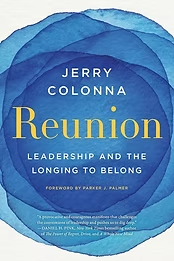
The book is called Reunion: Leadership and the Longing to Belong. In some ways, what I try to do is so many of my clients come to me, especially in the last few years, and say, “There are protests in the streets. Let’s pause for a moment. There are Nazis protesting at Disney World.” My father fought the Nazis. We’re living in a very distorted world. There’s polarization and dissension. The term I used in my book is separation. There is a separation that goes on. A broad turn to hold on to which a professor out of Berkeley called othering is this notion of systemic othering. We’re constantly putting people on the other side.
Reunion: Leadership and the Longing to Belong
I want to hear this even corporately about the extreme nature of what we call things. I was looking at my son’s talk about socialist and said, “Do you know what a socialist is? You might want to go look at the definition.” I’m not defending anybody because with the othering, name-calling, and stuff you share, I’m like, “Do we even have a hold of the language? Do you even know what you’re talking about at some level either?”
I do. Despite our efforts to say, “We’re a business. We’re not going to talk about these things,” the fact is everybody’s talking about these things. What I argue is that the root or the reason people are all talking about this is what they want. If you remember from my first book Reboot, I talked about how we’re motivated by three things which are love, safety, and belonging.

Reunion: Leadership and the Longing to Belong
In this case, what I’m saying is that what we’re all wishing for is a sense of belonging. We know who we belong to. What is our group? Where do we stand? I suggest that better humans make better leaders is true but not enough. There’s an opportunity to create a sense of belonging within the organization that does not mean equivalency and everybody’s in agreement.
You don’t need to agree. You need to align at some level. You and I are so much on the same page because of love, safety, and belonging, I talk a lot about Maslow. When we talked about survival and safety, I owe it to my employees as the leader, that they feel safe and are going to survive beyond a check. That’s my first social mission. I am 1,000% and I choose the word alignment. We don’t have to agree with everything.
Alignment implicit in that is mutual respect and a shared sense of values. It’s the reason I call it Reunion. I found this line after I started writing the book. There’s a brilliant poem by the late bell hooks and the first line of which is, “When angels speak of love, all things are union and reunion. There is no separation. There is no end to paradise.”
Where did that come from again?
Her poem is called When Angels Speak of Love. What I suggest is that there’s a reunion process that first starts with us reuniting with our sense of self. Second, understanding the stories of our ancestors. What did they go through? Who are they? Who were they? How does that relate to the world as it is now? I had ancestors who came through Ellis Island, for example. How different were they from the folks who were trying to immigrate to the United States on the Southern border? Our border policy is broken but they’re still people.
They are and that’s the rub. They still are people. It’s hard to argue that any of us didn’t come to that.
Can we find the empathy within to understand and lift a better way to respond to things like that or things like murders in the streets? Lance, I don’t mean to end on a down note but gun violence in the United States is the number one cause of death for children under the age of eighteen.
Gun violence in the United States is the number one cause of death for children under the age of 18.
You go back to love, safety, and belonging. The other side of that argument, and I’m not advocating for anything, I don’t share my political views, are we have a lack of safety plenty of times and there’s no love. This hit me. When you told me you have a book that was Reunion, I heard it as re-union. I’m hearing the word so much differently. We got a re-union somewhere. That’s profound. I’ve said profound more on this show many times in the last few years.
As we bring this down for a landing, I’m curious because there are some of the secrets with any entrepreneur and you’re leading your organization. You also have to sell your philosophy. If somebody else says, “Hey,” your whole team has to. If I get a referral to me like, “You can talk to Lance. He’s a great guy. He does good stuff. You got to talk to Jerry. He is a great guy,” somebody else sells your reputation.
I’m sure you get into spots where you’re getting introduced. Maybe somebody is skeptical a little bit. You’re selling ideas and a pathway to things. When I say selling, I don’t want to mean it but we all have to convince or persuade people of who we are or about. What’s your approach to get people to start to buy into your philosophy, path, or the journey you bring them on?
You’re the sales training expert so I’ll tell you what I do and you tell me if this is sales.
Expert is going a step too far.
This is a quick story. I once gave a talk. Before the talk, I was standing in line waiting to get some lemonade. There was a guy in front of me. I’m wearing a name badge and I leaned over to him. I said, “I hear this guy Jerry Colonna is boring.” He turns around, sees my name, and laughs. He says, “You sound just like that guy on the podcast.” I said, “That’s funny because I am that guy.” Here’s the thing. Everything that we talked about that you defined is profound, Lance. Check in with your heart. Do I believe what I said to be true?
Yeah.
For me, I wouldn’t even call it selling. I would call it me being the guy in that podcast. You heard me first on Tim Ferriss. I hope I still sound like the guy on Tim Ferriss.
Absolutely. I feel like we’re just talking.
My approach if you will is I land on my belly and trust being me. If you and I disagree, what I see is to find a place of agreement because I want to reunite with you.
It’s so well said. When you said that last piece, we all have to convince, persuade, and get people to look one way or the other and gain alignment, especially as leaders. Somebody taught me early on that if you take the word enthusiasm and go back to Latin and Greek, it’s either a gift from the Gods or God from within. If you took the last four letters of enthusiasm, they mean, “I am sold myself,” and maybe that’s where it comes from. If anything, you can hear in Jerry’s voice that he believes in what he does and in this pathway. Jerry, I can’t thank you enough for being on. What is your newest book again?
Reunion: Leadership and the Longing to Belong.
Is there any spot where you want to direct people to this?
Reunion.Reboot.io. That’s the book website.
I hope to stay connected with you. I appreciate your time. This has been wonderful. Thanks for being on the show.
You’re welcome.
Important Links
Reboot.io
How to Win Friends & Influence People
Reboot: Leadership and the Art of Growing Up
Reunion.Reboot.io
About Jerry Colonna

Leaders are increasingly challenged to understand how to respond to a polarized world. They are grappling with addressing division while embracing otherness. But to create welcoming environments in which each member feels recognized and comfortable being their whole selves at work, we must face our own need for belonging — one that is often unmet.
In REUNION: Leadership and the Longing to Belong (HarperBusiness; Nov. 14, 2023), executive coach Jerry Colonna urges leaders to consider the ways they have been complicit in, and benefitted from, conditions they say they’d like to change, and shows them how to create new systems of inclusion for everyone. In today’s complex and divisive world, it is only through radical self-inquiry, a concept explored in Colonna’s first book Reboot, that leaders can forge systemic belonging for everyone.