How to Get Your Team to Crush Their Sales Negotiations

Sales managers, here’s something I’ve noticed that may be frustrating you when your new salespeople start their sales negotiations.

When coaching new reps on their sales negotiations strategy, I’ve noticed many of them will start with a price reduction. Now, I’ve worked with inside sales reps performing transactional sales, and I’ve worked with outside salespeople making major deals. And I can say without reservation that offering a discount without fully understanding what the prospect wants will cheapen the sales process and your product offering. It smacks of the  high-pressure sales tactics that were prevalent back in the Mad Men era of sales. The unspoken message is, “We don’t care about you or your issues. We just want to move the product as quickly as possible”. And that is not the message you want your sales team delivering to your potential customers.

Here’s something else I observed in coaching these teams and in leading a company. The salespeople who can tie customer issues to unique benefits stick around longer.

Those salespeople that rely on price reductions as a working sales negotiation strategy have a higher churn rate.

An Example of How Price Reductions Fail in Sales Negotiations

Here’s an example from our director of technology of how price reductions can work against your salespeople during sales negotiations.

When I worked in the field as a system engineer for an enterprise storage company, my sales rep and I were involved in a deal that would have brought in over $300K for the company. After I brought all the pieces together, configured the system, created the proposal, and generated the price, she suggested that we include the standard discount as well.

Against my strongest arguments, she went ahead and stuck in the standard 10% discount. When we presented our proposal to the customer, the decision maker immediately “sharpened his pencil” and went to work. Here are the objections he had:

He dissected the proposal and said he wanted to take certain pieces out because he could get them cheaper elsewhere.

There were items in the configuration he wanted out because he felt he could do without them.

He said that he could shop around and get the same equipment at a lower cost.

He stalled and said he needed to run it by the owner of the company.

When the sales negotiations had ended, he had the price reduced below our cost because my sales rep folded at every counteroffer just to move the deal forward.

Naturally, our sales manager did not sign off on the discounts and we lost the deal along with the time we invested in the project.

Coach Your Team on What to Expect in Their Negotiation Process

Before your salespeople present their proposals, let them know that their prospects are going to ask for reductions, discounts, and preferred rates. And unless they’ve done a good job of differentiating their offering, their prospects will use the competition’s price against them.

Your salespeople should look for every opportunity to provide unique value that none of their competitors can provide. They should avoid commoditizing their solution by focusing on price reductions. Instead, have them use the knowledge gained in the diagnostic phase to highlight the prospect’s hot issues. Have them present how their solution is uniquely qualified to address those concerns.

When they take this approach, there’s less incentive to focus on price as the sole selling feature. And when their prospects do hit them with the  “I’m gonna check out the competition” argument in their sales negotiations, they’ll feel perfectly justified in answering, “I think you’ll find that no one can provide you with the tailored solution that we just discussed.”

Scarcity is one of Robert Cialdini’s principles of influence. When used with no forethought, the entire sales experience becomes overly manipulative. But when you get your salespeople to make their solution scarce by highlighting its uniqueness in their presentations, they begin to use scarcity strategically.  And what your prospects perceive as scarce will command a higher value and a higher price.

Let your team know that their prospects are  expecting a battle over price. Tell them to surprise their prospects instead by starting with points of agreement. Get them to show how their solution is uniquely tailored to address the stated needs of the prospect. By redirecting the prospects’ attention on their main issues, your sales team can make price a secondary consideration and turn their sales negotiations into solution discovery discussions.

Need More Ideas on Instilling Your Sales Reps With Better Negotiation Skills?

To learn more about how away-game selling can improve your team’s negotiation abilities, contact Tyson Group here.


Presentation Delivery Secrets to Better Support Your Salespeople

Looking for ways to boost the performance of your sales team?  Want to give your crew some easy wins? Here’s how you can coach your team in their sales presentation delivery that will have a big impact on their closing rates.

Now, I know that some of their deals will be sizable, requiring detailed supporting documents. However, what you must remember is that they are salespeople, not the head of state of some small country. The fate of a nation isn’t going to hang on their every word. There is definitely no need to have them reading their sales presentation from a written script.

I’ve delivered scores of speeches to groups around the country in addition to delivering hundreds of sales presentations to clients. I learned from those experiences that as a speaker, you need the awareness to read the audience and the flexibility to respond to them in real time. Your sales reps need that same awareness and flexibility to address any questions, issues, and challenges that their prospects might bring up. And like a speaker, they need to be free to respond to the needs of their audience, also known as their prospects. To do that, they need to be aware of how the audience is responding to their presentation in the moment. Delivering your presentation from a rigid script steals that flexibility away from them. And their prospects know this.

How Awareness During Presentation Delivery Saved a Deal

Back when I managed a crew selling professional development programs, one of my sales reps asked me if I could join a client meeting. Kelly was in the prescription phase and she had prepared an outstanding presentation for a department manager of a local company. She wanted me there to give her some feedback on her delivery.

When she sat down with the manager, she handed him a copy of the proposal and kept a copy for herself. She then proceeded to read through the proposal as her presentation. After about 2 minutes, the manager stopped her and said, “Don’t read me the proposal. I can do that on my own time. Talk to me about this deal.”

At first, Kelly was a little nervous. She was pushed out of her comfort zone. But when she found her footing, she realized that she knew everything about the company and about the deal she was proposing. At that point, she was able to have a real conversation with the department manager and addressed his concerns in real time.

Something your people have to get comfortable with is that their proposal is not their presentation. They need to remember that people buy from people. As such, they need to have a real conversation with their prospects. Don’t let them get comfortable reading their proposal the same way a speaker reads their slides, using it as a crutch in their presentation delivery.

Create A Framework For Your Sales Presentation

So, what’s the solution? What should they do to boost their presentation delivery? It’s actually quite simple. They need to do what professional speakers do. When you are coaching them through their presentation delivery, have them put their major talking points in an outline form. They can use note cards, PowerPoint slides, or maybe draft their sales proposal that way.

That outline serves as a framework for them to speak about their solution in a way where they can hit the highlights. That will free them to have a real conversation with their prospect. And puts them in a position where they can adjust in real time.

Remember, they’ve asked all the important questions during their diagnosis and they’ve done their research. They’ve put together a comprehensive solution. They are the experts. Help them leverage that power by condensing their proposal into the main points they want to hit. Then, help them use that framework to free up their attention in the presentation delivery and be aware of how their prospects are responding. This will allow them to interact freely with their prospects and build stronger relationships.

In summary, don’t let your salespeople read their proposal from a written script unless they really need the verbal precision. Instead, help your salespeople make better use of their proposal by outlining the main points and create an outline for their presentation delivery. Coach them to control the overall structure and flow of their presentation. Help them remain free to address their audience, making them relatable and approachable. And you will find them closing more deals.

Good Selling!

Need more ideas on designing and delivering your presentation? Get your copy of  Persuasive Sales Presentations here.

5 Essential Elements to Boost Your Coaching Process

As a sales leader, you will often find your people looking to you for wisdom, direction, and reassurance. Therefore, you need a coaching process that takes time to build up the people who make up your talent pool. We need to look beyond what they can do today and help them realize what’s possible tomorrow. When you invest in building your team members, you are investing in your organization’s future.

That’s why, as a sales leader, you can’t settle for just telling your team members what they should do. You need a process for coaching them to achievement.

Using a process gives you consistent results for all members of your team. And it gives you a framework to accommodate an individual’s unique personality through small adjustments.

With that in mind, here are 5 steps of a coaching process for building your individual team members.

1. Start Your Coaching Process By Identifying The Opportunity

The first step of the coaching process is to identify the opportunity. Typically, these opportunities arise from:

  • A colleague identifying an opportunity for improvement in another member of the sales team;
  • The sales person identifying an opportunity for himself or herself;
  • A customer, vendor, or other outsider identifying an opportunity to improve the relationship.
  • These different opportunities may stem from a variety of situations, including:
    • the sales rep taking on a new job or project that requires a new skill,
    • a new revelation identified during a team member’s formal performance review,
    • a post-mortem review of a challenge or mistake.

Regardless of the source, always assess the opportunity for coaching and improvement. And commit to a specific result to ensure the best outcome.

Remember, you can manage a process, but you coach and lead people.

2. Establish Desired Results

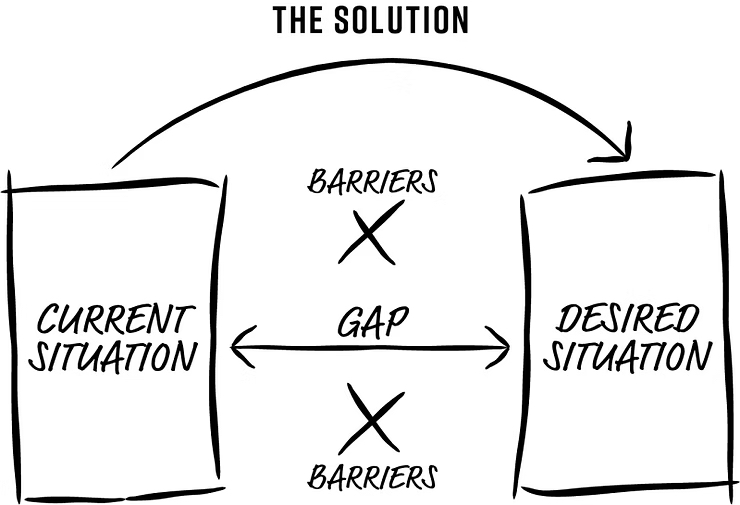
Once you have identified the opportunity, take time to pinpoint the results when your team member has bridged the gap.

When you establish the results, create a picture framed in the present tense, as if the team member has already reached the performance targets. Also, describe the gap between what the person is currently doing, what they should be doing, and associate an identifiable action with all steps in between. Throughout this process, always circle back to identify the targeted behavior and describe the desired results at the end of the process.

When you outline the process up front, your team member can envision well-defined results. And what they can envision they can successfully reach.

3. Provide Resources

In order for the coaching process to be successful, you must clear away obstructions and make the appropriate resources available. This includes time, money, equipment, training, knowledge, information, upper management buy-in, and support. Most importantly, your team member must commit to the process and want to achieve the results.

So ensure that the appropriate resources are in place and available. Over-promising and failing to deliver causes frustration for everyone involved. If you fail to give your people support, you can leave them with the impression that you set them up to fail, either intentionally or through ignorance. Either way, they won’t trust you in future dealings.

4. Implementation

Once you have the resources in place and you have explained and demonstrated the desired skill, it’s time for your team member to implement the plan.

In order for knowledge to develop into a skill, your people must take action and practice new behavior. But they must sharpen the behavior with the help of a coach who can ensure they are practicing the correct skill. Practice also allows the coach to identify strengths and opportunities for improvement while witnessing the skill in real time.

We must always frame our coaching to ensure that our team members will welcome our perspective. That way, they can learn from our observations as opposed to taking a defensive stance to our comments.

Remember, coaches act as mirrors, providing feedback on how the team member is performing.

5. End Your Coaching Process With Effective Follow Up

When following up on the results, remember that your goal is to effect a behavioral change. You want the team member to perform the new activities on their own. Coaching is a process. So include regular intervals to review the results.

When your team member has successfully reached the goal, take time to acknowledge and celebrate the accomplishment. If they haven’t yet reached the target, take the time to discuss the results they did achieve. Then determine if they need additional resources and what modifications they need to implement before moving forward.

Keep in mind, small acts of recognition throughout the process can have a large impact. So take time to recognize your team member throughout the coaching process. Let them know what they are doing right and acknowledge incremental improvements. Those small bits of recognition you provide will keep them on track and they will achieve the overall results faster.

Case Study: Sales Training Ideas That Impact Your Bottom Line

Greg Kish, Vice President Sales & Service with Legends at LA Stadium & Entertainment District at Hollywood Park

Q:  Tell us about the work you do with Legends

ALegends has been fortunate enough to partner on the most ambitious projects in the history of sports and entertainment. My role is being a steward of iconic brands to delivering on all revenue streams and ensure the financial success of the project. With that said, the most rewarding part is the opportunity to build a team of people and a culture that will have a lasting impact for our partners.

Q:   How long have you worked with Lance Tyson?

A: I’ve known Lance Tyson for 10-11 years, and my experience working with him has helped me to increase my confidence and excel in my career. I was first exposed to Lance at the age of 23 as a brand new sales person at the Dallas Cowboys, and I walked away from his training with a whole new way of looking at my job.  I later worked with him as a Manager at Levi’s Stadium in Santa Clara.  I’ve been through at least 10 trainings with Lance, on everything from sales, management, training, hiring and recruiting.

Q:  What makes Lance Tyson different from other sales trainers?

A:  Lance Tyson does a great job of providing impactful training.  He makes the material digestible and relatable.  He doesn’t just tell people, “Do as I say,” he actually takes the next step of saying, “Look what I can do with it.” Lance is the kind of guy who will pick up the phone on the spot and make a cold call to demonstrate to the team how to put his advice into action.  He puts people into situations that help them to assimilate what they’ve learned, either through a mnemonic device, or through relatable anecdotes that help to retain the info.  There are lots of nuances in Lance’s training that help people to adjust on-the-fly to what’s happening in a sales dialogue.

Q:  How has 1Huddle’s mobile gamification app helped to reinforce Tyson Group’s instructor-led sales training?

A:  We’ve found that people retain the information they learn in Tyson Group’s instructor-led training much better with the use of 1Huddle’s mobile app. 1Huddle helps to reinforce sales training, by capturing some of the goodness that Lance has to offer. Hearing Lance speak can be mesmerizing, and people always leave the training fired up. The 1Huddle app helps to recreate that experience after the fact – it’s like having the ability to hit a refresh button every time you need it.

Lance lives on through the 1Huddle app.  Not only does it serve as a record of what Lance said, it also helps to bottle his secret sauce by reminding us about some of the nuances and anecdotes, and allowing us to release them at the right time throughout the project.  We also use 1Huddle to help expedite the onboarding process, and to provide continuous learning and development throughout a project.

Q:  Can you offer a specific example?

A:  Part of Tyson Group’s sales training addresses how to handle objections.  Some sales reps are just intuitively good at handling objections, but for many others, it can be intimidating, so it helps to have a process in place. We created an “objections game” based on Lance’s model in the 1Huddle app.  It helps our reps practice techniques like extracting objections, clarifying issues, finding points of agreement, removing obstacles, and navigating around them.  The game makes it easy and fun, and it gives young sales reps the confidence to try out some of the techniques.  It reinforces the learning on a continual basis.

Another example is with regard to product knowledge. Tyson Group always asserts in training that sales reps need to be experts when it comes to their own product, and know everything about it, backward and forward.  They shouldn’t go into conversations with prospects if they are still struggling with product knowledge.  We’ve found that product training becomes way more effective when we reinforce it with 1Huddle’s mobile app.  The game makes learning product specifics fast and fun, and there’s also an element of healthy competition that appeals to our reps.

Q: Can you provide any success metrics to illustrate how Tyson Group and 1Huddle have helped improve campaign outcomes?

A:  Specific numbers are difficult to provide because we often don’t have a baseline to compare the results to.  Tyson Group is usually brought in at the beginning of a campaign, but sometimes it happens in the middle, and the project is already underway.  I can tell you that we’ve utilized Lance at every organization I’ve worked with, and that all of those organizations experience some uplift in sales.  Legends has hired him to train teams in Dallas, Santa Clara, Atlanta, Las Vegas, and more.  Lance sets the tone for the entire campaign – he makes people feel competent, confident, and ready.  Without his involvement, none of our campaigns would be as successful.

Q:  Can you offer any advice to others who want to get more out of their sales training?

A:  Lay the foundation by hiring a highly impactful trainer like Lance Tyson, then support it afterward with a technology platform that can be highly customized for each specific client or campaign.  Make sure that the training is absorbed and retained by providing a way for the sales reps to refresh their knowledge throughout the campaign.

5 Sales Closing Tips You Need To Win More Deals

The Myth of the Legendary Sales Closer

When we conduct our sales training, a mindset we like to adhere to is that there are no special skills in closing deals. In a different article, the Myth of the Perfect Closing Script, I conveyed my dismay at salespeople’s adherence to those relics. Those sales closing tips are a part of a different era, a different environment, and different customer culture.

Today, the reason we say there is no special skill in closing is because we believe that closing has more to do with the sales reps confidence and their ability to conduct a strategic sales process. It has nothing to do with their ability to follow a script to box a customer into a corner.

In all the sales assessments that we’ve done prior to conducting our training sessions, it’s been my observation that the ability to close is related to how an individual deals with a mentality of scarcity and abundance.  For instance, if the salesperson is operating out of a scarcity mentality, and they don’t have much in their sales pipeline, they’ll more likely accept a “maybe” from the prospect. And we know why “maybe” is the worst response you can get in sales. In fact, they will be opposed to challenging the prospect, vetting out objections, or clarifying objections. And they’ll definitely avoid using any language that will put the relationship at risk.  In short, they can’t afford to lose any opportunities.

On the other hand, when we find sales reps endowed with an abundance mentality, we see their pipeline might be three or five times their goal. These sales reps are more open to pushing a prospect, trying new techniques, and challenging their objections. They don’t lose sight of their people skills, but they are more assertive when dealing with buyers.

Sales is a Series of Yeses

Upon reviewing sales closing tips for today’s complex selling environment, here’s something we’ve observed. The best, most successful sales reps we’ve seen in action don’t treat the sales close as a separate tactic that’s attached at the end of the sales process as an afterthought. Instead, they treat the sales close as something that happens throughout the sales process. In fact, for them, selling is a series of positive commitments to a series of questions:

  1. “Can we meet?” “Yes. I’ll meet with you.”
  2. “Can I ask you a few questions?” “Yes, you can.”
  3. “May I present a possible solution?” “Yes, you can present something to me.”
  4. “Have I resolved all of your concerns and objections?” “Yes, you have.”
  5. “Are you ready to move forward?” “Yes, I’ll buy from you.”

A salesperson has about 5 necessary yeses when they are shepherding their prospect through the sales process

When we look at the sales process this way, we see there are 5 critical junctions where our salespeople must overcome some type of resistance, or “objections”.  If your salespeople understand where they are in the sales process and understand the type of objections they are facing, you can coach them on closing the sale better.

5 Sales Closing Tips That Will Help Your Salespeople Crush Their Competition

1. Know What a Buying Signal Is

The first in our sales closing tips is being able to identify a buying signal. Looking back at the collected sales wisdom of the past, we have ample descriptions of buying signals from the experts. Your prospect is sitting across from you: they are leaning forward, they look attentive, maybe they are rubbing their chin, perhaps they are asking clarifying questions… all of these are buying signals.

However, an alternate narrative might be they are confused, and they are trying to understand what you are saying. Or perhaps they have an itchy chin, or they need a shave.

Here’s the truth – you don’t know which explanation adequately reflects what you are seeing.

So, what’s a buying signal? Here’s the definition of a buying signal:

A buying signal is anything a buyer says or does that indicates some level of interest.

2. Know What a Warning Signal Is

Now, let’s flip the coin over and look at the other side of the previous closing tip. What’s a warning signal?

Again, let’s go back to those sales books and psychology books that made attempts at codifying body language for a description. Your prospect is sitting across from you with their arms crossed. They aren’t paying attention. Perhaps even looking at their phone. Of course, an alternate description would be that their arms are crossed becausey they are cold and trying to keep warm. Maybe they’re looking at their phone because they’ve got another meeting scheduled and your session is bumping into that time. Or perhaps they just got a call from home.

As before, we don’t know which description explains your observations. So again, we are left with defining a warning signal.

A warning signal is anything the buyer says or does that indicates disinterest at some level.

The question becomes, for both buying and warning signals: if you can see what they buyer does and you can hear what the buyer says, how do you know if they are interested or disinterested?  Here’s the answer: you test them by asking a trial close question. It might be something like, “how does this sound so far?”

This is like sticking a toothpick in a cupcake to determine if it’s done. If the toothpick comes out clean, then you are ready to move to the next phase. But if the toothpick comes out with stuff hanging on, then you have some more cooking to do.

3. Know How to Identify an Objection

The third item in our list of sales closing tips is to recognize an objection.

We have different categories of objections. For example, in my best-selling book, Selling is an Away Game, we talk more about your financial marketplace-driven objections. These objections are wrapped in cost, value, price, or budget.

Typically, what we think of as a sales objection comes after you’ve proposed or prescribed your solution to your prospect.  And objections, by their nature, reflect a certain level of interest in your solution.

An objection is anything the buyer says or does that indicates hesitation to move the sale forward.

4. Distinguish Your Inherent Objections

In a previous article, I mentioned an inherent objection. These are objections that occur because you didn’t do something well in the sales process.

I was recently with a group, the Baltimore Ravens, and we were discussing objections. Someone in the session said, “What if your prospect just doesn’t want to meet with you? Is that an objection?”

Well, this is what we call a put-off because the “objection” is more about you and your process and not about any solution you’ve offered.

Inherent objections mostly happen early in the sales process. They are often the result from your prospect being preoccupied, busy, distracted, or they simply don’t want to meet with you.  You’ll find a level of disinterest or disengagement with your prospect. These all occur without you offering any type of solution to their problem.

You need to be able to distinguish these inherent objections (the ones in which you have not yet gained the prospect’s trust) from your standard sales objections (the ones in which your prospect is interested in your offering and might move forward if you can resolve the issue at hand).

5. Have the Confidence to Ask for the Business

The last of our sales closing tips is to close the business once you’ve pitched a real solution. Following the sales process will get you most of the way to the close. However, you still must ask for the business.

As we’ve stated before, the close is not something that is forced at the end. When you walk your prospect through your sales process, the close flows naturally. But it won’t happen on its own. You still must ask the question. And so many sales reps miss this. They either try to force the close or they become shy as the end approaches, as if they’re afraid that they’ll scare off the prospect by asking for the business.

Most of the time, the simplest close is the best. I’ve seen sales reps try to over-complicate the close by cloaking it in some “mystical language” that only sales people can understand. Don’t get fancy. Just ask if they are ready to proceed.

Integrate These Sales Closing Tips Into Your Sales Process

I can’t emphasize this enough. If you have followed your process and addressed their concerns, then the close is merely the doorway to the next phase in the customer lifecycle. Simply ask them if they are ready to move forward. If the buyer says yes, then move forward. And if the buyer says no, then treat the response as an objection and find a way to overcome it. Either way, you’re moving forward. So stop hedging and start moving!

Need More Ideas on Assessing Your Salespeople and Getting Them Aligned With Your Market?

Learn more about aligning your sales team to your go-to market strategy and your market. Watch the on-demand webinar, Sales Leadership During Times of Uncertainty here.

5 Secrets to Motivate Your Salespeople

A question I often get in my consultation sessions is, “Bob’s not motivated. What’s the best way to motivate Bob to get out there and sell more?”

Well, I don’t know if there’s a best way to motivate sales people because I actually don’t believe motivation is an outward force. It’s not something you do to someone. Motivation comes from within the individual.

Now, there are some things you can do as a leader. In fact, there are some things you need to do as a leader to get your people off and running on all cylinders. But there is no special lightning-in-a-bottle that you can juice your whole team with to get them moving with gusto. In fact, there are probably some people in prison that are motivated by the same values as the sales reps on your team! Ultimately, we define motivation as coming from within the individual, not from something external to the person.

Now, from a sales leadership standpoint, I don’t believe your job is to motivate your people. I believe your job is to understand motivation to the point where you can help your people motivate themselves.

With that, here are 5 secrets of motivation to help you get your people performing at the next level.

1. Motivation is Different for Everyone Now, if I go back to what we just said, your job as a sales leader is to understand motivation and realize that it’s not a one size fits mosts. That would be like one of those hats you buy down in Disney World, where all the hats fit the same head. I think motivation is really personal. To understand that, you need to really consider the following example.

Two sales people have worked with me for multiple years and each motivates themselves in a different way. They are just completely opposite. One person on staff loves the public accolades, loves to win contests. That’s the way she rolls. But the other salesperson feels stuff like that is not as important to her. She competes against herself.

Now if I try to apply the same, cookbook, motivation techniques to each person the same way, that’s an example of one size fits most. And it doesn’t work.

That leads us to…

1. Knowing the Difference Between Motivation and Manipulation I don’t think most sales leaders understand the difference between motivation and manipulation In fact, most people think manipulation is a bad thing. Well, you have to know that there are several meanings to the word manipulation. If you look up the definition on Google or the Merriam Webster’s website, the first meaning will tell you that manipulation is to act in a skillful manner.

I think the number one thing you have to understand as a sales leader is that you are trying to manipulate a situation to achieve a result. You’re trying to, for instance, use a contest to extract the best from some of your people. Or maybe you give someone additional responsibility to make a member feel challenged. Or maybe you ultimately give members the clients that match their temperament.

Since motivation comes from within, it’s not something you can just turn on or off in an individual. But you can manipulate the environment to help your people perform their best. Don’t like the word manipulate? Try create. Or engineer. But know that you need to set up the environment where your people can flourish, grow, and feel compelled to succeed.

Now, if you’ve created the best environment for your people, there’s another piece you need to be aware of. And that is…

1. What you Say Matters The other thing you have to understand is that great pep talks aren’t going to get the job done. Sure you can use stories, anecdotes, and offer encouragement to move your team members. But none of these have a lasting effect. And they don’t work the same on all people.

Some people operate more like how Dr. Seuss describes them in his book, Oh, the Places You’ll Go. Dr. Seuss said, “You’ll succeed yes you will indeed, 98 and 3⁄4 percent guaranteed. Kid, you’ll move mountains be your name Buxbaum or Bixby or Bray. or Mordecai Ali Van Allen O’Shea, you’re off to Great Places! You’re off and away. Your mountain is waiting so get on your way.” So your people will understand they can do it.

But then there’s another section in the same book where Dr. Seuss says “You’ll play lonely games too. Games you can’t win because they’ll be against you.”

Words matter. But they won’t necessarily move all of the people all of the time. Some people need that occasional, verbal pat-on-the-back to keep them on track. Others see the actual accomplishment as the ultimate motivation and they “play those lonely games.”

If you’re going to be an effective sales leader, you gotta really understand that some people play those lonely, inner games. You have to have a clear understanding of what makes both types of people work and who is which type in your team.

That brings us to…

1. Fair is not Equal

I think the next thing sales leaders have to realize is that a lot of people come into sales jobs and think everyone should be treated equally. I think people need to be treated fairly, not necessarily equally. You have to remember, everyone has their own unique talents, styles, and experiences. So treating everyone equally will not have the effect you want. For example, let’s say I’m talking about inbound leads. If I’m gonna give out a lead, I’m not necessarily going to spread the wealth around to everybody. Leads or company referrals that come in are probably going to be given to my best people – the ones who are going to address the lead timely and have the best chance to close it.

It’s kinda like ice hockey. You give the ice time to the first liners, you expect more goals. You need to understand that.

Finally…

To Motivate Your People, Know Your People In your role as a leader, if you want to understand motivation, the key here is not to think that motivation is merely an external tactic you can quickly apply to your team. You need to get to know your people.

Everybody is motivated by different things. For example, some people reading this blog post might be very motivated by getting to the next level in their profession. So, maybe their motivation extends into actualization, the top level of Maslow’s Hierarchy of Needs. On the other hand, some of your people may be at the bottom of Maslow’s Hierarchy, living in survival mode. They need the job to survive.

Your role, as a sales leader, is to invest some time getting to understand the different narratives of the members on your team and assess their skills and talents. Only then can you strategically set the environment and your interactions accordingly to get the best out of them.

Back when we performed general leadership training, one of the pillars we reviewed constantly was an idea pulled from Jim Collins’ book, Good to Great. In that book, Collins stated that leaders of great companies were good at getting the right people on the bus, the wrong people off the bus, and the right people in the right seats. That’s the crux of motivating your team. Know your people’s temperament, skills, and abilities so that you can get them in the right position where they can be successful and motivate themselves.

You don’t want to be in a position where you are constantly pumping up your team. Instead, take time to know your people so you can set up the environment that will compel them to motivate themselves to be the best they can be.

Want More Ideas on Assessing Your Sales Reps and to Motivate Your Team?

To learn more about how away-game selling can give you a competitive edge, contact Tyson Group here.

5 Best Objection Busters You Need to Know

Here’s an interesting point I noticed in my trainings. When it comes to objections, salespeople do their best to avoid them. Overall, sales reps are usually looking to find things that are contribution-biased, things that are in their favor. They really hate to bring up objections. So most sales reps don’t even bother asking for objections. Instead, they hope to avoid them, not realizing that anything they’ve bought in their lives they initially objected to or compared and contrasted, weighing out reasons for buying vs reasons against buying.

So, we find many sales reps really don’t ask for objections. Instead, they try to make their case for all the reasons why someone would buy.

Coach your team to confidently resolve the objections they encounter. Download 7 Steps to Resolving Objections here.

With that in mind, here are 5 objection busters to get your head back in the game:

1. Ask for the Objection. To be good at negotiating or dealing with objections, ask the prospect, “What’s holding you back from doing this? What are the reasons you don’t want to do this vs the reasons that you do?” So, your first objection buster is to ask for the objection because that’s where the negotiation process starts. And you can’t start negotiating if you don’t get an objection first. You can’t bargain when you’re blind.

Having the right mentality is critical in negotiations and resolving objections. Ask yourself, do you have a scarcity mentality or an abundance mentality? Does someone have to lose for you to win? Or are there more than enough resources to go around because everybody wants something unique?

2. Clarify the Objection. Never start by responding directly to the objection. The first thing you want to do is clarify the objection. You do this by getting your prospect to define what they mean when they voice their objection, defend their objection, and explain it in the context of their situation.

Remember, their objection is like an iceberg – the complete meaning is submerged below the waterline and all you see is what they’ve given you. And like the Titanic, you can’t negotiate past an obstacle for which you don’t have complete visibility. Spend some time getting them to clarify their objection before trying to resolve it.

3. Use a Cushion. Use cushions to build rapport and trust. A cushion is a verbal phrase that acknowledges your prospect’s concerns or issues. It’s not an agreement or disagreement. If someone tells you your price is too high, saying something like, “Wow! That’s interesting. Investments are important.” goes a long way in building trust. Show your prospect that you listened to their issues and build rapport with them.

4. Use a Reversal. To reverse an objection, review the big picture with the prospect and help them understand the long-term impact your solution will have on their company. Sometimes, the objection your prospect states can be the very reason to move forward with the deal. Simply help them see their objection from a bigger perspective.

This is often the case when clients mention that your price is too high. If price is a concern, help your client compare the cost of your solution with the lifetime cost of not implementing it. Doing that will help them gain a better picture of the value you bring to the table.

Alternately, you can show the revenue generating potential of your solution. Then, compare that against the lost income potential for delaying implementation of your solution. The comparison will help motivate them to take action.

Typically, your prospect is looking at your offering through a limited lens. By expanding their perspective, you can help them see the reason they are holding back is the reason they should move forward.

5. Find Points of Agreement. Meet your prospect where they are by acknowledging their concerns as well as their desires. Remember, all great negotiation sessions begin with finding common ground. You aren’t building up for a fight. It’s a negotiation, not a confrontation. By finding and reviewing points of agreement, you establish a foundation to build the sale, and make the differences much easier to overcome.

Sometimes, if someone says, “I still don’t see the value” or they fall back to the price argument, finding points of agreement may reveal that there isn’t that much difference from your two points of view. So, when you have the objection, find points of agreement. That common ground will be the foundation on which you can turn big differences into smaller, resolvable ones.

Want Additional Ideas on Handling Objections?

To learn more about how away-game selling can give you a competitive edge, contact Tyson Group here.

How to Close Business in a Complex World: Bring It in for a Landing

This article on how to close business was originally posted on September 9, 2019 by Lance Tyson in SellingPower

For sales professionals, there is perhaps no single word more enshrouded in mystery than “closing.” If you check out the descriptions for sales jobs, you’ll find that companies are always looking to hire closers. There’s a kind of mythology built around closing that implies a rarefied skill possessed by only a few elite salespeople.

But, in reality, closers are like pixies or leprechauns – they don’t exist. That’s because there’s no special skill required to close business.

To Close More Sales, Prepare to Lose Sales

A few weeks ago, I was conducting sales training for a major NBA team. At the break, one of the sales reps approached me and asked for some advice on how to become a better closer. I asked him to clarify what he meant by that, and he said, “I want to close more sales.”

My response back to him was: “Are you also ready to lose more sales?” He gave me a look of pure confusion. So, we walked over to the door of the training room, which was standing wide open. I said, “See this door?” He nodded. I slammed the door shut as hard as I could. “Now it’s closed.”

My point was not to act like a jerk or make the sales rep feel small – I was simply trying to illustrate that the act of closing business means bringing the deal to its final conclusion. As long as that door stands open, the deal is still a possibility.

As human beings, we tend to accept maybes because they allow us to keep the door open indefinitely. But clinging to “maybe” actually prevents us from closing the deal.

Want your team to close business faster through powerful opening techniques? Click here and discover how Tyson Group has helped other sales teams make similar achievements.

The Toughest Question in Selling

If you want to close a deal, you have to be willing to ask the toughest question in sales – “Are you in or out?” And, before you do that, you have to accept the fact that you might not like the answer. Because sometimes this question serves as a catalyst to help us close business. In other cases, it means walking away so we can find another, more suitable prospect.

That’s why I believe there’s no specialized skill to closing. You simply have to decide whether you are ready and willing to shut the door.

Is the timing right to close? To find out, ask yourself these four questions. Have you:

  1. successfully established a rapport with the buyer?
  2. done your homework in evaluating and diagnosing the problem?
  3. offered a carefully considered prescription?
  4. had a frank dialogue about objections?

If your answers to these questions are “yes,” then the timing is probably right to close.

Successful sales reps need to be confident – or at least act confident. Don’t be willing to live in a world of perpetual maybes. It’s okay to let the cake sit on the table and cool down a bit, but at least be ready and willing to ask buyers if they want a slice.

A Few Strategies to Close Business

I travel about 50 times per year, and I still marvel at the fact that a 60-ton piece of steel tubing can thrust itself through the air at a speed of hundreds of miles per hour and manage to stay up. By contrast, landing makes sense to me. After all, we have gravity in our favor – inevitably, the plane will come down.

Closing business is like landing a plane – at its core, it’s simply the act of bringing the deal to its natural conclusion.

That said, there are a few strategies for closing, and it helps (before you hit the runway) to choose which one you want to work with:

1.The Direct Close.

I always prefer this approach, which can be summed up in the words of Nike: “Just do it.” In this variant, you just ask the question directly, “What are your thoughts on this – do you want to do it?” At the very worst, the answer may mean walking away from the deal. But, if you’ve taken the other previous steps in the sales process, chances are that it will move you more quickly toward a positive resolution and closure.

2. The Alternate Choice Close.

In cases where the direct close seems too presumptuous or risky, you might opt for the Alternate Choice Close, where you offer a couple of options, e.g., “Do you want to go with the three-year contract or the seven-year contract?”

3. The Minor Point Close.

If you encounter a situation where the buyer’s position is opaque and they claim to still be thinking about it, you could try the Minor Point Close. Ask how the buyer feels about a particular section of the contract (or some other minor point) to gauge interest and move the dialogue forward.

4. The Next Step Close.

When we are setting up a sales training at a hotel, often the sales rep will actually show us a room and ask us, “What are your thoughts on this?” They are literally helping us see beyond the close to the next step, which can be quite effective.

5. The Opportunity Close.

Often, organizations will pressure buyers by giving them a limited time frame – telling them that, if they act now, they will get a discount. Infomercials and timeshares are notorious for this type of close. Be careful with this one, however, because it’s the most manipulative kind of close, and it can backfire. But sometimes it works like a charm.

6. The Balancing Close.

In this approach, the sales rep helps buyers weigh the pros and cons in order to make an informed decision. There’s something to be said for taking the higher ground and helping someone go back through their consideration process to make sure they will be happy with the outcome. It helps build trust and can produce great results.

Remember: Closing is based on the momentum you have already established during the course of the flight. How quickly and smoothly you bring the deal in for a landing is just a matter of how well you direct it toward the runway.

Put Your Team on the Fast Track of How to Close Business in a Complex World

To learn more about how away-game selling can give you a competitive edge, contact Tyson Group here.

Tyson Group received honorable mention in SellingPower’s prestigious list of Top 20 Sales Training Companies in 2018 and 2019 for excellence in sales training.  Lance Tyson is a regular SellingPower blog contributor.

How to Turn Sales Objections into Opportunities

This article on sales objections was originally posted on July 8, 2019 by Lance Tyson in SellingPower

We’ve all had experiences when we felt a sale was going pretty well, and we felt the momentum gaining. Then, out of the blue, brake lights. Everything comes to a screeching halt. A prospect will suddenly tell you that your price is too high, or that they don’t have the budget, or that they aren’t sure your product or solution really has value.

The job of the sales professional is to take those sales objections and turn them into opportunities. Sometimes, the best outcomes stem from situations where you have to overcome the greatest obstacles.

Give your sales team a competitive advantage when resolving objections. Click here and discover how Tyson Group can help.

The Value of Proactive Dialogue

The other day I was driving down the highway when, all of a sudden, another car swerved in front of me and cut me off. My initial reaction was fear, because I had narrowly avoided a serious accident. Then, on the heels of a rush of adrenaline, I became angry at the other driver’s carelessness.

There were three levels to my reaction, with varying degrees of control:

1. React. I immediately hit the brakes and honked. This reaction was pure reflex, and I had very little control over it.

2. Respond. I considered whether I should find a safe place to pull over and regroup, or catch up to the other driver and flip him off. Ultimately, I chose not to do either, but considering these options required me to evaluate the situation and make some sort of decision, which offered me a bit more control.

3. Anticipate. I realized I had just experienced a near miss, and recognized I was still upset. Instead of responding to the other driver directly, I turned my thoughts toward figuring out how to avoid having this kind of experience again.  I then took some proactive, corrective action by lowering my speed and leaving over 30 feet between me and the vehicle in front of me. This option enabled me to exercise some influence over my experience, and afforded the greatest amount of control.

Salespeople are faced with the same levels of reaction and control every day. They can either choose to react reflexively when an objection comes up, or they can choose to take proactive control of the situation by having a dialogue that addresses the objection before the prospect raises it.

If, for example, the objection is about price, salespeople can either get blindsided and lose the sale, or they can start talking about value well before it turns into a problem.

How to Resolve Sales Objections

Salespeople often get caught in a trap of reactivity around objections. When this happens, they start throwing better deals at the buyer without truly understanding what the objection is about. This puts the salesperson into a reactionary stance, and turns the negotiating process into a game of Whack-a-Mole.

Cost. Value. Budget. Price. Those words mean very different things to different people. In every single sale, be it complex or simple, there comes a time when you’re going to have to get the prospect to define, explain, and defend how they are defining these terms.

Rather than being reactive, it’s better to have a candid, proactive dialogue about objections. This enables us to get a clear understanding of what the buyer is actually saying, rather than making incorrect assumptions.

To establish a dialogue, follow these four steps:

1. Extract the sales objections. Rather than hiding from potential obstacles, good salespeople lean directly into them. Ask the prospect, “What is your biggest concern about this deal?” or, “Is there anything that could derail this?” It’s important to have this dialogue early in the process so you can identify potential problems before they arise.

2. Clarify concerns/issues. Make sure you understand what the prospect is really saying. Don’t assume you know – instead, have the courage to ask the tough questions.

3. Find points of agreement. Identify common ground, and keep the end objective of the deal at top of mind.

4. Resolve the sales objections. You won’t be able to negotiate unless the objections get resolved, so find ways to either remove the obstacles or navigate around them, in order to move forward.

Train Your Sales Team to Resolve Objections With Precision

To learn more about how away-game selling can give you a competitive edge, contact Tyson Group here.

Tyson Group received honorable mention in SellingPower’s prestigious list of Top 20 Sales Training Companies in 2018 and 2019 for excellence in sales training.  Lance Tyson is a regular SellingPower blog contributor.

3 Steps to Gaining a Competitive Edge in Sales

This article was originally posted on May 1, 2019 by Lance Tyson in SellingPower

I recently made a visit to the orthopedic surgeon to check in on a shoulder issue. I didn’t walk in the door wanting to sign up for surgery.

After spending a bit of time in the waiting room, I was led back to another part of the office, where a nurse practitioner asked me a number of questions about my health, took notes on my weight, temperature, and blood pressure and interviewed me about my health history. They gathered lots of information about me in order to help the doctor accurately evaluate my condition.

And, all the while, I was evaluating them, too – on the thoroughness of their process.

An Analogy From the Medical Field to Gain a Competitive Edge in Sales

When the orthopedic surgeon came into the room, he took the time to connect with me personally. He immediately developed a rapport with me, just the way most good salespeople are able to do with their prospects. But, beyond that, he established his credibility by demonstrating his expertise and showing me that he had done this before. His questions were focused, and he was clearly asking them in order to understand me better rather than simply waiting to respond.

Help your team accurately diagnose their prospect’s challenges and hone their competitive edge. Click here and contact Tyson Group today.

When the doctor moved into a diagnosis, he had my full attention. His bedside manner, the questions he asked, and the level to which he appeared to be interested in listening to my answers all played a key role in how I reacted to his diagnosis and my willingness to accept that it was accurate. By the time he moved from the diagnosis into a prescription, I was already sold. I could have opted to get a second opinion or go down another path, but he had already gained my confidence through his open-ended questions and the way he skillfully guided the conversation.

Getting to the Right Selling Solution

In today’s complex selling environment, your team needs to make their buyers partners in getting to the right solution. But there’s a common misconception that sales is all about building relationships. In reality, though, sales is about three essential elements: establishing credibility, building rapport, and understanding the prospect’s needs. Relationships are a byproduct.

Everything salespeople say and do, including their appearance, adds or detracts from their credibility. Credibility yields trust and, in turn, improves rapport.

When good rapport is developed, the buyer feels confident sharing more information, which increases understanding. Only when those three elements are established in equal measure can your team achieve the right solution and gain a competitive edge in sales.

Four Things Your Team Must Do to Gain a Competitive Edge in Sales

That’s why the diagnosis step is critical when it comes to transforming indifference into interest in the buyer’s mind. The job of the salesperson is to:

  1. address the buyer’s doubts,
  2. establish credibility,
  3. ask the right questions to get an accurate read on the buyer’s situation, and
  4. adjust the diagnosis based on the buyer’s input and needs.

Once they get to the correct diagnosis, the next step is to prescribe a solution. The right solution to the wrong problem is worse than the wrong solution to the right problem, so it’s crucial to get the correct diagnosis. In sales we customize the solution as much as possible to the specific needs of the buyer. At this point, the buyer will have lots of questions: What is it? How does it work? Who says so, besides you? Can you prove it? To overcome  this doubt in the buyer’s mind, the your salespeople needs to give their buyers exactly the right amount of information, and no more, about the solution.

This is a step-by step process and takes place within a fluid world. It might be possible to cover both the diagnosis and prescription in one meeting, or even a conference call. On the other hand, in a more complex sale, it might take three or four meetings to connect, evaluate, and diagnose – leading to a prescriptive presentation. The pace and complexity of a sale are dictated by the marketplace and the product.

Regardless of the time involved or complexity of the sale, the process and steps remain the same. They can be adapted to suit any situation or customer, but the sequence remains constant.

Want to Know More About Honing Your Team’s Competitive Edge?

To learn more about how away-game selling can give your team a competitive edge in sales, contact Tyson Group here.

Tyson Group received honorable mention in SellingPower’s prestigious list of Top 20 Sales Training Companies in 2018 and 2019 for excellence in sales training.  Lance Tyson is a regular SellingPower blog contributor.