Structuring Projects Efficiently and Effectively with Jason Gonella

Success in sales is about more than closing deals; it’s about creating opportunities where none exist and empowering your team to shine. In this exciting episode, Lance Tyson sits down with Jason Gonella, the Senior Vice President of Ticket Sales at the XFL, for a deep dive into the world of project structuring and successful sales leadership. With a career spanning top sports organizations from the Eagles to the XFL, he walks us through the various models he has worked with and for creating success at all these different projects. From building a strong foundation and adapting to diverse markets to creating opportunities and defining success, Jason covers secrets and strategies in the world of ticket sales. Tune in now!

Listen to the podcast here

Structuring Projects Efficiently And Effectively With Jason Gonella: The SVP Of Ticket Sales At The XFL

I’m excited about this episode. I have Jason Gonella, the Senior Vice President of ticketing for the XFL, which is on the upstart here again. Jason and Len Komoroski are my two oldest relationships in pro sports and business. Jason, I’m so excited to have you on. Fellow Philly guy, you and I. It’s been a long time coming.

I’m excited to be here. It’s a great program. I’m so excited for you and all your success. Going back to those early days, it’s hard to believe I’m on with an Amazon and New York Times Bestselling Author. I’m proud of your success and to still be very close to you. I’m excited to continue to do some work with you.

No doubt. It’s funny. I’m thinking back to the work we did. I started being a trainer. You were starting in leadership but still selling with your team too. That’s where we were.

Things moved up neighborhood-wise. I was in Bensalem at a Holiday Inn.

That’s exactly where we were. We’re Bucks County.

In the end, we sent Phil Matalucci who went kicking and screaming through the program. In the end, it was like, “That was powerful. I enjoyed it. It was good.”

Phil might be one of the best salespeople in history.

He was such a good club seat guy. They made a can for him, filled it with sawdust, and said it was magic pixie dust. He sold 2,000 club seats for us in Philadelphia and we only had 8,000. He was an unreal guy.

Part of the audience is interesting. We have a lot of leaders and salespeople who read this. About 40% of the audience isn’t even in pro sports. A lot of my guests are pro sports execs. Describe what you do, to begin with. You’re with the XFL. Describe your role, how many people work with you, and maybe some challenges that you’re up against with that brand.

We’re going into our second season. When we started up, it’s unbelievable when you think about it. The Tuesday after Labor Day 2024 will be my one-year anniversary. I feel like in terms of all the stuff that we’ve done, I’ve been here for several years but it hasn’t even been a year yet.

This is like the second iteration of XFL.

It’s the third iteration. There was the WWE in both times. Vince McMahon’s company started with NBC back in 2001 or 2002. That was the He Hates Me version. That was launched as, “This is not your dad or your parent’s football league. Different ball, different rules. We’re not the NFL.” It was an early ’80s USFL. They replaced the Donald Trump character with Vince McMahon. They relaunched in 2019 to start to play in 2020. The league was off to some fairly substantial success in a few markets and then COVID hit. There were some other things going on with the WWE at that time. They bankrupted it.

The group that then owns it is Redbird. Dwayne Johnson “The Rock” ironically has a tremendous amount of history and has a lot to thank Vince McMahon and his group for his fame. Dwayne’s business partner is our chairwoman, Dany Garcia, who also is someone who’s been with Dwayne his entire career. They met back at college at the University of Miami. Unlike the first two versions of this, we’re attempting to make it as much of a collaboration with the NFL as possible. In addition, we’ll talk about ticket sales.

One of the things I’m proud of being a football guy and having worked in the NFL, someone who played football growing up, and is super passionate about the sport is we’ve got 60-some guys in NFL camps. We’ve got some tremendous former NFL executive guys I worked with at the Eagles. Marc Ross runs our football group. Doug Whaley is a former Bills. Russ Brandon is our CEO, who is someone that I was running around at NFL meetings with back in the late ’90s and early 2000s. Our relationship and his understanding of my career are why I’m here.

Would you categorize the brand as a disruptor brand almost? Is it viewed as that? Secondly, how hard has it been to go to market and sell over 2022 because you’re coming out of COVID? It was the third iteration of this. I’m not saying it is a disruptor brand.

When you asked that, my immediate reaction internally was, “No, we’re not a disruptor. We’re an alternative.” The way we reference ourselves is we’re a little bit in much of the success. We’ve got teams in their first year. I saw a tweet that the San Antonio Brahmas, one of our franchises, has ten guys. We only have 48 active roster guys and 10 of them are in NFL camps. This is all about being a league of opportunity on multiple fronts. It’s for the players, coaches, and referees. It’s a platform for people to get into what is the most glorious North American, if not the world of sports leagues. The NFL is it.

Ticket Sales: It’s a league of opportunity on multiple fronts. It’s obviously for the players, the coaches, the referees.

The shields at the end.

It’s nothing like it. It’s ironic. I sent somebody a note and was like, “Enjoy the start of college and the other pro leagues football season.” That’s not how we are though. The things we’re excited about are the NFL. Ironically, back to our heritage, the Eagles, I learned, were one of the groups that presented at the NFL rules meetings that our overtime and kickoff rule was interesting, which made me proud because I’ve got a tremendous heritage from the Eagles. I love the Eagles, Jeff, and everybody.

My point here is that we’re trying to be collaborative and alternative. We’re all about player safety and opportunity. Frankly, from a business perspective, both on the customer and the internal customer side, it’s about opportunity too. We’re giving people an opportunity and a platform to sell things. From a true customer standpoint, accessing things at a less expensive price would cost you to go to a normal sporting event.

I’m used to selling high-end premium stuff and that’s where I’ve made my name in driving contractually obligated income. I’m selling season tickets for 5 games that average $50 a game. At the Nets back in 1997, I was selling center-court seats for $55. There were $45 upper deck seats in ’98 when I got to the Eagles. This is different but we’re building brands. For me, the biggest challenge is we’re operating 8 different businesses in 8 different markets so our model is unique.

Let’s talk about that for a second. You have a sales team that’s coming across eight different teams. Each team suffers from the disease of uniqueness in each of their markets but some of it is the same. How many salespeople are reporting to you? What are you expecting from them? Is it situational awareness? Is it moving quickly? What does that look like from a coaching management standpoint?

From a structural standpoint, we started with the idea that we would have a director in each market and then a fairly balanced approach of six reps underneath the director in each of the markets. We would have seven people from a sales perspective that would drive the individual businesses in the market. For a variety of reasons, we staffed differently. We went a bit unbalanced. At our highest level, we had about 48 people. We went through a bit of a re-org around Memorial Day. Coming out of that, we went with what we call a centralized unbalanced approach.

I’m fortunate that I’ve got a guy who’s worked for me in the past, Matt Cords. He’s my right hand on the sales side. We were challenged to figure out how we could go forward with 50% of our headcount. We went with a fairly simple approach. We took our best people across the board. Our best people are the ones that can sell across all the platforms. We did a great job selling groups on a fairly tight window with a great job selling premium, which was ironic.

Seasons were a strong part of our business as well. We hit our ticket number for 2022 in those three categories. That was what we were in charge of. We took our best folks. We’ve got an unbalanced approach. I’ve got six people in San Antonio, which is a middle-market team for us. In our best market in DC, I only have two, a director and one seller.

We’re a remote organization generally but from a technology standpoint, we plug and play. St. Louis is our best market. When we need something done in St. Louis, we break up the days for the reps. Half the day, they’re in St. Louis calling and working. It’s funny. If you look at a commission report, it’s fairly balanced. Most of the activity in a heavy month where we’ve got renewals, which was what we did in July, is almost 50-50 by market, their home market, and then St. Louis.

It sounds like you’re at the bridge of the ship here and you’re saying, “We need to deploy resources here.” Every week, resources are based on where the need is. If you have to put labor in one place like San Antonio, which is one of your newer teams as opposed to the other, you’re deploying that way.

That’s exactly what it is. In sales, you tend to get into these military analogies but you go fight where the fight is and you move your troops accordingly.

You go fight where the fight is, and you move your troops accordingly.

That’s how you win. A full surge is a cover and move. At some level, everybody should know this because it’s decentralized leadership also. You have a remote organization so everybody needs to know what their role is. Everybody has to have their orders and get it done. You don’t have the time or space not to.

To that point, strategically, we hired people with the idea that we were going to have a fairly balanced approach. We may have over-hired experientially on some of these directors and we’re in this nimble gorilla warfare or whatever you want to call it. Some folks aren’t adapting well to that. “How do you expect me to do this? I only have two people.” We’re going to have to get adaptive and creative. This is reality.

You have to figure it out.

The Ukrainians haven’t asked the Russians how they want to fight the war or the Russians haven’t asked the Ukrainians how they want to fight. It’s like, “This is what we’ve been dealt with. We got to go deal with it.”

You’ve got to take the battlefield at a time.

Strategic can win.

No doubt. I bring that up because when I look at your career, and we were talking about this in the pregame a little bit, there are certain things you’ve been asked to do in your career. Let’s operate off that flexible and nimble. The first major project you get asked to be on, and you’ve referenced a couple of times is, for everybody to know, there are generations of stadiums. This new generation of stadiums, hospitality, and suites was launched through the Philadelphia Eagles when they built the link.

It went from a very multipurpose stadium to this brand new state-of-the-art and still at some level is with all this hospitality and these suites. You were brought on to that project as a person who was going to move arguably probably some of the most profitable revenue sources, which is the premium. Let’s talk about that experience a little bit. That’s where we enter Lance and Jason. In the late ’90s and early 2000s, that’s where we were.

I’m extremely biased but Lincoln Financial Field is private Camden yards of football. It’s the stadium that set the trend. I haven’t looked at my resume in a while but we still talk about things like at the time, it was the highest-grossing building in the league. We set standards for things like cost per seat. We had some extra time because of delays in construction and worked with arguably one of the best revenue maximization people in our business in history. If there was a hall of fame for revenue maximization, Len Komoroski would be in the first class of it.

Remember telling Jeffrey and Joe Banner like, “This is a better deal than selling this real estate for more on a unit basis because you’re getting more per seat.” One of the proudest moments in my career, and I tell this story all the time, was he had me walk the owner of one of the other teams that were getting more per unit on a 50-yard line. He let me say to the owner, “We got a better deal than you did because we’re only twelve suites.” That’s how you evaluate this stuff. That’s changed the model of the industry for a lot of people over time. That was a fun one.

It wouldn’t shortchange yourself. One thing that everybody has to realize is you’re going from the vet to this concept nobody ever saw before. You have these loyal fans. It’s not like you had to ask for prices. You had to create a sales system there with salespeople to do something that hadn’t been done at that point. In a marketplace like that, I wouldn’t criticize Philly but if you’re selling at Philly, you better prove what you have. There’s one thing to tell the truth and another thing to show the truth. Talk about that one.

We’ve talked about it a little bit. They’re living it in another building. You have to bring it and be ready in Philly. You’re not sneaking up on anybody. Philly is a different place. I remember when I first got there. I had worked at the New Jersey Nets before. My job there was to try to get senior-level people with the big companies in New Jersey to buy into this NBA franchise. It was hard to get meetings. The biggest thing was the chase.

Once we got a meeting, the selling was easy because it was the NBA, Michael Jordan, and the whole nine yards. You had a good franchise in New Jersey. In Philadelphia, I could get a meeting with anybody. I was the guy at the Eagles. “Sure. Come talk to me about your penthouse suite.” They knew exactly why I was coming and what I was going to do and pitch them. All they wanted to talk to me about was moving four seats that had been in their family the entire time.

When we got this opportunity that we had something new to sell and we were the game in town, the vet was interesting because you had the Phillies and the Eagles. The Phillies had the master position. It sounds odd but in these dual stadiums, baseball led the day because they had more games. It was ten games of football.

When we had our platform, we maximized it. With the way it was structured and I ran the PSL program as well, we had a very pedestrian number that we had to raise in PSLs but that was mandated by Mayor Ed Rendell, the famous populist mayor down there who used to have a sports radio show where you could treat the teams. I’ve never seen anything like it.

Long story short, we were capped. We could only raise so much money there but in premium, we could do whatever we wanted. Joe and Jeffrey, to their credit, didn’t want to be embarrassed by not selling everything. That is the right model. I’ve worked for some folks who want to maximize everything, have open inventory, churn, and all that stuff. I’ve done 2 projects and they’re the only 2 projects in NFL history that have sold every single PSL and premium unit. That was Minnesota and Philadelphia. To me, that’s what you do.

If you look at Philadelphia, they’re going into year 21 in the stadium. I have a friend here at the XFL who was looking for a suite. The guy selling the suites is a kid who used to work for me at the Home Depot Center. He’s like, “I’ve got one suite for $35,000 on New Year’s Eve.” That’s the only suite he has. Granted, the team is biased and great but that’s the right way to run your business. You’re taking orders at that point. That’s not what we were doing when I got to the vet.

At the vet, we were trying to keep our renewal rate so whatever we sold was additive. Not 100% but we were churning through. With that experience, we didn’t want to be in that business long-term. We wanted to be in a business where this thing was sold and it was continuing to grow with escalators and all that stuff. The Eagles are still in the top 8 or 7 in the league in revenue and their stadium is relatively old. You look at the team in Washington. Their stadium was built maybe 3 or 4 years earlier. They need a new stadium. The Eagles probably never need a new stadium in this ownership group.

Not with the way they run it. What’s coming out with your leadership is a lot of analysis. You always have known your numbers. That’s the way you’re even operating at the XFL. The decision is made on some of that analytics. How did you start to define your leadership and sales philosophy? What started to come out? In a nutshell, leadership learned about X sales there.

From a leadership perspective, what I like as a seller and a leader is depending on what we’re doing. We do this a little bit at the XFL but we don’t have that high-level premium that I’ve been responsible with my whole career but we do have reps. The ones that I feel are most successful are the ones that can identify opportunities but also know when they need to bring in the heavy guns to get the deals done.

In premium, our friend Phil was a great example. He could get into any office because he had sold all the floor seats for the Sixers but didn’t understand how to use our technology in our Prudential Center. He couldn’t turn the TV on or do anything but he would get the right people in the room and then make sure that he had the right people from our side. His closing rate was 100%. Every time he brought somebody in, they bought. These were people that we couldn’t talk to when we were at the vet.

From an overarching perspective, I want people to come up. From our perspective at the XFL, and this is very true, we want people who want the opportunity to grow their career, make a name for themselves in our business, and have a body of work that they can then leverage either to grow within our organization or somewhere else.

We want people to really want the opportunity to grow their careers, make a name for themselves in our business, and have a body of work that they can leverage either to grow within our organization or somewhere else.

Back to this league of opportunity, everywhere I’ve been, we’ve given people a window and an opportunity to make a name for themselves. The thing I’ve been proudest of and I look back on that I’m getting older is I’ve got guys that work for me at the Vikings that are running Michigan State properties and Virginia Tech properties. I brought Matt Cords back to run this with me. The other guy on the PSL side is running the Viking.

It’s that opportunity piece.

Yeah. We do things the right way.

You’re tapped shoulder then because of your success at the Eagles. You mentioned in the pre-game a controversial project to build the new stadium up in Hudson Yards. You’re there for two years. It didn’t get off the ground but talk about that for a second. At your point in your career, I remember you were in such a strategic place because there was nothing to sell. It was all strategy and positioning. What’d you learn there? That was an interesting turning point probably for you because you lifted everything.

We’re at the Jets. We were going to build what was going to be the Olympic stadium for the 2012 Olympics that ended up going to London. I’ve always been a kid who likes commanded work in the Olympics. To justify the expense, these stadiums cost $2, $3, $4 billion, or something like that to build the deck that the stadium was going to sit on. It’s pretty cool to go there. They built the center city of a major city on the Westside of Manhattan which was an empty train yard. Jay Cross and a couple of guys I work with have been involved in that with Steve Ross. It’s cool to see. I go there every once in a while to work and hang out because we’re mobile.

That project was incredible. From a revenue maximization perspective, it took what we did at the Eagles to try to do a cost-per-seat model. I was working with MBAs. We had a Chicago Bears model and a Philadelphia Eagles model. We had all these different things from a pricing perspective. We had run all sorts of charts and then the political process of it. That went on for a year. From there, we went into the planning process for what became the partnership that’s MetLife Stadium. That was also a very interesting process of sitting in these meetings with NFL ownership from two different teams, doing all sorts of study work and all that stuff. It was a pretty awesome process.

I didn’t realize that dovetailed in the MetLife.

I never sold anything there, frankly. I sold some stuff at the old Meadowlands at their Giant Stadium but I got an opportunity from there to go open Prudential Center with a small group. I took it and was able to get involved in naming rights and some other things. It was the right move for me.

In two spots though, arguably with what you did at Lincoln Financial and then with the Jets, not everybody gets to see the birth of this or the whole chessboard as opposed to just part of the chessboard. You’re looking and coming in through your career. You start getting the strategy around costs, profit, and structuring things the right way. You get a look into things that not a lot of people do. They usually get that information passed down. You’re looking at the whole dashboard at some level.

It was a lot of product building, frankly. “If we sell it this way, here’s what we can get. If we tweak it and sell it that way, here’s what we could get.” The PSL process at MetLife was intriguing. The two teams had very different mindsets on how to go about that. It’s an interesting marriage and they’ve tried it in LA with two teams. It’s interesting. It’s not easy. Things don’t always go like this.

No, especially when sometimes two missions are different too. No doubt.

That’s why single ownership works. I’m working in a single ownership model with eight teams. If you can figure it out, single ownership is the way to go.

It seems what you’re doing is closely related to MLS but not exactly.

Yeah, very much.

From there, that was your tribute. You then went West Coast after that.

It was a very quick dance. I was at the Prudential Center for fourteen months. The stadium was 2/3 built when I got there and all that stuff. I got the opportunity to meet Tim Leiweke through the guys I was working for at the Prudential Center, Gary Stevenson and Dean Jordan. Tim needed somebody to go run his premium business out at AEG. They were coming up on their renewals. Through a connection with Gary and a validation from Len, Tim was like, “This is the right guy.” We went out, had dinner, and had a couple of meetings.

At that point, that’s Staples Center. Now, it’s Crypto.com. This is L.A. Live even getting built.

It was a multi-venue. Technically, at the time, I had the purview of being their expert internally for AEG. Eventually, I ended up moving over to Todd Goldstein’s group and Global Partnerships. I was doing everything. I got there in early ’08. In September of ’08, the world ended financially with the market crash and everything, and then the job became interesting.

We had to resell 2/3 of the building. We had 115 suites that were up for renewal in a 150-suite building. We were looking down at the economy crashing. One of the proudest projects in my career was that time. I still have pictures of something we had docked up that we put No Vacancy under the Staples Center sign. We sold everything. We sold 40-some suites in 60 days when the rubber met the road at the end.

You had Home Depot Center where the Galaxy played too. You had both.

It was a weird year. In 2009, we sold 7 or 8 suites as the Galaxy were taking off. AEG is the most incredible sales company I’ve ever been involved with. It’s an unbelievable group. Todd Goldstein is one of the greatest sales leaders in the history of sales leadership. He can sell anything.

Arguably, in terms of sales company, they are unbelievable. It’s unreal.

If you need something sold, you call them. They can get it done.

There, you start honing and taking this. Like at XFL, you’re asked to do something quick. You’re able to move it. You see the strategy and you get involved in it. How does your leadership change being experienced with them that you’re West Coast? What changes with your sales philosophy?

Over time, it was a bit more of a transactional product. I also think the market was way different. You needed a different type of salesperson and better presenters or folks that if you didn’t have the opportunity there, you would have on the East Coast. It’s the “We’ll line it up and I’ll knock it down” approach. If you’re a rep in Los Angeles or Southern California and they can’t carry their water, you’re never going to get to that.

The person is done before you get there. Even transactionally, coming to visit is unbelievable. You needed “closers” that were a little better at it. The chase was a little less important about the front-end activity, I feel like. It was more about making sure your presentations were together. Not in so much like flipping a deck but someone was a little bit more advanced, which is probably the better way to say it.

Ticket Sales: The chase was a little less important than it was about the front end of the activity. It was more about making sure your presentations were together.

It’s interesting you say that. It’s more about the presentation, the front end, and more in Philadelphia.

LA for sure. New York is a little bit this way but I’ve never seen anything like LA. You have to know your stuff and be able to have a short attention span. These are folks who take lunches all the time and talk about multi-gazillion-dollar movie deals and TV deals. Everybody’s a movie star.

Know your audience and area. Where do you go from there? What are the next couple of moves?

After AEG, I started the Rose Bowl project which was an opportunity to get back into football. I did that for about a year plus.

Rose Bowl was going through a renovation. Also, you had to move a bunch of suites there.

We started that project and I’m proud of what we put together. I was very involved in the ideation. I met with the Rose Bowl three different times about helping them sell it with AEG. I got a call from a friend. We worked out and I was involved from a credibility perspective. I helped a young company get that work, which was neat. I went out on my own for a little while, started consulting for a company called Van Wagner, and was able to secure what became the U.S. Bank Stadium Project for Van Wagner Sports Entertainment. That was an incredible project where we hired 35 people to go into Minnesota. It’s never been anywhere like Minnesota.

It’s a different field. For everybody who’s reading, you are taking somebody in sales leadership and sales that have gone from arguably the most blue-collar city, Philly, up into New York. It goes cross country to two trips in LA and then goes flat straight up Midwest. You talk about the diversity of markets. Let’s face it. The presentation style and how you coach people is different. I remember in Minnesota, you had to torque it down a little bit. Meaning, we couldn’t be heavy elbow. If you have this Minnesota nice going on, everybody will meet with you.

I remember being in that sales center. Two guys were looking at a club and they worked for this company but they would use the tickets for the company themselves. They go, “We want the seats where they are.” I was with one of your sales guys and I finally said to them, “It sounds like you’re buying these seats for yourself. Don’t you get them through the company?” They said, “Yes.” I said, “You got to do what’s best for the whole company, not just your preferences.” It was one of those fire and ice clubs. I remember debating with them but you couldn’t go into it heavy-handed because they wouldn’t even buy from me if you were. It was weird.

All the LA slickness and presentation have to be way off. I brought a guy that worked for me of all things. John Bartley was with me in Philly. He was an amazing young kid. He went to the Rose Bowl because he had joined the Rose Bowl with the idea this other company was going to get to work. I knew he wanted to go back home. I gave him the keys and let him run the suite program.

Early on, I said to him, “John, we’re not selling Cadillacs here. Even though the suites are nice, we got to let people get comfortable and let them buy.” John got so good at it because he was from Iowa. I never closed more suites on a project. I told him, “You can do everything.” We closed so many suites in person that our folks with the client came over and said, “What’s going on?” I was like, “I don’t know.”

This is out of character so I sat in on two presentations. I was like, “There’s nothing illegitimate happening here. We built a good Prudential Center and we let that do the work. We then guide them to a decision they’re comfortable with and people love it. It was great. There was nothing. You came out and saw us a few times. There’s no better place to go to work for a great brand like The Vikings.” We ran the town. We were there for two years. It was unbelievable.

I had some of my best steak dinners there with you. I had good sushi when you were in LA at Takami, which I still go to. It’s still my spot. You, Molner, and I. It was Manny’s or something where you and I had some good stake there. I go back to this theme that I see arriving. In Philly, It’s the strategy, design, and developing product or the product strategy that manifests itself into how you sell it in this Prudential Center. You probably started to get done that in Minnesota. When you get to the Rose Bowl, you’re involved with designing that Prudential Center and walkthrough. In Minnesota, the same thing has to come to life.

For everybody reading not in pro sports, you’re looking at $500,000 to $1 million commitments over a period, maybe 5, 6, 8, or 9 years. With these seats or even the club seats, it’s the same thing. It’s your long-term commitment. They’re all sold B2B. The things people don’t have to have, they want to have. It’s not a need to. It’s nice to have. This whole design and strategy piece, and then getting salespeople to be able to do it, is what’s arriving for me. That’s what happened in Minnesota. In that project, you also were able to get involved and ended up doing the same thing with the Atlanta Braves.

We were able to secure some work. There’s also a common theme. A kid who telemarketed for me in Philadelphia ended up running that project for us and Evan Gitomer did an amazing job.

You have done a good job with raw talent or younger talent, and then bringing them up through in accord.

The deal there is all we did with Derek and the guys at the Braves, which is an amazing project. I probably went down there half a dozen times and was involved in the initial phases of it but I went to a game back in ’18. I was astonished with how much it was exactly what they created. It’s a whole little city in Cobb County, which is famous for everything going on with the 2020 presidential election. They made a little city in this pseudo rural. It’s in the middle of Atlanta but it’s not.

It’s an impressive project. We went in there and did the whole sales execution. Van Wagner Sports Entertainment got involved with the Rangers and in some other projects and stuff. We built a little business there that was cool to be a part of. It was a great group. They’ve gotten out of the space because it is competitive. Outsourcing selling is a weird thing. You have to stack your projects.

You got to know your cost. You’ve done that. You’ve built these SEAL teams or Delta force teams that go in it short-term. You got to get everybody committed to the mission. You have to be very mission-focused, which means you have to know your numbers and the strategy but you have to have the situational awareness or sensory acuity to change on the dime because you’re go-to-market. There might be some things you wouldn’t know. I challenge everybody. What worked in Philly, just because it’s an hour South doesn’t mean it’s going to work in New York, which doesn’t mean it’s going to work in LA, Atlanta, or Minnesota.

I always admire that about you. You’re digging and parachuting in. These are 24-month projects. You have had other roles that are long-term. Let’s say for the sake of time, you’re at the XFL maybe not selling the same thing but you are having to design. You have to understand XFL’s numbers and what ownership wants. You have to understand your competition but you have 8 markets instead of 1. For everybody reading, if you had to summarize your leadership and management in a nutshell, what would be the one-liner there? What would be the sentence that describes it?

Let people do their jobs but on the front end, one of our coaches in DC said, “Good culture is created by good people.” You have to have mission-focused people. We were talking about this before, how the sales determine who they bring in. I would rather bring in a high character, less-skilled person that we can adapt with some of the thinking and thought that has upside. Put good people in a position where they can do good things.

Do you believe salespeople are built or born?

It’s like athletes. You can’t teach speed.

We know that from our sons.

Unfortunately, my son broke his foot. He’s going to be even slower.

That sucks. I’m sorry.

My point there is there are certain intangibles that you can’t do so you have to come to the table with something and desire or want that you’re going to sacrifice. On top of that, you can teach. This is what I’ve been best at, taking good intended character people and putting them on a path to do great things. That’s the thing that makes me proud. We had a kid who used our LinkedIn sales navigator tool and get a sponsorship meeting.

Take good intended, high-character people and put them on a path to do great things.

I’m like, “This is what you should be doing for the company. I don’t even run sponsorship but this is great. We could use this in other markets.” It’s those kinds of moments. You know when you’ve got a good one that’s going to take you to the next point. That’s the key. Regarding the adaptability piece, what we were doing in 2022 is a little different than in 2023. With an unbalanced approach, we’ve got to have different folks with different skills. You have to be stronger in different areas.

One of the things that I think about when I think about you is sales is creating an opportunity where one did not exist. I’m going to bring this down for a landing here. If you had a sales song in your head, what song do you play all the time?

Fool in the Rain. That’s my favorite Led Zeppelin song. Although, I did become an immigrant song guy in Minnesota. I’ve heard that song about 6,000 times while walking through that Prudential Center.

I can think of that. I know exactly what you’re talking about. The second thing is if you had to gift a book besides mine, what would you gift?

Raving Fans by Ken Blanchard. He walks through three scenarios of how you create customers. One’s Nordstrom’s and one’s Trader Joe’s. He doesn’t call them out by name but it’s a one-minute manager. It’s 110 pages. You could probably read it in a night.
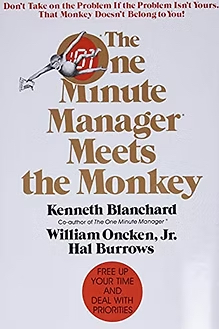
The One Minute Manager Meets the Monkey by Ken Blanchard

I have Raving Fans. It’s a great book. I haven’t thought about that.

I probably gave it to you.

Last thing. If you had to define success, what would it be?

At my stage in my life, having your family that wants you around.

I can appreciate that. Jason, as always, big hug even if we’re not having a beer or wings.

Sushi. Let’s go.

Thanks for being on. I love it. I can’t wait to get this episode out. I appreciate you.

I love you too. See you later.

Important Links

XFL Crypto.com Raving Fans

About Jason Gonella

Jason Gonella

Jason Gonella has over 30 years of experience in ticketing, premium seating, suites, and sponsorship sales, driving successful Contractually Obligated Income (COI) everywhere he has been. He has expertise in concept design, product innovation and creation, building renovation, planning, staff construction, management, and marketing and sales implementation, all with an eye for revenue maximization and sell-through.

Gonella is an industry leader and subject matter expert in these areas. He has a long and diverse track record of success in opening new buildings and reimagining existing properties and their product mix to sustain and generate new revenue streams across the United States. He also is the Senior Vice President of Ticketing at the XFL, the Spring Football currently heading into its second season in 2024. The XFL is a Red Bird Capital, Seven Bucks Productions, and Dany Garcia-owned entity. Jason manages the entire ticket sales and operational components with a staff of 40 people spread across the eight markets and leagues.

The league had a successful first season with record Season Tickets, Premium Seating, and Group ticket sales for a Spring Football League in North America. Gonella, prior to the XFL, started the consulting firm Quickstrike Partners (QSP), based in Bedminster, New Jersey. He was most recently the Vice President, of Premium Partnerships at Prudential Center and New Jersey Devils; a member of the HBSE family of companies prior to QuickStrike. He was the organization &’s lead for all Premium Seating sales. Prudential Centers Premium business grew by 30% YOY revenue and sold more inventory (new sales) in the two years Gonella was there than in the 4 years prior that HBSE owned the building combined. The building also embarked on an ambitious reimagination and renovation of its Premium Seating options called The Lofts in 2018 at Jason’s ideation and direction.

The Lofts project created 264 new seats in three distinct product categories – Loge Boxes, Loft Tables, and Loft Seats and both the Loge Boxes and Tables have sold out, generating multiple years of COI. Prior to joining Prudential Center, Gonella was Executive Vice President of Premium Sales and was a founding member of Oak View Group (OVG), working on revenue generation related to Premium Seats at the Forum in Los Angeles, the creation of the Arena Alliance, and the advent of the Stadium Concert series at Dodgers Stadium and Target Field. Prior to OVG, Gonella was also instrumental in the creation of the Premium Ticketing division at Van Wagner Sports and Entertainment (VWSE) in 2013.

He ran the group for the firm. There, he led the firm &’s acquisition of the Atlanta Braves Premium Ticketing project for SunTrust Park and the Personal Seat License (PSLs) and Premium/Suite Sales project for the Minnesota Vikings and U.S. Bank Stadium. His work there led to successful sales executions on both projects. At the time of his departure, the Vikings project was at 90% of Premium/Suite and 85% of PSL revenue and one year ahead of schedule related to the budget. US Bank Stadium is one of two; the other is Lincoln Financial The field sold out every PSL that was offered for sale.

The Braves had eclipsed a full year of budgeted seats and revenue in the first three months of sales. U.S. Bank Stadium opened completely sold-out in time for the 2016 NFL season and exceeded revenue goals in all areas Gonella managed, while the Braves moved into SunTrust Park for the 2017 season and have grown their revenue and yearly financial performance every year since it was opened. Previously, he held leadership roles at both Legends and AEG, where he served as the VP of Premium Seating sales at both firms, leading the effort to acquire the Rose Bowl Stadium assignment, and managing the project for Legends. While at AEG, he managed the STAPLES Center, Home Depot Center, and Nokia Theatre to record levels of success at each property. Including the sale and renewal of 98 Suites at STAPLES Center in the 2009-10 years following the economic collapse in the fall of 2008. Prior to his time at AEG, Gonella led the planning efforts for the New York Sports and Convention Center and the New Meadowlands Stadium (now MetLife Stadium) for the New York Jets.

He later managed the Prudential Center project in Newark for Wasserman Media Group (WMG) and OnSport on behalf of the ownership of the New Jersey Devils, leading efforts for a record-breaking naming rights sale and standards for NHL-only buildings in Suite revenue generation. From 1998-2004, Gonella managed the Stadium Builders License (SBLs), Suite, and Club Seat sales Campaigns for the successful opening of Lincoln Financial Field. As Vice President of Premium Sales, his team set NFL standards for cost per seat revenue in the Suite and Club Seats at the time of the opening of the venue in 2003.

Building Your Network with Lacy Ekert of the Cincinnati Bengals

Building your network is essential for personal and professional growth. But that network requires a relationship nurtured proactively. In this episode, Lacy Ekert, the Chief Partnership Officer of the Cincinnati Bengals in the NFL, tells us her story, where she grew up, up to her current position, and everything in between. Lacy brings insights on building your network effectively and how to build those relationships through her different opportunities throughout her career. Lacy loves to learn about other companies and people, which has helped her achieve marketing objectives and that has helped continue her career in partnerships. Get to hear Lacy’s strategic approach to fueling growth in the partnership space today!

Sign-up for Lance Tyson’s newsletter HERE.

Listen to the podcast here

Building Your Network With Lacy Ekert: The Chief Partnership Officer Of The Cincinnati Bengals

I’m excited about this episode because the person we’re going to talk to is Lacy Ekert, who is the Chief Partnership Officer for the Cincinnati Bengals. She and I go back for a couple of years. If we’ve done anything together, we’ve talked about some good deals together, from her time at Topgolf to some other things that she did. Lacy, welcome to the team because you’re newer with the Bengals. Tell everybody a little bit about yourself and your role now with the Bengals.

Thank you. It’s a pleasure to be here. Thanks for having me. I joined the Bengals Organization. I’m fresh in a new role. It’s a newly created position, Chief Partnership Officer. As you can imagine, there has been a lot of success at the Bengals Organization in the last couple of years since the Super Bowl run. There was a need in the organization to elevate and add some roles at the C-Suite level. How that looked for us is we had a CMO for a long time who’s still here, Brian Sells, who was overseeing all of the partnerships, marketing, and day-to-day activities.

He was promoted to Chief Business Officer. It opened up an opportunity to create a new role on the chief partnership officer’s side. I oversee everything from the partnership, revenue, development, sales, activation, account management, and also suites. We’re in a great position on that side. It’s about single-game suites, preparing, and getting everything ready for training camp, which we’re about to announce.

It’s your first training camp. This is good. Underneath you, you deal with a lot of revenue and you have a lot of staff reporting to you out of suites and the partnership business that you do, which are two very different sales at times, a complex sale or a more simplistic sale around a suite. What hat are you wearing the most in your first two months?

I’ve been lucky coming into an organization that has some great people already. We’re looking to staff up a little bit. We’ve increased our partnership revenue by about 116% over the last season. We have a lot of new partners and have created a lot of assets to sell that previously weren’t sold. How that impacted our business is first-ever stadium naming rights. We have a lot of gate sponsorships. We have a lot of jewel assets that have come on, which have elevated our seven-figure deals.

For us, our team is small and mighty. We’re looking to grow a little bit there, adding headcount and then also supporting our killer sales team. We have a group of guys here that have been here, some of them for many years and some are a few years. For me, it’s helping add value and bringing some of my market experience to them, help even grow revenue, and growing partnerships even more.

We’re going to dive into your career a little bit, but the last market you were in was New York City. You’re now in Cincinnati. You’re going from an East Coast mega-market to a mid-sized Midwest market. How’s that been for you?

I was born and raised in Montana. I’ve been fortunate in my career to live in a lot of different locations. People here think I’m crazy, but I’ve lived not only being born and raised in Montana. My first job out of college was at Nike. I was up in Beaverton, Oregon. I have been in Las Vegas for a number of years since ‘09.

You missed that championship.

I was bummed. I was there in ‘17 when the team was new. It was a great time. I’ve been in Chicago for a little while and New York. There’s a lot of business. There are a lot of companies that are based in Cincinnati and that have a big impact in the major leagues. You have Procter & Gamble here. You have PTG, Kroger, and big companies that have an impact nationwide. You’ll have a lot of business travel between New York and Cincinnati a lot.

There are 5 to 7 Fortune 500s headquartered down that way.

What I’m seeing is it’s a lot of like-minded and a lot of people in the industry enjoy hanging out together. We have a lot of fun. Consistently, every single week, I have been meeting with other teams, CCOs, and people in organizations that are wonderful people. I’d say that’s been my biggest transition there. I’ve been pleasantly surprised on a business front, similar to how it was in New York, being able to be in the mix and meeting.

There are many ad firms there too. There are many brand agencies down in Cincinnati, which is a product of Procter & Gamble anyway. That’s a hotspot. People don’t realize that about Cinci out of all the Midwest cities. You brought up before that you’ve been in a lot of places, as this show usually goes.

You have this responsibility now as the Chief Partnership Officer, a newly formed position in which you’re dealing with all the major partners and hospitality at some level at the stadium with the Bengals. You guys have grown a lot, over 100%, with a lot of new products. You’re making new relationships. How did you get here? What’s the start? You mentioned Montana. How do you get from Montana and a trip around the world? Where’d you go to school? What was that first role that you broke into things then?

I was born and raised in Great Falls, Montana. I went to school at the University of Montana, which, if you’re a sports fan, and even if you aren’t, you might’ve seen Montana State Brawl of the Wild featured on ESPN get college game day for the first time. That’ll make a connection to some of the readers out there. I attribute most of where I’ve been and where I’ve gone through relationships. I learned that very early on by going above and beyond. In college, I’m trying to figure out what would make me stand out and how could I get a job. I graduated back in 2008. That was right when the economy was starting to get tough for jobs.

I enrolled in a marketing field experience. Shout out to the University of Montana. They are forward-thinking with how they were positioning students to try to get people from Montana and at that university into major companies. They made an effort to connect alumni that had been very successful in their current roles back to the university students. They created what was called a marketing field experience class. I’ve since seen at my times at BSE Global in Brooklyn and MBA there are a lot more opportunities now to connect internships any time of the year. It used to be summer. That was your one opportunity. There’s spring, fall, fellowships and there’s so much more. I would encourage people to go and look out there for resources because there’s a lot more than there used to be.

I was blown away. Being able to connect with everybody via LinkedIn nowadays to make sure you’re getting your name out there and your accomplishments are very powerful. I was connected with a gentleman named Eric Sprunk, who was in a C-Suite position at Nike at the time and a University of Montana alum. We were able to go to Nike and spend a couple of days. It was for Business Management, Finance, and Marketing students. They had and set up with all those alumni different experiences for us. We went to Wieden+Kennedy, Nike, Pacific Crest Securities, and Microsoft. What we were able to do by having such strong leadership at the university is we were able to go out there and make our own connections.

From that, I was starting to get nervous that I would be, “With all these other people, I wanted to work for Nike. How was I going to get in?” I kept in touch with alumni that I had met there. I went out on spring break. All my other friends were going and doing their thing and having fun. I went out to Beaverton, Oregon, and asked for people to have fifteen minutes of coffee with me. It went a long way.

Connect with everybody via LinkedIn to ensure you’re getting your name and your accomplishments out there.

You took a spring break to meet with people. I loved that.

I felt like my mentality was if I waited until college graduation, that was too late. That’s when everybody was going to be thinking about it. I was thinking about it in January and February, “How was I going to be able to get ahead?” Jobs there are very difficult, especially if you’re not coming from D1 or you’re not a D1 athlete. It’s tough to get those connections. What has always been my mentality is to try to create authentic relationships and show that you care and work hard and that eventually will pay off. That’s how I’ve been able to move and been either recruited or recommended for a lot of the jobs that I’ve taken.

Try to create authentic relationships and show that you care and work hard.

What did you do at Nike? What was that role?

I was essentially on a contract there. I worked for Nike.net, where I was in an operations specialist role. It was a jack of all trades. Nike.net is a B2B retailer. If you’re a consumer, you’re buying on Nike.com. If you’re a retailer, B2B, you’re buying on Nike.net. We are working on a lot of outbound and marketing campaigns. This is going back to when there was a big salesforce and reps that would go and meet with the smaller retailers of the world and show them the product lines. That was when a lot was moving online and digitally. It was an interesting time in eCommerce.

How long were you there?

I was only there for about one year because I was on a contract.

It was a year contract. You convinced them off that network and you get there. What did you pick up from there? What was the big thing?

Nike was far ahead of every other company when I think back on how their philosophy was and work-life balance. They didn’t have 9:00 to 5:00. People were working on their own schedules. They were wearing shorts and athletic apparel to work. They had the Bo Jackson workout center. They had all these different places where they were doing CrossFit and everything was included and what they were able to do and how they treated employees. They were at the forefront of LGBTQ, which back then, a lot of companies weren’t even putting as part of support in their HR organization.

I learned that there are many great people and there are many people that you can learn from. There are thousands of people. I was happy to be there and happy to learn from each and every person I could. I tried to take on as many projects as possible so that I could learn eventually where I would want to go and what I would potentially want to do.

What was the move from there?

There were a couple of options to move to corporate retail or some others because you can move contracts or you can take other positions within it. At an entry level, there are different opportunities depending on what’s available at the time. I didn’t want to go that route. There were tons of layoffs at that time, unfortunately, because that was when the workforce was reduced by a huge percentage. Everybody was getting impacted in 2008.

That was that whole financial fallout.

I was passionate about nonprofits at the time. One of my family members had worked at the American Heart Association and she was running their LA market. She talked to me about why I wanted to do that and how exciting and great it was to be able to give back. I interviewed with American Heart. They had a couple of positions in different markets, but that’s how I ended up in Las Vegas. I was the Director of Business Development for the American Heart Association.

I did not know that about you. It’s cool because we have something in common. I didn’t work full-time for United Way, but for five years, I was in their business development program. I used to call on companies to do United Way campaigns. It was like a part-time thing that you would donate your time to, but I didn’t know you were a not-for-profit. That’s awesome.

It was great. If anybody is ever considering that, or if you were younger in your career and you’re trying to get into partnerships or you want to develop your skills, that’s a great way to do it. I’ll tell you why. You’re given the reigns to reach out to any organization at the time. For me, it was Southern Nevada. We had the Heart Walk, Go Red For Women Luncheon, and Heart Ball. Usually, there’s somebody that runs the market there. You’re building a board of directors. You’re asking CEOs, CMOs, and VPs of marketing to sit on your board and help you raise funds to advance lifesaving research for heart disease and stroke.

I met hundreds of people in southern Nevada. Some of those people are some of my best friends nowadays. They’re some of the people that I honestly ended up being sponsors of us at Topgolf and, down the road, relationships that I still value. It was many years ago. It’s good when you can see people come together at the community level because that’s what organizations are tasked with supporting and giving back to the community.

Working for a not-for-profit, is it that different from a sale or do you still approach it the same way? I know my thoughts are on it, but I love yours.

For me, there’s a level of authenticity. I am naturally that way. If you don’t feel like you’re a natural relationship builder or you struggle to be authentic in your sale or your approach, there’s more of a level of authenticity needed in that because people have a personal connection to the mission. A lot of times, people are supporting it because they know someone, they’re personally affected, or their organization is affected in some way. It’s a little bit of a different approach there.

Building Your Network: People have a personal connection to the mission. Often, people support it because of how they connect.

There’s some passion and authenticity there.

It’s more about a connection to the community than it is about specific marketing assets and specific, measurable ROI.

You’re still making the connection with people. You’re still trying to drive to some outcome. Is that where it’s more similar?

Yes.

How long did you do that?

I was there for about three years.

As your philosophy and strategies start to form, you come from Nike and you’re about relationships. You’re opportunistic, and I love the spring break story. You’re in that year contract, and then you’re like, “I’m going to leave sports and go to a nonprofit.” You take the opportunity. You start to grow that for three years. What there shapes your philosophy? What’s the 1 or 2 things?

The one thing I loved there and what propelled me into wanting to continue a job in partnerships was because I love to learn about companies and people. I love to be able to help where I could achieve their marketing objectives or to understand more. I learned so much about the healthcare industry and the automotive business. All the categories and partnerships for nonprofits are very similar to what’s in sports if you look at it.

There’s no doubt. You learned that you being able to gobble up knowledge, get a clear understanding of things and get that from there. You could probably start to see the strategy around things and how things come together. What’s the move from there? It’s interesting what I’m noticing. Very rarely the people I have on the show where many folks that are struggling with their career hell-bent on another move where I find successful people, they’re more opportunistic. They jump and dive into the opportunity. You can’t necessarily see in the distance, but the next move develops, like the one that you did from Nike to the American Heart Association. You talk to a relative and you’re like, “This is good for me.” What’s that next move?

When I was building out the board at American Heart, one of the board members was with CBS at the time in media and marketing. CBS has a couple of different arms to it. It’s mostly known probably by the CBS radio division and TV, which was building out digital at the time through Radio.com. They had an experiential arm. A gentleman on there, his name was Jerry, side-barred me and said, “I want to talk to you about this open role. It’s a director of integrated sales and marketing role. It is across our media and experiential divisions. We think you’d be great for it. Would you consider it?”

He recruited me because he said, “You’re going to be meeting with business leaders. I’ve seen you run boards with CEOs in town. You have great relationships. We could use someone like you that’s forward thinking that can help us grow our revenue. It was still a big pillar in the community because, as you know, media, news, and all of that locally is a big driver to connect back to the community.” I was recruited to come over there. I spent 4 years there and 3 in Las Vegas and then I moved to Chicago. I was promoted to Chicago to do the same thing, which in media, as we know, Chicago is a top three media market in the United States. Las Vegas is a smaller market. It’s not on the media side as big.

Media and news are big drivers to connect back to the community.

However, Las Vegas gets very large events. I could compare it to iHeartRadio. iHeartRadio Music Festival was the type of thing we were working on. We worked with Cosmopolitan and did SPF. This is going back a little bit, but Robin Thicke had Blurred Lines and all these big national promotions. I worked with the team there to make sure that Las Vegas was on the map as the destination. We rallied thousands of radio stations nationwide and did a massive focus on Las Vegas to do that. If you think about how long ago that was, it’s crazy.

Everybody thinks that happens now, but it didn’t used to be the case. In Chicago, that had a major news and sports edition, which I was looking for. We had the media rights to the Cubs, White Sox, and Bears.

You make the leap from Vegas to Chicago. Is it a promotion and responsibility or just the market is bigger?

Yes.

You are way more responsibility.

Promotion and responsibility, way bigger team, way bigger revenue targets, and then with the addition of news and sports. News radio and sports on its own have huge revenue projections with the base of listeners and viewers that they have out there.

Did you lead a team in Vegas, or was the move to Chicago a first-run leadership or were you on a team? I’m trying to follow there.

The way that it was structured was there were quite a few sales reps. In Vegas, there were 5 or 6. In Chicago, it was fifteen. My goal was I have a revenue bucket that I managed. It’s called non-traditional revenue. It wasn’t just radio or digital. It was everything collective. They would make dotted-line reports to me to sell sponsorships for big music festivals, events, and all sorts of different things. We had an arsenal of things that we could sell our business lines.

Inside your vertical, you’re managing and leading that process. The people that would sell into that is the dotted line. You would have to lead them and hold them accountable for whatever they were selling into that line. What was the spin on CBS? Do you say the 7, 3, and 4, like 3 in Vegas and 4 in Chicago? How long were you there?

It was four at CBS all in.

Now you have this whole other side of business acumen. Not only do you understand the partnership side and things that are way bigger revenue, fast-moving media, and a very big market. You’re in sports now because what you’re selling is now more affiliated with sports. You’re back in that move again.

What I learned in Chicago was it became more well-rounded when it became more to the media buying side. I became certified in selling all the new campaigns that were coming out. That was when podcasts were big at the time. That was a relatively new time for podcasts. I was looking to enhance my experience there across the digital and media landscape, understanding how agencies were buying, what they were buying, and the types of dollars that were being spent. I feel like being in that media market was beneficial for me. Also, making the connections that I did in the Chicago market.

When I first met you, I immediately saw how good you were with strategy. You and I going back and forth with that TCL deal at Topgolf, you are being able to see everything and work through some of your salespeople there. What business or sales skills did you develop between American Heart Association and CBS? What’s that big skill? No doubt, relationship building is your thing, but face-to-face, one-on-one, and in a group you’re selling, why do you have a lot of confidence in what you do? I’m interested to know what you say here.

At the time, I was still young coming into a lot of these meetings at a C-level. My biggest trait is I want to be the most confident person in the room. I want to understand and be passionate about what it is that I’m selling and what it is that I’m talking about. For me, I want to be the most confident when I come into a room and I’m having conversations. That confidence to me and how I build that up is that I know more than everybody else in the room about what I’m talking about or what I’m pitching.

I spend a lot of time researching before I pitch so that I can have effective questions and communication. That’s what I learned a lot from you, which is making the most out of the time and asking the right questions, how you can position people, and how you can negotiate. It changes the game when you’re talking to someone and you can get quicker to the point and get more out of those types of presentations and meetings. That’s where I’ve seen I’m a little different than others that I’ve been around.

Rate yourself here. I was coaching somebody with an MBA team. He didn’t do great in a presentation we were watching him on. He sees him. He came back and goes, “What is it?” I said, “One, you don’t have a presence. You’re just nonchalant”. Presence is confidence. If you want to be confident at times, act that way, but I also think doing research adds a tremendous of that. I said, “The presence and the confidence felt like you had less authority.” You want to have authority when you’re doing anything. There’s another side, and then there’s negotiation. To somebody that was in it with you, how would they rate you as a negotiator?

You can always be a better negotiator because you always have chips on the table. I’d say I’m a pretty good negotiator. If I had to rank it out of 10, maybe I’d be a 7. I think I always have room for improvement, but I also think you have to know what you’re negotiating against. That’s what I try to understand as a person. I try to do the best that I can. It’s been different in a virtual world to try to get a better read on people, and doing more negotiating digitally has been tougher.

You can always be a better negotiator because you always have chips on the table.

I’d rank you a little higher. Here’s why, and no smoke intended. I’ve yet to sense from you as long as I’ve known you and of various things, I’m not saying you don’t get emotional, but you don’t show your emotion, which if I was negotiating with you, I’d be doing something to see if you got pissed off or hot about something. It would be hard to poke the bear on that one with you because if it’s that poker face or that chest face, I’ve yet to hear you even get emotional.

I even think back to that one time when you had a salesperson. We don’t have to name the person here, but they were selling to that candy store in Vegas or that candy shop. You were frustrated with what did or didn’t happen there, but you didn’t show the frustration. I’m like, “She’d be hard to negotiate against,” because there were enough things that lined up with what you and I were talking about to be pissed off, and you weren’t. I’m like, “This is good.” you develop this confidence, this prep, and you want to leverage that. What’s that next move? You work for a very successful NFL team. What’s that next move? Where do you go? Is this Topgolf now? Is this when you start to arrive there?

This is Topgolf. At the time, my now husband was based primarily on the West Coast. I was personally looking to get for a move to get back. That was what triggered it. I loved working in Chicago. I made a lot of great friends that are lifelong friends and agencies like Intersport that I still work with to this day. I was looking for opportunities. People might say, “You have a very interesting background.” Having a diverse background is key to getting where you want to go faster. That has been one of the biggest things that has championed the speed of my career.

I had done a lot of research on a company called Topgolf. I knew somebody back in Las Vegas who was the GM of the property that was opening. At the time, a lot of people didn’t know about Topgolf or didn’t know what was happening. If you saw it from 30,000 feet and then you dug in, you would know that the goals and the objectives of that company were to be the fastest-growing sports entertainment company in the world. How they were going to get there was more about technology than it was about golf, which a lot of people didn’t know.

It was about all of the different business lines. If you looked at the acquisitions that were being made and the people that were being hired, it was essentially probably one of the best opportunities in sports I saw out there. It was a startup mentality, which was something I was very interested in being a part of at the time.

I remember when we started to work together, the big objection with all the teams at Topgolf and I used to laugh about this because I thought it was the best was, “You’re charging us NFL prices without the media? Who are you?” That was the objection. I remember when I heard, I go, “I better dig into this because I don’t know how you’re going to deal with that because that’s a good objection.” A lot of the sponsors you’re calling on didn’t understand. They maybe knew of Topgolf or didn’t, but it was this education in the beginning and the prices were high. I’m not knocking Topgolf charges what you can. They’re a good customer of mine, but I thought it was an interesting time then.

The Topgolf was about education because of how quickly that team was built. I was employee number four. We brought on to build an entire partnership division. At the time, there were only 15 venues in the United States and 3 in the UK.

It originates in the UK.

We joked that it was the oldest startup known because it was originally all the way back in 2000 that those venues were open in the UK. It wasn’t until Erik Anderson, who was the Chairman, brought the rights to Topgolf to the United States and started moving some things around, including the headquarters moved to Dallas. That was spearheading. They got an influx of private equity. It started in 2016, which is when I started there. It was the very beginning of what you’re seeing now. When I left, there were about 75 venues. It’s a powerhouse. I spent six years there. It was the best time in my career that I’ve ever had, working with some of the best and very motivated people from all over professional sports. You had the Mavericks, Star, and IMG Golf. There were many different people.

There were great teams and to watch that trajectory go. I didn’t realize you were there when there were only five. You saw all the growth.

Rodney Ferrell, who’s the VP started everything over there. Even a few years before that, he’s credited to bring the vision of, “You have all these venues now. I know how we can monetize and bring forth and use this media network,” if you think about how strategic that was to build out a media network to specifically build it the way that consumers engage and how you can have multiple touch points. Not only adding a layer to bring on the number one eSports golf game in the world, bringing on experiential tours to it, and bringing on a top racer. There are a lot of layers there that are exciting.

Building Your Network: Build out a media network to specifically build it, how consumers engage, and how you can have multiple touch points.

You started to build out some more of a West Coast team. That was important to you. What did you learn about there at Topgolf that started to form your leadership philosophy?

Topgolf was a tough sell. Not everybody has the ability to be that creative. Some of the deals that we worked on there took years to get clients on board and buy into what we had. Even at 50 or 60 venues at the time, we had more people coming to Topgolf than any of the professional sports leagues combined. We had Millennials and the sweet target for any advertiser that wants to bring about it. It was tough. We hired a lot of younger sellers. It was coaching them. A lot of them are remote.

When I was at Topgolf, I was fully remote living in Las Vegas but based out of Dallas and building the global flagship, which was internationally the focus of the company five years before its time. I have had people in Arizona and Dallas. I was reporting back to Dallas. I had people in LA. The most challenging part was to effectively manage remotely. When we would make trips to be together, it was trying to make the most out of those times. Whether it was doing training with you guys and making sure that we were making the connections and people felt part of the team was challenging.

Building Your Network: Ensuring we were making the connections and people felt part of the team can be challenging.

You were a forerunner to what happened in the pandemic because you guys already operated that way. You said something else that I thought was interesting around the coaching and training that you had to do. Our group does a lot in partnerships. We do stuff outside of sports. Especially, in the beginning, I felt that a Topgolf sale was very transactional. It always was more long-term. It wasn’t like you were trying to tie more things in with that education and people trying to understand what it was. I could be wrong in saying that, but I’m saying what it felt like. You always had the salespeople presenting to understand the business they were calling on so they could dovetail Topgolf into that brand. Am I accurate there? That’s what it always felt like to me.

It’s challenging to sell a partnership nationwide, but that touches 75 independent venues. That’s tough. Now when you look at sports teams, and here at the Bengals, we have one facility, that’s difficult. When you have 75 different decision-makers at the corporate level, at some point, your communication has to be good.

I’m sure there’s a lot of internal negotiation there, as much as anything. I bet that was a big internal and external negotiation. You’re there and then you have a shorter stint. I remember you and I talked and engaged in the conversation. I was like, “What’s the goal? Where are you going?” I don’t want to put words in your mouth with some of these bigger teams and 1 of the 4 leagues. You landed a big role at Brooklyn Sports Entertainment. You went back to a big city, back East. What did you learn at Brooklyn Sports Entertainment before you got here?

For people that try to make a jump, sometimes it’s interesting to see why and how you made that decision to move. I love working at Topgolf. It was an amazing time. For me, the time was right because back in 2020, we took the company public in a merger with Callaway. After the six years that we were there building, we finally made it. We achieved it. That was a huge piece of me that I was very proud of. I felt that there was more to learn and more to do for me professionally. The Brooklyn position was a title bump to VP of Partnership Development.

It was the opportunity to go to a media market, number one, to make contacts at the highest level at the biggest agencies. At the time, Brooklyn Nets were very big momentum. There’s a lot of opportunity at the Barclays Center to bring on partners. Also, the opportunity to work in the WNBA. The Liberty now plays there. It is a huge opportunity that I felt passionate about that I could learn and drive value. I don’t ever want to accept something if I don’t feel like I can deliver exceptional value to the organization based on my experience or my motivation to be there. The biggest thing that I learned there is it can be tough in those markets.

You’re working with people that are very sharp, that have been in the industry a long time, and who are going to challenge you. You need to know what you’re doing and how you’re positioning. Topgolf was in an area of its own. We weren’t competing against sports teams.

We might get some of that budget, but it was more of a national play. In New York, I’m competing against the Knicks and every single sports team there. To get the share of dollars in that market was tough. We were a challenger brand. We looked at it that way. We were trendy and edgy. We looked at everything the way that we thought, where we could stand out and how we could authentically connect with audiences. We did a great job there. We brought on some killer deals that were unique to Brooklyn.

You get the shot, the call, and the interview. You got a chance to go to the Shield. Now you’re looking at that and you’re like, “This is it.” You get the call for the big role. You probably prepared and went in very confident. I know you would, like a boss. When somebody asks me about you, “What is about Lacy?” I go, “She’s a boss.” “What do you mean?” “She’s just a boss.” I’m not a hardened flower guy. That’s my compliment. I’m sure you went in that way. There are two things as we bring this thing down for landing. For yourself, what are you most excited about? Flip it over. What are you most nervous about or where’s the gap for you, whether it’s nervousness, where you’re like, “This might be a little bit of a pothole for me?” Tell me about those two things.

I’m most excited about the future and the leadership of the organization. The ownership group is amazing. I report directly to them. I’ve seen the vision. It’s very motivating to see what they’re doing. A lot of it is going to stem. A lot of people are going to see it this season with what’s going on at the stadium and exciting projects. For me, that’s the biggest piece.

On the other side of it, what am I most nervous about? By nature, I want to win. I call it nervousness, but we’ve got some big lofty goals. Joe Burrow is an amazing guy. We’re behind him all the way. We have some big lofty goals as an organization. I’m going to stick it out and make sure that we get those. It’s motivation and fire every day to make sure that we’re working to be one of the best teams in the NFL.

Three questions I always ask. Everybody would want the answer to this. You’ve lived all over the place, from me watching Yellowstone and thinking about Montana to some of the major markets in the country. Big deal, whether it’s any of those markets. What’s that song playing in your head, whether it’s pump-up music or what’s the song for you?

Songs are tough for me because I like all genres of music, but for me, it’s Wayne Newton because we got our Golden Knight, who just won a cup. It’s Las Vegas.

If you had a niece or nephew or somebody you were close to one of their children, they were 7 or 8 years old, it doesn’t matter if it was a boy or girl and they say, “What’s it mean to be successful?” how would you tell them as a 7 or 8-year-old what success meant?

Success ultimately is being able to enjoy what you do not every day because not everybody enjoys it every day, but getting to enjoy what you do and being proud of what you do. That’s what success means to me.

Do you feel that way now?

I do. My nephew, Peyton, we’ve talked about this a lot. It’s his birthday. He rocked the Ja’Marr Chase Jerseys for his birthday. He was pumped.

Last question. Not everybody’s a reader, but if you had a gift one book to somebody and it would be your go-to book that you would gift, what would you gift?

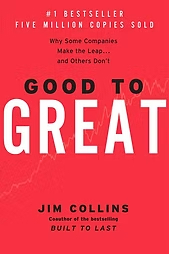
It is OG, but I still think Good To Great is the book because for me personally, I achieve and I strive for excellence in everything that we do. For me, even when we’re working with some of our people on the account team and we have clients coming in at the C-level in our stadium, I want that to be an excellent and great experience. Whatever that is that you do personally in your job day-to-day, I strive to make sure that people do it at a great level or an excellent level. That’s always one. Oldie goldie, but I still love it.

Good to Great: Why Some Companies Make the Leap and Others Don’t

It’s on my shelf. The bottom line is average is the enemy of great. I’m with you. I love that book. It’s a book I gift in the past. To pull this together, there are a couple of things I’ve taken out of it. You’re right about the non-traditional or diverse way you went about your success. You arrived. Each step of the way, you’ve prepped yourself for success. It was not a straight line. There’s nothing you did there that was a straight line. There are risks involved and I love that.

If you’re reading this, this is Lacy. This is how she talks. She’s her authentic self. I love the advice on confidence that prep. Too many people wing it. They don’t do their own prep. They let people prep for them, and that yields confidence. I fully expect you to say that you’re a good negotiator. I had never asked you that, but I know.

I can let people know that about me.

I’m pretty sure, at this point, anybody who followed your trajectory knows it’s not a secret anymore. The last thing is you didn’t chase the money or the title. It happened. Title and money follow, they don’t ever lead. That has gained you speed in your career because if you look at your career, you got some speed to success there and that a lot of people look at like, “How the heck did she get there?” Thank you so much for being on. I can’t wait to get this out. I appreciate you.

Thanks for having me. It is great to talk to you.

Important Links

Cincinnati Bengals Good To Great

About Lacy Ekert

Lacy, a Montana native, joined the Bengals from BSE Global, the parent company of Barclays Center and notable owner of the NBA Brooklyn Nets and WNBA New York Liberty. Prior to BSE Global, Lacy spent six years at Topgolf growing its holistic partnership strategy and client portfolio, along with time at CBS, the American Heart Association, and NIKE. Lacy brings excellent relationships with global brands and agencies, experience in the digital and media spaces, and a creative and strategic approach to prospect and package deals to continue fueling our growth in the partnership space. She oversees Bengal’s commercial business, including sponsorship sales, account management, activation, and premium teams.

Leveling Up Your Career with Joel Adams of the LA Clippers

Lance Tyson sits down with Joel Adams, the VP of Ticket Sales for the LA Clippers. This episode takes us through the hardships of his career progress and the unexpected challenges he has faced. He also talks about his journey in the professional sports industry. Lance and Joel have known each other for years, and Joel is mentioned in the first chapter of Lance’s bestselling book, Selling is an Away Game! If you want to climb the ladder in your industry and career, this is a great listen with lots of insight on hard work. Learn how to hold people accountable, face difficult conversations, become a refined leader, and find the right leadership style for yourself and others.

Sign-up for Lance Tyson’s newsletter HERE.

Listen to the podcast here

Leveling Up Through Your Career With Joel Adams: VP Of Ticket Sales For The LA Clippers

I am excited about this episode. The person we are talking to is my first book. There is a whole chapter dedicated to him in my book. At some level, you will learn through this. He is one of my heroes. I have known him for a lot of years. We have been in the trenches for a long time. Welcome, Joel Adams, Vice President of Ticket Sales for the LA Clippers. How are you doing, Joel?

Lance, thanks for having me.

We are going to get into one of my heroes in life. You are the Vice President of Ticket Sales, and you got some interesting business propositions going on. As Vice President of Ticket Sales, you guys are doing what? People who aren’t in sports want to know this. You are lifting the impossible. What are you up to?

Before I get to that, I was prepping a little bit for this show. I was looking down at the names of those who have been on the show. I must be getting to an end of a list. Those are some legendary names. You got Scott O’Neil, Stehlik, and a few others. Thanks for having me on. There is a huge opportunity challenge we are working on with the Clippers.

My role is two buckets. One is selling the premium suites and lofts for our new building. I will back up a second. Our new building is coming in 2024. After the next NBA season, I’m sure everyone probably says, “They are working on a new building, but it is the best arena in the sports.” The second bucket is all of the season ticket sales, club seats, court-side seats, and general admission seats. I’m filling up the building for not only Intuit Dome coming out but also for the last year here at Crypto.com arena.

Don’t let yourself off the hook either because there are a couple of things here if you are tuning in. We are coming out of COVID. Joel’s responsibility is to build a team to sell them in one of the most competitive markets in the country, into a marketplace that has already seen a couple of new stadiums, be it SoFi with the Rams and the Chargers, and LA FC is building a new stadium. There are other competitive teams and the Dodgers. He had to build a team, a sales approach, and a pipeline to sell this new arena. I don’t know whether you can disclose or not, but can you disclose how many millions that is or whatever you can? I won’t put you on the spot if you can’t. I can say it is a lot too.

Every market got its opportunities, challenges, and benefits. LA market got over 1,000 suites in it already, and some of the buildings like SoFi and Crypto. You got a couple of soccer and baseball teams. Finding our niche within the market for premium is the fun part we have been working through during COVID and post-COVID. The good part is we are going to have the best suites and premium experience out there in the market. When you are looking at dollars to spend. If you are a business, you are looking at us as a newer option led by Steve Ballmer. It is going to be the most tech-forward and the best place to watch a game.

This is important because you look at one of the most technologically advanced arenas that are going to come online. Whether you are in sports or not, one of the things Joel is talking about is his group sells one of the biggest revenue drivers in the stadium. It is a complex entertainment option. It is so B2B in a marketplace that is competitive, coming out of pretty strong COVID restrictions in the State of California. Joel, how many people are reporting to you in your leadership at the Clippers?

In total, it is anywhere between 40 and 50, depending on the time of year. You have a specialized team going after the suite sales. You have a little bit of a broader team going after the court side and club seats. You have an inside sales team who is able to pick up the rest. Within that, there is a layer of managers and directors that help as we are trying to do filling the building and sell all the seats.

It goes without saying a challenge in your job is while you are building this thing that is out in the future, 12, 24 months, or somewhere in between there. You also have to sell them to an existing building and service existing clients. It is almost like, over time, if you can imagine this in your mind, Joel is managing and leading this team in a moving train on one track. Over the period of the next 6 or 7 months, they are going to have to completely lift that train and get them on a new set of tracks they built. That takes a lot of balance and foresight. It is a tough thing to do.

We want to fill the dome up, and we are going to have a huge fan base there. We also want our fan base along for the ride for next season. We got a good team. We feel like we can compete at a high level. We want our fans to experience both.

Career Progress: Joel Adams wants to fill the Intuit Dome with their huge fan base and entice them to go along for the ride even on the next season.

As we are talking about this, and we are going to go backward because a lot of people are interested, how did you get to one of the biggest markets, leading a big team in a competitive situation? You are hands-on with your salespeople. What is different now versus how you sold? I bring that up because when I met you, you were a good salesperson yourself. You don’t like a lot of excuses and things like that. What is tougher or different about this market that your people are now as opposed to what you were when you started?

Early on, especially when I was in sales, it was a lot easier to get time, space, and meetings with people. Maybe people were less busy or less distracted. I was able to pitch people on why they should be a part of whatever building or team I was with. Now, as I talk to the sales team, it is hard. There are lots of distractions. Social media has become a bigger thing. Emails become less. From 8:00 AM every day, I get five emails from an AI bot. How do you separate yourself from that to eventually tell the story of why they should be a part of whatever you are selling? That is the number one challenge right now.

There are a lot of distractions in sales. Social media is becoming bigger and emails are getting less engaging. You should be able to tell people why they should be part of what you are selling.

It is hard to beat the frequency of an AI bot. You almost have to put the human back into it. Let’s talk about your trajectory because a lot of people are like, “How the hell did he get there?” Where did you come from? Where did you start? Where did you break in sales? What was your first job? I don’t even know that. I know where I met you, but what was that first breakthrough for you?

How far do you want to go back?

Bring it where you need to.

I was in college. I was interning for the Rancho Cucamonga Quakes. It was a Minor League baseball team here in Southern California. It was an operations internship. I was doing everything from pulling picnic tables to putting up the fast-pitch mannequin or whatever was needed. My boss was like, “I’m looking out for you in the business world of what you may do after you graduate. You might want to get some sales experience because it is important.” I’m like, “Sure.”

He puts me on their inside sales team. He gives me a phone book for selling the Quakes. You are talking about mini-plans and group tickets. I am bad at this mainly because I was given a phone book, and I cold-call people. It is hard. I immediately fail over and over again. I’m like, “I am not ever doing this. From a career standpoint, this is not me. I will go back to operation stuff and accomplishing stuff. This is hard.

I don’t even know if I told you this, but when I graduated, Target was hiring for a manager. It is their entry-level managers’ program. I’m like, “Solid base salary and benefits. This is why I went to college. This is it.” It is a long interview process. I get the job. Six weeks in, they let me go. My world is crushed.

Why did they let you go?

I like to think that it was their mistake, but it was probably my mistake because I was wearing red and khaki every day. I’m nothing against red and khaki. I probably wasn’t into the job. It showed if I had to guess. When they told me they were going to part ways, I was in shock. I was driving home. I immediately had this feeling that I had let many people down. My parents put so much into my education. My mom homeschooled me. They paid for my college. I was like, “What am I going to tell my friends and family?” I got past that, and I’m like, “I got to go back to something I’m passionate about.”

It is the cliché.

I was like, “If that is what I’m supposed to do, I will do it.” Sports sales kept coming back, “This is what you got to do to break into sports.” I went to an open interview with 100 people with San Diego Padres. For whatever reason, I didn’t think I performed well. Jonathan Tillman is the director at the time. Robert Davis was the inside sales manager. They hired me out of ten people. That is how I got my start. I can keep going if you want to.

That is where you and I met. I was with Justin Petkus. He was going through some emails. I said, “I sent you this email.” He goes, “Here is the dominator from the Padres.” Furby listened to the dominator. It was this killer process we put together to sell tickets. It was all built on different engagements. It was a marketing plan, a sales plan, and how to engage. He sent it over to me. That is when I started to engage with you. You got an inside sale.

Long story short, in most inside sales programs, if you are in pro sports, you understand. If you are not, what they do is they groom talent. It is almost like a Moneyball concept. They will take young talent and bring them into inside sales so you can get it done, and the performers get promoted. Thus, enter Lance and Joel together.

To be transparent, I was continuing from my Minor League days. I was bad at the beginning. For the first couple of months, it was rough. Robert Davis and Jonathan Tillman would tell you that. What I appreciated about this opportunity compared to the last one is that everyone cared. Everyone was like, “Let me give you some coaching here. Let me bring in a sales trainer like yourself. Let me help you get to where you want to go.” I’m like, “This is great. I could get better at this. I could work harder than everybody else. I will continue to get better, and they see it is a process.” At the time, it didn’t feel like that. It was like, “I got to get better.” After 7 or 8 months, I’m like, “I could get good at this.”

Is that the point where you start to turn the corner, where you start to be consistent and make it to the top of the board? The way I remember, and I talk about it in my book this way, you were always talked about in the top tier. You have flashes where you move right to the top, back out at 2, 3, or 4, and flash at the top. You are always, average-wise, being the top tier. Do I remember that accurately?

That’s absolutely right. I was never great at anything specific. Education-wise in school, I was always B or C. I got cut from my high school basketball team. I’m like, “I could get good at this. I could work hard. I could be at the top.” For some periods of time, I was at the top. I dropped a few slots here or there. I don’t know if you told this story before, but I was number four on the board once when you came for a training session. You called me over. You tell a story better than I do, but you got in my grill a little bit.

It is something like you should be ashamed of yourself and embarrassed. It was something assertive, but you and I had good currency. What I always remembered and know about you as a leader now is it’s like a Marine a little bit, in first, out last. There is never an argument for one thing. There wasn’t even that outworked you. One of the leaders said something. As I remember, the backchanneling conversation is Joel is getting outworked right now. I’m like, “That can’t happen because that is where he was going.”

Do you know Dan Rosenthal? He is with Elevate. You both have the calves in common. I remember the same conversation with Dan. He got where he was because he was willing to put more time in and work. Sometimes that is what it is about. Activity multiplied by selling skills is what gives a result. Activity is the only thing you can control. The skillset comes later. As you get better, you get more confidence. You start succeeding there. You are always one of their top guys. You got promoted at the Padres. What was that first promotion for you?

I was at the Padres for four and a half to five years. I went from inside sales team to account executive to inside sales manager for a short time.

You moved up in the sales ranks. You got a chance at management. That is when you got the call.

Things were changing in San Diego from an ownership level. The leaders that I was close to were going to the Miami Dolphins. I called some mentors. I was like, “Where are the best inside sales roles open now? I heard good things about the NBA. I want to try that out.”

Were you necessarily a basketball fan?

I’m a basketball fan.

Is it more because you are in the business?

I have always been a fan. I’m more of a baseball nerd. I have two fantasy baseball teams. I look at all the stats. Everyone was like, “Why do you like baseball?” I’m like, “I just love it.”

There is something about the never-ending game and never-ending clock. It is an interesting play, but you look at the NBA, not to interrupt.

I have been fortunate throughout my career. Some of the names I have already dropped guide me in the right direction. What to look for in the next opportunity that will eventually sustain long-term growth? People and culture. Look for that over money early on. I talked to the Cavs. Nic Barlage was there at the time. Eric Klaus and Brad Sims were there. They are good people. From a sports sales standpoint, I’m like, “This would be a great move for me to get out of my comfort zone.”

I was excited because I live in Ohio. I was like, “In town here, this is good.” What happened? This is an all-time classic story of all stories. It is classic. I still have your Cleveland number saved in my phone. You get the job. You are in a good spot, and they want you. This is great. What happens?

San Diego to Cleveland. I was like, “Yes, why not?” These are different cities. For the first couple of months, you are trying to build people’s trust. You are getting aware of your surroundings. I was trying to build the inside sales team. When we were 6 to 7 months in, we were starting to cook from a results standpoint. We were like, “We are going to add more people.”

LeBron James decided to come back. I like to take credit for selling out the building, but I will give that to LeBron. We sold out, as anyone would in that situation. You had less of a business opportunity from a career standpoint and from an inside sales manager’s perspective to keep growing. I got a couple of calls from Jason Green around that time. He was like, “We got a spot in Miami for you here with the Dolphins. We got a new project.”

LeBron left Miami, replaced you, and you went to Miami at the Heat, not the Dolphins.

He has been following me my whole career. Now he is in LA.

LeBron James is following you at some level. At this point, between San Diego and Miami, you have a year and a half or maybe two years of management and leadership experience.

Yes, that is fair.

If you could name two things that you were exceptional at sales or you felt, how that transferred over into your leadership philosophy? What was the move there?

Some of the skills that make you a top seller don’t translate. You learn that the hard way. It was like, “I will outwork everybody and do whatever is necessary.” That is good on some levels as a leader. You need that, especially at an early manager level. While we were on the Miami stage, I worked for Dave Baldwin at that point. He was pressing me like, “The devils are in the details” Everything you do from campaigns, people, and recruiting standpoint is so in my grill. I was uncomfortable with it because I had never quite had that.

All he was doing was telling me, “Everything needs to be the best. You need to hold people accountable this way. I will hold you accountable this way. You need to hold your team accountable this way.” It frustrated me a little bit, but I learned so much from that. If I didn’t have that, it would have been harder in my next role.

Would you say there was a refinement to your approach? Your philosophy is like, “I’m going to outwork everybody. I’m going to out-hustle everybody. I’m going to have my team reflect that.” Dave Baldwin is now the President of the Chicago Fire. Jason Green is the Chief Ticketing Officer. Baldwin coached you more on that refinement. Is that what you are saying?

He showed me going from an early manager to being a director, which is where my career was in Miami, and what that level-up looks like. Being in charge of a smaller and less experienced team to being in charge of a more experienced sales team leading through innovation, I had to have that. How to have difficult conversations? How to challenge people? I needed that.

I was a little soft as a leader early on. I relied too much on the connection piece, and not enough on holding people accountable. I learned from you as a salesperson. This is something that didn’t translate like the challenger sales model. If you want to be a challenger, you want to ask questions and create friction almost to make sure you get to where you want to go. It was harder for me to do that naturally. I was able to do it with customers all the time. It is harder to do it with people that I worked with every day, and that I was close to.

Career Progress: With a challenger sales model, a leader asks tough questions and creates frictions to make sure they will get where they want to go.

I always felt that you were fierce at holding yourself accountable. It is an interesting concept. You still are. You are tough on yourself. You expect a lot. I always felt that as a younger person. It doesn’t come off sometimes. Maybe it is the opposite. Sometimes I hear it from leaders all the time. It comes off on how they start the lead to refine that. Does that refinement start to help you be an executive and a leader?

Yeah. Jeremy Walls said this all the time in Miami. I’m going to butcher it a little bit. There are two extremes on the leadership spectrum. There is the hardcore leader that is always in your face, always holding you accountable, and always intense. That is one style. On the other extreme, you have the person who never tells you what you need to hear, who you like, and who you connect with.

How do you find the middle ground where people like working for you, and you connect with them, and care about them? If you do care about them, you also want to hold them accountable and show them what they are not doing right. At the next job or the current job, they can level up. I always thought about that a lot.

An effective leader genuinely cares about their team and holds them accountable in everything they do.

It is the difference between being liked and respected. That is what Jeremy was saying there. While you were in Miami, you had a little bit of a hiccup. It didn’t lay out like you wanted to in Cleveland. You had to work. You had to hustle your way in San Diego. You had to work your way to the top, but you hit a massive obstacle. This ties back to my hero comment. Explain to bring through everybody what you start to go through in Miami. What happened health-wise to you? This is important to your story and brand.

It has become a big part of my story and something I always look back to. In 2016, I was a couple of years into Miami at that point. I was having trouble hearing in my right ear. A bunch of the leaders in Miami would go to lunch all the time and make fun of me. They were like, “What is wrong with you?” I don’t go to the doctor. I don’t get checked out. I had to get to the point where it was bad before I went to the doctor. I’m like, “There is something wrong with my hearing.” The doctor was like, “You are 30 years old. Your ear looks fine, but let me take an MRI.” I’m like, “Okay.”

I get the call like, “I need to see you now.” I’m like, “This has never happened to me before.”

I go in, and they show me a five-centimeter tennis ball. It is almost a brain tumor that I have that is causing my hearing to slip. When you hear the word brain tumor, you think the worst. You think, “What is that? What is that going to do? Am I going to die?” You start going into the lowest of thoughts. They were like, “We are going to be able to have surgery on it. We’re going to be able to take it out. It is not cancer. You are fine there. You are going to lose hearing in your right ear, but you are going to be fine.”

After a little bit of freaking out for a couple of days, we get to that point. We get set up for surgery. We are on the path. Through the prep for surgery, they check your heart and make sure it is all good for going under. That is when they found cancer, Hodgkin’s lymphoma, and not related. I already had the bad news about a tumor in my brain. I’m like, “It is not great, but I could get past it.” The cancer part was another thing that dropped.

Where did they find the cancer at?

They found it in the chest. Luckily, they found it early. It hadn’t spread much at that point. The doctors were like, “We’ll put the brain surgery on hold. Let’s do chemo.” I did chemoradiation for a couple of months. I was fortunate to have great healthcare support from everyone at work personally at that time. I was able to get past it, and I was cancer free. They are like, “You should wait a few months to take the tumor out” I’m like, “No, I want to do this now.” I had to wait a couple of weeks, and I had surgery. It was a fourteen-hour surgery. I had a good outcome. I did lose my hearing, but that was it. For a couple of months, I was in rough shape from a recovery standpoint. You probably saw me during recovery.

I have a distinct memory of that after all this. I recall somebody saying to me, and this could be wrong, that the surgery was supposed to be long and maybe took you this long. The recovery was supposed to be this long, and it was Joel’s order. We were doing training with your team in a visitor’s locker room or one of the locker rooms because there was no space. It was under some construction.

You looked at me and you go, “How do I look?” I go, “You look great.” You said something to the effect, “Can you tell?” At that time, you were struggling on your right side a little bit. You showed me that it was maybe drooping a little bit. It was tough to talk and hear. It is not drooping. I’m trying to use a word to describe it to the people who are tuning in. We were going hard and I go, “I got this. We are fine.” You are like, “I got to be here for my people.” You weren’t trying to be a hero. You were being Joel. You were there. You are plugged in like normal. I was like, “Take it easy. We are good.” I babied you a little bit to piss you off.

With that memory of everything, it was hard for me to believe at the time. I knew everything that was going on. I was plugged into it. You were there. I was surprised to see you there that day. I remember Jason and everybody plugged in. Dave plugged me in. He was like, “He is back.” Ashley is telling me the same things. There is another thing that happened. Ashley, kick me if I say this wrong, but this is how I remember the story. You told me you were dating Ashley at the time. You guys were dating for a little bit, but not uberly long.

We had known each other for a long time and dated before. We got back together within that last year.

That was the year you found everything out?

She moved to Miami. We were officially dating. If you could imagine starting dating somebody and this happening to them. Can you believe it?

You knew it was her because she is your caretaker. She took care of you.

I quickly asked her to marry me right after.

I think not putting that into the story because it is a human story. It wouldn’t tell the story like you needed to because you told me. Ashley was like, “What the hell did I get myself into?”

She was there every step of the way for you, which is a wonderful testament to who she is.

You got this career. You have to bust your ass. Your whole story is about that. You are a student. You always want to be coached and learn. You have never claimed the smartest person in the room, nor do you act that way, which is the mark of a true professional. You are a straight shooter. What did you learn about yourself going through that you didn’t know at all? Did you have fear? Was there something there? Was there another gear? I think you have a lot of gears already. You had them.

Maybe I knew them before. Maybe it became more clear through the process. Who knows? My perspective on life changes, which is easy to say after something like that happens. What is important to you? The things I used to stress out about, I don’t stress out about anymore.

Give me an example. That is cliché. People say stuff like that all the time.

My brain was conditioned to try to have the best results, bring the best campaigns, and do the best I could. Part of that is good because it strives to make the best you can professionally, but some of it is not good because you stress yourself out. You have a lot of anxiety about things I didn’t necessarily know. When you have a health scare, it is like, “I don’t have the health now.” Those things don’t matter at all to me at that time. Now moving forward, not that those things don’t matter at all, because they do, but putting it in the right perspective to go, “I have my family and friends.” That is the priority versus work and going through that.

Career Progress: When you get sick, you get a new perspective in life. You will realize that career and money are less important than family and friends.

It has given you the perspective that we are stressed. I look at you now. I know we have had a lot of intense business conversations in the last several months over what is in front of the organization between you, Jason, objectives, the organization, and coming out of COVID. How has that affected your leadership? Are you able the prioritize things right away? Being up against a little bit, I know you know what is important, but I don’t sense you getting stressed at the little things like that. Do you think it is continued to carry itself?

I would be lying if I forgot sometimes and got in the same headspace. I still fight that. From a leadership standpoint, it created more empathy. It is something I wasn’t great at before, like seeing other people’s situations and understanding where they are coming from. I had rocked my life to this point. It has all worked out. I have been fortunate from an education-professional standpoint. I hit a major roadblock. As a leader, when I see other people hit major roadblocks, it is more real to me. I was like, “That is the priority. You got to take that head-on.” Before, I would have gone, “That sucks, but I still need you.” It is the empathy piece that I find more now than I did before.

From there, you moved from Miami over that hurdle and a lot of people you were close to. You got an opportunity to get back home or back to California. That thus starts the journey with the Clippers of rebuilding their sales and getting to a point where the organization’s positioned itself to build a new stadium, and you sell into it. Talk about that transition for a minute.

That was a tough one. There were a lot of people in Miami that I was close to. We had a great thing going. There was no income tax in Miami. Ashley and I started to build a life there, and we enjoyed it. Jason got the VP job. He is from California. I’m from the LA area. We have been to a few different spots together. He asked me to come with him. The Clippers were going through an interesting time where they were transitioning from the Lob City, Blake Griffin, Chris Paul era to maybe a lower demand situation for the Paul George and Kawhi stuff.

It was an opportunity to learn how to create a staff and processes and transition a whole group of people to thinking about things a different way. I had a lot of conversations with different people. From a long-term career perspective, Miami is more the people I’m comfortable with and the roles I have been doing for a couple of years. The Clippers represented a challenge. It is something I didn’t know if I would be good at yet. By broadening my leadership capabilities, in the long run, I could hopefully take on more than I would if I stayed in Miami. After a tough call, I made the move. I’m grateful I did.

It sounds like it was the advancement of the strategy and more of the executive piece that was coming quicker in one role versus the other. On top of that, I also would go without saying that one of your characteristics is loyalty. You are loyal to the group of people you are loyal to. You had a strain on loyalty because you were close to the people in Miami, but you and Jason had been together, not maybe as a team, but you worked together since you were younger. There was some loyalty there. Sometimes every decision is tough. I remember that time. That was tough for Jason to get there and tough for you.

Over the last four years now, being through what you have been through, the health scare, the trading for you and LeBron, and this work ethic you have, how have you evolved now at the Clippers? What would you say is different about you than when you first got there? What is more of the same? What have you discovered? All questions are wrapped up, but it helps.

My role has evolved from a director of sales overseeing a sales team to now being vice president overseeing multiple leaders. As a director of sales, I was coming into an organization where I didn’t have any trust built yet with anyone outside of Jason. Doing that on that scale and learning how to get a group of new people and a culture to trust me was hard. That took probably six months. Any new organization doesn’t care what you did before. What can you do for me now? I had a ton of support, but I also wanted to prove everything.

When joining a new organization, the people within it will not care what you did before. Get all the support you can get and prove everything you can do.

From a leadership angle, I had high standards, and that was good what I had before. I was able to learn how to fit in with the group but also hold people accountable at the same time. I was able to learn on the fly what it meant to come into a new culture and create new processes and teams but also do it within the structure of what’s currently there. In doing that, I had Jason, who I trust as a leader. I like working for him because I follow him around with the last three jobs. Learning from a new group of people and doing it on my own at some level has been what I have learned the most.

Joel held the story. You said something at the beginning. We’re now at the end of the list. There is not enough time. This is where it is. Those people you mentioned made it to the book anyway. That is an amazing story. You are one of my heroes. You are a person I love to talk to and talk to periodically. I always appreciate the trust. I have a couple of last questions, and I ask everybody this. If you had to pick a song at this point, because you have been through a lot at a young age, that defines your life, like a theme of a song to define your life, what would it be and why?

I will pick two.

I’m going to make you pick one of the two. You give two, but you are going to have to pick one.

It means something to me. Ashley and I’s first dance at our wedding, which was a culmination of getting through the health stuff. I’m marrying the love of my life, which was a huge moment for me. We did Latch by Sam Smith. That one sticks out to me as something that is important to me. Anyone who knows or is close to me is like, “Joel loves rap and hip hop.” That is something people wouldn’t expect and be like, “What would your walk-up song be?” I get that question a lot. Coming from the West Coast, Dr. Dre is the best. Dre is something that I still like quite often.

If you had and you got some young ones on the way. Let’s say they were 10, 11, and 12, a little bit older than they are now because they are a little younger than that. They said, “Dad, what is it mean to be successful?” What would you tell a 10, 11, or 12-year-old?

Outlive: The Science and Art of Longevity

There are a few things my parents instilled in me early on. That is be careful who you hang out and spend time with because you eventually become them. That will lead to success. If I try not to give a cliché, working hard is the answer. That is where I would go firstly because, from a personal best friend group of 5 or 6 people that I developed through college, from my wife, and from people I have worked for and alongside, that is the biggest thing.

Last question. Besides the book you are in, I’m not saying you do, but if you had to give somebody a book that would mean something over time to him, what would it be?

A little bit of a recency bias since we talked about the health stuff. It is Outlive by Peter Attia. It has taken a proactive approach to your health and a little bit more on the personal side of things. From a business side, there are many. A couple of your guests have mentioned this. It is How to Become a Rainmaker by Jeffrey Fox. It helps me with my confidence.

Joel, I’m glad we finally got to do this. I can’t wait to get it out. I appreciate you being on. Thanks for being on the show.

Important Links

Joel Adams – LinkedIn Scott O’Neil – Past Episode Brent Stehlik – Past Episode Outlive How to Become a Rainmaker

About Joel Adams

Joel began his sports career in 2007 as an intern for the Rancho Cucamonga Quakes and has since developed in ticketing by working in the MLB, NFL, and NBA. Before joining the LA Clippers, he oversaw business and membership development with the San Diego Padres for four seasons. From there, he spent one season with Cleveland Cavaliers as an Inside Sales and Recruiting manager. Once Joel began working with the Miami Dolphins for four seasons, he oversaw business development in a senior role before he took over the premium sales team as a Director.

In 2018, Joel joined the Clippers as Director of Ticket Sales, where he focused on bringing in new ticket sales revenue and oversaw the premium sales team. After being in this position for two years, Adams was promoted to Vice President of Premium Sales, solely focusing on Intuit Dome, the future home of the LA Clippers that will open in Inglewood. Here he oversees a team that delivers suite and premium seating revenue. He plays an integral role in developing the new arena’s future hospitality and fan experience, but his growth and leadership don’t stop there. Joel was recently promoted to Vice President, Ticket Sales in November 2022.

Joel received his B.S. from Azusa Pacific University. He resides in Simi Valley with his wife Ashley and his children Camden and Hudson.

Managing Individuals by Skill Set with Jeff Morander, CEO of ALSD

This episode of Against the Sales Odds podcast features Jeff Morander, the CEO of ALSD. Jeff has vast experience and knowledge in the professional sports sales industry. From his time at Boston University to his current position as the CEO, Jeff gives valuable insight into how he has maneuvered his way through the professional sports world and how ALSD breaks down the silo of the fan experience. He shares best practices and strategies on how stadiums and organizations can enhance that experience for the luxury side of sports. This knowledge expands across all the major sports leagues and entertainment brands worldwide.

Sign-up for Lance Tyson’s newsletter HERE.

Listen to the podcast here

Managing Individuals Based On Their Skill Sets With Jeff Morander: CEO ALSD

I hope everybody is doing great. This is another episode, and I am really excited about this because I’ve gotten to know this person over the last couple of months pretty well. We’ve sat a lot of meetings together. They’re a partner of ours. I’d like to welcome Jeff Morander, the CEO of ALSD. Jeff, I’m going to let you talk to the audience about what ALSD is. Tell everybody what ALSD is.

Thank you. ALSD is an acronym for the Association of Luxury Suite Directors, which is interesting because we’ve outlived that name over the years by adding more members and more tracks in diverse categories. Simply put, it’s a community of members that come from professional sports, build and design firms, and tech companies. This 2023, there is the addition of companies that are involved with security and health as well as fan journey or fan experience.

A philosophy that we have is it’s all connected. While we started as the Association of Luxury Suite Directors, thirteen of them gathered in Indianapolis many years ago. We’ve built that up to conferences of an excess of 1,300 attendees. ALSD has grown over the last several decades and has become more than a premium seating organization.

For people who are not in the sports or entertainment industry that tune in to the show, you had to explain the importance of the suite business or that hospitality business to sports in general or maybe what people would expect going to a stadium or an arena. Could you, in a nutshell, wrap that up for people that wouldn’t know?

We’ve always felt that it’s about the experience or the fan journey. While we started to focus on premium seating in our early years, coming to a suite, club seat, or even beachfront property and what that looks like in terms of benefits and experience while you’re there, we’ve always preached utmost professional customer service in terms of catering to the customer.

For me, it’s gone beyond that. It’s the driveway-to-driveway experience. Having worked at Soldier Field with the Chicago Bears in the past, we had everything right in terms of training and all the different entities that touched the Bears fans when they came to the game. That is from staff that was the outside footprint of Soldier Field to welcome them and direct them to a security company, an usher company, or a parking company.

What we realized and what ALSD supports is it’s all connected. If one traffic cop screws up the pattern, it affects how they experience their parking situation, which then affects how they come into the building. It is a ripple effect. We’re committed to breaking down the silos of many departments and bringing everybody together in the US in July 2023 and then in October 2023 in Europe for a conference and sharing best practices. The common theme is that fan experience thread that we’re committed to. It goes beyond premium. It’s driveway to driveway.

The mission of ALSD, at some level, is to share best practices and strategies around that stadium experience that’s more on the luxury side or the premium side. My brother works for Bank of America, and they have several suites all over the country. It’s that experience where there’d be some kind of entertainment around friends and family and that driveway or driveway.

What ALSD does is drive the best practices between all these sports teams, whether they be a major league soccer in Europe all the way to an NFL team or even an MLS team here. I’m excited to have you on. You’re the CEO of this organization that works with all these monster sports entertainment brands. Tell us about your job and the ALSD organization. What are you focused on a day-to-day basis? We’re then going to go backwards on how you arrived at the spot.

When I look at ALSD in terms of my focus and looking under the hood with respect to where we are and where we want to go, part of that is strategically looking at the conferences that are so important to those about sharing best practices, networking, and seeing new venues or renovated venues that you may or may not be able to make a separate trip in your professional life.

For me, I looked under the hood when I first got here and focused on people and technology because while we talked the talk with our members, we hadn’t walked the walk in specific areas. We upgraded our team and commitment to the technology from database CRM to artificial intelligence and anything in between.

From my focus, I’ve looked at how I could diversify ALSD from the name of the conference to whether we add additional conferences because the demand worldwide is incredible. We’re talking about Australia, Asia, and all parts of Europe. We could have a show in the UK every single year, and that still wouldn’t meet the demand around the world for that kind of sharing of information and networking. We encourage people to do their R&D, which we affectionately call Rip off and Duplicate. If you’re building a new facility, go out there and see all the different venues. It doesn’t even have to be in the same sport that you’re focused on.

Professional Sports: If you’re building a new facility, go out there and see all the different venues. It doesn’t even have to be in the same sport that you’re focused on.

I’m looking at diversifying ALSD. We’ve added a consulting arm. We’re looking at a secondary marketplace and adding that. To your earlier point, we not only have the sellers in terms of 80% to 85% of the sports teams and venues are members with us, but we also have the buyers such as Goldman Sachs and the Bank of Americas, etc. At some point, we’d like to put them back together again. The pandemic has created some issues for us, but that’s one of the reasons why I’m focused. We didn’t have the ability to have a conference, so if your entire business is focused on two conferences, how do you survive?

One of the things you said is that ALSD works with about 80% of the sports and entertainment brands around their high-end hospitality premium seating, whether they be club seats or suites. It’s such a critical part of the revenue for a new stadium. If you look at the Buffalo Bills, they are building a brand new stadium. A significant portion of their planning would be to focus on what that premium experience looks like and how to sell that premium.

You go overseas. You said to Australia, whether it be rugby or Australian rules football all the way to the Premier League in Europe to NASCAR. These are all organizations that are such a significant, profitable part of their business. Everybody has to understand that most of this is a B2B sale. It’s very little that it’s a business-to-consumer. The strategy to engage these businesses in a marketplace, grow these relationships, and create predictable long-term income is critical to the success. ALSD is the place where people go to benchmark, share best practices, and duplicate and replicate as much as possible what works. Is that fair?

That is absolutely fair. I would go a step further, too. We have the top food and beverage companies that are there with us hand in glove. We have the top venue management companies in the world that are there. I go back to that, “It’s all connected.” We’re starting to see a trend where it used to be the suite director would come with one other person. This time, the organizations are bringing additional people with them, whether it’s business intelligence, security, their food and beverage partner, or their parking partner.

You’re starting to see the breakdown of those previous silos where more people are coming to the show. They may not sit in the exact same sessions. That’s the beauty of having four different tracks. You can cross over to wherever that meets your interest. The fact that they’re there together and they have a shared experience, they can then help with that collaboration within their own organizations.

Professional Sports: The beauty of having four different tracks is you can cross over to wherever meets your interest.

ALSD, every year, will have different events that they’re bringing these folks together. I’m curious. I get a lot of CEOs on here, as well as presidents, senior-level VPs, and senior-level folk leaders like yourself. The question is always, “How did you arrive here?” Let’s start from the beginning. You’re a CEO of a major international association. How did you get here? What’s your first move coming out of school, if you even went to school? I have some guests that don’t go to school, and some do. What was that first move? Where are you from? Where did you go maybe coming out of school or your first job? What started the journey?

I grew up in West Hartford, Connecticut. Before I embarked on my career at Boston University, I took a job with a department store. It was the school of hard knocks and grunt work, but I learned a lot in that experience while going to high school. Early on, I had two career paths that I was set on. 1) It was to be a pilot, and 2) It was to be in professional sports.

Unfortunately, with the pilot career path, I finished third out of 102 cadets at Boston University, and there were only two pilot slots. They offered me a nav slot. I turned it down and immediately pivoted to sports. I was working in the communications department in my freshman and sophomore year, and then I pivoted to work with the BU Hockey Terriers.

We got something in common that I didn’t even know. I didn’t know you were from West Hartford. My middle son spent two years in Newington. I’ve spent a lot of time in Newington. He played junior hockey for the Connecticut Chiefs. I had no clue. As you brought that up, I’m thinking about a great diner that I’ve been to quite a few times. I’m trying to think of that. I don’t know if it’s off Mass Pike there, but there’s one road that goes down the middle right near Newington there. I spent a lot of time there.

I grew up on Newington Road. I could chip a golf ball close to the town line.

I didn’t know we have that in common. That is great. You grew up in West Hartford. You did ROTC. You pivot because it’s not working out. You want to be a pilot. You’re not going to take the navigation position, and you’re working in the department store. What are you doing in the department store? Are you selling something? Are you servicing something?

I ended up going into shipping and receiving, so I was unloading eighteen-wheelers. It was a great learning experience because we had to do everything manually with a lift. Once they built the docks, I could handle an entire eighteen-wheeler by myself. I worked the night shift and helped out.

Is that all through school or after school?

I did that through high school. I was very fortunate to catch a break. Before I started working with BU Hockey, the Hartford Whalers of the National Hockey League were the Carolina Hurricanes. They set up the 1st inside sales department in the history of the NHL and only the 2nd one in sports behind the St. Louis Cardinals. I would go to school at BU and then come back and work in Hartford for the Whalers during the summer and get my first taste of career professional sports.

I look back at it and say I caught a great break because I saw the owner for opening night. I grew up as a Bruins fan before the Whalers even existed. On opening night against the Bruins, I see the owner in the center mall on the railing. I was like, “I have to go speak to him, introduce myself, and see if I can work in the business.”

Mind you, I’m in a Bruins jersey, so it was not very smart to meet with the rival owner. I knew he had gone to Boston University, so I knew we had something in common. I went up and talked to him for a few minutes. He said, “Send me your resume, and I will route it. We’ll see what we can do because we’re about to launch this new initiative.” I was one of the fortunate thirteen people that were hired. I got my taste of professional sports while still in college.

We’ve seen a pattern above here. Number one, you are smart enough to talk to a fellow alum and make the connection. I see a little bit of the operational side early because I see the pilot coming out, and you’re working on the docks. I see the sales side emerging, too. You get out of BU and experienced the Hartford Whalers’ inside team. Was that after school or during school? What were you seeing there?

It was both during school and immediately following graduation to potentially earn a full-time job. I had a great mentor, Jack Parker, the head hockey coach, not only in terms of the sport but in life in general. He’s like a second father to me. When I came back after I graduated, my parents were like, “We sent you to Boston University for four years. When are you going to land a full-time job?” I was like, “This is what I want to do.” I’m out there interviewing with different banks. I was a Finance major.

That is not a bad place in Hartford for insurance either, right?

No. I got lucky. My parents set a September 1st deadline for me to get there. In mid-August, my boss came to me on a Friday afternoon and said, “Can I see you in my office?” He closed the door, and I’m like, “This has never happened to me. Something is up.” He said, “I’ve resigned my position, and I’m recommending you for the job.” I was 22 years old right out of college. My knees were shaking underneath the table. I’m like, “I’m your guy. I’m ready. I would love this challenge.”

Was that to manage the inside sales team? Am I following you there?

It was to manage the entire ticket sales and service department.

You talk about one door closes and one door opens, right?

For sure. I found out later the reason why is I was the only one that had cross-functional experience in sales, service, and ops out of any of the internal candidates. While they had a stack of resumes that were truly impressive, they didn’t want to go outside. It was late. It was the end of August. By the time I got in that chair, it was early September, and the season was starting.

If I’m following this correctly, your parents set a deadline, you get the full-time job, and you’re running the whole kit and caboodle?

Yes. There is an irony to that story. We still joke about it all these years later. That was in 1986. The person that was most qualified for that job left the organization on August 1st. Two weeks later, when they find out about the resignation, they put their resume in to get considered, and they get no look whatsoever.

Loyalty goes a long way, doesn’t it?

For me, I was leaving in two weeks. That was the mandate to have to make a move. The timing was such. They gave it to me on an interim basis and left me there in that role for eleven months before I earned it. When I look back, if I knew what I know now, back then would’ve been so much easier. I was a young professional that was fortunate enough to have my second mentor in my life, the late William E. Barnes. He guided me through everything like budget projections, how to do media, and managing staff.

I was never the best salesperson. I finished fourth out of 13, but I never aspired to be in sales exclusively like the top 3 hunters did. They didn’t want any responsibilities to manage people. They wanted to sell and hunt. No matter how well I performed, I could never outperform them in terms of the results, but that wasn’t my intent. My intent was always to become a manager and be more strategic and tactical.

Professional Sports: The intent was always to become a manager and be more strategic and tactical.

How long are you there? I like the comment of being fourth out of thirteen. It’s not like you’re out of it. You’re in the middle. You know enough and probably are working hard enough to get there, but you have a different pathway. How long at Hartford?

I was there for a total of seven years. With an ownership change, I decided to take a different path. I went to Atlanta to work for a Minor League hockey team, the Minor League affiliate of the Tampa Bay Lightning.

What role did you take there? You were there for seven, and you were on Minor League?

I was head of ticket sales and service, but realistically, there were five of us who started that organization and truly started that from scratch as an expansion team. It outdrew the NBA Hawks, believe it or not, for many games to the point where Mr. Ted Turner pulled our owner aside to say, “What are you guys doing? This is incredible.”

To me, that opened up my eyes because when I was on the Major League level, I had the budgets, the size of the staff, and all the resources that I needed to be successful. When I got down to the Minor League level, I had to become more resourceful, open up my mind, and really get after it. I did that for two years before I got the call-up with four other staffers.

You had to go from a systems thing to an entrepreneurial thing because that’s truly a startup. You’re in a startup mentality. I’m thinking about John Clark, who was working on a Minor League team in Jersey. He said, “We did everything.” Kerry Bubolz, when he started off in the Minors, goes, “You might have a title, but you could be working a concession stand one night.”

Kerry was at the IHL Cleveland franchise, and I was part of the Atlanta International Hockey League franchise. It truly was a sobering experience. I never was concerned about getting back up to the Major Leagues. The first time I ever stepped foot in Georgia was when I accepted the job and went there. I used the same transferable skills from Hartford to attack that market and develop staff. I was fortunate to get that experience.

I look back and say, “If I never went to the Minor Leagues, would I have been as resourceful and as willing to push the envelope in creativity?” I still keep in touch with all the people from the mid-‘80s to the early ‘90s of staff. There is continuity there because I’ve been blessed to have certain people work with me in different markets. Sometimes, it is 3 or 4 markets where they would follow me to the new endeavor. It was a life-changing moment for me not only to expand professionally but Atlanta and that experience is where I met my wife of many years.

Congrats. You said Atlanta made you resourceful. You found your wife, and you became resourceful. I love it. I love how all that came together there. What are the next couple of moves from there? It seems like you’re on a little bit of an NHL trend, which for everybody reading, and I say this with all due respect being a hockey father and loving hockey, hockey is a tough sell.

You’re not selling the NFL shield. I’m not knocking anybody on here that does. Hockey is a different sell. It’s similar to what MLS has to deal with at some level. Sometimes, it takes a second seat, a third seat, or maybe a fourth seat. You’re selling hockey in Atlanta. It’s a little bit different selling hockey in Hartford, which is far from Boston. Your next 3 or 4 moves are what? Where do you go from there?

I go up to the Parent Club to Tampa Bay Lightning and open what is Tropicana Field but at the time was called the ThunderDome in St. Petersburg. I go to Lightning because they are going to move from Tampa to St. Pete. They need to double their staff side. I worked there, and then I decided to cross over to the NBA.

Was it the same role?

Yeah.

You said you are on the revenue and service.

That’s the one thing that I was taught when I first came into the business in Hartford. It was, “Keep your pulse or thumb on the revenue because that will open additional doors,” and it did. I’m a Finance major. I never envisioned myself to be in sales, service, and ops, but I fell in love with it. Do you sell to live, or do you live to sell?

Keep your thumb on the revenue because that will open additional doors.

I would argue in any industry, the heck with sports and entertainment, there are two paths to get to the top that I can see. One is you take care of your relationships. That’s common with anybody I talk to. You’re either coming through on the high finance side, or you’re coming through and bringing bread to the table on the sales side. I see those two paths. I see more people on the sales side than I do on the other side. It’s interesting. You have that ops piece, too. You’re there, and then you go to the NBA. Who do you go to in the NBA?

I go to the Rockets, and I go to the WNBA Comets. We had an arena football team, too, but the Rockets were Barkley, Olajuwon, and Drexler days, coming off a few championships. We had about 40 seats that we needed to manage to sell. With the WNBA Comets, one of the top three experiences I’ve had in my entire career was the inaugural season.

It was fantastic with Cynthia Cooper, Tina Thompson, and the late Kim Perrot. We didn’t have Sheryl Swoopes because she was on maternity leave until year two. I tell you, grassroots all the way. It was anything that we asked we were able to do. We ended up winning. The crowds were incredible, but winning the championship that year and then three more after that. I had left right around the second championship.

Of all these teams you worked for, the WNBA team is the first time you named any players. That sounds like you became a fan of that.

No question. It was awesome. It’s interesting. I regret not sharing this because very early on in my career at the Hartford Whalers, I was 1 of 4 salespeople that would sit at a lunch table of 6 with Gordie Howe on one end and Emile Francis on the other. If I only took notes after those lunches, I could write a book and publish some stories that are phenomenal.

That might be a whole other episode.

It was incredible. I’ve been around the Phil and Tony Esposito in Tampa Bay. Those are two All-Stars and Hall of Famers. Crossing over and going to basketball for me was a huge step because it validated that the process by which I used was transferable. I had no experience in the Houston market but was able to methodically prospect and attack the Houston market for multiple sports teams. That was awesome. I have had other NBA experience with Sacramento and Atlanta Hawks, but I’m known as a hockey guy. Even when I was at the Bears, they professionally called me the FA hockey guy. They’re like, “Here comes the FA hockey guy.” I won AA football school, so I didn’t rate with the football ops or anybody.

There are no sports in the Northeast. At the Rockets, you’re still in that ticket revenue side of things. That’s for three organizations, not one, so you’re multi-tiered. It sounds like not only are you being resourceful, but you’re creating a predictable, scalable process that wouldn’t matter what you sold. I’m going to assume, too, if I go as far as to say, is probably a lot of those principles you’re applying at ALSD to grow a service organization around driving revenue. I do know a little bit about your approach because I have been working with you. For your next couple of trips, are you at a VP level at this point in these different organizations?

I hit the vice president level with Tampa and then with Houston. It’s interesting because the next move that I made is I called Len Komoroski to ask his advice on going from three teams on the NBA, WNBA, and NFL level and the vice president to then go to Chicago as a chief operating officer with the Chicago Wolves. I got good feedback there because of his experience.

I branched out with multiple disciplines like community relations. I oversaw that. I only had a little taste of that when I volunteered in Hartford. It was a fascinating experience. While there in Chicago, the Bears were building a new Soldier Field. They hired me based on my experience moving from Tampa to St. Petersburg and then back into the new arena with the Lightning at that time.

You go to a big market and get recognized. At this point, Atlanta is probably the biggest market you were in. Hartford is a submarket of Austin. It’s a different market, so you go to the Wolves. I do love that move because most of the people I know that are successful have done something inside their career to expand their reach and their property lines. I even think of some of Len’s protégé, somebody like Kerry Bubolz, who did the same exact thing inside the Cleveland organization. Len was huge with that, even in his own career.

I went back to a director-level position, his advice to me was, “It’s not the title. It’s the role.” I thought that was very telling because the role was very expansive. Not only did I do the sales and service the last year of Soldier Field, but we had to do a concurrent campaign for 2002 down in Champaign, 170 miles away. We started selling the new building in 2003. You’re juggling three sales campaigns with a small staff, and you’re down one level.

It’s not the title; it’s the role.

I was invited. I was 1 of 4 to sit on the construction team. Not only could I do the sales and service, but I could guarantee what we were positioning as the benefits to our fans, suite holders, and club suite holders were going to come to fruition. It was because I had a say at the table on all the value engineering decisions that needed to be made on construction sites.

I’m curious. You brought up a couple of things, like resourcefulness is more of a predictable process, and you understand sales and ops. You’ve had a couple of leadership positions at this point. What starts to become your leadership philosophy? What is your leadership style if you had to say it in two sentences at this point?

It’s hard to recap it because I focus on the people. One of the things that I learned was you can have a process and manage your team a certain way consistently or a certain way on fundamentals. My secret sauce is to manage individuals based on their skillsets. If you are an expert in sales, I would give you low direction and low support. If you struggle with budgeting or projections, I would give you high support and high direction. It’s based on the individual and your skillsets related to the job.

I didn’t get that when I was a younger manager. I try to blanket manage everyone. There are farmers, hunters, leaders, and managers. I was very blessed to have some selling managers, which is a very hard role to fill. A sales manager is one thing, but a selling manager is another because you’re pushing and pulling that staff. For me, I try to focus on the individual person based on their skillset. That was the secret sauce. It took me years to figure that out.

That also takes a lot of time because most people are looking to reduce how much work they have to do. I agree with your core philosophy. People like to be managed and led by exception, not by the rule. That’s why in hockey, we have a first line, second line, and third line, or in NBA, the starting lineup. People are striving for something, but the amount of time it takes to manage people to their skillsets means you have to understand their skillset. That means you get to know them as an individual and understand what motivates them. Painting with a broad brush doesn’t work. You’re painting with a fine art brush. You would paint the Sistine Chapel with not some big wall brush.

Recruiting was a big part of it. That was one part of the process as well as onboarding, coaching, training, and getting staff. For me, the other part that I focused on to be successful was you create that fun team dynamic, but you do everything in your power to retain your staff. I put a heavy emphasis on retention. Years later, it was when the movement on analytics came out. The NHL put out some great data that would show for every year that you retained your staff, you could expect a $100,000-plus lift from each one of those individuals.

Professional Sports: Create that fun team dynamic, but do everything in your power to retain your staff.

If you have a staff of 10 and you retained all 10, you could expect an extra $1 million the following year. That was another component. It wasn’t teaching based on individual skillset. It was retaining that valued team member so that you could take it to another level. I don’t know if that exists. It seems like that retention has fallen off, but it’s what I do at ALSD. I’m trying to retain who we have and also add the missing pieces.

I sat down with my senior team not long ago and said, “My role will evolve this year as we grow into what I call the five Rs,” which are Refinement and Revenue. The other Rs are Recruitment and Recognition for the organization. For recruitment, the way I look at it is you got to recruit once for people to come aboard, and you’ve got to recruit every day for them to stay. Most people don’t leave an organization because the pay is lower. Most people leave because of their manager or their leader.

That’s what I wanted to ask you. When I first broke into the business, it was all about loyalty to your organization and then maybe department because they were siloed and then self. Do you feel like the business has changed and it adapted where people are more focused on what they want to work for the manager than they do the entity?

Yeah. That’s true. That is such a good question. We could probably dialogue about this all day. In America, it’s much different than working for a company in Korea, where there’s more loyalty to the company than there is to the individual. Why do people leave? Most people leave a marriage or a business because one or both parties don’t feel appreciated in the relationship. That’s my other R. My fifth R is Relationship Management. That goes beyond the business, but that goes internally.

If anybody reading is using Jeff’s philosophy of leading the individual, you win. We’re talking about kids that are in school. My oldest son is 25 years old. The chance of him having seven different careers by the time he’s 45 is probably a really good chance, which means he will leave organizations. You know this as well as I do. People do follow great leaders. You take Len Komoroski and Kerry Bubolz. You take a Chad Estis and a Doug Dawson. There are all these examples where certain people fit together, and people stay together, too. That’s a wonderful philosophy.

I will say this to everybody. Here’s a big but. The philosophy Jeff’s talking about, if you’re a new leader or up-and-coming, or even if you’re somebody evaluating your own current leadership, what he is suggesting takes an enormous amount of time and focus. That means you’re breaking bread with people that you’re spending time and you know stuff about them. You’re managing the relationship with them like you would a customer. Sometimes, ESI is more important than CSI. Employee satisfaction to some people is way more important than customer satisfaction, and you can tell. That’s important. You came out of Chicago. How long were you in Chicago? Where was your trajectory there? What are the next 2 or 3 moves to get us to ALSD?

I did three years with the Wolves as chief operating officer and then three-plus years with the Bears from 2001 to 2004. One thing I failed to mention is part of the reason why I was able to be so mobile is that I have a spouse that is in banking. Every time we moved, she ended up getting promoted and getting a better job than she had before.

That helps.

When I was single, I made my own decision about where I went. I get in the car and move to Atlanta. When I got engaged and then got married, it was a joint decision. When we had our child in the second experience in Atlanta, it became a family decision. As you evolve, for me, it becomes more difficult. You’re more judicious in terms of the opportunities that you take.

I was fortunate after Chicago to be recruited by Bernie Mullin to go to Atlanta. It was multiple teams. We had the Phillips Arena at that time with the Hawks and the Thrashers. It is very similar to Houston in terms of the efficiencies, org chart, and what have you. I lived through three work stoppages with NHL. One of them is where the NHL wasn’t working. We took the Atlanta Thrasher staff and doubled down on the Atlanta Hawks.

Our ownership was committed to retaining the full staff. We doubled up on the Hawks and were fortunate enough to swing them by 30% in ticket revenue. That was a fantastic experience. One was to have Bernie there to be able to help guide me but to be back in Atlanta, where it all started in terms of my personal life with my wife, and then we had our only child there during that stop. I have very fond memories of Atlanta. It is a special place for me. It is so interfaced with the people that I work with.

What was that role? Was that a revenue role, or is that more of an optional?

Revenue for sure. It was tied hand-in-glove with analytics. An interesting side point is even our own staff thought that the crew who reported to me, when they didn’t, they reported up through marketing. They were joined at our hip in so many meetings and initiatives. You know how important that is. Even the internal staff had no idea that they weren’t officially part of our department. It is a good feeling to know that you’re collaborating in such a way that people don’t see party lines.

Going back there, I loved everything about that. It was a great experience for me, my family, and the team. What I was going to say is the beauty about being in this chair with ALSD is in 2022, I went to New York City for our show. I’ve only been in the chair for two months, but I know over 300 people that are at the conference and trade show. The reason why is because of the people that I’ve worked with directly as colleagues but then also people that I come across in different league meetings, and to have the varied experience with NBA, WNBA, and NFL. I’m more of a hockey guy. I have been in hockey for the majority of my career. Having the diversity of my contacts and relationships certainly helps because to see a familiar face is a great feeling.

What were your last few stops that were significant before you got to ALSD that started to shape and round off your experience, leadership, approach, and philosophy?

I left Atlanta for Sacramento. While that was an extremely difficult job in the year and a half that I was there, I received more training in a year and a half than I did in my entire career combined. It was a constant commitment not only catering to customers but making sure that team members progressed professionally from disc training to listening training. You name it. It was everything under the sun.

I’m very thankful for that stop. It was short and more family-driven than professional-driven for the reason to leave. I had a multi-year agreement to stay there, but it was difficult with a nine-month-old baby support group. When you look at how you evolve, that’s one hiccup that we had based on the fact that it was the first time that we made a family decision.

It quickly followed by being recruited to the National Hockey League. For me, it was an opportunity to go there, earn my doctorate, and have a more global view of corporate sponsorship, community relations, ticket sales and service, and work with eight clubs. I was part of club consulting and services, which was the equivalent of an NBA team. We had a team of 14 to 15 people on that staff, so it was a very small crew.

We did consulting with the clubs, buy opportunities, and share best practices. For me, back East got us closer to family, but I went there with the mindset of two years stop. I was a team guy, not a league guy. I thought, “Two years stop, earn my doctorate, so to speak, broaden my horizon, and then go back to a team.” I stayed there for six years. I loved it. I had two full-time jobs.

After club consulting was disbanded, I did ticket center of excellence. I did the ticketing strategy across the whole league. I was also invited to be a part of overseeing NHL events, specifically credentials and ticket ops or ticket sales. I did two full-time jobs. There were two different managers that I reported to an office on the fourteenth floor. My workstation is on the eleventh floor. I would clip something on my chair so people knew where I was. I juggled that for many years. It was an awesome experience working with the commissioner, deputy commissioner, and the staff that they still have there.

For me, I came away from the team side. You had to be neutral. You couldn’t route to Switzerland and cater to all clubs. For me, I was always with the intention that I would go back to the team side. I was fortunate enough to be recruited by three of the owners of the Coyotes. It was, at that time, Phoenix Coyotes that then became Arizona Coyotes. I met them in a 30-minute meeting in the NHL, and the next thing I know, they are asking permission from the deputy commissioner if they can recruit me to go to the team side. At the league, I worked with them.

It’s all about those relationships.

I knew the entire staff. I didn’t know the ownership group coming in, but I knew the entire staff. While I was juggling two jobs, Bill Daly, the deputy commissioner, asked me to join a very small group of people to work on the Coyotes. If you recall, the NHL owned them coming out of bankruptcy. What we thought might be a 4-month transition turned out to be a 4-year transition to get the right ownership group in there. I was the only one going back and forth, boots-on-the-ground consistently to Arizona. For me, it was natural not only to go back to the team side but natural to join them because I knew everybody that was there. I interfaced with them for thirteen months, going back and forth between New York to Arizona.

This is a pattern that I see. If I was taking anything from this, I would say revenue ops and that experience developed your reputation. From there, there’s repeatability, but very people-centered. I look at that NHL experience that you had. Probably holistically, you’re looking at best practices from that consulting and advice you were given at the NHL, which lands you with a couple of other trips to Phoenix. All of a sudden, you’re at ALSD. All that experience is going to drive ALSD in the future. You have that vision. I didn’t realize it was as vast. I’ve looked at your LinkedIn before, but I didn’t realize it was that deep in experience.

I’ve been fortunate enough to work in some great markets with some great people. In the end, it is about relationships for me. Do I care about my personal brand? Absolutely. I have pride. I want to do a job. What’s great about ALSD is I’ve gone to the conference for many years. I’ve known the founder for twenty-plus years. I’ve known our president for fifteen-plus years. For me, it was a natural to come over. More importantly, I’ve walked in the shoes of our members.

I was going to say that. Relationships are one thing, but you’ve walked in all these shoes, from small organizations to very large organizations. You were hands-on with the smaller organizations. It is four almost that the markets weren’t huge. There is the WNBA, and you did it again with two different organizations. That’s unreal. I didn’t realize that. We’ve talked a little bit about kids and stuff. In a nutshell, a 7 or 9-year-old that was a niece, nephew, grandchild, or your own child said, “What does success mean?” How would you define success to a 7, 8, or 9-year-old based on all this experience?

It depends on your goal. When I was 7, 8, and 9, I wanted to play football. I didn’t want to just play football. I wanted to be the quarterback. I wanted to be in a leadership position. It was no different than baseball. I was a middle infielder. In basketball, I was a number 1 or a number 2. I wanted to lead. I didn’t want to follow. I got involved in activities that would help me with that later in life.

At that age, it’s probably too young to talk about it. This was ingrained in me by my old-world grandparents. My great-grandparents on both sides came through Ellis Island. My grandparents had a work ethic like I’ve never seen before. That translated to my parents and then on to us. They didn’t know what vacation was. There was a balance or whatever.

The one thing that they shared with me and has been my goal ever since I heard that is to be the stepping stone for the next generation. To my nieces and nephews, it’s trying to help them and pick them up in any way, shape, or form, as well as family and to do that. Interestingly enough, I live by that. I have done that consistently.

Be the stepping stone for the next generation.

At fifteen years old, my parents set me away as an exchange student. That opened up my eyes and opened up new languages, new cultures, and new everything. It was life-changing. I’ve given that opportunity to my nieces and nephews. Only one of them has taken me up on that. We felt that it was that impactful to let them see if it had the same effect. If not, no harm, no foul, but it is to be the stepping stone.

What was interesting is I always did that in my personal life with regard to family. I had my first mentor, William E. Barnes, in Hartford. He said, “Why don’t you use that for your professional life to be the stepping stone for the next? Like you caught breaks early on and people helped you, you could do the same.” I live by that. I still do that.

What I’ll take away from my career is that I played a small part in helping develop and have professionals progress to get them to where they wanted to go. It sounds simplistic, but it’s the payoff. To your earlier point, you got to put the time in and spend some time with people and help them along. For me, that’s been the win. It’s not my personal brand as much as it’s played a small part in helping an organization and individuals. ALSD is no different. I feel like I can use these transferable skills to take us to a whole new level. We’re on our way.

When you’re getting these business deals done and managing through some of that stuff, what’s that one song that plays in the back of your head?

It’s Business by Eminem.

There you go.

It’s a little-known fact. Growing up in Connecticut, I caught rap music from its inception out in New York City. I listen to everything under the sun, but that song is the one.

What is one book you gift to people or have gifted to people, or you would gift to people besides mine?

What’s interesting is I’m not a big book guy. I read a lot of them. I like nonfiction. In my circle that I would gift, they would not read that. They’re more fiction readers type of thing. I like to give people more current events, like articles of interest and different things. It sounds corny, but I read different websites across the world. BBC, for example. I’m more of a current events guy than I am a book guy. That changed.

When I was younger, I was a big Hemingway fan. I read his books in Spanish because I was an exchange student. Here I am, as I go to Europe for our show in Manchester, I am making a stop in France. I am going hiking over the Pyrenees in Pamplona. Pamplona was his place. We’ve got a few stop-offs to chase him. We’ll likely pick up a book to read. It would be more current events or articles of interest that I would share with people than a book.

That’s fair enough. Jeff, this has been a great interview. It is great to get to know you better personally. I didn’t realize how deep the track was. You are amazing. If you’re reading this, don’t worry about the title because the leadership will follow. It’s not about the title. Your ability to create a sustainable, repeatable process and understand that is important. I appreciate our relationship, and I appreciate our time here.

Thank you. Likewise. Thanks, Lance.

Thanks, Jeff.

Important Links

ALSD LinkedIn – Jeff Morander

About Jeff Morander

Jeff Morander joined the Association of Luxury Suite Directors (ALSD) as CEO in May 2022, arriving from the Ottawa Senators of the National Hockey League. For six years, he also served in a League capacity in a variety of roles, including Vice President of NHL Events, Vice President of Ticket Strategy, Vice President of NHL Club Consulting and Services.

Some of the highlights of Morander’s NHL career include executing numerous successful events such as the NHL Winter Classics in Philadelphia and Pittsburgh, NHL All-Star Games in Raleigh and Ottawa, NHL Awards in Las Vegas, and NHL Heritage Classic in Calgary. He also established a Ticketing Center of Excellence and assisted NHL Clubs with “Best Practices” that resulted in record-setting league-wide revenues. Morander continued to use best practices to evaluate loyalty programs, mobile ticketing, and new technologies to enhance the fan experience. CRM/Database marketing, focus groups, secret shoppers, and surveys have also provided invaluable feedback.

With over 35 years of senior management experience in the sports industry, Morander has also worked for the Phoenix/Arizona Coyotes (NHL), Sacramento Kings (NBA), and Monarchs (WNBA); the Atlanta Hawks (NBA) and Thrashers (NHL); the Chicago Bears (NFL); the Houston Rockets (NBA) and Comets (WNBA); the Tampa Bay Lightning (NHL); the Atlanta Knights (IHL) and Hartford Whalers (NHL). As CEO, Morander focused on people and technology in his first year, leading to top attendance for ALSD in NYC and ALSD International in London.

In 2022, ALSD also set record revenues in its 32-year history. Morander will strategically evaluate another conference and tradeshow to meet increased demand, expand ALSD Consulting, and continue strengthening Membership and pursuing other growth opportunities. Morander graduated from Boston University with a degree in Business Administration. Jeff and his spouse, Kim, and daughter, Madelyne, reside in Scottsdale, Arizona.

How to Build a Better Brand with Zoomph Co-Founder Amir Zonozi?

This episode of Against the Sales Odds podcast is an interview with Amir Zonozi, the President and Co-Founder of Zoomph. Lance Tyson and Amir talk about the intricate details of Zoomph, their partnerships, Amir’s story from college to his current professional career, and everything in between. Throughout this interview, Amir expands on Zoomph’s audience, partnerships, challenges, and day-to-day activities for his role.

Sign-up for Lance Tyson’s newsletter HERE.

Listen to the podcast here

How To Build A Better Brand With Co-Founder & President Of Zoomph: Amir Zonozi

I am pretty excited about this episode of the show. We have with us the President and Cofounder of Zoomph, Amir Zonozi. Our two organizations got together and are collaborating on a partnership with the things that Zoomph and the Tyson Groups do. I was excited to get this interview in play and this episode up and running. Tell the audience about yourself a little bit. What do you do? What’s your day-to-day? Talk about Zoomph for a little bit so everybody understands what it is, how it works, and why it’s important.

I am super pumped about this partnership and can nerd out about that in a little bit here. I am the Cofounder and President of Zoomph and a dad of three boys. With Zoomph, what we’re doing is helping these organizations and sports and entertainment understand what the value is of that branded exposure through the different activations that they’re doing with their partners. We provide these partner insights so that they can improve their partnerships or have better data to go reach out to the right people.

That’s been an exciting ride for us, but we didn’t start there. We had a long journey before we figured out what our product market fit was that allow us to unlock the growth that we have. At the end of the day, I am out here in D.C., enjoying life. I have a great team. I am excited about what we’re doing together for our partnership and having a conversation with you.

Let’s unpack that a little bit, a couple of things. First of all, I’m sure we’ll get to the three boys because I didn’t know that. I am a father of three boys, so that awesome was an interesting play. From a Zoomph standpoint, for the audience, and I want you to break this down for somebody who might not quite understand maybe outside the sports and media realm, Zoomph provides data so organizations can position themselves the right way. Am I saying that correctly? Can you expand that and go into more detail?

100%. What I love is you’re an icon when it comes to sales, sports partnerships, sports hospitality, and all the different interactions in a business that becomes within sports. Where we’ve come in is the sports media size of the business. We’re helping them understand that branded exposure provides partners, whether it’s broadcast on linear that they’re able to look at across these large audiences across the US and how that exposure asset that a brand might have with one of these teams, or we’re looking at YouTube and TikTok.

All of this exposure provides a ton of value, whether it’s making sure they’re right in front of the right audience. It is looking at their social data. If you’re trying to reach soccer moms, it’s about the propensity of soccer moms that you’re trying to reach as a brand. Maybe it’s not the LA Rams. Maybe it’s Angel City FC that you’re trying to align with. Every audience has a story to tell. We try to make it clear how to make those alignments happen. We work on both the brand side and the team side or the league side. We work with the media companies as well.

We’re processing this media content using AI. One, we are looking for logos. Two, we are looking for the assets. We can do auto-attribution. If you’re a Rakuten, you know exactly the value that you’re getting up until game 2 Lakers or game 3 Lakers and Warriors that’s going on that we’re talking. We put that all together so it’s very clear what your performance is. That data can also help you go sell and sold assets or it can help you find the right partners to go after.

Building A Better Brand: Data can help you sell assets or find the right partners to go after.

We provide insights when it comes to any of those questions to make those strong, powerful partnerships that provide value on both sides. Niches get riches. These are all niche pockets and groups of fans. Amir with his 3 boys is very different at 40 than Amir at 25 with his boys at the game trying to have fun. It’s all different in those experiences. We try to show those stories through to digital audiences that you hold.

Let’s unpack that for a second because it’s interesting. What I heard you say is you provide almost this avatar effect for a brand to make a decision on who they would partner with maybe on the sports and entertainment side. It would also help a sports team like Monumental down in D.C. who has the Wizards and the Caps make a better decision on how they would position their brand to certain audiences with other organizations you’re trying to do business with.

Conceptually, it is aim small, miss small with you guys. You’re trying to get whatever side of the business you’re working on, whether it be on the brand side or the sports side, to get them to aim small. That’s going to arm them to make better business decisions, or a salesperson to sell that better. Is that correct?

Yeah, exactly. We live in a business of uncertainty. We put a certain need to the performance that you’re getting and then what that ROI is for these brands. It is by them understanding, “If I’m DoorDash and I’m trying to reach an audience that prefers delivery of goods to me or food to me, maybe I want that differently than the Wizards or differently than how I activate with the Caps.” Each one of those will be able to give a better idea of how to move forward and what content makes sense. At the end of it, we’ll help recap what that valuation looks like, a cold dollar sign.

The event business is huge, but the way we’re looking at it, sports is not the product. It’s the platform. The product is the branded experiences that you build off sports as a platform. You look at the drive to survive and these long-form storytelling pieces and narratives that are allowing fans to understand the human component of these athletes.

These teams are getting smarter. The Jets do a wonderful series. It’s going to be exciting on YouTube with Aaron Rogers coming in and playing for them. These long-form content pieces are incredibly powerful in winning new fans over. We’re helping understand where these brands should be and what the value is of being told in this story. Whether it’s Ted Lasso holding up an iPhone or Eleven crushing a can of Coke, media is a storytelling platform.

Ads are becoming less effective. It’s about how you fit within the story. Think of us as a product placement company. Think of us as a branded exposure company. That’s where we come in. This is why I’m so excited to be talking to you. You inform these amazing people in the space like Al Guido, Scott O’Neill, and different people that have made a profound impact within the business. As media becomes a bigger solution for these iconic properties and organizations, we’re helping provide that infrastructure and framework, allowing us to make deals happen off this and understand what that business impact is.

It is a super exciting space to be in. I love that you’re using D.C. references. As a D.C. guy myself, I still call them the Bullets. It’s a very exciting space. We see fandom as our oxygen. Wherever there’s fandom, it gives us a place to go breathe, whether it’s film, sports, or entertainment. Originally, we didn’t start here. We started in the government connected to our D.C. stuff. We did impact before, during, and after speeches with the state department.

We got first involved with Monumental Sports in our original product. That was our gateway drug into sports. That was what got us so pumped and excited. We worked with all different kinds of projects from Instagram, Twitter, and Coca-Cola, but what we were focused on was fan engagement. We were the asset at that time. Over years of finding not quite takeaway success, we found every way that didn’t work, we learned it got smarter each year.

In 2018, the Cowboys came to us. They were like, “We don’t want to use any of our visuals. We want to use your platform to organize and grab these posts.” We said, “No.” They were like, “We’re the Cowboys. You can’t say no to us.” We’re like, “We’re for marketing. We’re not for partnerships. We’re not for sales.” They were like, “We’ve checked and looked. We think you guys are the best at this we can do in this way.” When we did it in that way, it opened up our eyes. We spun the platform all 2019 to focus on partnerships. The last couple of years for us have been a breakaway success with digital assets being one of the most used platforms out there. I’d be happy to go into more detail. I wanted to give a quick recap.

The bottom line for me is I’m listening to it and knowing what I know and thinking of our customers, sports is a platform. You help storytelling better around those things, if I was ever going to say it in a nutshell. I do know this as long as I’ve been in business. Stories sell and facts tell at the end of the day. Like anything else with the audience, we have execs that tune in to this and we have up-and-comers tuning in to it also. You’re the President and Cofounder. What does your day-to-day look like? I know what a president does. I am the president of my own company. I also know you probably wear a ton of hats. What does that look like? What are you running into every day in your world?

Being cofounder, you do wear a lot of hats. You celebrate every time you can fire yourself in a certain role that you suck at. You find someone better that can champion and grow to the next level. We originally were within an agency, MetroStar out in Reston. They work with all these amazing government entities. The CEO there, Ali Manouchehri, took a big chance on our team on some of the projects that we were doing. He allowed us to have nights and weekends to work on this. Once we split it out, we’ve been running and growing with it.

Being a co-founder, you wear a lot of hats, and you celebrate every time you can fire yourself in a certain role that you suck at and find someone better that can champion and grow to the next level.

There are three cofounders. There is Nick Cronan who’s our Jony Ive. He is our chief design officer. There is Ali Manouchehri who’s our chairman and CEO. He is instrumental in our investor conversations. He influences our product and our vision and where we’re going to go. My role is I flip the work chart upside down. I call myself a customer success for the company. Whatever is needed or whatever obstacle is in their way, it’s my job to understand how quickly we can help them get that out of their way. We hire the best and smartest and brightest people. They know what they’re doing. I’m out here to make sure that they get what they need.

I love interacting and engaging, probably a little too much on that side, with our customers.

I love working with our product team on how we need to get our features out the door and finalize the amazing innovation that they can do there. I am checking with customer success to see what issues we need to prioritize to eliminate obstacles. I am working with finance to make sure that we’re building an infrastructure vehicle that can continuously fund more people coming in, take care of our investors, and grow the current team that we have.

It’s a little all over the place, even the HR-related things I have to jump in on, but nothing gets me more excited to know that we impact 30 families in a better way. The parents of some of our employees engaging with us, retweeting, and sending us DMs and congrats is infectious for me. I love being on the client side. I love selling. I love telling the stories of what we’ve been able to do.

Early on, I used to think I was terrible at sales and would try to shy away from it, but where I found my ability to tell my story in the right way is I nerd out. I have so much passion for what we’re doing. If I’m able to unlock that and share with the customer in their eyes what we’re able to do together, that’s the way that we can grow. I’m constantly looking for what can we be better at and how we beat ourselves yesterday. If I had a theme song that I’m constantly listening to, it’s Eye of the Tiger by Survivor. Rocky Balboa is the main figure in my head of, “Keep getting back up when you keep getting knocked down.”

I love it. Let’s go backward then. Coming out of school when you were getting your first job, your first job was doing what? Let’s hit backward and come back to how you landed here. I’m listening to what you said and you were measuring impact for the state department. I want to get through that. How do you arrive at this? Where’d you start?

Do you see all those crazy guys that are all obsessed with Web3 and NFTs? That was me for social media when social media was becoming a thing. My background is I graduated undergrad with psychology. AIM was what fascinated me. This is a throwback for those that understand and say it is well-referenced. With how you frame certain signals and how the return signal is received, it fascinated me that you can get more responses to an away message first. You put it in one way and you get zero responses. I love playing with that.

I worked in inpatient and outpatient psychology units. I argue social media is more psychology than it is technology. I was lost at the time because social media wasn’t built there, but I did anything. I worked with pest control. I worked with senators, doing their social media community management. I was a freelancer. I was at a bar giving advice.

One of my friends was cousins with Ali. He was like, “We’re growing and building this new media team. You’ve got to come and have a conversation with him.” At that point, to even get into the program that I got into, which was Georgetown Communication, Culture, and Technology, I didn’t have the grades. What I did have was I was a music pirater. We had 200,000 people hit our website a month for pirating music, but we got shut down by the FBI.

That was the Napster time when all that stuff was going on.

Exactly. I was able to show that I knew what I was doing by generating audiences and creating web traffic and demand. I used those insights for the admissions. I had a meeting with them. I was like, “I don’t have the grades. I’m obsessed with social media.”

I’m going to stop you right there. Let’s unpack this for a second. You come out of school. You’re a psychology person. You got a psychology degree. You’re front end with AOL. When it was dialing, you could hear it. We would all wait three minutes. Our hearts would be pounding so we could message somebody. We had this whole friend list.

You were fascinated by people’s reactions when they were using that technology. That’s what I heard you say. That was your thing. You’re freelancing and then giving free advice to people or maybe getting paid to give the advice but probably out there selling yourself a little bit. Is that fair?

Building A Better Brand: The only reason we’re winning is because of our technology services.

100%. It didn’t matter what the job was. If it was around social media, I wanted to be doing it and working on it.

Did people even call it social media at that point? Was it even a thing? I remember Mike Ondrejko is the one that showed me YouTube. I remember I’m bringing the Cavs off. He goes, “This is YouTube.” I’m like, “What’s this?” He was showing me a coach rant and rave with somebody. I can remember the day I signed up for Twitter. I was like, “This is stupid, but I’ll sign up because everybody’s doing it.” Is that time?

Yeah. People were posting pictures of their lunch at the time. What I was looking at this is the next form of the telephone. Instead of one-to-one, it’s one-to-many. I knew that this could be a platform that can be taken to different degrees. The first thing was when I was working all these freelancing gigs, no one took me seriously. I was like, “I need something that makes me look official.”

You need some credibility. I love it. This is the same time when you were pirating music, too, so you had a side hustle going on also. I love it.

You nailed it. I went to Georgetown. I was like, “I know how to do this illegally. I want to do this the right way. I want Georgetown on the side of my rocket ship. No matter where I go, you guys will have that branded exposure if you believe in me.” They said, “You have to get a B-plus or higher.” I got straight A’s the entire time I was there. Every single report, they would roll their eyes and be like, “Let me guess. It’s on social media,” and it was.

In the second year of that, I started getting excited about the different entrepreneurship programs that they have in startup things. That’s when I was connecting with some friends. I was at a bar giving social media advice. Someone within that group knew Ali and connected Ali and me to work together. Ali had this project with the state department that was looking at speeches before, during, and after. Eventually, we got into social walls. For President Obama, we created a tweet wall for him.

Are you still in college at this point?

Yeah. I’m still in grad school. I would go straight from class to MestroStart to work on these different projects. At the time, there was a product there that they had built for the state department that was called MySTANLEY. That’s when I was like, “What could be done with this?” At that time, I was thinking of social listening, but it was like, “I could control this as one of our main users of what’s needed for social.” We started building on that and serving. Quickly, we moved out of federal work and into private work working with Monumental, Orioles, and the Giants. We had a bunch of sports businesses.

I always say I’m a foreigner in sports. I’ve never worked for a team. I have an accent. I don’t know what it’s like to do ticket sales and that grind, dedication, and persistence that you need on it, but I have other ways that I’ve gotten kicked in the ass to learn how to get smart about how I position and frame things. We grew in that. We knew it. Eventually, we kept listening to our customers. We never fully took off. We kept trying to do new things. As we started listening and condensing what we were doing on focusing on key specific things, that unlocked a lot of value for us.

Let’s go timeframe-wise, too. I want the audience to put a couple of things in perspective. You get out. You get your undergrad. You’re doing a side hustle 2 years or 1 year before you go to grad school. You’re doing your mirror slash Napster deal. How long is that time period?

It was about 2 to 3 years when I was working at inpatient and outpatient behavioral clinics. I was working with people with schizophrenia.

I forgot about that. You got a whole human side to you, too. You got to love that work to do it. You got to love people at some level to do that kind of work when you’re working with people that have challenges mentally and with all kinds of things that they’re suffering from.

It’s an audience that necessarily doesn’t want to be helped at times, too. You’ve got to overprepare yourself to embrace any type of thing that might come your way. For that, I loved the ability to be able to connect with somebody where we are even psychologically not as present in the same reality that we’re both in but still find a way to connect with one another.

You have to over-prepare yourself to embrace anything that might come your way.

There’s that connection then with the AOL stuff because you got that connection with people. You like to read them. You like to understand that.

I look at how we connect digitally. The pandemic forced the rest of the world to have this connection. I have friendships with people I’ve never met in real life before. That started back in those AIM days. As a younger shy, introverted dude connecting with friends or talking to significant others, it was easier for me to convey behind a keyboard than in person until I built that confidence where I could do that.

It’s not the same as being in person, but I looked at that connection and the ability to do it. If one is one-to-one, then one is one-to-many. I’m looking at social as this ability to connect with audiences at scale in different ways. That fascinates me. It fascinates me that if you say something that everyone agrees with, you’ll get more likes on social than you’ll get replies. If you say something that you know people will disagree with, you’ll get more replies and fewer likes, engagements, or retweets.

The game of putting a signal out and having someone receive that signal and understand the message, and then how you can tweak the signal to get a different reaction from the receiver fascinates the heck out of me. Whether it’s one-to-one or one-to-many, that’s where I nerd out. That’s where I get connected to where I am. That’s the foundation of it.

It sounds like this journey of persuasion and influence with an audience, group, or individual. You figured out, through grad school, “How do I get some credibility and become an expert in this?” From there, you start getting involved in an organization that’s trying to define itself at some level. You talk about what you’re doing with the MySTANLEY thing at some point and then how it started to evolve. What period of time did the product or the technology start to evolve from what you were doing with the state department to where it is? What’s the timeframe there?

The idea originated in 2011-ish. I graduated in 2012. No offense to Georgetown, but I learned more from the experience of MySTANLEY and Zoomph than I did at school. It was addicted to constantly building it and listening. We serve many verticals and many businesses. We went after an MRR in a B2C play where other organizations can use these social tools as social power tools, whether it’s putting stuff on your website like a widget that you’re monitoring in the post or on the jumbotron, what tweets or Instagrams you want to visualize.

2016 is when we split off from MetroStar. Those first early years was very great. We saw how tough it was to work with businesses at a small size. We quickly learned that we have to work with enterprise-based organizations that have the resources and ability to take this data and insights and drive it. We got into people, audience, and first-party data, which is exciting, but then, Cambridge Analytica happened. We were doing the same basic psychographics and understanding these audiences based on the social behavior that people are exhibiting.

If you follow a bunch of breweries, if you talk about an IPA or Saison, and there is a different beer-tasting app store out there, we look at that social behavior and aggregate. We collect these audiences based on their affinities. I already know what brands you’re into based on what you talk about, what you share, and what’s in your bio. My bio says rookie dad of three and lucky husband. As you see dad, you know that I’m a parent. As you see husband, you know I’m married, it’s not as simplistic as that, but we use that self-defined data. We structure people based on their social audience behavior and group it based on that.

That was in 2017 and 2018 that we were like, “This is not taking off the way that we had hoped.” It was 2018 when the Cowboys and MSG were both separate pilots that wanted to work with us on our data in different ways than our other customers did. That was our a-ha moment of like, “This is a no-brainer. We accidentally built a product for a platform for partnerships.”

For example, our platform is an open search engine. If you’re starting a sports partnership, that would be a stupid idea to do because it takes a lot of effort and money to build an open search engine. Since we brought that into the space, it allowed us to disrupt. For example, with WWE, they brought in Logan Paul. Our data helps tell that story. Was Logan Paul the right person to bring in? Does he have a de-duplicated audience? What kind of lookalike audience can you extend to? All of those data points are from past products and features that never took off. We rearranged in an interesting way to solve the challenges that partnerships have that allow all those failures to be a success in the aggregated way that we’ve collated it together, if that makes sense.

Building A Better Brand: It takes a lot of effort and money to build an open search engine, but because we brought that into the space, it allowed us to disrupt.

It does. What I want everybody to hear is through this journey from 2012 to 2018 to where you’re in ‘23, it sounds like you’ve had to define the product and define what the audience is. I want them to see that as a business leader, you’re constantly trying to sell the business and sell yourself and the credibility of it. You’re going through these iterations, and that’s difficult. That’s very hard. That entrepreneurial journey is as hard as any sales journey.

In some cases, they duplicate themselves, too, because there’s this constant fight of fighting the market and who the customer can be, defining the product and what it is and what it isn’t, selling the people who are going to invest in you, and then trying to win customers. It is four lanes at all times. They crisscross a little bit, but it is difficult. I want them to see that. Through that journey there to where you are, did your role change? It sounds like you were very much at the front lines of trying to win business at some level.

100%. My role originally was as a community manager. I kept taking responsibilities and they were kept handed to me because I had a high level of standards that I wanted to deliver, too. This is the way it is at Zoomph. I don’t know if it’s all other organizations. When you want something to get done, people will get out of your way to allow you to get that done if you put the right enough inertia into it.

When you really want something to get done, people will get out of your way to allow you to get it done if you put enough inertia into it.

My role originally was on the marketing side and helping us grow. I was our business development person for some time, too. I was our customer success person for some time. I came into it thinking I had to be a certain thing. I quickly learned that if you’re not authentic to yourself, then it’s a no-brainer you are going to suck. I never went to a business school in this aspect, but I read tons of books that are out there. I was constantly optimizing what I’m doing from different perspectives of, “How do I present this to the different audiences?”

My role is contact switching from 10,000 up to 30,000, up to 50,000, down to 10,000, whether it’s in the product, investor, or on a sales call of like, “I have to switch my context all the time.” That ADHD nature of mine of being able to move and get excited about these different things, it’s a superpower in this opportunity because I don’t get overwhelmed. For a lot of people coming into entrepreneurship, it’s very overwhelming the number of things that are on fire at any given time. You have to have that ability to persevere through and know and prioritize what things need to be done at what time and at what point.

It might seem juvenile, but I look at it all as a video game. When you get to the next level, the bosses get tougher. You’ve got better weapons to go up against. You’ve got a better team. I’m always looking to get to that next level. I have to define in my head what the next level is to organize our group or organize myself. You said it right. There are a lot of different audiences that you’re delivering messages to. I’m constantly translating between those different audiences of what we do, who we are, and what we’re not. You nailed it. What you say no to should make you more proud than what you say yes to.

There’s no doubt. You’re the cofounder. You have been in the trenches with other people. They might have a similar story or a little bit different perspective. What you say no to defines you because that’s not who you want to be. That won’t be great for the long-term growth of the business. The marketplace is fickle. The marketplace has an uncanny way of getting rid of things that don’t work. You’re found out pretty quickly.

You have all kinds of organizations that might not do exactly what you do but might potentially demonstrate that they do similar things. Sometimes, people can’t decipher that. Your opening of describing what Zoomph is and I kept feeding it back to you and you kept going, “Here’s what it is,” the marketplace tries to look at that even more simplistically. People choose to want to work for you. It’s then keeping clients. It’s all those things.

What I want everybody to understand is I don’t think Zoomph got to the spot very easily.

What they don’t see is all the customers lost, the customers that won, the investors that won, and the investors lost. The, “We’re going to decide to go here. It’s not fast enough. It’s not slow enough,” they don’t see all that. On top of that, which is important, you guys have had to build an organization around this. You’ve had to build a company, which in and of itself is trying to pour floaters on in Ocean City, Maryland on the sand sometimes. It moves.

Focus on yourself for a second. With your role inside the organization, you flipped the org chart upside down and said, “This is my role. What’s going on here?” You almost went more servant leader with your approach. What are the next hurdles for you personally? Then, talk about the next hurdles for Zoomph or direction.

It’s so clear the way that you distill the conversation into those actionable points. It takes one to know one. You’ve built these businesses. You understand how difficult it is. It’s weird, but one of the best feelings winning back a client that left you. It’s being able to see like, “We built something so good that someone might have told you something better but you went on the market and realized.” We lean into those obstacles. We ask every customer like, “Go tough on us. Point out what’s wrong. Bonus points if you stump us on a question.” We want them to walk out of it thinking, “This group knows what the heck they’re doing.” What we want out of it is we want you to be comfortable enough so we’re learning where we have to go and deliver, too.

We got humbled in the beginning. Jeff Gordon once quoted and retweeted us and said, “Numbers like these are going to ruin this industry.” At that moment, it’s like, “We’re done.” You’re so passionate and involved in it, but you have to have this emotionless ability to take these things and learn how to optimize them. I also play this external figure on behalf of our organization. What I’m realizing is every organization needs a personality that’s external to the brand itself to drive it where it needs to be. It is that human approach, much like you and your business. For me to be a bigger aspect of that, I need somebody internally to help me with the organizational infrastructure.

Every organization needs a personality that’s external to the brand itself to really drive it where it needs to be.

We have a team of 28. We go up against people of these giant companies that have a team of 72 developers. The reason we’re able to do that is we find the best people that have a chip on their shoulder and tell them, “You’re a gazelle in a grassy field. Go run. This is what you were put on this earth to do.” We allow them to be as good as what they do in what they do.

I would argue there, too, though. It’s small, agile, boutique-y, or however you put it. If that’s who you are, I would argue you guys probably have to have a superior process. People make decisions based on time, cost, and quality. You guys probably can do things at speed, which means you have to have a decent culture. There’s a whole other side to that that that the execs on the team realize, “That’s hard to do.”

If you don’t have the firepower, it’s a little bit like Ukraine’s fight with Russia. I don’t mean to stick my foot in politics. You would think Russia at this point would be crushing Ukraine based on history size and things like that. Being agile, there’s something to it. Having a superior process, there’s something to it. With that being said, you have to hire people and they have to have some freedom. Well done on that end.

Thank you. You nailed it. We’ve got the greatest team in the industry that’s off the field, Thomas Matthew, the Avengers have the Hulk, we have him, he’s our product chief product officer. Nick, our cofounder, is our Jony Ive. We’ve got Lindsey Pacatte who’s our financial person that we call our Joe Pesci. She comes from the Dallas Stars. If I’m a foreigner and I have an accent, we brought a lot of people that are native from the industry itself within our organization so we can connect better with that. We’re constantly reassessing our pipeline. We’re constantly reassessing our product roadmap.

What we’ve gotten great at is trusting one another, but also that ability to adapt. That’s what you nailed. We try to move like a jet ski, not like a crew cruise ship. We’re growing at such an alarming rate. We want to keep retaining that speed of delivery and the speed of innovating on behalf of the customer. We do have a lot of processes that we do around it. A lot of that I credit to Ali by us spinning out. I’m an intrapreneur, not an entrepreneur. Ali has been there from the beginning giving us this ability from the company that we spun out of to think like a much bigger company.

We are doing a series A. When we’re doing this in front of all these investors, they’re like, “You guys are so mature beyond your age. This is insane.” We had that guidance. One of the key things is having these mentors. It is having these people that are investing in you that know what they’re doing and who have had that experience that can be tough on you. Since we had that infrastructure, we should be delivering the way that we do, growing in the way that we do, and having a team that is moving as one. We tell interns if they correct us, that’s awesome. We’re going to high-five them and hug them. We want the idea to be the hierarchy. The top thing in this company is the ideas. We try to be nimble.

One of the key things is having mentors—these people who are investing in you, who know what they’re doing, and who have had that experience that can be tough on you.

There are challenges that we’re looking at. One is growing the team and retaining that culture. Two, what we are looking at in the company is the diversity of media content as it’s growing to other platforms. We’re on social and broadcast and doing some work on OTT with specific providers. We want to expand that view with audio as well. We’re looking for branded exposure.

We look at attention as currency, content as commerce, and audience as assets. How we connect that and understand what that branded value is is helping these organizations take content to the next level. Organic content is the place where product placement, we feel, is ripe for innovation. We’re seeing brands gravitate towards it.

You look at Apple and everything from different shows on Netflix. They have a YouTube premium subscription that removes ads. Twitter, I bet you with Elon and his crazy behavior, they’re going to move away from ads in some way with Twitter Blue as well. Organic content is going to be branded content in there. We got to move quickly to adapt to the new media sources. We hope we’re five minutes ahead and we’re moving and planning in that action. We’re always assessing what that next medium is of how we understand where that value comes from.

Getting to know you on this interview, you know who you are. The other thing is I heard somebody say one time that you better be fired with enthusiasm or you’ll be fired with enthusiasm. You’re enthusiastic about what you do. There’s something else with enthusiasm that people forget. The word enthus comes from the gift of the gods. In Latin, it means God from within. The last four letters of enthusiasm are I Am Sold Myself. Without a shadow of a doubt, you are sold on the mission and vision of where Zoomph is going, which is extremely exciting. As we bring this bird down for landing, I still have a couple of quick questions to get people to know you. If you had to gift a book that you read that had an impact on your life, what book would it be if you had to gift any book?

There are a couple of books. Selling is an Away Game and The Human Sales Factor, I know a good guy that’s written those two books there.

I appreciate the plug.

I’m sure your audience already read it. There are a couple of books. I usually do audiobooks with the boys. Extreme Ownership by Jocko Willink was something that opened up my eyes that it doesn’t matter if it’s not my responsibility or not. I need to take that responsibility and make it mine and create the vision that I need to see. That opened up my eyes that your ability to make an impact is bigger than what your lane is. It is eliminating that.

Extreme Ownership: How U.S. Navy SEALs Lead and Win

There is also Chris Voss, Never Split the Difference. There is Donald Miller, Building a StoryBrand, which sounds like a boring book, but he does a good job of breaking things down. The last book I read is Blue Ocean Strategy. It is about constantly rethinking how to deliver value and innovate on behalf of the customer outside of the product itself and how you deliver and build the product.

You are thinking with the two end caps. With Extreme Ownership, I would say you have extreme ownership. Blue Ocean Strategy is interesting because you’re looking at the business you’re in as a blue ocean. The analogy goes that the red ocean is shallow water, bloody, less fish, and lots of fishermen while the blue ocean is deeper water, more oxygen, and more fish. You are looking at Zoomph as a blue ocean strategy, not a red ocean strategy. There’s still the last question. You said you have kids. They’re all under five, the boys?

Yeah. The oldest is turning five, Hudson. The second one is turning three, Rocky, and then Maverick will be turning one.

There you go. Those are good branded names. At this point, you have three sons under five. Let’s say you have a niece or a nephew right around ten. It is right at that point where they start to understand life, let’s say 10 to 12. They said, “Uncle Amir, what does success mean to a 10 or 12-year-old?” Think about your audience because we’ll be there the whole time. How would you describe success to them?

It is doing what you love to do and being celebrated for it by your friends.

I like the celebration. I hear the doing what you love to do all the time, the celebration is important. Keeping score is important. I love it. This has been a wonderful interview. I’m looking forward to our partnership and getting this post out there. This is great. Thank you for the insight.

The pleasure is mine. Thanks for having me. No worries at all.

Important Links

Zoomph Selling is an Away Game The Human Sales Factor Extreme Ownership Never Split the Difference Building a StoryBrand Blue Ocean Strategy

About Amir Zonozi

Amir Zonozi is the co-founder and President of Zoomph, providing partnership insights across sports and entertainment for organizations like Golden State Warriors, Angel City FC, Invisalign & WWE. Amir is also a member of Ally’s Women’s Sports Club with Sports Innovation Lab and sits on the board for Women in Sports Tech. Outside work, Amir is an expert at crashing drones, recovering sneakerhead, and a proud father of 3 boys under 5.

Leading A Team Of Underdogs With Nicole Jeter West

Over the past five years, there has been a focus on increasing funding for businesses owned by women and BIPOC individuals. However, despite progress being made to close the funding gap, women-owned businesses in the US still only receive 7% of venture funds. Nevertheless, more companies and venture funds are being created to support underrepresented communities. In this episode, Lance interviews Nicole Jeter West, CEO of Underdog Venture Team, a next generation agency that provides an integrated mix of brand building services while investing in and partnering with ahead-of-the-trend startups within the sports industry. Underdog Venture Team aims to increase diversity in the sports industry and invests in businesses owned by BIPOC or women at a rate of 66%. They are a team of passionate underdogs, who build brands and create value, with a social impact model at the core of all they do.

Listen to the podcast here.

Leading A Team Of Underdogs With Nicole Jeter West

I’m excited about this episode. I have the distinct pleasure of interviewing Nicole Jeter West. She is the CEO of Underdog. She calls it the anti-agency, but it is an agency that builds brands. I’m excited to hear about that. I can remember the last time I was with her. We were coming out of the city with Mike Ondrejko, President of Legends. We were in his car and we were dropping Nicole off at the train. When Mike discovered SiriusXM Fly, we were listening to that station and talking about it. Nicole goes, “I might remember that.” That was the last time we were together pre-pandemic. Nicole and I have talked about a lot of things from leadership to how to sell and how to manage over time. Nicole, welcome to the show.

Thanks, Lance. I’m so excited to be here and happy to see you face-to-face. It has been too long.

Nicole, tell the audience what Underdog is. I love the name of it. It invokes a lot of things.

Full credit to one of our Cofounders, Dan Mannix, for the name. I too love the name. I’m a proud underdog. I get to be CEO of all the underdogs, which is fun. We say we are the anti-agency and that we consider ourselves brand builders. We build brands in two different ways. First, we build brands in the services we provide, which will feel very agency-like, marketing, partnerships, strategy, experiential, and focusing on how we can help grow and build brands in a way that is a bit unique and different. The other aspect of how we build brands is through our venture studio. Our venture studio is how we invest in early-stage startups. We make micro-investments. We are not doling out the big bucks, but we are making significant investments in those early-stage companies.

We play in spaces we know and love, like entertainment, health, wellness, and anything sport culture. We are working to make sure we are not just helping invest in those companies that everyone else is looking at, but we made a commitment that 66% of the portfolio will be focused on investing in women-owned businesses as well as people of color-owned businesses. That is because we know the venture dollars aren’t going there as much as they should be. Between the services and the venture side, that is how we help build brands.

I have three questions off that. I know what a CEO does, but I don’t know what the CEO of Underdog does. I would assume, from what you said, you wear a couple of different hats. The agency is how old at this point?

We are a little shy of a year in 2023. We are babies.

In your role as a CEO, you talk about making investments, and that is seeing around the corner. That is what a CEO does. At the same time, you are trying to grow the firm organically. What hat are you wearing more? What part are you spending more time on?

Being a CEO is about hiring great people. Yes, I wear lots of hats, but I have an amazing group of teammates who have come on board. They took a leap to go and leave what might be a corporate role, or you might say, “It is more stable,” I don’t know anything more stable in this environment, and come to a startup. A lot of those folks are veterans in the industry.

“Being a CEO is about hiring great people.”

Although I’m wearing multiple hats and I’m focusing on how we can grow both parts of the business, I’ve got amazing people like Alysse Soll. She heads up our advisory group. She is laser-focused on looking at and understanding founders in the space, working with accelerators, participating in judging panels of startup pitches, and making sure that she is in the know of where and who we should be working with. She develops the core relationships at the startup founder level. She is the person who I’m talking to and saying, “What is happening in our portfolio? How do we feel about these groups? Where do we want to put more of our efforts in if it is a particular category?” She has got her pulse on all of that.

I’m in it to the extent that I’m working with her, understanding, and I get to be part of some cool demos. She pulls me into the accelerators. I love this side of the business, but on the other side of it, there is a lot that we, as veterans in the industry, can help bring to those founders. Something that has been a lot of fun too is being able to work with these founders and startups and say, “Marketing, partnerships, PR, understanding where and how you bring your product to the market.”

The market for them, a lot of times, is sports properties, teams, and leagues. We’ve got a wealth of knowledge across the team, from Megan Allison Hughes, who was at Genesco for several years, to Sara Toussaint, who headed up sponsorships with Wells Fargo and MLS. We’ve got some folks who are well-versed in a lot of areas of the business. We bring all of that to bear on the service side and help some of these founders out.

You are looking at that portfolio where you are looking what the same with each of these organization’s portfolios and say, “Where do we need to put the resources and assets and help in making sure it is predictable and scalable so they can move and build their brand?” It sounds like you’re inside and assembling the right talent, which is the place to start because where our biggest connection is and how we met is that team of rivals and experts coming together.

It sounds like you are not in hypergrowth, but you are moving. I saw you speak at a sports business journal conference on diversity, equity, and inclusion, and I was like, “I haven’t seen Nicole for a while. It sounds like there are a lot of things going on.” I believe you guys sponsored that event or were involved at some level.

Let’s go backward because your career has been about connecting with the right people. When I was doing some homework, the first thing I could find is you were involved a lot in sports early. You go where first? What was that first role? How did you land there? How did you figure that out? Everybody would be interested in that because the journey goes from basketball to landing at the Olympics. Underdog is like that little superhero dog. That is the other thing I was thinking about which is the whole theory in my mind. Start there for us.

I started right out of college. I didn’t know I wanted to be in sports or even that there was a business of sports. That wasn’t something that I focused on. I went to school at the University of Delaware.

I bounced at the Stone Balloon for a summer.

What year?

It was ‘93 and ‘94. My buddy lived at Paper Mill Apartments. Look at us dropping. How about that?

This has gone to the next level, Lance. There has got to be a whole separate blooper reel in which we talk about the Stone Balloon.

Nobody knows that the University of Delaware has the only female mascot in all of the NCAA.

Drop the gems, Lance. Let them know. I had no idea because it is not often you get another person, especially if they are not a Blue Hen, to be excited about Delaware.

I love Delaware.

It is Joe Biden.

I used to live near Christiana Mall as a kid. The first football game I ever went to is a Blue Hen football game. We are having a whole different conversation. We are having drinks over that.

Was Tubby there at that time?

Tubby Raymond was there. I even know who that is.

That was my test. I wanted to make sure.

I know exactly who you were talking about.

I went to school there. I focused on marketing. Coming out of school, I wanted to work for an advertising agency. My dream was to go to New York, get in with one of the big ad firms, and be the person who creates the Dove commercial. That was what I wanted to do. I was like, “That is going to be it.” I have been in marketing since high school. I was in DECA programs. That was my thing. I came to New York and started interviewing with all the agencies, like the Jack Mortons, Rapp Collins, and all those guys at the time.

I was in the city in my one interview suit, a blue suit, skirt, and top with the pinstripe buttoned down and my leather padfolio. I was there meeting with interviews and had all of these great agencies. My good friend, Matt Pazaras, who is over at the Milwaukee Bucks now with Peter Feigin, he was at the Knicks. He had started his work at the Knicks in partnerships early stage. He was like, “Let’s grab lunch. Come meet me over at The Garden.” I was like, “Great.” I’ve been a huge Knicks fan my entire life, like my dad. We grew up watching fourth-quarter heart attacks and the whole deal.

I went up there. I’m waiting in the reception area. I can vividly remember all of it. I was sitting there on the fourteenth floor. This wonderful woman named Gyvonne was the receptionist. She is the sweetest woman in the world. She was like, “Baby, sit here. You will be fine. He will come out.” I was like, “Okay.” I’m waiting and sitting there looking like I’m waiting for an interview. A gentleman walks by and he was like, “Are you here to interview? Are you waiting for someone?” I was like, “No, I’m waiting for a friend. I’m here to have lunch.” He was like, “You look like you are here for an interview.” I’m like, “Yes, I came from interviews, but I’m just here waiting for my good friend.”

He goes, “Do you have another interview in you?” I’m like, “Am I being punked?” It was before MTV Punk’d. I don’t even understand what’s happening. I was like, “I guess.” He was like, “Great, come on.” He takes me back. I’m walking the halls of MSG and I’m like, “What the heck?” He walks me back to a corner office and proceeds to interview me.

I had my padfolio and resume. We start talking. I don’t even know what I’m interviewing for. Afterward, he was like, “We will be in touch.” I’m like, “I don’t even know what you are going to be in touch about.” My good friend, Matt Pazaras, came and he was like, “I have been looking for you. Somebody told me you were back here.” I was like, “Yes. This guy decided to interview me.” He was the VP of marketing for the New York Knicks. That was my interview.

A few weeks later, I got a call saying they wanted to hire me for a marketing trainee position. A marketing trainee at that time at MSG was a glorified intern, but it was an internship for a year. You weren’t promised a job afterward. You were on a crappy hourly salary. They were like, “You probably won’t get hired. We don’t hire people full-time because there are no front offices like this small.” Nobody realizes that they are that small.

I also got in two offers from other ad agencies, full-time offers, salary benefits, the whole nine. I’m starting at the bottom, but still a full-time offer. My parents were like, “What are you going to do?” I was like, “I’m going to work for the New York Knicks. I could work for any agency. I’m going to live at home with you all because I can’t afford to do anything else. I’m going to ride the bus from Leonia to New York every day and live the dream.”

I asked anybody that has been a marketing exec or an ad exec, if you had to choose one thing, is it your creative ideas that are great, or is it your pitch that is not good? I’m going to assume both are good.

I enjoy storytelling. For me, that happens on both sides of it. The creative aspect of coming up with what that idea could be and envisioning that. I love getting in the room with other people and feeding off of them to figure out what is that. The pitch to me is I get to reveal and tell you the story. I love doing that. Put me in a room and let me tell the story. What I didn’t realize, and it didn’t fully hit me until I got to the USTA, thanks to Lewis Sherr, that is actually selling.

If you author the story, you earn the right to tell the story and sell the story. I have an interview after this. Her name is Coach Dar. She is a performance coach for athletes. We talk a lot about adrenaline in different business situations, those endorphins, and things that go off. What causes a rise to it? I could imagine a young Nicole interviewing. You probably sold yourself well. You get in there and engage people. It is not like your body language has changed. You are engaging me to talk. I wonder what does it for you?

The more that I’m talking it out with you, it’s probably the pitch.

I distinctly remember breakfast at Ohio State when you were with the Legends. We all sat there. There was a pitch that day. It was at the hotel there. I think I said, “Can I come? I won’t say anything. I want to watch.” You guys were talking about the pitch. I was like, “I want to be involved with this at some level.” I was having breakfast with you guys.

It was you, Ondrejko, Estis, and Chad. We all call each other by last names. I was trying to make sure people knew.

It was a big pitch to Ohio State.

It was also one which we dreamed up. We were like, “Let’s go birth the baby and see if we can get somebody to buy.” Thank God for Kim Smith.

The crisscross of marketing, advertising, and sales ends up being the pitch because the idea gets birthed, as you said, and you’ve got to pitch the whole thing. I was always curious about what it does for you. You do a first run at the Knicks. From what I can see, that is a 2 or 3-year run. You leave there and you boomerang back at some level. Talk about that space.

I called them tours of duty. I did that for five years on my first go. I was fresh out of school in 1999. There were still Knicks that you knew on the court, Patrick Ewing, Allan Houston, and Sprewell. It was marketing for fun at that time. I learned a lot about branding and marketing and creative. We didn’t have a sales team in-house or out-of-house. We had no tickets to sell. We were still in the sellout streak. There was a mile-long wait list. For several years, people have been waiting on this list.

I had a lot of fun learning about engaging with fans, what subscriptions were like, and how you retain people. It wasn’t anything like when the second tour happened. That was the first tour. I left for life reasons. I was young and got married while I was at the Knicks. We decided we wanted to start a family and tried a couple of times while I was at The Garden. I had a few miscarriages. It was a hard go. At that time, working at The Garden, you didn’t just work for any one team. You worked on everything. I was burning myself out early. I was trying to climb the ladder and do all the things. I was a go-getter. It would be hard to tell me like, “Slow down. Stop.” I had to make a decision, “I need to shift out of the environment.”

I went down the street. I feel like I’m the kid who was like, “I’m running away.” I went a block away to an agency called The Mixx. It was one of the agents we had worked with. A woman by the name of Robyn Streisand was the founder. She was like, “Come work here. It will be amazing.” It was a group of a majority of women, which I had not been in an atmosphere like that, a badass founder who was like, “We are going to go take over the world.” Everything was non-sports for the most part. I got to work with Nickelodeon, NYU, and Prudential Insurance. I got to watch a founder manage and run a business. I was like, “This is interesting.” I became pregnant within weeks or months.

What is interesting about what you say is when you talk about a woman’s journey through business, and my whole executive team is women.

You are smart.

That is why my company is good. I’m dead serious. I’m not a woman but I observed that you got to play a long game. It is a patient thing, but you had to be like, “I got to take this fifth gear, which I’m used to running. I might need to go on third gear and extend it out a little bit.” You almost got to go a four corners offense and play the clock a little bit. I’m not saying everybody wants to raise a family, but if you want to raise a family as you did, you get to be like, “I got to spread it out and think.” I almost have to play way more chess.

I had to be strategic. It is anything. If you want to raise the family or you want to have more personal time, it is about, “How do I work smarter, not harder now? How am I strategically thinking about the next move and where I am?” I realized once I had left MSG and sports, there were other ways to be in the sports world and not have to work 24/7, 365. That is what I learned. I was like, “I have seen now what that looks like for an entrepreneur to run her own small agency, grow that, and still get to work with amazing brands. I want to take a year where I get to be with my son at home. I get to mix the world up because I love sports, and I miss that.” I started my own consulting business and I did that for two years.

That was your own thing. I didn’t realize that so this was your first tour of that.

The Mixx was a small entrepreneurial startup so I got to watch somebody else do that. I was like, “I want to have my baby, be home and manage, but still be in the space and still work in sports.” I had my marketing consulting business. I did that for two years. I worked with athletes and their foundations. I worked with brands like Nike and Boost Mobile.

I had a lot of fun. I connected with two other women in the sports industry who were doing the same thing, Ayala Donchin and Erica Stanley. We came together. We created all of these amazing NBA All-Star events. It may be bringing you back, but Magic Johnson and Alonzo Mourning had these big billiard events that they would do as fundraisers, and we got to put those on and develop those. We did the same with Carmelo Anthony and the others. We had a good time.

I was doing that for two years and I probably would’ve kept doing it. I got a call from Steve Mills, a mentor, a friend, and somebody I admire in the business. He reached out to me. It was back in ‘06. He was like, “We miss you at the Knicks. We are looking for that creativity and that storytelling. It is a whole different team and group. We got to sell tickets. It is a different environment. Would you come back?” I was like, “I don’t know. I’m a mom. I got my own business. I’m picking and choosing projects.” He is like, “Come in and talk to the guy I have in charge right now in the marketing group.” I said, “Okay.”

Hunter Lochmann, who is now at Monumental Sports, was at the Knicks. He was heading up the marketing. I went in and had an interviewing and a conversation with him. I knew Hunter from back in his team, NBA days. He is a salt-of-the-earth person. He is one of the nicest people, genuine, and a lot of fun to be around. I was like, “I would come work with this guy.” Steve calling me meant a lot, but being Hunter who was there was different. He was a family guy. It was a different atmosphere that he created. He was like, “I know what I know. There is some stuff you do that I don’t do. I’m cool with letting you run and do that stuff. We can be partners in this.” He approached it that way, and I love it.

This is the second phase because it sounds like the first phase was in with The Mixx. You got your own consultancy and that is foundational. Is that the next phase of your career because it is a long stint this next time?

It is close to the same. I have been shy for several years, the second run.

You started getting management there.

At that point, I was in the director of marketing role. Digital was big at that point. I’m figuring out the website and email marketing. We also had tickets to sell. We built the first in-house sales team for The Garden with Bobby Gallo, who is over at the NFL, Bill Goldstein, Brian Lafemina, and Janet Duke. We built out the first sales team for the Knicks and the Rangers, which never had been done before.

Those things were completely new and challenging. It forced me to grow outside of marketing and make things look nice in packages and design. I got exposed to sales for the first time in a big way. From the marketing angle of it going, “We are focused on quality assurance, but I’m also listening and learning on how they are pitching, selling, writing scripts, helping them write scripts and thinking through that.” I did not realize it at that time, but I was going through a Sales 101 of my own. The marketing side of selling the story is getting to the sales piece.

I have enjoyed that tremendously. Life happened again, and I was like, “I’m going to make another pivot.” There are lots of detours. It is how somebody explained to me one time about my career. I was like, “I never saw it that way. I saw there was life happening” I was like, “I have to strategically make a different decision.” Some people are like, “You made a lot of changes to go in and out of the sport.” I was like, “I never thought about me going in and out of the sport. It was where I needed to go or what I felt I needed to do for life.”

I would look at it right now as more opportunistic. As you said, “I’m going to be in sports. I like sports. I had a chain of events happen where I got interviewed, and I’m in sports. I had better job offers as I took this because it seemed bigger.” I guess back to that Knicks piece because it is important to your role right now.

When you look at Underdog, at some level, if you are involved with the investment side of building somebody’s brand, you are getting involved with a lot of these founders. Some of them have great ideas, but they don’t necessarily have practical management leadership experience. You are helping there based on your own leadership philosophy at the Knicks. You start forming it. What was it? It is different pitching an idea. You still got to sell your idea as a leader, but what do you start forming around your leadership philosophy there?

Being at The Garden, I got to see lots of leadership because there are a lot of changes across coaches, presidents, the team, how things got structured, and from one team or a group to another. I got to be exposed to a lot of different leadership styles. It is all hindsight. You don’t see it as much at the moment, but pulling the things that were working and being like that, “That is good.” Scott O’Neill was standing up there motivating a team. How he does it, how he gets them energized, and the energy he brings into a room, yes. Watching somebody more quiet and patient like Scott Layden and how he would approach things.

“Learning leadership is all hindsight. You don’t see it as much at the moment.”

Taking in from different people and saying, “I like the way that works.” I don’t know if I would do it that way, or seeing how people respond. When you have somebody like Brian Lafemina who has a team of people around him, and you are like, “These people love him. Why do they love him? What is he doing? What is it I’m watching in his day-to-day causing people to react that way and want to run through a brick wall?”

He builds a deliberate culture. It is a deliberate move. I don’t think he was in front of that curve.

The ability to not micromanage, hire smart people, and let them be smart and do smart things and not feel like you got to dim somebody’s light for you to be able to also shine and grow. That is my style.

Dim somebody’s light to make your light brighter. It is well said.

If I can make your light brighter, my light becomes brighter.

“If I can make your light brighter, my light becomes brighter.”

That is the mission of Underdog.

It is our mentality. We are scrappy and leave it all on the floor. I want to fly under the radar. I love that people don’t know we are working with Major League Soccer and Televisa Univision. Some of the clients we have are Athletes Unlimited and Netflix. We are doing things with clients that people are not yet aware of. That is okay because we were like, “We will operate over here. We are going to grow quietly and do our thing.”

It is not the engine as much as it is the nitrous oxide behind the engine. You leave the Knicks at the start of 2010. The world falls apart a little bit. I didn’t think about it this way because that is when it started to fall apart. That is when Scotty and Mike make all those improvements at MSG. All of a sudden, you are a tennis star.

I always shout out Evelyn’s Kitchen because if you are in New York and New Jersey area, it is one of the best. If you are nationally, you need to buy all their sweets because they are still out there, and they are amazing. During my time at the USTA, I started in marketing. I went back to focusing on marketing, specifically around all of their series and The Open. It was anything pro side. One thing I learned was USTA is a nonprofit. Nonprofit and sport are different. I came in running at MSG space. They were like, “She is a lot. Slow down.”

They play a little bit more defense than the offense with their brand.

What I learned in being a steward of the brand was the brand is powerful. It has built so much equity that you can play a little bit more of like, “We got this. We are the US Open. The magnitude, the spectacular nature of what it is, and the level of partnerships. The deals get done for the US Open over the course of what is now a 3-week or 4-week window because they continue to expand. That window command is what some seasons or a team would dream to command. It was done in a 2 to 3-week window. That in and of itself is a little bit jarring when you go in, and you are like, “You are getting this for two weeks that we are running the tournament. That is amazing.”

I focused on marketing for the first couple of years. The big pivotal moment for me was when Lew Sherr, who was running partnerships and commercial revenue for the US Open, said, “I want to create a digital partnerships team. I’m looking for somebody to lead it.” I was like, “Let me think of some people. I will send him over.” He was like, “No, you are not getting it. I want you to lead it.” I was like, “I know digital from a marketing perspective. I get that side of it. You are talking about somebody going to go out in one sell. I’m not a salesperson. I’m a marketer.”

I was like, “You are talking about somebody who knows tech inside and out. You want this person to be arm-in-arm with IBM and understand how to develop apps. This is not me, but I will help you find somebody.” We went back and forth for a while. Lew can be persistent. He continued to tell me like, “You should do this. You need to do this.” I was like, “I don’t want to be a salesperson.”

Sale is a bad four-letter word.

It was at that time. I was like, “I’m a marketer. I’m not a salesperson. I don’t want to be beholden to a number I have to deliver. I spend the money.” After me saying no a couple of times and I gave full credit to my husband, who said, “What are you afraid of?” If you know me, I’m like, “Who are you talking to? I’m not afraid.” He is like, “Do it,” so I did. I built a team of amazing people. Brian Ryerson and Tara were amazing groups of people. We created the first digital partnerships team.

It was hard. There were marketing partnerships already in place. Diane Faugno who runs that is amazing. We were like, “We are going to come in, upsell partners, and bring in new partners.” I approached sales like a marketer. I was like, “We are not going to sell. We are going to talk to CMOs and brand people, and we are going to listen.”

I remember writing out our approach. I was like, “We are going to go in, listen, understand their objectives, pay attention to what those are, and learn about who they are and what they are doing inside and out. We are going to come back and deliver against those objectives.