Boost Your Evaluation Process with Effective Sales Questions

Guiding the Evaluation Process Using Sales Questions

When was the last time you were in a car lot to shop for a car?

You and I both know you weren’t there by accident. You were there for a reason and more than likely, you planned it all out.

However, the first question most salespeople ask is: “Can I help you?”

That question is a brutal sales starter, because the buyer answers the same way each time: “Nope, just looking.”

A more effective question might be: “Have you ever been here before?”

Now, the buyer has to stop and think about where they are before responding either yes or no.

If the buyer says “yes,” the salesperson can reply, “Okay then! You would probably like to know about this sale, those cars that are on clearance, and these new vehicles over here.

But if the buyer says, “No, I’ve never been here before,” the salesperson could respond with, “Okay then! You would probably like to know about this sale, those cars that are on clearance, and these new vehicles over here.

You see, it doesn’t matter which response the buyer gives. If the salesperson has a predictable process with directional questions, he or she has the superior position tactically.

Asking questions like “Can I help you” shows that the salesperson thinks the questioning process is only for them.

However, asking, “Have you ever been here before” gives the salesperson control of the conversation and gives them the opportunity to direct the conversation where it needs to go.

That’s the difference between a good salesperson and a great salesperson. A good salesperson thinks they’re asking questions for their process. A great salesperson uses sales questions not just for their process, but also to guide the buyer’s process, thus turning the evaluation process into a tactical advantage.

Back to the Doctor’s Office for the Evaluation Process

Let’s head back to the doctor’s office for an example. If you recall, we used a visit to the doctor’s office as a process model for diagnosis and prescription. The second step in that process was the evaluation process.

A patient may go in for a checkup thinking they’re healthy, but their assessment may be flawed. Any number of ailments could be sending signals that something is not right. But the untrained patient will either miss or misunderstand them. A good doctor will ask questions to guide the patient through the evaluation process and reconsider their initial assessment. They’ll realize, “Maybe I’m not as healthy as I need to be.”

On the flip side, maybe a patient has some signs leading them to think they have a serious health issue. The doctor’s questions can lead them in the direction of thinking, “Hey, other people are experiencing the same symptoms and it’s something easily correctable. Maybe, I’m actually healthy.”

In both cases, the good doctor, or the medical team, is creating a gap between where a patient is now, including where they perceive they are now, and where the desired situation is. If the gap is very wide, they create a solution to get from one point to the other. Essentially, that’s what a good salesperson does as well.

Sales Questions Are Your Tools to Build Bridges in the Evaluation Process

At this point, tactical sales managers will tell their team to, “ask open-ended sales questions” to drive the evaluation process. But recognize that you have more tools at your disposal. Your evaluation process will include open-ended sales questions, closed-ended sales questions, essay questions, multiple choice, fill in the blank, and true/false questions. The key here is to create the environment in the prospect’s mind to ask the right sales questions.

Also note that as salespeople, we ask questions to understand the buyer’s current reality. We want to know the implications of taking immediate action and the consequences of procrastination. Overall, we want to highlight the issues involved, and the payout when those issues are resolved.

If the salesperson asks questions the right way, the buyer may provide suggestions on how to best present a solution to them. They may even give the salesperson their version of the ultimate solution.

Here’s an analogy that will help frame this. Envision a fast-moving river. One bank represents the buyer’s current situation. It’s where they are now. The other bank is the buyer’s desired situation. That’s where they want to be. And the river represents the obstacles facing the buyer. The purpose of your sales questions is to build a bridge from their current situation to their desired situation.

As salespeople, we are tasked with increasing the buyer’s awareness in these areas. Once they do, they’re open to being persuaded about anything, whether it be vehicles, financial planning, or their health.

In the next posts, we’ll review the various types of sales questions as well as moving the sale forward by asking the right questions.

For more ideas on using sales questions in the evaluation process, download Lance Tyson’s book, Selling Is An Away Game available in the Kindle format on Amazon.

Don’t be Blockbuster: A lesson in AI for sales leaders

The tale of Blockbuster is a stark reminder of the unforgiving cost of ignoring innovation. Sales leaders today can’t afford to repeat the same mistakes.

THE RISE OF AI: THE FUTURE, TODAY

Today, a new frontier of innovation beckons: artificial intelligence (AI). This powerful technology has the potential to revolutionize sales and customer interactions—but only for those sales leaders who decide to embrace it.

Read the full article by Lance Tyson on Fast Company’s Website.

Tyson Group Earns Inc. 5000 Spot as One of America’s Fastest-Growing

DUBLIN, Ohio, Aug. 15, 2023 (GLOBE NEWSWIRE) — Tyson Group, a foremost name in sales training and consulting, is elated to announce its spot at No. 4582 on Inc.’s esteemed 2023 Inc. 5000 list — an annual compilation of the fastest-growing private enterprises in the U.S.

Lance Tyson, President and CEO of Tyson Group, remarked on the achievement: “Being named to the Inc. 5000 list of fastest growing companies in America is a testament to our commitment and dedication to our clients. When you partner with Tyson Group, you’re aligning with a leader in the sales training industry. Our unparalleled approach to crafting customized sales strategies and tactics has delivered measurable results for some of the world’s most prominent brands. Our success is their success, and this recognition further underscores our promise to provide exceptional, tailored sales solutions.”

The Inc. 5000 classification shines a spotlight on the most accomplished companies within the vibrant realm of entrepreneurial businesses. Household names like Facebook, Chobani, Under Armour, Microsoft, and Patagonia all received their initial national acclaim as honorees on this list.

The Inc. 5000 class of 2023 epitomizes firms that have achieved significant revenue growth in the midst of challenges such as inflationary pressures, increased capital costs, and daunting hiring landscapes. The top 500 businesses this year reported an average median three-year revenue growth rate of a staggering 2,238 percent. Collectively, this year’s companies have contributed 1,187,266 jobs to the economy over the past three years.

Inc. Editor-in-chief Scott Omelianuk stated, “Running a business has only gotten harder since the end of the pandemic. Making the Inc. 5000—with the rapid growth it requires—is truly an accomplishment. Inc. is delighted to honor the companies that are building our future.”

For more details, visit www.inc.com.

Source: Globenewswire

10 Ways Sales Training Elevates Electronics Manufacturing Teams

In an age of rapid technological advancement and global markets, the electronics manufacturing and machinery industry faces an intricate set of challenges. As this industry progresses, sales teams are thrust into the limelight, serving as the vital bridge between manufacturers and their diverse clientele. For sales professionals to truly shine, targeted training becomes essential. Let’s explore how sales training can empower these teams to conquer industry-specific challenges:

1. Mastering Technical Complexity Given the highly technical nature of electronic manufacturing, sales teams require a deep understanding of the products and processes they’re selling. Training provides them with the technical knowledge they need, allowing them to confidently explain product functionalities and manufacturing processes, even if they hail from non-technical backgrounds.

2. Keeping Pace with Technological Advancements With the electronics industry evolving at breakneck speeds, staying updated is crucial. Regular training sessions ensure that sales reps are familiar with the latest innovations, equipping them to convey product value effectively.

3. Navigating a Diverse Product Range The vast product range in this industry can be daunting. Comprehensive training offers sales professionals insights into the entire product portfolio, ensuring they know how to position each product to appeal to different market segments.

4. Managing Long Sales Cycles In an industry known for its prolonged sales cycles, patience and persistence are key. Training sharpens these skills, guiding sales reps on how to nurture leads and guide them seamlessly through the sales process.

5. Embracing Customization and Solutions Selling A one-size-fits-all approach doesn’t cut it in this industry. Sales training hones the ability to craft tailor-made solutions that cater to specific customer needs, setting the stage for lasting business relationships.

6. Navigating Global Markets Operating on a global scale introduces a plethora of cultural nuances. Training in cross-cultural communication and business practices ensures sales reps can resonate with customers from diverse backgrounds, fostering trust and mutual understanding.

7. Rising Above the Competition In a market teeming with established players, differentiation is vital. Training sessions empower sales professionals with the tools they need to highlight what makes their products unique and to communicate compelling value propositions.

8. Championing After-sales Support The sale doesn’t end once the product is delivered. Training emphasizes the importance of robust after-sales support, which is pivotal in establishing enduring customer relationships.

9. Perfecting Pricing and Negotiation Pricing in this sector is a delicate balancing act. Sales training refines pricing strategies and negotiation tactics, ensuring sales reps can finalize deals that are both competitive and profitable.

10. Ensuring Compliance and Safety Navigating industry regulations can be intricate. Training prepares sales reps to address compliance concerns proactively and to provide essential documentation, instilling confidence in prospective clients.

The electronics manufacturing and machinery industry, with its myriad challenges, necessitates a salesforce that’s agile, informed, and proficient. Comprehensive sales training is the linchpin that can uplift teams, enabling them to navigate this complex landscape with finesse and assurance. As the industry continues to evolve, those companies that invest in training are set to not just survive, but thrive.

Stepping Up Your Sales Game with Tyson Group

Navigating the intricacies of the electronics manufacturing and machinery industry demands not only an understanding of the field but a mastery of sales techniques tailored to its unique challenges. Why journey alone when you can partner with the best?

Tyson Group, an award-winning sales training, coaching, and consulting firm, has a legacy of assisting global brands in amplifying their sales productivity. With a proven track record, our team can help you drastically reduce sales-cycle times and boost close rates.

Take your sales team from good to extraordinary. Don’t let these industry-specific challenges hinder your success. Reach out to Tyson Group today and witness a transformative shift in your sales performance.

Navigating Pain Points: A Guide for Sales Leaders in Manufacturing

The industrial terrain is ever-evolving, and the manufacturing sector is no exception. With the rising tide of challenges and opportunities—from long sales cycles to leveraging AI—the role of sales leaders in this dynamic sector has become increasingly pivotal. Despite all the rapid developments across the industry, certain pain points persist, posing significant challenges to sales leaders navigating these tumultuous waters.

At Tyson Group, we recognize these difficulties and have devised strategies to help you circumvent these obstacles, transforming them into avenues for growth and development.

Pain Point 1: The Sales Cycle Maze

The manufacturing industry is renowned for its intricate, lengthy sales cycles. These may span weeks, months, or even years. The task of nurturing prospective clients throughout this extended timeframe can be daunting for sales leaders, making them susceptible to fatigue, frustration, and the potential loss of prospects.

Solution: The key is to implement an effective CRM system and a clear strategy for lead nurturing. This includes a systematic follow-up protocol, educational content marketing, and regular customer interaction to maintain engagement. Also, sales automation can be beneficial in handling repetitive tasks, thereby freeing up time for more critical duties.

Pain Point 2: Technological Evolution

The continuous wave of technological innovation has significantly impacted the manufacturing industry. Keeping up with these changes, understanding the novel technology, and effectively communicating these changes to potential customers has become a herculean task for sales leaders.

Solution: Invest in regular training and development programs for your sales team. Keep them abreast of industry innovations and technology advancements. Utilize easy-to-understand demonstrations and visual aids to help customers grasp the changes and benefits.

Pain Point 3: Global Competition

With the surge in global competition, it’s becoming increasingly challenging for sales leaders to differentiate their offerings and stand out in the crowded marketplace.

Solution: Here, value-based selling comes to the rescue. Emphasize the unique value propositions your product or service offers. Identify and communicate what makes your offerings different and why that difference matters to your potential customers.

Pain Point 4: Meeting Customer Expectations

In the digital age, customers demand immediate response and personalized service. Maintaining such a high level of customer service is a significant challenge for sales leaders in the manufacturing industry.

Solution: Embrace technology that aids in enhancing customer service. Solutions like AI chatbots can handle simple customer queries 24/7, providing instant response times. Personalized email marketing and customer segmentation can provide the personal touch modern customers crave.

Pain Point 5: Sales Forecasting Accuracy

Manufacturing industries often struggle with accurately predicting sales, leading to supply chain issues, overstock or stockouts, and financial problems.

Solution: Implement predictive analytics in your sales strategy. The intelligent use of data can help sales leaders make more accurate forecasts, leading to better decision-making, improved financial planning, and optimized supply chain management.

Pain Point 6: Talent Acquisition and Retention

Finding and retaining top sales talent has always been challenging, and this difficulty is amplified in the specialized field of manufacturing sales.

Solution: Building a positive company culture and providing ongoing training and professional development opportunities can help attract and retain high-quality sales talent. Also, consider implementing performance-based incentives to motivate your team.

By recognizing these pain points and working towards their solutions, sales leaders in the manufacturing industry can turn these challenges into opportunities. The journey may be long, but remember, you’re not alone in this voyage. As an award-winning sales training and consulting company, we are here to guide and support you every step of the way.

In this ever-evolving world of manufacturing, it’s crucial not just to survive but to thrive. By implementing these solutions, you can and will transform your sales team into a powerful, adaptable force, ready to navigate the dynamic landscape of the manufacturing industry with ease and expertise.

At the end of the day, it all boils down to having the right mindset, tools, and strategies to deal with challenges head-on. So, gear up and get ready to turn these pain points into your stepping stones to success. After all, every problem is an opportunity.

AI: The Secret Weapon for Sales Leaders, Unleashed

We are living in an era where being good just doesn’t cut it anymore. In the high-stakes world of sales, you’ve got to be exceptional. You’ve got to be ahead of the curve. So, what’s going to give you that razor-edge advantage? Your new team member. The one who never says no, never complains, never takes vacation days.

Artificial Intelligence (AI).

To illustrate, a global software company recently embraced AI to overhaul their sales process. Previously, the company used a traditional CRM system for managing sales, which involved a significant amount of manual data entry, guesswork, and intuition. This led to inaccurate sales forecasts, longer sales cycles, and less-than-ideal close rates.

Recognizing the need for change, the company decided to incorporate an AI-powered CRM system into their sales process. This system provided predictive analytics based on past sales data and customer behavior, allowing sales teams to target leads with higher conversion potential. The result? They saw their close rates skyrocket by 30%, a substantial increase that directly impacted their bottom line.

The AI system also automated mundane tasks such as updating customer information, scheduling follow-ups, and tracking sales progress. This automation freed up the sales team to focus more on building strong relationships with potential clients and less on administrative tasks.

To top it off, the AI tool also streamlined the sales cycle. It helped the team identify the most promising leads more quickly, thereby reducing the sales cycle time by up to 25%. Furthermore, the predictive analytics provided by the AI system improved sales forecasting accuracy, helping the company strategize more effectively and stay ahead of market trends.

The moral of this story? AI isn’t a sci-fi fantasy any longer. It’s real, it’s here to stay, and it’s revolutionizing the sales industry as we speak.

Fact: 84% of sales teams are already tapping into AI, and this number is set to skyrocket by 2025 (Salesforce, 2021). This isn’t a passing trend—it’s the future. Are you going to sit on the sidelines, or are you ready to join the winning team?

So, how can AI transform your sales game from ‘good’ to ‘blow-your-competition-out-of-the-water’ great? Here’s the breakdown:

1. Sharper Sales Forecasts: Say goodbye to guesswork. AI-driven predictive analytics are ready to do the heavy lifting, crunching colossal data sets to identify trends and patterns. The result? Smarter decisions, foresight into market shifts, and laser-precise sales forecasts. Companies playing the AI card have seen a 6-10% increase in sales (BCG, 2022). Not bad for a day’s work, right?

2. Quick and Dirty Sales Cycles: Time is money, and AI is here to save you heaps of both. AI-amped Customer Relationship Management (CRM) systems cut the fluff, taking care of mundane tasks and leaving your team to do what they do best—seal the deal. Plus, it points you right to the most promising leads. The reward? A whopping 15-30% reduction in sales cycle times (Gartner, 2022).

3. Skyrocketing Close Rates: More sales, less hassle. That’s the AI promise. Companies using AI for lead scoring saw a jaw-dropping 30% hike in their close rates (HBR, 2022).

Okay, you’re convinced. But how can sales leaders harness this AI wave to take their teams from mediocre to extraordinary?

1. Cultivate a Data-Driven Mindset: Data is the fuel that powers the AI engine. The more data you have, the more refined and precise your AI-driven insights will be. Encourage your team to become data-driven. It’s like learning a new language—the language of success.

2. Invest in AI Tools: There’s a veritable smorgasbord of AI tools out there, each serving a unique purpose in the sales process. Do your research. Find the tools that will amplify your business strategy and boost your team’s productivity.

3. Adapt and Evolve: AI isn’t static—it’s an ever-evolving beast. As a sales leader, you need to keep your finger on the pulse. Stay up-to-date with the latest developments. Adapt. Evolve. Keep your team ahead of the curve.

4. Don’t Lose the Human Touch: AI is a powerful tool, but it’s not a substitute for human connection. Use AI to strip away the menial tasks, giving your team more time to do what they do best—build relationships with clients.

5. Secure the Fort: With AI, you’re dealing with vast amounts of sensitive data. It’s critical to have iron-clad security measures in place to protect your clients’ information.

Artificial Intelligence is not just a buzzword—it’s the new frontier in sales. But it’s not just about harnessing AI; it’s about integrating it seamlessly with human intuition and strategic thinking. That’s the sweet spot Tyson Group aims to help sales leaders find.

The future of sales is here. It’s time to seize the AI revolution and transform your sales team into a force to be reckoned with.

Meeting Management Tactics to Tame Your Meetings

Here are a couple of meeting management tips I used in some of my past coaching sessions for leadership teams. Unusual… Unorthodox… Crazy… Call them what you will. They get the job done, especially when you use them as coaching opportunities.

Meeting Management Tactic: Controlling Access

In this session with a client in the Ohio area, I was reviewing sales leadership practices with the organization’s management team.

There were 12 people initially in the room for the upper leadership meeting. After we wrapped up the 30-minute session, I had someone open the doors to let the rest of the management team in. I waited for 10 minutes to give people time to network, share ideas, and just conduct small talk among themselves. Then I said, “OK. We’re gonna start in about 5 minutes, so finish up.”

I took the 5 minutes to hop on down to the restroom and freshen up. As I made my way back to the conference room, I deliberately timed it so that I arrived at the door just seconds before my 5-minute timer went off.

Then I did something I’ve done many times in meetings with my own team. It lets people know that meeting time is everybody’s time. I stepped in, closed the door and locked it behind me. Anyone not in the room after that point had to knock and wait for us to let them in.While this may seem harsh, it is not a new meeting management concept. Think about the last time you went to a high-end live performance, a play on Broadway perhaps. If you arrived late, did you just walk in and sit down in the middle of the performance? Or did the usher hold you at the entry and wait for an appropriate break to minimize disturbing other patrons? Locking the door sends a message to your team: Meeting time is everyone’s time.

So be on time.

Meeting Management Tactic: Limiting Disruptions

Immediately after the door close, we got to it. I began the session by reviewing the house rules. One of those rules dealt with disturbances coming from everyone’s personal hand toys, the smartphone. If smartphone buzzed, the price was one dollar. If we caught someone thumbing through emails, the price was five bucks! And everyone selected one individual, someone everyone trusted in the group, to be the banker.Later, near the end of the session, we’d typically have a contest where the spoils of the bank were the contest prize.Again, this is not a new idea. But here’s where I added a little spice to the mix. I reached into my wallet, pulled out a $5 bill, and handed it to the banker. I then said, “I don’t plan on creating any interruptions. But if I can put up 5 bucks before we start this meeting, I think everyone can ‘man up and put up’ if they create an interruption.  Agreed?”At that point, everyone nodded in agreement, turned off their smartphones, put them away, and we got down to business.It was harsh, but nobody’s smartphone disrupted the meeting, and we had everyone’s attention.

Control Your Meeting by Controlling Your Team

Charging people for buzzing smartphones and locking the doors after the posted start time isn’t for all of your meetings. However, if you have people regularly strolling in 10 minutes late, try locking the door for a few meetings. Encourage those chronically late members to make it on time. Let everyone know that you are serious about not wasting everyone’s time.Here’s an idea to keep in mind. When you are leading a meeting, you’ll often have to come up with creative methods to control the flow and keep it on track.

But remember, your meeting consists of a group of individuals. They are there to solve a problem or share information.So lead the meeting by leading your people. And leaders lead by example.

Introduction to Overcoming Sales Objections

In the realm of sales, objections are a natural part of the process. When faced with objections, sales professionals have an opportunity to address customer concerns and build stronger relationships. However, successfully handling objections requires a strategic approach. In this paper, we will explore key factors to consider when handling sales objections. By understanding what to look for and implementing effective strategies, salespeople can navigate objections skillfully, increase customer satisfaction, and improve their chances of closing deals successfully.

Are Your Salespeople Paying Attention to Customer Concerns?

When a customer raises an objection, it’s crucial to pay attention to their concerns. Listen carefully to what they are saying and show understanding and empathy. Sometimes, customers may not express their objections directly, but by actively listening, you can identify the underlying concerns they may have. By using a seven-step process, salespeople can help their potential customers identify their real objections. This helps in addressing objections effectively and building trust with the customer.

Recognizing Different Types of Sales Objections

Objections come in various forms. It’s important to recognize these different types to respond appropriately. Common objection categories include price, product suitability, competition, timing, authority, and trust. But sales objections usuallyfall into 6 distinct classes: genuine, stalling attempts, misconceptions, skepticism, unsolvable, and trivial. By categorizing and classifying objections, you can prepare suitable responses and tailor your approach accordingly. Understanding the type of objection allows you to address the root cause and offer solutions that meet the customer’s needs.

Building Rapport and Gaining Customer Trust

Building rapport and trust is critical when handling sales objections. Sales professionals must establish a connection with customers and demonstrate their expertise. By creating a positive and trustworthy relationship, salespeople can address objections more effectively. Trust-building strategies include active listening, empathizing with customer concerns, providing relevant information, and offering social proof or testimonials. Building rapport and trust enhances the credibility of sales professionals and increases the chances of overcoming objections successfully.

Asking Questions to Understand Sales Objections

Asking questions is a valuable skill when it comes to identifying objections. By asking open-ended questions, you can encourage customers to share more about their concerns and motivations. This helps uncover objections that may not be immediately apparent.Effective questioning techniques enable you to understand the customer’s perspective better and address objections comprehensively.

Seeking Customer Clarification

Sometimes, objections may be unclear or vague. In such cases, it’s important to seek clarification. Ask the customer to explain their concern in more detail. By doing so, you can gain a clearer understanding of the issue and provide targeted solutions. Seeking clarification helps uncover objections that customers may not have expressed clearly initially, ensuring that you can address concerns accurately.

Understanding the Impact of Emotional Triggers

Emotions often play a significant role in objections. That is the reason a salesperson’s EQ can play a major role in how the deal is developed and the sale sis closed. It’s important to pay attention to the customer’s emotions and understand the triggers behind them. Objections driven by fear, uncertainty, or skepticism may be rooted in emotional factors. By identifying these triggers, you can empathize with the customer and provide reassurance or tailored solutions. Addressing the emotional aspect of objections helps build trust and improves your chances of overcoming objections successfully.

Doing Research and Being Prepared for Sales Objections

Research and preparation are key to identifying objections in advance. Take the time to gather information about the prospect, industry trends, competitors, and common objections. Anticipating objections allows you to proactively address concerns even before they are raised. By conducting thorough research, you can demonstrate expertise and position yourself as a trusted advisor. This builds confidence in customers and helps you navigate objections effectively.

Review

Recognizing and understanding sales objections is essential for sales success. By paying attention to customer concerns, recognizing objection types, asking questions, seeking clarification, understanding emotional triggers, and being prepared through research, salespeople can skillfully identify objections and address them with tailored solutions. This approach strengthens customer relationships and increases the likelihood of closing more deals. With a proactive and empathetic mindset, your salespeople can effectively handle any objections they encounter and achieve sales success.

Sales Leadership And Bringing Value To The Table With Mike Ondrejko

Being a great salesperson doesn’t always equate to being a great manager or a great leader. You need to have grit, you need to be selfless, and you need to bring value to everything you do. Your host, Lance Tyson, teams up with Mike Ondrejko, the President of Legends Global Sales. The two have a spirited discussion about what it takes to be successful in sales, the importance of authenticity, and making the transition from an individual contributor to a leadership role. Stay sharp! This episode is packed with information.

Listen to the podcast here.

I’m here with Mike Ondrejko, a dear friend of mine. We’ve been on a long journey in multiple different properties. He’s here to share his story. Michael, give me your title. Tell us who you are.

I’m the President of Legends Global Sales.

Tell everybody about Legends and a little bit about your leadership journey.

We can go in a lot of different directions. We’ll start with Legends. I’ve been fortunate enough to be a part of the growth of Legends for the last several years. First and foremost, we’ve been partnering with some iconic brands that are taking out world-class projects. We think about the SoFi Stadium in Los Angeles and Allegiant Stadium in Las Vegas. We partnered with Notre Dame with their stadium renovation and Manchester City back to the day.

We’ve earned the responsibility and the trust to be stewards of some of the most iconic brands across the world of sport. To help them elevate what they are going to do in terms of generating revenue and making sure that any projects and partnerships they take on, they’re going to be delivered at the highest level. We’ve had that responsibility for several years.

It has grown into a number of different verticals and I would say somewhat organically, we have a team that’s incredibly talented. Part of what they do is they identify new opportunities as they’re on the ground with each one of these partnerships. They will say, “This is what we’re hearing.” It’s probably sprouted off a number of different verticals for us.

Particularly in times like this, we’re super fortunate enough to have significant revenue streams coming in across several different areas of the business and not just relying on one thing from a revenue standpoint. The journey of Legends has been an absolute blast from an overall career standpoint. I still feel challenged and learning every single day. We have the opportunity to go and work on fifteen of these projects that are happening across the globe. It’s an absolute privilege to have the opportunity to do it.

I’ve talked about this where when you advance up into senior leadership, you either come from high finance or you come from sales because you bring something to the table. Backward from Legends, tell everybody where you were from there because the journey is long. Tell people about the journey and how you got to Legends.

I’m sure we’ll break this up into a couple of different parts, but from a starting standpoint for my career, I started working for the Detroit Pistons. The Bad Boys were my favorite team of all time growing up. As a hoop junkie, I might’ve had taken a little style off from Rick Mahorn and Bill Laimbeer. I like the physical style.

Find a team that has the right infrastructure but is awful from a performance standpoint. That’s when you learn.

Were you there when they were there?

No, I wasn’t. The Bad Boys were the early ’90s. Never in my wildest dream as some little kid growing up and been to New York and having Isiah Thomas posters hanging on my wall am I thinking I’m going to go work for this particular NBA organization coming out of college. Coincidentally, through connections of my college basketball coach. I happened to know, he was an assistant at Cleveland State University with a guy named Hal Estis, who is the father of Chad Estis, who at the time was working with the Pistons.

I did not know that connection at all. I’m blown away.

I started working for Chad with the Pistons. I feel extremely fortunate. At the time, I would say Palace Sports & Entertainment was the most forward-thinking, sales-driven organization in all professional sports. What they did and the constant reinvention of The Palace of Auburn Hills, which is now deceased. They tore it down in 2020. Every year, there was a new invention in that building and they were trying something new. They were buying amphitheaters.

As a salesperson there, ‘98 also happened to be the lockout year in the NBA. I’m making $10,000 a year. I have no health benefits, starting in June, leading into an NBA season that didn’t exist. You’re talking about some challenges and adversity. I walked in a confident person. I was like, “I’m going to figure out how to have success in life.” I had no idea about sales, no formal training.

Did you do anything before that? Any kind of sales at all?

No, I get to Detroit. I’ll never forget this. I’m probably three months in now, June, July, the middle of August. It’s about 105 degrees out. This is an absolutely true story. I couldn’t even make this up. I had made zero sales. I’m last on the board. I’m a little nervous. I’m like, “This is fricking hard.” There wasn’t a ton of success being had, but I was zero.

I go and set up this appointment. I go out with a guy named JT Ryan, who was a great salesperson. I asked JT to join me because I wanted to see him in action. I want a little bit of help. I want to learn and pick up some ideas. JT and I are driving to this appointment. We get there. They were already a suite holder. It was the ultimate deflating. I was beyond embarrassed.

You had no clue they were a suite holder at all. You just blew it through there.

There wasn’t a database, a CRM and all that level of sophistication. You were spraying and praying. JT and I were driving back. I already had my head between my tails. I was driving an ’88 Bonneville. We’re going across Telegraph Road and is probably like six lanes, both ways, 105 degrees in our suit. My transmission goes on my car. I had JT in the back of my car pushing my Bonneville across Telegraph Road. We pull into this gas station.

There are payphones at the time. I get on the payphone. I called my dad. I was like, “I’m pretty sure I’m going to get fired here.” I told him the story. This is how I made my first sell though. I called every transmission place in Detroit. As you can imagine, the auto capital of the world, it’s the longest line on the phone, but I called every single transmission place until I found one and I said, “If I bring my car into you, you will buy season tickets for the Pistons.” I finally found a transmission place that would do it. That’s legitimately how I made my first sale in the industry.

I’m coming in and I’m going to give you my transmission business, but I need you to buy tickets.

Yes. What I realized through that process is I was grinding. Todd Lambert was my day-to-day manager.

Todd is still in Detroit right now with the Lions.

Sales Leadership: Have that same level of conversation that you can have with a CEO as you can have with a fan. It’s the same type of dynamic.

I’m like, “I’m going to listen to everything that they are teaching me and I’m going to do it by the script.” If I’m going to fail, if I’m not going to be successful at this, I know I’m going to put everything into it, do it by the book and I can rest easy doing that. I’m like, “If that’s not for me, I’ll go.” I didn’t realize it. I was building up a significant pipeline. I got better. I have more confidence. There was a little momentum of the season’s going to come back.

I had this super robust pipeline built up because I was hustling still. Other people were like, “It’s a lockout. It’s hard.” In my head, it’s a little bit early success. I’m glad that I didn’t because I kept grinding. Once the season came back, I went from last to first on the board. I didn’t know it, but I was ready. I had done the homework and my research. I had some understanding.

It wasn’t a skill thing. It was a hustle thing.

That first job in sports, you don’t have to be smart. You got to be willing to hustle.

A salesperson, what were you bad at? You climbed the hill. What were you bad at and good at? If you had to pick a competency, what would it be?

I go back to I was a Piston fan and I don’t recommend necessarily working for teams that you’re a fan of. I got to talk to fans. I could talk the history. It’s important to be authentic and know the organization inside and out. That was completely comfortable to me from the get-go. This was, again, my own preconceived notion was I can have that same level of conversation with a CEO as I can have with the fan.

At the end of the day, it’s the same type of dynamic. Once I got more comfortable and realized that I could have the same level of comfort going into those meetings, that’s where I became better from a B2C salesperson to be able to understand at least how to have a conversation at that level early on in my career from a corporate standpoint.

I’ve been in a lot of business conversations with you. You and I have negotiated our deals together. If anybody’s reading, I’m not much of a smoke blower. Take it as you will. I never sense you change who you are. If I’m having a beer with you, right before this COVID-19 when we were still skeptical about what it was or what it wasn’t, I don’t feel that conversation changes. I don’t feel you’re any different here. Expand on that a little bit, because you know who you are. You talk about authenticity.

That’s an important thing of every salesperson is different. You’ve got to find your own voice and what you’re comfortable with and a style that fits you. I’ve referenced this all the time within our group internally. Eric Sudol has led the Cowboys sponsorship group into unbelievable heights. There’s first in the NFL and then there’s second. He’s pioneered that. He is the best salesperson that I have ever been around. He’ll say things and he earned the right to say them, but he’ll say the same things where I wouldn’t say it that way or frame it that way. That’s his skillset. That’s his talent.

During a financial meltdown, when it’s hard to have any success, all you can do is prepare to come out of it and be as strong as possible.

If I tried to do what Eric was doing, it wouldn’t feel the right way. I used the example of JT Ryan taking the car. JT was a very different seller than I was, but I wanted to learn from all these people and see how they operated so I could develop who I was going to be. The comfort in your own skin as a salesperson, that’s an important aspect of it too. You’ve got to be able to stop thinking about like, “What am I going to say next? How is this going to happen?” To be able to listen, get the inner voices quiet and listen to who’s on the other side of the table from you. Once you get to that point, then you can have a real conversation.

A lot of times, I’m like everybody has a signature, but everybody has a different signature. We talked about Eric Sudol many times. He’s probably 1 or 2 on my list. There are a lot of things where I see younger salespeople and even people’s coaches like, “You don’t want to be a second-class Eric Sudol,” because sometimes you don’t even know where that radar comes from or why he’s going to say it. Get into a sequence, get into how hard he works too, because there is nobody who outworks Eric Sudol. It’s one of the reasons.

I would say, “Some of you won’t be willing to work that hard either.” You got to find your gear. It’s important and sales leaders who get script boring and things like that, you may be trying to one size fits most and doesn’t work. You’ve got to find out what that strength is. As I said, I never sense that your demeanor changes whether we’re having a drink or whether you’re talking to your team or whether you’re talking to a customer. You’re never acting. You’re being you. You’re in the moment. Everybody reading has to understand that. It’s a hard journey to find. You need to find that. That’s a journey.

It is not a light switch. There’s a lot of trial and error. There’s a lot of mistakes. Being willing to make mistakes too, you’ve got to go through that life cycle. At first, you’re going to be afraid to make mistakes. When you have the right managers and you have the right leadership, you can look over the edge and you can try some things and you can fail knowing that they’re there to help pick you up, clean you off and point you in the right direction again. That’s an important thing to have from a greater standpoint. I’ve had several people play that role for me, which I’m forever grateful for.

Your journey from there, you go to the Cavs or you’re going to Tampa?

The Pistons bought the Tampa Bay Lightning. Living in Detroit in the late ’90s wasn’t great. The moment they bought the franchise, Chris Hibbs, who is part of our licensed family as well. Chris and I were roommates, cubes next to each other. We walked into Chad’s office. We’re like, “We’re moving to Tampa.” The week before we got to Lightning, they were on the cover of Sports Illustrated for the worst team of all professional sports. We’re selling bad hockey to a bunch of Floridians.

Were you still in sales there?

Yes.

When did management start to hit, and after how long? I don’t think sales necessarily prepare you to be a good leader or a good manager. Sometimes it’s horrible because you got to go from being focused on customers to focus on salespeople. It’s not you getting the recognition as you’re giving the recognition. When did you make the change or switch?

I was in Tampa for probably about two years. You and I met in Cleveland. This is the early 2000s. When I got to Cleveland, I was last in attendance, last in revenue in the NBA and you see a common theme there. In every one of those situations, there was good ownership and there was great day-to-day leadership that I was able to be around. If I’m giving advice to my son, I would say, “Don’t go work for a good team.” That’s easy. Anybody can sell in that environment. “Go find a team that has the right infrastructure and is awful from a performance standpoint. That’s when you learn. That’s when you go and involve.”

I was on the phone with an exec from the Ravens and my son sitting here, all this COVID-19 and he said, “Dad, can I listen to some of these calls?” I was like, “Get in.” You’ve talked to my sons before. Kevin said, “You might want to go to Minor League sports and figure it out. Go get your ass kicked a little bit.” Anybody can sell a Stanley Cup winner and NBA championship.

Sales Leadership: If you pick up the phone and set a meeting, you’re going to have a conversation while bringing value to the table. Engage in a different way instead of just asking, “Where’s my contract?”

It’s easy to sell in those environments. Even if you’re outside of pro sports and a name brand, sometimes you’ve got to make some room for yourself. On the earlier day with a tech firm and they don’t have a great name in Europe and it’s different than it is in the US. You got to change your tactics a little bit. You got to be more engaged.

You know I like to read. Angela Duckworth wrote a book called Grit. She was a super smart, super talented person and Harvard-educated. She was like, “There’s something missing from all these successful people that should be on this path, but don’t ever make it.” Her ingredient was grit. That’s what I learned through those first couple of jobs and that will stick with me forever.

She talks about the book. She talks too about prodigies and what you don’t realize about a prodigy, somebody who’s a math prodigy or a pianist. You don’t see all the amount of time and that grit that they put into that, the hours to develop that. You just see this eight-year-old prodigy, but you don’t see all the other stuff. You don’t see their grit. You were an Inside Sales Manager at Cleveland. Your team performed well, and you started developing people. What’s the next piece of your journey?

I was in Cleveland for seven years. It was a great long run. I almost look at Atlanta as three jobs. The first job with the worst team in the NBA, the second job was when in ’03 LeBron was drafted, and our business dynamic changed. The third job was in ‘05, when the ownership changed. Dan Gilbert came in to buy the franchise. I was fortunate enough to have three different jobs and I didn’t have to move around, which that doesn’t happen all the time within the industry.

We were given different opportunities within each of those regimes and the last one with Dan, he was like, “I’ll invest. I’ll go build things in the building. Tell me what’s going to go to make more money.” Through that process, we went from dead last in the League in revenue, when we got LeBron, we got to about the middle of tier and as Dan invested more capital to the building, we got the fourth in the NBA from a revenue standpoint. It was this great journey. At that time, I went to work for Madison Square Garden.

You got to VP Ticket Sales and Service at Cleveland. You got the opportunity and you’re affiliated with a good leader like Chad Estis, who in turn moves down to Dallas, which opens up some opportunities for you. Scott O’Neil, who’s another icon executive, decides to give you a look, recruit you and get you to Madison Square Garden. I’m thinking about that time that the bottom falls out, that’s right around the financial crises.

Being a great salesperson doesn’t always equate to being a great manager and a great leader.

I started my career with a lockout, make the move to New York, and we’re going to sell the highest price sponsorship suites that’s ever been introduced to the industry in the midst of a meltdown of the entire financial industry. You go through and you figure out how to have success in times like that. We’re clear. For a 4 or 5 months stretch, we didn’t have any success. What we did was prepare. We’re prepared to come out of it and be as strong as possible.

I want you to talk about that for a second. Give everybody context. Madison Square Garden decides to upgrade the arena and they make a lot of investment and products, high-end suites, clubs and things like that. Your task is to run a sales team to sell things that have never been priced at that before we hit the financial crisis. The big target lists are Wall Streets and banks. Banks all of a sudden become nontargets because Sarbanes-Oxley and all that stuff there, they’re not spending money. They’re collapsing. You’re forced to do what a salesperson or your sales team that you’re managing. What did you have to find there?

The banks all federal requirements at that time had to take TARP funds from the government to make sure that they were healthy, so there wasn’t a complete collapse of the financial industry. Our job is to turn over every single stone and possibility in the marketplace. One of the amazing things about Madison Square Garden and still to this day my favorite venue to watch a game or a musical act. It’s the low roof. It’s a special place. The number of events that they have there, in many circumstances a benefit, but you can’t be a small company and think about the utilization of 250 events a year.

We found success in other different little pockets, but in terms of the big-ticket items, while TARP funds were out there. It was hard. We started to have conversations in different ways. One of the things we invented was like, “Understanding whoever it was.” Chase couldn’t sign these agreements. Let’s talk about once you’re on the other side, exactly what your intentions are and what you want to do. We walked through the entire sales process. We even, in some circumstances, had some letters signed, but again, an important point was the team that we had hired had the right DNA and they were the ones that going out and did all the groundwork from a day-to-day standpoint.

It was Lisa Banbury, Matt Goodman, Sean Downs, Michael Parker, people that are still making a tremendous impact in the industry. I’ve been fortunate enough to recruit great talent. We kept working, you came in, training development and we were in preparation mode of, “We’re going to go win a championship.” The day the TARP funds got paid back, we signed probably about $50 million in agreements that day the TARP funds came back from having everything lined up the right way.

You almost in sales had to be the master verbal and a handshake. “This is what we’re agreeing to. Let’s take this off the table. ” When the time’s right, we’re going to get it done.

How’s that done, Lance? There’s trust and relationship. I’ll give that team I mentioned a lot of credit. They went in and they asked all the right questions. They understood at a granular level what these organizations were going through and how the buying decisions got to change. In the old day, one person CEO could say, “We’re going to have to buy it.” With all the TARP funds and regulations and all those things, there were 47 heads that you had to get bobbing in the same direction in order to get approval. It takes time to understand how that path is going to work. We did all that recon work, so when we were in a position to win, we’re winning.

For anybody reading and this is important, number one, you have to be credible. You have to have rapport. You got to line up your pieces. You’ve got to know where all those decisions are going to be made. You’ve got to continually follow up and stay engaged with them and then close. What people have to realize now, the landscape’s going to change. Companies that are going to purge, merge and submerge. You’re going to have to understand multiple buyers, going to spend like that. It’s going to be harder to sell. It’s like hunting in winter. You’re not hunting in late spring. You’re hunting in the winter.

I’ll give you a good example. This is probably fast-forwarding a little bit to Legends, but it’s timely to what you said. We’ve got a couple of new partnerships that we’re chasing down. I was talking to our team that leads that from a day-to-day standpoint. I was like, “Were you calling them right now and asking, where’s the contract?” They’ve got a million other things that they’re worried about like if it’s a college of getting their student-athletes home and being safe. They’re not worried about our contract, to be clear.

If we pick up the phone and set up a meeting and we’re having a conversation about something that we’re bringing value to the table with, we’re engaging in a different way. If we said, “We went across the industry and looked at these ten different things that are happening within the development space. Here’s what our thoughts are and how they might apply to you.” Yes, that takes time and a lot of work. We’re probably going to have to do that anyway, but we’re now having an engaging conversation versus, “Where’s my contract?” It’s a completely different dynamic and relationship. That’s how you go out and do it. Bring value.

Sales Leadership: It’s not a good sign if a salesperson is acting selfishly and not thinking about how they work within the entire group dynamic.

What defines a win now is much different than yesterday. You may have to realize as the salesperson, what took you five steps, might take you twelve. You can’t be tone-deaf. It goes to that jagged edge. Every scenario is going to be different. Some scenarios are going to be good. I’m on a board for a construction equipment company. They’re a lagger. They’re doing great because it’s essential business. A few months from now, they might not. You just don’t know.

Let’s change course for a second. You’ve managed hundreds of salespeople over the years. What’s one thing about a salesperson that will piss you off or grind against your values? That’s where the value starts. When something irks you, that means somebody crossed a line. Think about that for a second. What grinds you that you had to coach over time?

This one’s easy for me. You’ve seen it consistently over the years. Maybe some tough decisions in terms of moving on from the leader on the revenue board. We’re big into being a good teammate, helping other people out. You said, “Being a great salesperson, doesn’t always equate to being a great manager and a great leader.”

Part of the reason why at Legends and all the staff before that, that we’ve had much success in growing people from a career standpoint. You can point a million different directions in terms of the individual that they’re responsible for their success. What we do is try to provide a culture and an environment that helps foster that growth as quickly as possible.

If a salesperson is acting selfishly and not thinking about how they work within the dynamic of that entire group, it drives me crazy when someone puts their individual talent above or in replacement of what is best for the team. It’s not an overnight decision. We try to coach on that, but at some point, they don’t get it. That’s okay. They’ve all gone on to have success in their revenue generators. They’ll always have great jobs and make money. It just doesn’t necessarily work for us.

It has to be a fit for you. I get it. That act of selfishness, the challenge as a leader is to describe and show what that means because that word means many different things. Give me an example of an act of selfishness like a person’s doing what? I want people to see this because, culture-wise, you don’t want your culture to be a cult. There’s a difference there. You got to define this stuff. You have to communicate it well.

I’ll go back to like boiler room ticketing type of stuff. You have people that are struggling. Maybe they hadn’t made sales in three months and they had to get the transmission to break down to make the sale happen. You have people that are having a lot of success. They hang up the phone and how they go up to the sales board and ring the bell. All those little things in terms of how you do it and when you’re at the top of the board, all eyes are on you in terms of how you act.

Everyone else is going to follow that. You’ve got to even realize even more when you are already a successful salesperson from a number’s perspective, your actions dictate so much more what happens within the room. We talk, coach and train on that. As a hoop junkie, I look at culture and team.

When you’re a successful salesperson from a numbers perspective, your actions dictate so much more what happens within the room.

I want you to watch how his body language has changed. All of a sudden, he starts talking about values, he’s up, he’s crouched. I want to tell you, this means something to people. You got to know what your values are.

There are reasons why environments and people become successful. I always use the reference of Jr Rider. He was as talented as a kid going to the NBA. He wasn’t in the right environment. He didn’t have the right mindset. He didn’t work. Give me guys that were playing in major colleges and put them in a good system and surround them with a lot of the right things. You go and build great leaders and something special has been individually awesome on his own, outside of the San Antonio system. You build the right structure and the right to give people the opportunity to go and flourish and be amazingly successful from a career standpoint.

Speed round. If you had to pick one college basketball coach that you most behave like or want to behave like, it could be pro too, who’s your guy?

I would say, Brad Stevens. Here’s why. There are two real attributes to Brad that I love. I’m a Bad Boys fan, I hate the Celtics. Let’s be clear. Brad, in a game, rarely stands up. He is done all of his work in practice. His guys know what to do, where to be and how to react. Brad doesn’t have to stand and yell on the sidelines. If you see me coaching my kids, I’m in a stance every possession. I’m like, “Get on the big line.” I’m not doing as good a job as Brad because Brad can sit back and he’s relaxed the whole time.

You got a level to get to.

I got a lot of steps to go to. When you watch his teams, when they come out of timeouts, ATO is common in NBA, After Timeout situations. His teams are the most efficient ATO plays in the League. That goes back to preparation, doing the work, knowing what the situation of the game is, draw them up the right play and putting the right people in a position to execute. That’s what our business is. Brad is the best.

Pick one skill that in this changing environment, if you’re a leader, what are you going to need? If you’re a salesperson, what do you need to do?

It might be the same for both lands. It’s your analogy. I’m going to mess it up. If you give me an hour to chop down a tree, you’re going to have someone that’s going to hammer away. Give me the person that’s over there sharpening their ax and make that thing as sharp as possible.


If You Don’t Buy In, Why Should Your Prospect?

Build a Strong Sales Team by Igniting Enthusiasm

Equally as important as what we present, how we present ties into credibility and believability of any high-performing sales team. Like it or not, business is like high school on steroids. Prospects are going to judge you on how you look, how you dress, how you present yourself, how you communicate, how you deal with people. The last thing people will judge you on is who you are as an individual. It’s a shame, but that’s just the way it is.

But the biggest thing on trial is your enthusiasm. Some salespeople just aren’t very good at being enthusiastic. They’re like crypt keepers. That doesn’t mean you need to be bubbly and obnoxiously loud. But the last for letters in enthusiasm are I-A-S-M for a reason. When we deliver a solution, that means: “I Am Sold, Myself.” Enthusiasm means being invested in and believing in what you sell.

A lot of salespeople fail at this when they present. They’re not actually sold themselves on what they do. And on top of that, they don’t know enough about the customer, so they don’t speak in specifics or mindlessly rattle off statistics and general facts. They’re not good storytellers, or suck at using props. Maybe they lean too much on a PowerPoint. But that’s not the true presentation. We’re the presentation, the messenger.

Sales effectiveness relies on passion—on great storytelling and even better analogies. It’s in how we present ourselves that we will either persuade a prospect or sow doubt in their mind.

So, if you want them to buy, you better buy in first!

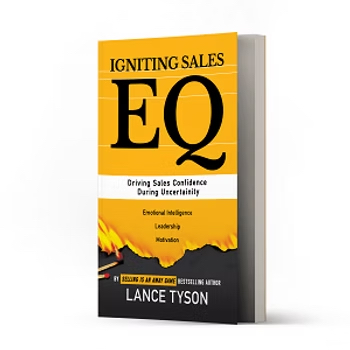
For more ideas on leveraging your Sales EQ and increasing your enthusiasm, get your copy of Igniting Sales EQ, available online at Amazon.