In-Sights: Fixing Sales Fragmentation & Aligning Your Sales Strategy

Sales teams today face a common challenge—fragmentation. With multiple tools, strategies, and messaging inconsistencies, sales efforts often become disjointed, leading to missed opportunities and lower close rates. In this short insights episode of Against the Sales Odds, Lance Tyson breaks down the root causes of sales fragmentation and shares practical ways to align your sales process for better efficiency and results. Tune in for a quick but powerful lesson on bringing cohesion back to your sales strategy!

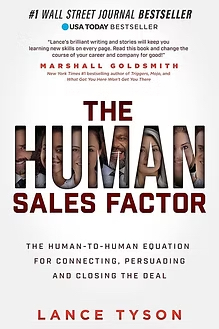
Lance is the bestselling author of Selling Is An Away Game and The Human Sales Factor. You can purchase these books at Tyson Group.

Check out Tyson Group’s Open Enrollment Programs: https://www.tysongroup.com/openenrollment

Check out Lance’s Bestseller Books: -The Human Sales Factor – https://tysongroup.com/books#thehumansalesfactor -Selling is an Away Game – https://tysongroup.com/books#sellingisanawaygame

Download our playbooks: https://www.tysongroup.com/sales-playbooks Schedule a call with one of Tyson Group’s member: https://bit.ly/41YJW7K Subscribe to our Newsletter: https://tysongroup.com/#weeklynewsletter

Follow Lance across Social Media: LinkedIn – https://www.linkedin.com/in/lancetyson/ Instagram – https://www.instagram.com/lance_tyson_1/ X – https://x.com/lancetyson

Listen to the podcast here

In-Sights: Fixing The Sales Fragmentation Problem: How To Align Your Sales Strategy

Understanding Sales Fragmentation

There’s a concept going on in sales, and it’s across the board. It’s called fragmentation. See if this happens to you at all. Do you have prospects that you’ve talked to on the phone, you’ve either met formally, like on a Teams call or Zoom call, you’ve gotten texts from, voicemails from, and maybe some emails, and there’s a fragmented communication going on that you have at least in three different ways communicated with them? Who has that going on? That’s fragmentation. It’s hard for salespeople because you’re communicating across a bunch of different platforms.

I have one of my salespeople instructors who does nothing but send me text messages with voice notes. She’s smart. They disappear. When you send a voice note on an iPhone, it disappears. You’ve got to actively save them. I’m then looking for the text, thinking, “She texted me?” Have you ever gotten a text but it’s a voicemail that somebody’s left that has text to? You’re dealing with this fragmentation. The hard thing for all of you is, “How do I take what’s happening to me and get good at it?”

Fragmentation and sales fragmentation. The only way we know that we can help you is because the fragmented communication makes your sales processes longer. Go back to what Naomi said in the beginning when a following-up is taking longer. The hard thing about sales for all of you is you’ve got to glue all the conversations together. That’s not only good organizational skills and good time management, but you have to start picking out when you’re going to have the right conversation.

For instance, you want to be talking to somebody when you resolve an objection. You don’t want to be doing it over text or email. Your best odds are to talk to somebody through it. You are hired for your verbal articulation skills. I could hire first-year nursing students to send stuff out to people. Write this down. Sending ain’t selling.

I’m not going to argue with the fact that you’ve probably sent a lot of things out and sold a lot of things. I’m saying it’s not your best odds. Especially going back to what Adam said, we got this higher price stuff. You’re not going to win it. You’re not going to win some of that stuff by sending out locations and benefits. You’re going to have to talk people through it. He even said it. He goes, “This is different.” He flat-out said it. It’s not impossible I didn’t read that from him. I’ve met Adam before. It’s pretty reasonable to say he is going to figure it out, and all of you are.

Sales Fragmentation: You do not want to resolve objectives via text or email. Do it in person.

If we go to a casino, what are our best odds at betting? You don’t want to play slots. Slots aren’t your best odds to win. That’s why there are four times as many slot machines as there are anything else, because the odds are not in your favor as a player. It’s not poker or blackjack. They’re a little bit better than slots. It comes out to craps. Your best odds are games like craps, games that seem difficult.

How To Solve Sales Fragmentation

You want to have some different parts of the sales process. You want to set yourself up. When I get all this fragmented communication, what’s going to put my best odds? I need to talk to somebody about this. I need to go through this with you. I need to show you what the product is. That’s where this has to go. Does everybody at least see fragmentation in your world a little bit? Let’s start talking about some solutions to all these things we put out.

Your brutal truths, we commented on that. We talked about buying and warning signals. We talked about fair and not equal. We talked about the sales landscape that maybe some of us sell with our own profile being prevalent. Sometimes, that works, and sometimes, it doesn’t. You go back to what Marcus said, “I got to create some momentum here,” whether it’s artificial momentum. We’re talking about a very fragmented world we live in.

Back in the day when Richard started selling, he talked to somebody and had 1 or 2 conversations in front of him that were not as fragmented. It’s the same with Baker and the same with me. We had a contained prospect at some level. You guys are in a brave new world. You’re dealing with all kinds of communication. I have salespeople selling on social media and inboxing off stuff. I had a couple of salespeople for the Cardinals who got appointments off dating apps. It’s all over the place. I’ve seen everything at this point. I’m of the persuasion that as long as it’s not illegal, immoral, or unethical, everything’s on the table. Do your thing. It’s all on the table.

You’re getting some chuckles over here because we have somebody who sold off a dating app also.

Some Quick Real Stories

I love it. Genius. It’s great. I don’t mean to be the old guy in the room here. Several years ago, texting to make a sale was highly frowned upon. I have a quick story. When the Cowboys were building AT&T, there was a guy named Eric Sudol who worked for the Cowboys for a lot of years. He was in suites for a long time. He worked for Memphis and then worked for the Cowboys. He took over as Chief Revenue Officer for Tepper down in Carolina.

You want to be having different parts of the sales process and set yourself up.

We do a lot of this. We were making outbound calls with their salespeople to set appointments for their suite sales for AT&T Stadium as it was coming online. He was arguing with me a little bit. I said, “Do you want to make a little bit of wager and see if your system works versus mine?” He goes, “Absolutely.” I said, “We’ll pick an account and we’ll go after that.” He goes, “We’ll take this one.” I said, “All right. Give me the guy’s number.” He goes, “What do you mean give you his number?”

It was this guy who was on Oprah Winfrey. He owned a big oil machinery company and sold heavy equipment to the oil industry. I said, “You said to go after one of your accounts. I want to prove my system works.” The wager was he would either buy a nice dinner at the most expensive restaurant in Columbus for my wife and me or I would buy it for him and his wife.”

He goes, “What are you doing?” I go, “I’m going to text this guy.” He goes, “You can’t text him.” I go, “Why? Is there an international rule book against texting an executive?” He goes, “No. It won’t work.” I go, “We’ll see.” I texted the guy. The way I text people when I’m trying to prospect is I one-bubble it or two-bubble it. If you want somebody to respond, be annoying on text if you’re going to text. That’s your hack. Don’t put the whole sentence. You got to be like, “Hey,” and press send. Say, “How are you?” and then press send. I played the game. I know it’s annoying, but my job is to get his attention.

The guy responded. I said, “How are you?” The guy texted me back. He goes, “Who’s this?” I said, “This is Lance.” He sent a question mark back. It was maybe 30 or 40 seconds, and I got a phone call. I said, “Eric, he’s calling me back.” He goes, “Lance who?” The guy’s name was Mike. I go, “Mike, I’m sorry. I’m Lance. I’m with the Dallas Cowboys. I was curious. Has anybody given you a tour of everything we’re doing with the new Cowboy Stadium with the suites?” He goes, “No.”

I said, “You’re a company. You fit the profile. I’d love to give you a personal tour.” He goes, “I’m in Dubai right now.” It was a Thursday. I had him on speaker, and I’m laughing at Eric. I go, “When do you get back?” He goes, “I get back Sunday.” I said, “You’re probably straightening everything out in the office and everything. What about Wednesday?” He goes, “Yeah, I’d love to come down for a tour.” I said, “I’m going to be out of town. My assistant, Eric, would be able to give you a personal tour.” Eric ended up selling suites to the guy six months later. The point was I didn’t make the sale. Eric made the sale. I generated it because I got the guy’s attention.

Important Links

Lance Tyson on LinkedIn Lance Tyson on Instagram Lance Tyson on X

Driving Revenue & Leadership: Aligning Teams for Success

Success in sales isn’t just about numbers—it’s about strategy, leadership, and collaboration. In this episode, we dive into the critical role of aligning teams across sales, marketing, and business intelligence to drive revenue growth. Learn how effective leadership, clear communication, and removing internal barriers can set your team up for success.

Whether you’re leading a sales team or looking to optimize your sales process, this conversation is packed with insights to help you win. Tune in now! 🎧

Check out Tyson Group’s Open Enrollment Programs: https://www.tysongroup.com/openenrollment

Check out Lance’s Bestseller Books: The Human Sales Factor – https://tysongroup.com/books#thehumansalesfactor Selling is an Away Game – https://tysongroup.com/books#sellingisanawaygame

Download our playbooks: https://www.tysongroup.com/sales-playbooks

Schedule a call with one of Tyson Group’s member: https://bit.ly/41YJW7K

Subscribe to our Newsletter: https://tysongroup.com/#weeklynewsletter

Follow Lance across Social Media: LinkedIn – https://www.linkedin.com/in/lancetyson/ Instagram – https://www.instagram.com/lance_tyson_1/ X – https://x.com/lancetyson

Listen to the podcast here

Driving Revenue & Leadership: Aligning Teams For Sales Success With Jake Vernon

I am excited about this episode because this one is with somebody who I have a lot of things in common with. I got Jake Vernon on. He’s the Chief Sales Officer for the Minnesota Timberwolves, the Lynx, and the Iowa Wolves. One of the things we have in common is we are both Philly guys. We grew up maybe 4 or 5 miles from each other. We didn’t know each other back in the day. I’m a little bit older, but we ran the same areas. Jake, welcome. How are you doing?

Thanks for having me. It is only fitting that you’d have me a week after the Philadelphia Eagles took home a Super Bowl. There’s something poetic in that, for sure. I’m sure like me, you were glued to the TV and texting all your crazy Philly friends and family members who were probably out on Broad Street doing stuff that they shouldn’t do that night.

It’s interesting you brought that up. My mom was having an operation the day after, so I flew into Philly. I got to my brother’s house who lives right outside of Philly ten minutes before kickoff. For everybody, my son and his son are about the same age. They’re starting college together. He and I have done therapy together. I have a son who goes to school at St. Joe’s in Philly. He’s become this massive Philly fan. I didn’t want to look at his Instagram. He went from Manayunk to Broad Street. He was in some crowds. I’m like, “I don’t want to know,” whatever they were doing.

I was right there with you. I kept picturing my 70-year-old uncles out on the street doing something they shouldn’t do. We go way back when it comes to that Philly connection. We both know how passionate that fan base is. I’m sure they had a good time. It was fun to watch from afar.

There’s no doubt. I usually cheer for who we are doing business with. We do some stuff with Kansas City. I’m like, “I can’t take the Philly out of me no matter what happens.”

Not at all.

Jake’s Experience As A Chief Sales Officer

Tell everybody about your role. You are the Chief Sales Officer for three professional sports properties. Talk a little bit about the role, how many people report to you, and major responsibilities. It’s important all in.

you start your career

My main function is to make sure that from a revenue standpoint relative to ticket sales, first and foremost, we are doing everything necessary to have success. I have spent many years here in Minnesota and have understood the marketplace. I have understood what has made us successful throughout these years. My role at this point from a leadership standpoint is identifying the processes that we need to have in play for all 3 teams, spending time with the leadership groups within those 3 teams, and making sure that they are supported and that they have the resources they need to be successful.

The other side of this is making sure that I’m connecting and removing barriers across all functions of our teams. To be successful from a revenue and sales standpoint, you need collaboration and teamwork. You need to be able to work well with other departments within marketing, business intelligence, PR, etc. For me, I’m at my best when I can take what the goal is and spend time with those key stakeholders. All of us get on the same page so that when we walk out of that room, everybody’s very clear on what their role is and what the objective is.

To be successful from a revenue and sales standpoint, you need collaboration and teamwork.

When you ask what this role is, there’s a little bit of me that still likes to get my hands dirty and understand what we are doing on the phone, what are the talking points, and what are the trainings like, but for the most part, I’m trying to stay out of that day-to-day and allow the leaders to do that. I make sure that I’m there for the leaders in terms of support and that they are in a position to be successful.

You said it, too. You’ve been there for many years. In that tenure, you’ve rebuilt the organization. In every area of the country, there are certain ways you sell. In Philly, you are probably a little bit more direct. People don’t believe that, but there is a regionality to how you sell. In Minnesota, it’s interesting. The flight factor is high.

Sometimes, you have to work hard as a salesperson to read if somebody is interested or is being nice to you and showing people skills. You did a phenomenal job there also. You’ve gone through a huge capital spend at the arena. We have to realize that for someone at Jake’s level, there is a B2C element to what his revenue teams do. There’s a crossover, a big B2B element. The strategies there are different and so is the process. How many people report to you?

I have 76 total direct reports. As you look at a couple of areas of our business, the Timberwolves side of our business is healthy. We have had some incredible success on the floor over the last couple of years that has met what we were building on the sales and service side and created this perfect storm. We have had to add people to handle all the accounts we have added. When you look at that, we have had to expand and figure out how that process would work now that we have multiple accounts and almost 11,000 FSEs.

When you look at the Lynx side of the business, you are seeing some explosive growth. The league itself has seen explosive growth. Our tremendous Minnesota Lynx has as well. You have another scenario where we went to the WNBA finals. We have seen some incredible increases across our FSE numbers and single-game ticket sales numbers. Being able to capitalize on that has forced us to ensure we have the right staffing level. We have expanded our Minnesota Lynx staff and are excited about what we are ready to accomplish on that side of things.

Down in Des Moines, the G League and what that team has done is they have continued to lead in revenue and sales. My role there is more about making sure I can be a good consultant for those folks and making sure that we, as the mothership, can be there for them, whether that’s providing resources or expertise.

I’m excited about the group we have. Part of my role is also overseeing our fan experience areas and a lot of the arena operations we manage on a game-by-game basis. That area of the business is also critical as we continue to grow the fan base. We have seen some incredible spikes in our single-game ticket numbers. With that, you have to make sure that the holistic customer and fan experience on game nights is a good one, or else, you could lose them quickly.

That part has also been a lot of fun for me to dive into because, as a grizzled ticket sales vet, you’d sell the tickets and service the account. When you start to look at how their ingress and egress to the building works, what their technology experience is like with our app in the arena, and what the F&B experience is, we have worked hard to ensure this entire experience at every level is one that folks enjoy and that keeps them coming back game after game.

Jake’s Career And Professional Journey

He has all these revenue streams from three different teams plus other revenue streams from in-stadium that he’s looking to play out. You’re a bit like a traffic cop also. You’re coordinating, strategizing, and keeping the momentum going. Where did you start your career? After college, where did you go first?

t’s a fun trip for me to talk about this because I grew up in Philadelphia. I don’t know if the eighteen-year-old Jake Vernon would have ever thought he’d be sitting here in a C-level position. I was hoping to get through college and figure it out from there. I’m blessed. I have had a lot of incredible people help me along the way.

I went to Xavier University in Cincinnati and had an incredible four years there. I got lucky with an internship in Cincinnati. I got an unpaid public relations internship with the Cincinnati Reds. On my first day on the job, we had some crazy stuff happen. The umpire, John McSherry, tragically passed away behind the plate. I remember that day and the stress that came with it.

It was my first day on the job. It was a tragedy and something that baseball remembers quite often. Looking back, it opened my eyes that you never know what this business from a day-to-day point of view could bring. I didn’t know it then, but it set the stage for my career being ready for the moment, whatever that moment may be. I got a job with the Indianapolis Indians, a AAA baseball team in Indianapolis.

I didn’t know that. I had no clue.

It was a wild experience. I was a PR intern. When something like that happens, the phone lights up. We were a small staff. I was 1 of 3 people. I stayed until about midnight that night, answering calls and reading off a statement we had written. I remember walking out that night. My boss and colleagues were exhausted from the day but we were playing a game again the next day. You had to go home, recharge, and come back. That was a big learning experience for me. I was 1 of the first 5 employees for the Indiana Fever. The Pacers had acquired and earned the right to get the Indiana Fever as an expansion WNBA team.

What did you get hired at? What was that job when you went over the Fever? I remember that’s when I first met you. That’s when I first learned about the WNBA.

I got hired as a ticket sales account exec. There were three of us. It’s hilarious to think. If you’d bring an expansion team now, you’d probably hire 25 salespeople and a bunch of managers, but there were 3 of us. They handed us a bunch of leads, a bunch of folks who had said they were interested in potentially coming to games.

I will never forget this. They were building a new arena and the offices weren’t ready yet, so they put us in a conference room. There were three of us across from each other, making calls. It was loud. There was another new employee that day. His name was David Morway. His role was assistant general manager. Our assistant GM was sitting in the same conference room. You have had some hilarious experiences throughout this whole career.

How long did you do that?

I did that for two seasons, and then I got promoted to a premium sales role with the Indiana Pacers as my full-time role. Back then, we sold everything. There were no real specialties. Our Pacer sales team sold Fever, and then our Fever team sold Pacers.

What year was this?

It was from ’99 to about 2002. I spent a couple of years as a dedicated Pacer ticket sales rep. I give this guy credit a lot. You know him well. He is an industry titan as well. Doug Dawson got hired as our vice president. We were at a time there when the industry was starting to expand the sales staff. To drive ticket revenue, they knew they needed to hire and strategize differently.

Doug came in and laid the foundation for me to dive into processing people. I remember back then, it was bang out the phone calls, go have the meetings, and go close deals. Doug took a different approach. I remember vividly the conversation he and I had in his office. He was like, “Jake, you could be great at this. You could be a great leader. People tend to gravitate to you. They listen to you. If you want to do that, these are the steps that we need to take.”

Quite frankly, I went back to my desk thinking, “I’m not sure I want to change my ways. I like making all the money I’m making from selling tickets and doing what I’m doing.” The more I thought about it, he was right. It was time to explore that side. Honestly, I enjoyed it. It created an opportunity for me to build off of my strengths which were my relationship skills and my ability to have tougher conversations but have them come from the heart, hold people accountable, and be creative. That’s part of this. We tend to forget that to be successful in these roles, you have to make sure you are rethinking things on a consistent basis.

Background And Experiences As A Salesperson

You have the relationship skills and you are thinking at the moment. Your critical problem-solving skills are off the charts. Even working with you over the years, your ability to dial into the problem and say, “This is what we are going to work on,” stands out. You said you like to get your hands dirty earlier. I know that for a fact. As a salesperson, because I don’t want people to miss this, how were you as a salesperson? How were you able to manage? Where were you on the board?

Anybody who’s competitive and anybody that has success in what they do, you’ve got to have a little bit of ego attached to that. I always believed in myself. As a kid from Philadelphia, for me to be successful, I knew I had to be the only person in the room who believed I could do it. There could be other people in the room, but the chip on my shoulder was always about, “I have got to go do this. It’s me against everybody.”

Aligning Teams: Anybody who’s competitive and has success in what they do must have a little bit of ego attached to it.

As a salesperson, I took it that way. I literally would come in every day, go to my desk, get in my own mind and environment, and go. As a salesperson, what I leaned on was making sure I had all the information, I understood what you were trying to get accomplished, and I understood your business. I wanted to understand how we could be connected.

I’m a big believer in saying, “You work in this industry. I know so-and-so over here. Do you know them?” Making that deeper connection very early on in the conversation was important to me.

Once I got that conversation going with individuals, the trust was there. They knew that I was always going to make sure that whatever business we were going to do was going to be good for the customer and good for the business. That was how I sold it. Some of my managers at times wanted me to be a little more in the process. I tended to get onto the edges a little bit more.

Was it more like a networker?

Yes. I believed in the process, for sure, but I also think there were times to play on the art side of this rather than the science side. I was good at that. I could navigate those conversations. When I ask my reps how things are going or what their process is like, anybody who tells me, “I don’t use a script,” I always pause because everyone has a version of a script. It doesn’t mean it has to be written down as this very mechanical thing.

They have something guiding them.

W within those guidelines, you can do whatever you want. I was that salesperson. Doug would probably answer that I could be a pain in the ass to manage because I had ideas. I was super competitive. I wanted to be number one. If things weren’t going the way I wanted them to go, I would work harder and maybe be in his office more, telling them what I thought we should be doing to have success.

You’ve never been afraid to give your opinion.

I believe in my opinions, that’s for sure.

Rising To The Managerial Role

If I’m thinking of a younger version of you, which I probably knew closer to ’05, ’06, or ’07, you were willing to debate. There’s no question. You were in sales. Doug comes in and he gives you a shot to start to manage. You said, “I want to sell,” or “I want to do this.” What’s that first management role?

I managed our season ticket sales team. They were all folks who had been in the business and had been on the team for a few years. Honestly, I was more of a peer leader and friend to a lot of those folks. When I took that step into management, that part was hard. It’s something I tell young managers all the time as I promote people in very similar situations, “You have to separate yourself a little bit,” and that can be hard. These are people that you tend to hang out with. This is a business that’s a little more like a family than a workplace at times.

When you get promoted to managerial positions, you have to separate yourself a little bit from your team.

For me, I struggled a little bit with separation where I have to be able to manage you during the workday, and then I can’t necessarily go have a beer with you after work. I learned that there are times you can do it and there are things you can do to make sure you are building that relationship with your employees. I also learned that, at some point, you have to be the manager and have to be the boss. Those tougher conversations are more effective when there’s some separation there.

Over time, that came into play. I learned and understood how to do that. It goes away. I always say that after the first year, people start to view you as the manager. In that early part, they are like, “That’s my buddy Jake, my colleague, or work friend.” It’s a tougher situation that most younger leaders have to go through to be successful.

In that first management job, you are trying to separate Jake the friend as opposed to Jake the boss. How long were you in that role, and what did it look like from there?

I was in that role for a couple of years, got promoted to oversee group ticket sales and season ticket sales, and then got promoted to oversee premium. At that point, Doug had left to go to the Cowboys project with Legends and I got promoted to his role of vice president of ticket sales and service. By then, I was starting to understand how to develop people. I was starting to understand how to make sure the process was being taught. There was a transfer of skills happening on the sales floor between managers.

It’s interesting because when you came into sales, you were on the periphery of that. You even said it earlier. You said, “I was more art than I was science,” but you started to see value in the process itself.

What you start to understand is managing a larger workforce, managing different personalities, and managing up to a leadership team, you couldn’t do all that without some sort of structure and some sort of process that you believed in. For me, as a leader, I was totally different from what I was as a seller.

Aligning Teams: When managing a larger workforce with different personalities is impossible if you do not have some sort of structure and process you believe in.

You were trying to scale the philosophy.

I would not be able to do what we needed as a business without that scalability and without that ability to understand a teachable process. At that point, when I got promoted, I started to dive into what is the leadership and development of people and what the staff needs to be successful long-term. I was able to lean on my experience as a sales rep and understand what I needed and how I developed into a leader and a manager.

I asked myself, “How do I help these folks accelerate that process?” Everyone is on a different timeline, but if I could jump in and begin to not only teach sales skills and customer service skills but also teach leadership skills and how to manage people when you do get promoted, then we would be creating some shortcuts that most don’t get.

What comes out here is the most interesting philosophy you said. What I’m hearing is you said, “If I’m going to scale this and create some consistency, I have to have a defined process, a predictable process, and predictable results and I’m going to have to build it through people because I can’t do it myself.” At that point, you have become VP. You had 40 to 50 people reporting up to you.

I had 45 staff members. You start overseeing a budget line that’s multiple millions of dollars and start understanding the impact you have on the organization. Ticket sales and sponsorship drive the ship and drive the business. There was a moment when I had some amazing people around me. Doug was a great leader as well as Ben Milsom, who I know you know, and Kevin Frattura.

We had an incredible group of leaders and we all learned together. When they all went their separate ways and it was just me, there were some moments of insecurity. I had to make sure that I shared and talked about what was going on with other leaders outside of the organization. It was a heavy burden. I was excited about the opportunity.

It was a newer venue, too.

The other part of this is that we went from a team that went to the NBA Finals and the Conference Finals pretty much every year. We had the Malice at the Palace happen in ’04. That derailed the entire business. The revenue streams and ticket sales took a huge hit. At that moment, as a young VP in 2007 and 2008, this was a reclamation project all of a sudden. This went from a brand-new building that sold out every game to we couldn’t get more than 8,000 or 9,000 people into the games.

That pressed on me to not only be creative but to also make sure I kept my best people around me. That’s where you see staff members look for other opportunities when it gets tough like that. The only way I was going to survive right there was to make sure that I had a great relationship with my best people and that they understood the long term was going to be good for them.

One of the things I also noticed about you then is you were doing a lot of alternative things to drive business. You got entrepreneurial. At this point in the history of sports, you were running a lot of cocktail parties and events. The president of the team at that point was Larry Bird. If you know Larry Bird, you had a lot of interaction with him. It’s interesting. I hadn’t thought about that. You were doing some innovative things that I didn’t see other teams doing. This was before 2010. They weren’t doing anything in the mid-2000s. They weren’t doing it between 2010 and 2015.

You are dead on that we had to be creative and do things differently because we weren’t going to be able to call 100 people a day and make this successful. We had to get in front of people, tell our story, and get people to believe that the long term of this was going to be a lot of fun and successful. I give a lot of credit to Larry Bird, Rick Fuson, and Jim Morris because when we talked about these ideas and said, “Can we start to use you guys to tell our story? It’s not going to be powerful enough with just the staff.” They jumped in with both feet.

I have told this story. I have been at Larry Bird’s house with 200 season ticket holders and 100 prospects. I have had Larry come into suite nights and spend time with customers. We have gone to Herb Simon’s house. We had to do these things. Now, it is the norm in our industry,  but back then, there were a lot of times when people would call me and go, “Are you seriously hosting a party with Larry Bird?” I said, “Yes.”

I attended those cocktail parties. We were doing business with the Cavs. They are running off the hottest ticket run. You guys had lost all those great players and those great battles with the New York Knicks and stuff like that. You guys have figured it out. The other thing you have to remember, too, is Jake is in the small market at this point. Indy’s not big. If you mess up one relationship, everybody knows about it. Indy is where you went to high school. It’s like Cincinnati.

It’s a basketball state.

They know the game.

You also have to understand that you are competing against the Indiana University basketball program and Purdue’s basketball program. There were other options out there. We weren’t the only game in town. It also synced up with Peyton Manning’s run with the Colts.

It’s not like you were the only ticket. You had a football team.

To be relevant within all that clutter, you had to do things differently. The other thing, and you were there, is those sales events allowed you to tell your story. Getting people to buy in on the relationship that we could have and getting them to understand how this could be mutually beneficial wasn’t going to happen over the phone. We are in sports. The tough part is folks tend to look at the product on the court first. They don’t look at the other opportunities that exist.

Aligning Teams: In sports, people tend to look at the product on the court. They do not look at the other opportunities that exist.

I had some sales exec who worked for the Golden State or something. He goes, “I have this.” I said, “With all due respect, if you take some of these winners, I could hire first-year nursing students to sell some of those products when you are hot.” I have nothing against any of those. When you are hot, you are hot. It’s easier to sell. Remember, you think sports sells. It doesn’t sell. It has to be sold. Nobody understands that. If you are an Eagles fan, you can’t get a ticket. What about the other 29 teams that have to move tickets or other revenue streams like partnerships?

There are always dollars to be had out there.

No doubt.

I also agree with you on this. What I also learned during my experience in Indiana, which worked well for me in Minnesota, is things change on a dime. At ‘06, we were having incredible success, and all of a sudden, one turn of events happened. There was a fight in the stands and your business completely crumbled.

That didn’t land very well in Indianapolis.

Not at all. That did not land well anywhere.

That’s true.

As I look at our business, you have to be prepared and build a structure, a process, and the staff to handle something like that. If something bad happens or a trade happens, your business changes. You can look across the landscape of sports over the last few months. You are going to see teams that have performed on the court and are having tremendous success. You are also going to see some teams that have underperformed or had something happen to their business that has drastically affected them. My goal was to always make sure that it is as even-keeled as it possibly can be and that you are on that flat line as much as you can. When you play in those peaks and valleys, it’s tough on the staff and the process.

Starting An Outsourced Sales Consultant Business

I want to bring something up. In your run there as VP, what year does it end? You then take a turn in your career and decide to go in a whole different direction, which ties into the whole entrepreneurial side. I want to make sure we hit on that. Your run as a VP was how long?

It was about a five-year run.

There are two things I want to mention here. You said early on that you always bet on yourself, that confident, cocky Philly. When I was bringing up all the different special events you were doing to drive tickets and you had a little bit of entrepreneurship, you decided to leave and start your own thing. You started your own business. You take everything you were managing and say, “I can turn this into its own business.” I remember talking to you then.

We were almost business partners.

We talked a couple of times. At least we trusted each other.

We could have taken over the world, two Philly guys.

No doubt. We were both a little undercapitalized but we were running. Tell everybody about that. You decided to roll the dice on yourself and start a business.

This was an idea that I played around with for a couple of years. I talked about this with Ben Milsom, Doug, and Kevin in a meeting in 2005 or 2006. I started talking about, “We are good at what we do. Should we be doing something outside of these four walls and understanding how we could help other businesses and other sports teams?”

I left the Pacers. I decided I wanted to try and take a stab at this outsourced sales consultant business. There were some businesses out there doing it at Learfield and IMG at the time that were helping colleges and universities outsource their sales functions and create sales teams that could go out and sell tickets for them.

On the other side of that, it happened to sync up with the lockout. I knew the NBA lockout was coming, and I knew there was going to be an opportunity where teams were going to turn the spigots off a little bit and they were potentially going to lay off employees. When they had to rev that back up, were they going to be in a position to hire and sell what they needed to sell for a shortened season? It all synced up together for me.

It was an incredible experience. I loved it. Waking up and suddenly being responsible for your family, your mortgage payment, and all that with no steady income was exhilarating and also scary at the same time. I enjoyed the idea of going out there, doing the business, and building the business on my own. You know this as a business owner. You have to understand employee taxes and how to do payroll. There were a lot of other things I didn’t know.

There was a lot of risk there. I always admired that about you. You did that for 2 or 3 years.

Three years. I went out and got some great deals. Butler University was one of my first deals. They were coming off a national championship run with Brad Stevens and needed to start to monetize that success. In their own words, they weren’t equipped to go out and hire twenty salespeople. We did some big numbers for them from a corporate partnership and ticket sales standpoint.

Charlotte Bobcats at the time needed help. I got a gig with the Minnesota Timberwolves, the Indianapolis Motor Speedway, and the Cincinnati Reds. All of a sudden, my name was starting to circulate. I would get phone calls. I had to start turning down deals because the deal wasn’t going to be fruitful enough or it wasn’t something I was willing to put the energy into.

You talked a little bit about risk. You are a problem solver. What did you add to your leadership strategy there? What did you realize about yourself that you still carry through?

Having an owner mentality is much different than an employee slash senior leader mentality. As senior leaders in a sports team, you’ve got to be good stewards of the team and the franchise. You know this. It’s your money. It’s you balancing the checkbook every day. For me, there was a level of respect for the business that I don’t think I had prior to that.

Running your own business is so much different than being in corporate leadership. You are balancing your checkbook every day.

You want to take your staff out to a happy hour or want to go out and do a sales event somewhere. When you work for a team or work for a business, it’s part of the budget. All of a sudden, that budget is your money. You have to start to understand this ownership mentality. It’s what I always talked about. You start to understand what it’s like to own something rather than work at something. The biggest growth piece for me was starting to understand what that looked like. When I did take this role with the Minnesota Timberwolves, I was much better suited for leadership because I had gone through some of those things with my own company.

I never asked you this before. Did the business you were doing with your own business with Minnesota create a pathway for you to the Timberwolves?

Yeah. I had a great relationship with our COO, Ryan Tanke. He and I talked when I owned my own business. He was in the same predicament that I thought most teams would be. He said, “We don’t have the staff yet. We’d love to hire you.” I said, “You came to the call center that I had in Indianapolis.” I had this call center with up to twenty salespeople working there. I said, “We could dole out different projects.” We did a project for the Timberwolves. That started the conversations with Ryan.

I miss the team environment. You and I have talked about this. When you have success as a consultant, it only scratches so much of that itch. I always tell this story. I love Butler. They are amazing people. We helped them sell a game out against Gonzaga on a Saturday afternoon. If that was the Pacers, I would have taken my staff out and we would have celebrated. We would have had this huge celebration. No disrespect, they are great people, but I remember there was this, “Great job. Thanks for all your help.” I miss that team environment.

It’s the camaraderie that’s built into it. There’s something that when you are a hired gun or when you are a Hessian sometimes, it’s hard. There’s no doubt. I understand that.

That was when Ryan and I started talking about potentially the future of my business and where I wanted to go. At the time, there were starting to be some people looking to acquire the business that I had built. It made sense at the time. I was ready to get back into the sports side of this and on the team side. I trusted Ryan Tanke and understood what he was looking for.

If I were to make this type of move, I would have never done it for a job or for a leader that I was unsure about. I needed to make sure whatever that move was going to be that it was going to be something that I could be myself and that we could bring in the processes and ideas. You know this. You see it all the time. There are a lot of people that get hired into the wrong situation. It doesn’t mean they are bad at their job. It’s their core functions and their skillset that don’t fit into the culture. I wanted to make sure that happened.

I was doing something and a younger person reached out. She was working with the Ravens. I had done a talk there. I always give my number out to anyone. She goes, “You mentioned some organizations not to work for. Why?” She asked me a couple of questions. I said, “You want to go work for the right leader. I’d look at you as if you were my own kid. You’ve got to be in the right situation. Culture’s critical.”

Valuable Advice On Sales Leadership

With that, you land back in Minnesota. I’m going to take a couple of things. Number one, bet on yourself. You are a quick problem solver. You always like to roll it up. You proved it again when you started your own business. You were like, “I had to go out and win the business myself.” You were winning the contracts and managing the company. There are two sales there. It’s sale 1 and sale 2. It’s like, “Go win the business. Now, we have to go execute,” and you’ve got to go resell this other product. There are several things going on.

I joke all the time. The scariest moment is when someone says, “We have a deal. Now go sell the tickets.” I was like, I got to go do what I said I was going to do.”

Be careful what you wish for. You are an entrepreneur. You need to make a payroll. Anybody that’s an entrepreneur knows this. The scariest thing in the world is realizing, “I got to make my people’s payroll. I might not get a payroll,” especially when you are starting off. 99% of all businesses fail after year one. You went the distance and then decided to exit yourself.

When you look back at your rise from VP to chief sales officer with multiple properties, what are three things you can say about your leadership? I also want you to give some advice to salespeople. As a strategic sales leader with a big group underneath you and multiple properties and multiple revenue streams, give three philosophies about your leadership or strategy. Go.

First for me is that I got to be present. I need to be present for my leaders but also be present for the staff. I take a lot of pride in knowing what’s happening in all areas of the business. To do that, you can’t ask for an email to be updated every day or every week. You have to be in conversations, in people’s offices, and have robust one-on-ones with your managers and understand what they are up against. That, to me, provides a sense of security. It is a sense of like, “I can do this as long as we are all doing this together.”

You never in training have dropped your kids off at daycare. There are a lot of leaders out there who when they train their people, it’s like parents dropping their kids off at daycare. They’re like, “Go have fun with the trainer.”

If I’m going to set the expectation, when you come in and visit, which is some of my favorite two days, I always say, “I expect this from the staff.” They need to show up ready, show up early, and make sure they are engaging. If I’m asking that of the staff, then I better be doing the same. That’s the part I enjoy when you visit. I get to dive in on this too for a couple of days.

If you want your staff to show up ready, come to work early, and always engaged, you better be doing the same.

That’s the epitome of what you are saying. You are present. What you are saying is, “I’m present in all kinds of things. I’m in boots-on-the-ground mode.” What’s your second thing?

The second piece for me is when you look at it from a strategy standpoint, you’ve got to be buttoned up in terms of what the game plan is. What are you trying to get accomplished, and how are we going to do that? For us to be successful in these roles in our business, you’ve got to run very comprehensive and successful sales campaigns.

That doesn’t happen by you coming in on a Monday and going, “We are now selling suites. Everybody go get it.” That requires time with business intelligence. That requires finding the right leads and spending time with the training so that the staff understands what we are trying to accomplish. I’m a big believer in that strategy part. I spend probably more time with my managers around the strategy and the plan than I do when the execution happens because I trust at that point that the plan is good and all they have to do is to go execute.

My third one is probably something I have learned from a lot of different leaders over the years. It is to have fun. I keep talking about Philadelphia. I grew up in a low to middle-class family. My mom and dad worked their tails off every day at jobs that they didn’t like and that they didn’t love getting up for. When I think about the culture I want here, I know it’s going to be difficult at times. Sales can be difficult at times, but we are going to have fun when we do this, whether that’s sales contests, spending time with each other, or doing community service. We are going to have a culture that cares about each other, lifts each other up, and also has a lot of fun together.

The folks that I work with out here and some of my leaders are how I gain my energy every day. I say this all the time. They uplift me. When I’m having a tough day, I walk the sales floor because I know I can have some fun, I’m going to smile, and I’m going to enjoy each other’s company. For me, the fun part is real. I don’t want to sell insurance. No disrespect to the folks that sell insurance, but I want to be able to look down at our practice facility, and watch the Timberwolves or the Minnesota Lynx practice. Who gets to do that? I look back at eighteen-year-old me. If you told me this was my job, I wouldn’t have cared what you were paying me. I’d take it all day, every day.

The advice to the salespeople is this. I want to say it for you. Show up ready. What was the other one?

Show up early and be ready to engage.

That’s the best advice. That’s the most succinct advice I have heard for a sales team in forever. I’m taking that one as your advice.

I’m not complicated. I’m usually pretty simple when it comes to these things.

Answering Rapid-Fire Questions

That’s why you’ve been doing this for so long. Last couple of questions. These are the ones I ask everybody. You are going to get a big deal done or get your people ready for a big deal. What song are you playing in your head? What’s that go-to song? What’s in your head?

A lot of people are going to make fun of me on this one, but it is what it is. I grew up a huge Bon Jovi fan. I could pull out some old photos to prove it. It is Livin’ on a Prayer every time.

It’s such a go-to. The whole song has power chords. It’s the whole thing.

Not to be too dramatic about a sale, but if you go into this battle with the idea of, “This is who I am and how we are going to do,” it speaks to me that way.

There is nothing wrong with that. I haven’t heard that one for a while. It’s on my playlist.

My problem is it’s going to date me. If my kids see this, they are going to kill me. They would have wanted some Kendrick Lamar or something a little more modern, but I can’t.

Mine’s right around the same time. It’s This or That by Black Sheep. It’s early ‘90s. I got it. What are we going to do about it? Second question. Your kids are a little older. If you had a niece or nephew at age six, seven, or eight and they go, “Uncle Jake, what does success mean?” You say to them what? They’re six, seven, or eight-year-olds, so it can’t be this complex thing. Go.

It’s pretty simple. You try your best and let the results be what they are. I wish I could go back to some of my experiences with my kids. I put too much pressure on what the results were and didn’t celebrate the work that they put in to try to be successful. When you look at these kids at those ages, it’s like, “Enjoy it. Celebrate the work. Celebrate that you tried your best and move on.” We were told that all the time when we were kids. I probably didn’t believe it that much because I hate to lose more than I love to win, but that’s what I would tell them.

I’m with you on that one. I hate to lose. I will do more not to lose a thing than I ever did to win.

Nothing makes me more angry. Anybody who has played pickup basketball with me knows that doesn’t ring more true.

There are a couple of rumors out. Your name has come up in a couple of them.

Don’t listen too much to what someone like Jake Reynolds, Ryan Davenport, Ben Milsom, or Jason Howard say about me.

There’s some Scotty O’Neil, Chad Estes, and you stuff out there.

Those guys aren’t sweethearts on the court either.

Anybody that’s competitive is not. Last question. Besides my book, if you had to gift a book to somebody, like a new leader or something, what would you gift to them?

I would probably say The 7 Habits of Highly Effective People.

The 7 Habits of Highly Effective People: Powerful Lessons in Personal Change

I still go to it.

I gave it to my kids. When they were like 15 and 13, I said, “You guys need to read this.” I don’t know that they quite got it. My older son since then has probably understood a little bit more of it.

Philosophically, I go back to that book when I write anything to myself. I agree.

I use it with our staff people all the time. A lot of times, people come to me and ask me questions about how they should handle certain situations or how they should develop. I usually talk about that book because it can help you identify where your shortcomings are and how you could handle them.

It gives you that path. I was writing something in my journal where I laid out all my roles. The book clearly says your life exists inchief sales officer separate roles. It goes from inner to outer. How do you deal with yourself first and then worry about how you deal with everybody else? I couldn’t agree more. It’s my most tattered book.

It’s also easy to get through.

It’s not a hard read.

It’s a quick read.

It’s comprehensive. It’s not light. It’s heavy.

If you look at the one I have, I have highlights all over it because I go back to it all the time. It’s one of those that I always pull back out. I don’t read a lot, but when I do read, it needs to be something that helps me in terms of understanding where I’m at and how it can help me be better. That book has always done that.

Episode Wrap-up And Closing Words

I love it. I have been waiting for this for a long time. I’m pretty sure you and I could riff a bit more. This is one of my longer ones because you and I are rapping.

We can easily do it for a while. No doubt.

Thanks for being on. This was a great interview.

Thank you.

Thanks again, Jake Vernon, Chief Sales Officer of Timberwolves, Lynx, and Wolves. Let’s go.

Important Links

Minnesota Timberwolves Jake Vernon on LinkedIn The 7 Habits of Highly Effective People

Reading The Signs: Spotting Buying Signals That Close Deals

In this short episode, Lance Tyson breaks down the key buying signals that indicate a deal is ready to move forward. From verbal cues to behavioral patterns, we’ll show you how to spot, interpret, and chase these signals effectively. Learn how to engage buyers at the right moment, avoid missed opportunities, and turn interest into closed deals. If you’re looking to sharpen your ability to recognize and act on buyer intent, this episode is a must-listen!

Lance is the bestselling author of Selling Is An Away Game and The Human Sales Factor. You can purchase these books at Tyson Group.

Be sure to sign up for Lance’s LinkedIn newsletter here.

Love the show? Subscribe, rate, review, and share! https://www.tysongroup.com/podcast

Listen to the podcast here

Reading The Signs: Spotting Buying Signals That Close Deals

Understanding Buying And Warning Signals

Think about this for a second. There are three concepts that are in selling, and most people don’t have a strong conviction of what they are. There are buying signals, something you observe that could be a buying signal. Luke says, “I notice buying signals. When I do, I chase.” I go, “Correct, Luke, at some level.” Anybody here have dogs? Anna, you’re shaking your head immediately. What kind of dog you got?

A purebred Beagle.

I got a Beagle. We have a lot in common. I got a purple dog and a Beagle. The Beagle has some energy.

Some energy and stubbornness.

That’s another spirit animal right there, so is mine. I don’t know if anybody has a dog like this or ever observed a dog where you have a tennis ball in your hand, fake throw it, and the dog takes it halfway across the field but you still have it in your hand. What you can’t do with some leads is chase a fake thrown ball. You’ve got to be able to observe a real buying signal, which then flips over to say, “I’ve got to know what a warning signal is in a sale.”

They come with definitions so I’m going to go over them in a second. If you know the difference between those two and how to address it, you’ve got to know what a buying objection is. There are categories of different things. If you get anything from me at all, it’s these definitions. If I was physically sitting across from Adam, crossing my arms like that, would you say it’s a buying signal or a warning signal?

Warning.

I could just be cold. If I was sitting across from Adam and I was going like this, or you’re on a Zoom call and going like this, what would you say that is?

Buying. The gears are turning.

Could be interested. Could be gone. I need shade. At this point, we’ve got to be careful of being these pundits on TV when somebody gives a speech and we’re going, “Somebody’s delivery means blah, blah, blah.” It’s a freaking guess. All you guys can do is guess. We all have contribution bias in sales. Contribution bias is when we look for the factors that make our case. The contributing factors that make your case. That’s what you look for. You should, at some level.

A buying signal is anything the buyer says or does or doesn’t say or do that would indicate a level of interest. I’ll say it again because it’s the opposite. It’s anything a buyer says or does or doesn’t say or do that would indicate interest. I’ve had salespeople that do a presentation. Let’s say I’m presenting to Baker and he doesn’t have any questions. He’s like, “It sounds pretty good.” I could say they’re buying signals but on the flip side, your other side should say, “He had no questions. He’s just being nice.” You’ve got to find a way to test those things.

Buying Signals: A buying signal is anything the buyer says or does or does not say or do that would indicate a level of interest.

You would all agree if you’re talking to somebody on the phone that this makes it exponentially harder. Yes or no? If you’re doing this and you can’t see anybody or you’re not face to face, it’s exponentially harder. Let’s go to a warning signal. What’s a warning signal? It’s the opposite. It’s anything a buyer says or does or doesn’t say or do that would indicate disinterest. They’re fair definitions. It’s easy to follow. How do you remedy?

Asking Questions That Solicit Opinions

The only way to remedy this is to ask a question that would solicit an opinion. That’s your only move. You have no other move. Think of it like a hypodermic needle. You’re inputting something or extracting something. That’s all trial closes. Everybody thinks this trial closes is this big spot in the sale. No. A trial close is a question that solicits an opinion. Too many times, we get so caught up in pitching that we don’t solicit opinions.

Say I’m talking to Luke and we’ll go with Adam’s example. Say I’m pitching these club seats and Luke’s acting like he’s interested. “Luke, on a scale from 1 to 7, how interested are you in this new club level?” Secondly, “Why would you do it? Why wouldn’t you do it?” I would ask a fully baked question like that because I would want to see where he goes.

Number one, I’d ask a question 1 to 7 because statistically, somebody won’t pick a middle number if you go up to 7. We have a data person who works with us on our team and says if you want the real stats, go 1 to 7, not 1 to 5. For some reason, when you go as high as seven, nobody picks a middle number. I also said, “Why would you do it? Why wouldn’t you do it?” However Luke would answer that question, chances are Luke will go positive before he goes negative.

Remember, two of you said, “I keep following up with somebody until they say no or stop calling me.” Let’s look at the behavior that’s pretty consistent across the board. Most people would rather not deliver bad news to you. It’s easier to ignore you and make you go away. If you ask the Rocks team, 9 times out of 10, when they pitch, somebody will say to them, “Great presentation.” They’ll go, “Great presentation. That’s the kiss of death. Do you know why? Who says your presentation sucked? Nobody.” They’re always going to say you had a great presentation. You’ve got to reverse and say, “What are some things that concern you?” You’ve got to go the opposite with it.

Let’s see if they answer 1 to 7. Let’s see what they like. If they say what they like, I can immediately flip it over and go, “What are some of your concerns?” If they start with some of the concerns, I can attack it. What’s probably happening with some of you, I’m not saying all the time and I’m not saying you don’t think about this, but sometimes you don’t go there because you’d rather not go to the friction. Nobody gravitates to friction.

If you go back to Adam’s example, when people are going to make a decision on committing to you for 1 year, 2 years, or 3 years for clubs, they’re going to do a pros and cons list in their head. “Here are all the reasons I should. Here are all the reasons I shouldn’t. That’s where you have to get their opinion.” That’s how people make decisions ultimately. You all make decisions that way. “Why should I do it? Why shouldn’t I do it?” Plus, minus, pros, cons. It’s like a weighted thing.

Episode Wrap-Up And Discussion Summary

I’m talking about what’s obvious to you but the magic is how do you facilitate a conversation that gets buying and warning signals or an objection? The last definition is a buying objection. Remember, a buying objection only comes after you pitch something. I’m going to go over these concepts ten times with you. This will be the first time of multiple times you know this. I’m just talking to you. I’m not even training you. We’re just talking.

A buying objection is anything a buyer says or does or doesn’t say or do that hesitates them from moving forward with the sale. You only technically get a buying objection after you pitch something. Anything prior to that is a put-off. They can only object to something they can buy if you’ve never pitched something they can’t object. You’ve got to think about it.

Buyers can only object to something they can buy if you have never pitched something they cannot object to.

We’re talking about very tactical things here. We’re talking about your brutal truths, follow-up, getting out objections, adjusting to what they want versus what we assume they want, and weighing out leads. Who’s worth following? Who’s not? That’s a hard decision because you could miss, and we have. It’s all those time management things. How do you create a little constructive tension sometimes into a sale? Not that you become a jerk or anything because we don’t want you to be that. We want you to have good people skills and good manners. Ultimately, we want to have a decent relationship with the people we do business with.

Important Links

Lance Tyson on LinkedIn Lance Tyson on Instagram Tyson Group on Facebook

In-Sights: The Best Time To Handle Objections? Before They Arise

In this short episode, we dive into the art and science of handling objections—a skill every sales professional needs to master. Learn how to turn resistance into rapport, uncover hidden opportunities in challenging conversations, and navigate objections with confidence and finesse. Whether you’re facing tough clients or complex deals, these proven techniques will help you stay in control and close more effectively. Tune in and take your sales game to the next level!

Lance is the bestselling author of Selling Is An Away Game and The Human Sales Factor. You can purchase these books at Tyson Group.

Be sure to sign up for Lance’s LinkedIn newsletter here.

Love the show? Subscribe, rate, review, and share! https://www.tysongroup.com/podcast

Listen to the podcast here

In-Sights: The Best Time To Handle Objections? Before They Arise

The Science of Handling Objections: Strategies That Close Deals

Let’s look at the marketplace first. You do a lot of studies. Usually in the market, you’ll hear things about the cost of doing something’s too high, the cost of owning something’s too high, and the argument from sales as the cost of not doing it might be as high. What’s interesting about value is value is perceived. Anytime somebody objects about budget, that always seems most legit. Budgets are usually based on a past number. It usually is a timeframe and it means people are involved in the decision-making of prices.

The Predictable Way To Look At Objections

Budget is a decision-making process all in that’s a marketplace rejection. The last thing is the price. Price is the price. What’s interesting about capitalism is the price is what’s there regardless. The marketplace is an uncanny way of getting rid of products and services that don’t meet standards. That’s where price comes into play. As we look further into this, we have to have a predictable way that we look at objections.

Prices are capitalism’s uncanny way of getting rid of products and services that do not meet standards.

If we’re talking about objections in this episode, we’re going to talk about negotiation in the next seminar. One of the things we need to ask ourselves is, “When is the best time to ever deal with an objection?” Your choices comes up after somebody says something. The best time to deal with an objection is before it ever comes up. That means it’s baked into your process.

My mentor, Sami Iorio, was the greatest at dealing with objections before it ever came up in his speeches and the way he would prep for things. He would make comments that would in a way put a buyer on their heels a little bit. I’m pulling a text up from one of these guys who used to work with him. He used to say things. Remember the time he was selling to a big pharmaceutical company?

I’m sitting next to him. Before we started, he said to the decision-makers or the senior management, “Before I can get into help you, I need you to know that what we’re going to suggest is going to push your budget because it’s something you didn’t budget for. It’s going to be very inconvenient for your supervisors because what we’re suggesting is going to take them off the job site or production floor.” I looked at him and said, “That one line deal with that objection before it came up was unbelievably effective.”

That’s strategy. Before you go there, you have to understand what was behind Sam’s recommendation. In my book, Selling Is An Away Game, we talk about a very collapsible, predictable sales process. It’s a sales process that probably fits in a lot of spots. I’m not saying this is your process but hear me out. It follows a visit to an orthopedic surgeon or a dentist’s office. When you go to a dentist, doctor, or surgeon, you need to connect with somebody. They have credibility, were suggested, and referred to.

Selling Is An Away Game: Close Business And Compete In A Complex World

You walk into a doctor’s office and the nurse practitioner, assistant, or whoever it is, or PA evaluates you. The connect is they look at your insurance and qualify you, who you are, your name, and all your contact information. That’s the connect step. You identify who you’re going to deal with the provider and then they verify who you are. When you get in the office, there’s an evaluation done by a nurse, nurse practitioner, or whoever it is.

I have a couple of people in my family. My niece, Madison, is going to be a nurse. One of my son’s girlfriends is going to be either a PA or nurse too. This is probably something they’re going to do in their life. They evaluate. Once that evaluation is done, they confirm your past and look to move to the future. The doc comes in and diagnoses you. From there, based on a wellness visit or sick visit, there’s a prescription made. That’s the evidence and advice.

After you get a prescription, say you’re going to get your shoulder done because you tore a labrum, there’s going to be a dialogue about the prescription like what PT you’re going to get, any painkillers, and whatever it looks like. You have to debate back and forth with the doc. Ultimately, you close and advance it. We call for level first with objections. Before you get an objection to what they say after you pitch, there’s another level of objections called Inherent Objections. They are built in and tied to each one of these steps.

A Balanced Approach To Selling

The goal is to have you understand them first. We have a secondary sales process we teach inside of all our sales processes called A Balanced Approach to Selling. If you look at 3:00 first, it takes into consideration the mindset of the buyer or prospect. If you want to sell John Brown what John Brown buys, you’re going to see things through John Brown’s eyes. You’ve got to see the inherent objection that you can deal with.

There’s a strategy tied to that. What are you trying to accomplish? What are the overarching goals? What tactics would you use? What skills would you need? Brandon Lawrence, who’s on my team is one of our Senior Director of Business Development. He and I are on a call with an executive of major league baseball. She was very lukewarm, if not cold, at best. If you got out of there, it felt that we didn’t establish credibility but it was a cold call.

If we’re going into her and you look at that first connect step, her mindset for us is she’s preoccupied. We had to say or do something to get her out of her preoccupation. She’s probably asking herself, “Why the heck am I even meeting with these people?” Brandon and I both had to engage her in a conversation and get her to acknowledge that we were somebody worth listening to. There’s the rapport and credibility.

Were we able to move it to the next step? Yes. If you were reading the buying and warning signals thing she was doing, it seemed like a hell of a lot more warning signals and buying signals. We didn’t employ tactics as a good sales starter. We had to use impact statements where we were talking about other organizations we did business with. We had to facilitate the call. That’s called a white speak statement.

The first objection is she’s preoccupied. We need this when we’re prospecting, opening calls, and presenting. We have to get our buyers or audience over a level of preoccupation. That’s an inherent objection number one. Remember, before we can talk about objections when you present, you have to know the inherent objections that are there. That’s why the sales process is there.

Let’s look at step two. Back to the bounce stock selling, we’re in the evaluate step. If you go to 3:00, the mindset is that the buyers are disinterested. If you’ve ever asked buyers questions in the beginning, they were pretty enthusiastic about answering your questions. As you went forward, they stopped being enthusiastic and participating. It’s probably because your questions weren’t interesting.

If anybody ever told you there’s no bad and stupid question, that’s a lie. There are stupid and bad questions. Especially if you’re not thinking of your audience and you have that kind of EQ, that’s an issue. As you ask questions, you go through a needs assessment and opportunity analysis. The strategy would be to ask questions for the buyer to paint a picture of their ideal scenario.

Most salespeople ask questions like a lawyer leading a witness in court. They ask questions that are good for them, not necessarily the good of the buyer.

Most salespeople ask questions that are like leading the witness if you were in court. They ask questions that are good for them but not necessarily good for the buyer’s tactics. You have to understand the gap. Secondly, you have to create the right environment for asking questions. If you do want to be good at resolving objections or negotiating, facilitating is at play at all times. What skills do you need there? You’ve got to be a strategic thinker and an active listener.

Important Links

Selling Is An Away Game Lance Tyson on LinkedIn Lance Tyson on Instagram Brandon Lawrence on LinkedIn

Mindset, Money & Mastery: Audrey Faust’s Journey Empowering Women

In this episode of Against the Sales Odds, Lance Tyson sits down with Audrey Faust, MBA, Financial Coach, and author of She Grows Rich. Audrey shares her inspiring journey from corporate life to entrepreneurship, revealing how she mastered the interplay between mindset, money, and business growth. Learn how her experiences, neuro coaching techniques, and financial expertise have empowered women leaders to overcome limiting beliefs, build wealth, and thrive in business. Audrey also discusses the personal stories behind her book and offers actionable advice for achieving financial and personal success. Don’t miss this enlightening conversation packed with wisdom and practical insights!

Link to Audrey’s book – https://a.co/d/97DeKt6

Love the show? Subscribe, rate, review, and share! https://www.tysongroup.com/podcast

Listen to the podcast here

Mindset, Money, And Mastery: Audrey Faust’s Journey To Empowering Women In Business And Finance

I’m really excited about this episode of the show. This is the first for me, I’m interviewing somebody that I went to high school with. I wouldn’t say Audrey, we’re great friends, we definitely knew each other. Audrey Faust, who is putting out a book, She Grows Rich, I’ve been following her career a little bit with what she’s been doing in finance and now getting into the coaching side, especially focused around women in business. On their business and some on their personal side also. Audrey, welcome to the show. We went to high school together.

I know. Lance, it’s so great to be here. We have a best friend in common.

We definitely have a best friend in common. We share Sue Gaddy in common, who is Audrey’s best friend and probably one of my best friends from high school, or at least I was her backup plan to get married to and she was mine in case by the time that that wasn’t going to happen. At least we have backup plans. Ironically enough, like a small world, I was talking to Sue right before this, and I was telling Audrey. Welcome to the show. I’m excited.

Thanks, Lance. I’m so excited to be here. It’s so exciting to be with a fellow author who came from Pottstown, a small little town in Pennsylvania, who knew?

That’s right. For, if you don’t know this, I went to two different high schools. I went to one outside of Philly, and then I moved to Pottstown my junior year, and Audrey and I both went to Pottstown High School, the Falcons, outside of Pottstown, Pennsylvania. I cannot even say what Pottstown’s really famous for other than, I don’t know, the Hill Schools there.

Cruising? Cruising down the high street.

Audrey’s Finance Background And Career Journey

One of the best places to cruise. I think Mrs. Smith Bakeries, and that’s about what we got. I do though, ironically enough, not to get political, there was a Kmart there and Donald Trump sent one of his sons to the Hill School. I got a picture of the parking lot when him and his wife, Ivanka, were buying stuff at Kmart. Imagine that. That weird taste there. Audrey, tell us a little bit about your background. You have a finance background, you have an MBA and you’ve been in the VP Finance CFO for the better part of your career. Tell us about that journey.

Believe it or not, I actually didn’t go to college out of high school when we graduated high school. I talk about this story in my book. I went back to get my accounting degree as an adult.

How old were you at that point in your journey? Was it like several years out of high school?

That was in my mid-20s. I actually had two children at the time. I had taken a tax course and learned how to do taxes because I was doing administrative work and it was too difficult to afford daycare to put my kids in daycare. It just didn’t make sense. I took a tax course is where I got started and did taxes on the side. The first year I did my tax return, Lance. It was a shock because I ended up getting an earned income credit which meant I was on the poverty line. I’ve come a long way since then, but that was the kick in the ass that I needed to change my life. It empowered me to go back to school, not only that but to build from nothing, from the poverty line to now my net worth is $2.7 million.

I love it. Now, real quick question, and I’m trying to think back. I don’t know the high school we went to had an academic track, there was like a business track, and there was like a track. When I say track, it’s been like a choice.

I was in the business track. Funny enough, the only class I got an A in was accounting. I couldn’t understand why most of the people in the class were failing that course because I thought it was the easiest thing ever.

You decided to do the hard thing. Like you have kids, you’re starting a family. You have an eye-opener financial experience when you’re doing your taxes. Are you saying that was the precipice that made you like say, “I’m going to start investing in myself more?”

Yeah. My mom was in a marriage and it wasn’t very happy one when my dad actually had mental health issues and she was financially stuck in that marriage. The one thing that she programmed in me, which I evidently didn’t listen to until I got older, was to make sure you can always financially support yourself. You didn’t end up in the place that she was in. She couldn’t financially support herself, so she felt like she was stuck in this marriage.

That moment when I realized that I was like, “I was exactly where she told me not to be.” I knew I had to make a change. The only thing I knew back then to do was to, “Maybe I better go to college and figure this out and make a better life for myself and my children because I didn’t want them to grow up and live where we were always worrying about money and not being able to pay the bills and all of that.”

Somebody told me one time that there’s all kinds of school thought, you hear money’s the root of all evil. I heard somebody say to me one time that sometimes the lack of money is the root of all evil. When you have to work just like that and unless you know, you know. Like mid-20s, and then how long did that journey take you? I can imagine that must’ve been some time put in. Was it night school or a day? What were you doing?

I was going mostly at night. I was trying to work part-time as well to try to add money to the family. Once I took a couple of accounting courses, I actually started my own bookkeeping business. I needed a job or something I could do that could make enough money. Also, have flexible hours that back then most jobs didn’t offer.

It didn’t look like it does today.

You couldn’t work from home.

How were you when in the bookkeeping business? Where were you getting your clients from? Was it a referral? What did that look like? That had to take some guts. I mean, when you think back, you probably didn’t think about it much then because you’re trying to make a living and trying to get it done. What did that look like?

I joined the Tri-County Chamber of Commerce is what I did. Good old Tri-County Chamber. Back then, they used to have a mailing list that you could buy. I purchased the mailing list, I literally sent out 300 pamphlets that I created myself to talk about bootstrapping at all. I printed about creating it all myself.

The entrepreneurial mindset. That’s an entrepreneur. Get it done. Most founders just get it done. 300 pamphlets, people respond to it?

Yes. The universe spoke, I guess, too. I have one client. Out of those 300, I got like 3 or 4 calls. It spiraled because people realized I was smart, I knew what I was doing, and then I was just getting referral after referral. I actually had to put on the brakes because I couldn’t take any more on within just a few months, which was absolutely crazy.

I know it was onto something, but I also had three little ones at that time, as well as going back to school, because I was still committed to finishing my accounting degree because I saw the big bucks the CPAs were making. I was like, “You wait a minute, I want some of that.” That was good motivation to continue to go to school. It offered me great flexibility. I would just go from business to business in the area and do the bookkeeping and it was perfect.

The Purpose In Bookkeeping

Curious, it made me tied a little bit because as we go through your past, we’re going to talk about what you’re doing. What was the main business issue that you were solving when you were doing the bookkeeping? Did they not have staff? Did they not have time? What did that look like? I’m sure that threads into today at some level.

I’ll answer that in two parts because there’s another that really threads into today. The first part was they just needed somebody that could come in a couple hours a week, and pay the bills. Most of them were like multi-six-figure businesses, they weren’t huge, but they were large enough that the owner either didn’t know what he was doing or didn’t want to do it.

They just needed somebody to come in a couple hours a week and get all the bills paid, get the payroll done, get all that stuff done. It was a great little business that I created overnight. In the other part of this, there were two kinds of businesses. This is where I first started seeing it, is there was the six-figure business, a multi-six-figure that just wanted to stay that. They didn’t want to grow. They were like happy with this little like four-person staff making a few hundred thousand a year.

They didn’t look at their financial numbers. As long as they could pay the bills, they were good. They didn’t want to grow. There were other businesses. These are the ones that I really fell in love with. These are the ones that, “We’re at multi six figures. We want to go, we want to keep growing to multi 7, to 8.” That’s what I saw the difference. The ones that wanted to grow, were looking at the financials every month. They were making decisions based on the financials every month. The other ones could care less. All they cared about was whether or not they were going to have to pay taxes that year.

The businesses that grow are the ones looking at their financials every month and make the best decisions based on them.

All of a sudden, those two different kinds of businesses, they’re asking your opinion about the numbers.

The ones that wanted to grow-er.

You became engaged in the business.

Yes. That’s what I felt a lot like I like being engaged in the business and knowing that all the work I was doing meant something to somebody.

Your opinion really counts. I look at the poorest decisions I’ve ever made as a business owner and entrepreneur is when I didn’t ask for clarification or I didn’t verify on the number side, because I’m one of those number person, one of those numbers, people, you’d probably appreciate that. I’ve seen it. I can look at a balance sheet, and I can look at a P&L. I look at the gross profit. I couldn’t tell you what was off and why it was off but I have enough radar for that. When I make the assumption, I didn’t verify that’s why I always got myself into trouble. I think it’s such a critical piece and you’re going to sit at the table at that point with some of these companies. No doubt.

I guess a little further on my journey then, I did that bookkeeping business for about ten years. One of my clients was growing and growing, after I finished my degree, he asked me to come on and be his controller and continue to grow with him. I started with him and he was not even at a million. Between working with him as a bookkeeper and then actually went on his staff full time. My kids were now older and didn’t need as much attention, and I really enjoyed working with him. I got to see that company go from mult- six-figures. When I finally left, it was over five million. That was really cool to be part of that, to be part of the decisions and part of the executive team watching that company grow like that.

It is, people ask me all the time, and they go, “Do you want to retire?” I just like, “Yeah.” I mean, I guess at some level, but I do enjoy the game. I enjoy the engagement. I think there’s a purpose there, whether it’s teaching people, making decisions, there’s some game there that’s fun. You have a passion for it too. I love it.

I do.

You’re there for would you say about five years?

I was there for four years as a bookkeeper and then another five years as their controller. We grew an accounting team, which is awesome. They moved an hour away. At the time I was in Pottstown, they moved from Pottstown to Lititz out by Lancaster.

It’s a country drive.

It’s not a lot of traffic, but it was an hour’s drive each way. That’s two hours in your car. I felt like it was getting a lot of executive positions. It wasn’t as much fun as it was in the beginning either. I was more involved and now there was a whole hire team, a lot of voices. Two hours in my car. I decided I was going to go back out, do my own business again, and just do it in a different way. I didn’t want to go back to the bookkeeping. I wanted to create a business where I was a CFO and controller for small businesses. I also have a bookkeeper that works under me and she does the bookkeeping. I still get to do the fun part where I advise them and help them grow and look at the financials, help them understand, make decisions with them, and all of that.

How did you go about growing that business then? Before you were marketing it one way and you got a bunch of business, then you took yourself out of the game. How’d you jump back?

I did. That was a little scary because I wasn’t leaving a full-time job the first time. I just grew out of nothing. I’m stepping away from a nice little comfortable salary back out. I had a lot of contacts because I was good at what I did. I had the accounting background to do what I did like all the CPAs in the area knew and loved me. They were a great referral source before. I called them on like, “Guess what? I’m coming back out.”

However, I’m going to tell you a big mistake I made. I came back out wanting to create the business that I just told you but I ended up creating a bookkeeping business again and I hated it. Lance, I hated it because I had gotten out of that. I was determined to have a six-figure business within a year and I did it but I blew it up. I was like, “I hate the work I’m doing. This is not working for me.” I kept the one business that was what I wanted. That I was helping involved in the decisions and the management and all of that.

Is that when you became the fractional CFO business?

Yeah. It didn’t take me long to build that and then bring on a team member to do the bookkeeping.

It’s interesting. They at first blush, they look the same, but the work’s different. You almost have to go through that trajectory to pull it apart a little bit. It’s a discovery. The other thing is, because I think it’s interesting, people listen to this podcast, like our business is about growing revenue and sales productivity, but everybody has to sell it. Like sometimes it’s in how you position the business in yourself as an expert to sell your wares. It’s specific, like you said, one’s very specific. The advice piece is the overarching macro decision-making and the financial, the bookkeeping’s the nuts and bolts.

The data entry part.

Writing The Book And Getting Into Coaching

How long then into the CFO fractional piece? What do you learn or pick up there? How do you start getting into the coaching and then the book?

I’m going to tell you a story about the book because I forgot to mention this to you.

No, that’s great. By the way, the book is She Grows Rich. It’s on Amazon, right?

She Grows Rich

Yes. She Grows Rich by Audrey Faust.

There you go.

Guess who inspired my book?

Who?

Sue.

What did she say or do?

She Grows Rich

In the Dominican Republic, together on a vacation together. Obviously, she’s known me since high school. I was just talking about how I grow my wealth and I was like, “Yeah, do this, do that. Rental properties, this, that.” She looks at me and she goes, “Why aren’t you sharing this with the world?” It was like a perfect suit bomb drop. I was just like, “I don’t know.” I was like, “Anybody could do this. This is special.”

I thought about it for a while and then I had somebody else almost like say the same thing to me who I was like in a coaching group myself and I really respected her and she was a coach. She goes like, “You really know a lot about this financial stuff I just cannot believe how much you know.” I was like, “Maybe I should do something about that.” In 2020, I see 24, 23. When Sue said it was like October of 22. January of 23, I put it on my list, “This year I’m going to write a book and I’m going to write it about that.” That’s how it was born.

You’re drawing on the fact like inspiration from the book. Like you’re going, “I got some subject matter expert. I am an expert on this.” You have this macro-financial knowledge. You definitely understand people’s businesses. You’re helping them make decisions. You did it internally with a company that grew. At some level, are a growth expert too because maintaining a business, like you said early on, with some of those companies that enjoy as much, that they might have lifestyle businesses, you’ve actually just paid.

Actually, you’re an operator too, because you’ve grown your own practice twice. Two times over. You say, “I’m going to get this expertise down.” What part do you start putting the bed or sunsetting the fractional piece and start getting into the coaching? It sounds like you’ve invested in yourself a lot too, with other coaches. What’s the inspiration there?

I think it was probably a few years back when I first hired a mindset coach. What I didn’t realize before that was probably about 6, or 7 years ago. It wasn’t that long ago in my life. I didn’t realize those thoughts in your head that you can change them. I never realized it before then until I worked with my first coach. Even Sue, our mutual friend, she’s like, “You’re different. What did you do?” She went and worked with that same coach as well. It’s like that was my first experience as a coach.

I became a certified neuro coach, which is all around the mindset and all the beliefs that you have in your subconscious, and your subconscious runs like 95% of your thoughts in a day. I tied the money piece to it, the money mindset and the neuro coaching, and the financial background that I have and started working with. I first started working in personal finance, which is where the book came from.

Mindset: Your subconscious runs around 95% of your thoughts in a day.

I was helping women understand the mindset, all the behavior around money, creating a relationship with money, and how to invest on your own is pretty simple. That’s all that’s in the book. All about personal finance. My next book is going to be on business finance. As I was coaching on personal finance, I had a lot of people come to me and say, “Do you coach on business finance?” I was like, “I can. That’s my background too.” That’s how that all evolved.

How To Cultivate Your Money Mindset

For the readers, especially you have a specialty in women leaders, and it’s a passion for you. Somebody like you, if you’re anything like Coaches I know or even our own business, we look for common themes that come up. Everybody believes they suffer from the disease of uniqueness. Ironically, you kind of find a baseline. What are the baseline core obstacles when it comes to personal finance or even cascading over to their own business from women leaders? Like what are the three things that they have to overcome that you have to deal with first even with your neuro coaching background? What would you say?

I use the neuro coaching background to work around the money mindset. When you’re growing up before the age of seven, that’s when your subconscious is primarily formed. Whatever you’re hearing at a young age from your parents and people around you, you’re taking it as truth, as 100% truth. For example, my mom used to always say, “We work hard for our money.”

My subconscious interpreted that until I was able to flip it, that I have to work hard for my money. There’s another common theme and you can even see it in the media where rich people. A lot of people have a negative reflection of rich people. Rich people are mean, rich people are greedy, rich people are whatever, fill in the blank. If you have that in the back of your mind, you’re never going to be rich because you are going to do whatever it takes not to be rich. That’s why a lot of people that win the lottery, blow it all because they have this mindset that like, “I’m rich now. That means I’m mean, I’m greedy, I’m selfish.”

If you think that all rich people are greedy and mean, you will always do whatever it takes not to be rich.

That is the primary thing you need to first reprogram. I use my neurocoaching tools to do that first. We identify if there’s any of that going on and then reprogram that. We go into the strategy and getting with a blueprint, whether it’s your personal finances or your business finances, rather than a budget, because I hate the word budget, I call it a blueprint. You can have one in both. It’s really just a blueprint. It’s a map of where your money’s going so you know where it’s going, and make sure it’s going to where you want it to go.

You’re dead on, and I hope everybody’s reading because what I’m about to say concurs. I agree with the mindset piece. One of the things that we do at Tyson Group, and I’ve always done any company. I always have people read The Richest Man of Babylon or The Wealthiest Barber. The reason why is because it’s about paying yourself first. Tell people all the time, that you’ll never go to debtors’ prison. They closed debtors’ prisons back in the 1790s. I get people are knocking at your door, but you should pay you first. I just said this to Sue, but I say it to my people all the time.

Money follows doesn’t lead. Think about everything that Audrey has said here if you’re reading. Yeah, there was a necessity she had to make money, but she wasn’t sitting there going like this is my leader. I’m going to do what I’m passionate about and it will follow me. I think the other thing people don’t program in their head very well, one of my mentors said to me, “Lance, here’s what you need to know about finances. Revenue is the showerhead. Expenses of the drain. One thing you need to remember is the drain can never be bigger than the showerhead.”

I love that.

That’s what I do. The mindset thing, you and I couldn’t be more lockstep. I do think we are a program, especially with your mom. Like going back to your mom said, and there’s probably no doubt that you can tell by the way you’re talking about her worked her ass off. I get it. My mom worked at Schaeffer’s Family Restaurant for years and Red Lobster in Pottstown. Like I watched a woman work her ass off. That was that mindset. Like, “I figure out how do I get money to work for me? Not me always working for my money. How do I get paid when I sleep a little bit too?”

Like you said, the book, She Grows Rich is about personal finance, but I think you and I agreed in the pregame that especially if you’re coaching business owners, and I even told you this even in my own world, my personal finances cross, I am the business at some level, so they collide with each other. My personal balance sheet collides with the business balance sheet.

Everybody’s striving to create a company that it consists on its own, but most entrepreneurs have created a business that’s tied to them until they have that growth plan, like you said. As you get into like who you’re coaching right now, do you see that as getting into the more macro side of coaching them on business? Is that like some of the folks you’re coaching now? Do you see that as an outlet or your next marketplace there?

Your net profit, in most cases, is your income. If you’re an S corp, then you have a salary too but both of that is your income.

Unless you’re just taking a distribution with a lot of people taking a lot.

We won’t get into that.

It’s always a good thing. Anyway, go ahead. I didn’t mean to interrupt.

Anyway, that flows into your personal. If you’re not making a profit, or you’re not paying yourself, you’re not going to sustain your business for very long. Many times it’s about, especially with women, it’s in a service-based business where they’re selling their own expertise, it’s about the confidence and the value that they bring to the table. Sometimes they don’t often realize that it’s not just them. It’s their marketing. All the other things that go with a business that they have to pay for on their own. It’s the whole picture. Sometimes I think, “I’m not worth that much.” A, that’s a mindset thing we’ve got to work on but B, it’s not just you. It’s all the other things in your business that support your business. You get to take home what you deserve.

If you are not making a profit or you are unable to pay yourself, you will not sustain your business for long.

It’s really interesting. I believe in sequence. I think most entrepreneurs and businesses get out of sequence with things. That’s why I was asking you first how you approach your own business. Most entrepreneurs put the product or service together. I got this great product or service that they make the cupcakes but then they go, “S***, I actually get people to come to my store or I find clients.” They go, “I got to be able to speak a financial language. I don’t know how to do that. I just know how to make the cupcake.”

They don’t realize they have these hats, but like when I was asking you about your business each time, there was no hesitation with you. You had an idea, and you go, “I got to figure out how I’m going to sell the idea.” Your financial background tells me that you understand the sequence. The next big thing is not producing revenue. You said it’s how you make money. That’s a big difference. It’s what you keep. I think it’s genius. No, and it is. You gave me some stats in pregame. As we were talking before we hopped on here, you said in the ‘70s that only women entrepreneurs are like 8% of the entire business. Now what are they?

In the ‘70s women only owned 8% of businesses, 8% of businesses were women owned. Now we’re at 42%. Women are coming into the business. They’re outpacing men coming in. Hopefully, we’ll get to at least 50-50 at some point.

Which would be a good thing. You know how I feel, I told you, that most of my leadership team is female. I think being a woman entrepreneur, it brings a set of challenges a lot of times. There are different expectations for a woman and that they put on themselves. I’m not even saying society, nor do I want to get them conversation. I think like even take your own story. You’re like, “You’re coming up Maslow’s hierarchy of needs and you’re sitting there going.

I got to make money and I’m going to decide to educate myself. I got one full-time job raising children. I got another full-time job and I’m going to put myself through school.” You decide to actually start your business. You have the credibility because you’ve done it. Listen, there’s not much difference between a six-figure business and a seven-figure business. We all have the same problems. We’re trying to make a payroll.

I worked for eight figures. Wait a minute, they’re not any different than the seven figures. They have the same balance sheet, the same financials, and the same problems.

Answering Rapid-Fire Questions

No doubt, just a couple of zeros. I always tell my wife like, I would love my job if I wasn’t dealing with so many people. We’d all get our people issues. No, I love this. I think we could talk about it all day. I’m really excited about your book. I’m ordering, a couple of copies for my team, and excited that a fellow Falcon, Pottstown people are together. I love that piece. Definitely next reunion, you and I are having a drink. If we go, I’m probably going to drink another time. Before I do that, I have three questions. I had every one of my audience kill me. The first question, every podcast asks this. Before you go up on stage, before you make a big deal, or going to give advice, a big presentation, what song you’re playing that go?

Hey look ma, I made it.

Who is it again?

It’s Hey look ma, I made it. I’m drawing a blank on who sings it.

We’ll find it. Think about that. Second question. You have to gift a book to somebody. What book are you gifting?

One of my favorite books is by Jen Sincero, You Are a Badass. It’s actually the reason or it was the book that helped me leave my corporate job and start a business again. I still listen to it. She also has another book that’s You Are a Badass at Making Money. I still prefer her original one. It’s definitely a book that has been transformational for me. Just really, it just helps you believe in yourself. Nobody else is going to believe, other people will believe in you, but you have to believe in yourself first.

You Are a Badass: How to Stop Doubting Your Greatness and Start Living an Awesome Life

Last question before I bring this bird down for landing. We’ll talk about where everybody can go get your book’s release date before that. If you were sitting on the edge of a dock and you had a six-year-old or seven-year-old on either side of you say boy and a girl and say their niece or nephew and say, “Audrey, what’s success mean?” What would you tell? How would you say?

You Are a Badass: How to Stop Doubting Your Greatness and Start Living an Awesome Life

What does success mean?

Remember, 6 or 7 years old?

I’m going to say happiness is the first word that comes to mind. Success is happiness because you need to be happy and having fun with what you’re doing and enjoying what you’re doing. To me, that’s a success. Living the life that you want to live. As we spoke, I get to live in two different places now in Florida in the winter and up north in the summer months. To me that’s success. Like I put in a plan to create this lifestyle and I did. It’s exciting.

Closing Words And Episode Wrap-up

You are truly the author of your life. I love that. Now tell everybody when the book comes out, where they can get it, etc.

She Grows Rich, How to Become a Financial Powerhouse. It comes out on January 21st, 2025 on Amazon. You can find it. Just search She Grows Rich by Audrey Faust. I hope you really enjoy it. I’d love to hear from you. There’s also a book portal that comes with it. It’s free. That’s got some amazing calculators in it. It’s got a whole money mindset training in it. Lots of free gifts in the book portal that come with the book. There’s a QR code in the book.

Can they pre-order it now or on the 21st?

They might be able to pre-order it, but it’s it’ll definitely be out there.

Check it out. Search it if you can pre-order it, if not on the 21st. Audrey, we are hoping and cheering you on and for your success and please order that book. Thank you so much for being on.

Thanks for having me, Lance. This was just a lot of fun being with another Potts Peruvian. That’s where we are in.

Potts Peruvian, there you go.

Important Links

Audrey Faust’s LinkedIn Profile She Grows Rich The Richest Man of Babylon The Wealthiest Barber You Are a Badass You Are a Badass at Making Money

In-Sights: Boosting Sales Productivity with Strategies to Work Smarter

In this short episode of In-Sights, we dive into proven techniques to enhance sales productivity, from optimizing workflows to leveraging the right tools. Discover how to eliminate time-wasters, prioritize high-impact activities, and empower your team to close more deals effectively.

Lance is the bestselling author of Selling Is An Away Game and The Human Sales Factor.

You can purchase these books at Tyson Group.

Be sure to sign up for Lance’s LinkedIn newsletter here.

Love the show? Subscribe, rate, review, and share! https://www.tysongroup.com/podcast

Listen to the podcast here

In-Sights: Boosting Sales Productivity: Strategies To Work Smarter, Not Harder

Three Critical Factors In Selling

Here’s an interesting thing that we hear from salespeople. Number one, we’re constantly hearing that salespeople and leaders are trying to increase sales productivity. I think anybody that’s on here, whether you’re a leader, an individual producer, I’ve yet to see that sales are going down. We’re dealing with an international truck firm that is a private equity-driven organization. They have to grow double digits. We’re with an NBA team where the sales leaders are really focused on how to have dramatic growth. The NFL team has to grow by 20%. Another one here in Ohio. We know that’s important.

What stops sales productivity is really cycle time because as we try to grow sales, we also have to look to take steps out. We know for a fact that there is some confusion between negotiation and objections and they actually collide. I was at an airport one day and I was looking at a competitor of ours who had a book of objections. I picked it up. It was about 200 pages, and it was about 200 pages of tactics about what to do at the moment.

What stops sales productivity is cycle time.

This episode won’t be about that at all. This will be about the strategy and understanding where objections come from. As we have to deal with those objections, and I am going to say this often, we’re probably not going to deal with objections from here on out. We’re going to resolve objections. That’s a very big difference in objectives there. How do we reduce sales cycle times? Certainly, objections in negotiations could extend them out like an accordion. Ultimately, how do we get better close rates? They can be close rates on anything, from securing appointments to winning more deals, whatever it looks like in your world.

Mastering Sales Stages: From Prospecting To Closing

Let’s dive into this information. Here’s a map of sales stages. Any one of you, I know we have some clients and some sports teams on here. We also have a tech company that I was talking to. I know it’s on this. If we looked at sales stages in a semi-complex to complex sales world, most of you here probably have to prospect. You have to reach out to somebody, have initial communication. That’s you following up with things that you would do. Individual prospecting or leads. You probably are going to have to have a first interview, very common nomenclature or needs analysis. You develop some solution with the buyer and then you actually present a solution.

There’s some evaluation from the buyer. This can happen in multiple meetings. This could happen a few meetings. This could happen in a one-time move. They’re going to object after they evaluate, but then that’s when the negotiations actually start. One thing you want to take out of this in closings, and we’re going to talk about this, is if you go to the bottom of those stages, the evaluation, the objections, and negotiation, you could ask yourself this question. Where do objections come from? You actually have to go to the stage before that.

Objections typically come from some kind of presentation that’s going awry. We say that evidence removes doubts. A good lawyer will present evidence that evidence is used to remove doubt. I think I said in one of my books. When you have the facts, you pound the facts. When you have the evidence, you pound the evidence. When you have neither, you just pound the desk. I think the bottom line is that if you are presenting the wrong information, you could actually be causing more objections.

Now, that affects negotiation down the line. It affects your closing and things like that. You have to go the step before that. You have to look at how you develop the solution. Are you selling to a need? Are you selling to a primary need or a primary interest or are you selling to a secondary interest? Sometimes, the right solution for the wrong problem is worse than the wrong solution to the right problem. Sometimes, we’ve got to get the problem or opportunity.

The right solution for the wrong problem is worse than the wrong solution for the right problem.

Resolving Objections Vs. Negotiating: Key Differences In Sales Success

What about prospecting, the initial communication? There’s credibility issues and things like that. We’re going to come at this strategy a couple of different ways. When you’re selling, what’s the difference between resolving and objection negotiating? That’s the first question you need to ask yourself. I mentioned a little bit before, the question begets another question. Could you make a sale without negotiating?

The answer to that question is actually, yes, I have. Tyson Group, an Inc. 5000 company, which tells you one thing. We definitely know how to toot our own horn, but it also means we eat our own dog food. We practice actually what we preach. Being on the Inc. 5000 list actually means we grow at a pretty fast pace. I would say the sellers of my team, whether it be Brandon Lawrence, Jon Schollenberger or Zach Tyson on our team, and Gina Beltrama, who runs our team, we’re constantly debating with each other on approach.

We’re constantly debating with each other on strategy. We’re constantly looking at are we getting negotiated or not? Is somebody making moves on us? I think as you look at things as, “Am I negotiating many times when I should have just resolved the objection? I would write this down. You can’t bargain if you’re blind, so you have to have a sight line. You’ve got to be able to identify objections. Does your sales process require you to identify what an objection is? Until you do that and identify the categories of objections, that’s actually after you pitch, like I showed you in those stages. If you don’t get them all laid out, you’re going to have issues at some level.

Sales Productivity: You can’t bargain if you’re blind. You have to be able to identify objections.

Defining Negotiation And Recognizing Buying Signals

Let’s bring this a step further. Here’s what’s interesting about the word negotiation though, as we tie these together because some people got on this because of the word negotiations. Some got on a because of objections and some got on, they go, “Maybe I don’t even know what the difference is.” Let’s define some terms.

First of all, as we think about negotiation, that really is around navigation. I’m going to talk about that in a second. We’re going to look at some more terms defined with navigation negotiation. The next question you got to ask yourself is, “As I’m selling, do I know the difference between a buying signal and a warning signal?” Let me help you with that one right now. We’ll go back to the first bullet point right after this.

A buying signal is, is anything a buyer says or does or doesn’t say or doesn’t do that indicates a level of interest. You’d be surprised. Salespeople never really gave that any thought. If I’m standing across from you or sitting across from you and have my arms crossed, preferably speaking, what does that mean? A lot of pundits would tell you that that means I’m not interested or I’m closed off. If I was across from you or on a Zoom call and I was rubbing my chin, what does that mean? Somebody said, “Maybe Lance is thinking. Maybe he’s interested,” or that could mean I just need a shave.

Sales Productivity: Buying or warning signals would indicate a level of interest or disinterest, but then the question becomes, how do you actually not only observe them but also engage with those things?

At some level, what is a buying or warning signal? Let’s go to the warning signal. A warning signal is anything the buyer says or does, or anything the buyer says or doesn’t say or doesn’t do that would indicate some hesitation to move forward. All during the sales process, we have to be recognizing these things because buying and warning signals would indicate a level of interest or disinterest.

The question becomes how do you actually not just observe them but engage with those things? How do you talk about them? Some of those solutions is how good you are in your sales process by asking evaluative questions. They’re essentially trial closes. Trial closes are evaluative questions or questions that listen to an opinion. I might say something to Chip, like, “Chip, it looks like you’re maybe a little closed off to that idea or it seems like, or sounds like we’re not hitting the mark on that.” He might say, “That’s right.” Objections themselves. There has to be a part of the sales process after the pitch that we actually get those objections out.

Important Links

Lance Tyson’s Books Lance Tyson’s LinkedIn Newsletter

The Goalie Mindset: Building Sales Resilience & Confidence

In this engaging episode, Lance Tyson chats with Ryan Chute about the unique goalie mindset and how it relates to resilience and decision-making in sales. They discuss the importance of confidence under pressure, whether in sports or business, and touch on Ryan’s journey between Nova Scotia, Phoenix, and Austin. Lance also shares insights into Tyson Group’s rigorous trainer certification process and reflects on the value of adaptable leadership in dynamic environments.

Love the show? Subscribe, rate, review, and share! https://www.tysongroup.com/podcast

Listen to the podcast here

The Goalie Mindset: Building Resilience And Confidence In Sales With Ryan Chute

I’m really excited about this episode of the show. I have Ryan Chute who is a Partner at Wizard of Ads®. Here is a little background about Ryan. I was excited to get him on. I was watching a little video of him. He is from Nova Scotia. His family is in the furniture business. Most importantly, to me, where I think he and I are going to have a connection is he played goalie for ten years in hockey.

My sons all play hockey and I have a goalie. Ryan and I are in agreement that while there’s a lot of risk in being a goalie, they tend to be the smarter of players. We came to an agreement here. This is going to take a little bit of a different turn because Ryan is an expert on how sales and marketing collide and how leadership looks at the orchestration and choreography of all those things.

‐‐‐

Ryan’s Career Path

Ryan, welcome. Why don’t you introduce yourself to the audience? I appreciate it.

I am grateful to be here. I’m blessed. I’m ridiculously grateful that I’m able to run an eight-figure agency within the Wizard of Ads®. We help out small businesses, mostly professional services, and home service businesses like air conditioning companies, plumbers, electricians, and accountants. It’s boring stuff that’s not too sexy from a marketing standpoint, but we put a shine on it that allows people to connect with the brand so that they can grow their businesses.

It wasn’t always this way. I started off in the family business. Going up through the family business can be a bit of a rough ride. In stepping out of that going to the corporate side and going into the auto book business, there is a lot of toxic boss energy out there. There are a lot of rough workplaces that weaponize fear, shame, and guilt. I mimicked a lot of that a lot of my life. I was a very transactional operator being raised in that environment and mirroring what I saw. I took what I saw. I was an astoundingly strong manager but a train wreck of a leader. It kicked my butt. I had to adapt and figure that out. That was the TSN turning point, as we say in Canada when we play hockey.

It’s interesting what you said, especially being in a family business. You know this as well as anybody with your background. Where does the business start and the family stop and vice versa? Where does the conversation from last night not carry over into the business conversation? It’s really hard to turn on and off.

With your background in HVAC, a lot of those companies happen to be family businesses. Sometimes, that EQ inside the family is different from the EQ you have to bring to the business. I was involved in the family business for a while. Two of my partners, their father founded the business. I was an equal partner to them.

They were always really good at never calling him dad in front of people. They always called him by his first name. At first, I didn’t get it, but over time, I got it because they had to cause some kind of separation. When he was Sam, they weren’t in family mode anymore. When he was Dad, they were. That’s well said. How did you get to the Wizard of Ads®? What was this journey? It sounds like you came up through a family business and broke out on your own. You’re in this macro strategy play where companies are trying to grab market share, sell, and increase revenue. How did you get there?

I started transitioning around 2009. As the financial crisis hit the world, we were finishing off our last couple of house flips out in the Western side of Canada and realized there wasn’t any access anymore for the foreseeable future at that time. I moved into the auto industry and got my feet wet there. I started in the business office. I was doing finance and insurance sales in the back end of the office.

After a couple of years of that, I found a business that was really thriving. It was a company in Canada that was doing sales where they do marketing and sales for the organization. I looked at that like a duck to water. It was interesting for me because I ended up quickly being able to go across the world doing this. I’ve been to 4 continents and 10 or 11 countries doing this type of thing.

I did so well that I was promoted to the Australasia market where they were opening up and to help them develop that whole market at the senior leadership level. We were talking with the OEMs of the manufacturers themselves and getting all of these things live. We had up to 60 trainers at 1 point in time going in and doing a 3-day event. We had driven the marketing and then netted a result. It was all very successful.

When I was done with that, my visa was done and I made my way back. They had overbaked it so much in the North American market that it had a negative, toxic vibe. While I tried to bear it out, I  didn’t have it in me to put up with the awful energy that was coming out of it. That’s when I met Roy. I’d been reading the Monday Morning memo at MondayMorningMemo.com for several years. He has been doing it for 35 years. He never missed a Monday. He spoke about things in such a dramatically different way. Years ago, he was able to write three books about marketing, sales, and leadership. That’s where I first heard about him. My father had introduced me to him.

I then moved it over to the class itself in Austin, Texas. There’s a place called WizardAcademy.org. It’s an organization. It’s a not-for-profit school where they teach business owners how to communicate and advertise their business. That was unbelievably life-changing. I started going to every class. Roy got to know me. A couple of years in in 2017, he asked me to become a partner, which is the only way that you can become a partner.

For the last couple of years, I’ve been hard-charging. At first, I thought I was going to do sales training. As I looked at the landscape, I realized you’re not going to win this game by training salespeople. You’re going to win this game by getting the mindset of leaders right. My trajectory shifted. As COVID hit, I pivoted to selling the Wizard of Ads® service itself of marketing strategy and media buying and then going on a journey of learning what I needed to learn to help leaders lead better.

You will not win the business game by training salespeople. You will win it by getting the mindset of leaders right.

Let’s go to something you said there. It’s interesting. With people who own businesses like yourself or myself, there’s always that enthusiasm that you have. Do you have a job, a role, or a career? Even if you’re a business owner, what does that look like? Most business owners know their business has a heartbeat and has its own soul. It’s like a ship. They have a christening for a ship. A ship has a name. When you got involved with Wizard of Ads® as a partner and you started to work with these leaders, where did you migrate to? What’s your superpower? Is it more the sales side, the marketing side, or where they collide? Where’s your expertise there?

Probably the biggest lesson that I learned coming from a transactional world was the power of communication, the power of branding, and how the same thing that we typically would say but in a slightly different way had such a profound effect on things. I really gravitated to the overarching strategy with the unique ability to understand the marriage between marketing and sales through that leadership. That was the thing that I struggled with the most, which is why I put so much energy into breaking that down and understanding that to the level that I do now.

Common Sales And Marketing Mistakes

Where do you think leaders make the mistake between marketing and sales? When you start to look at a business, what’s the first miss?

The first miss is always the first miss. It’s that they believe that marketing is saying the same things as sales. Marketing is in no way saying the same things as sales, which is where there’s often a disconnect, particularly when the marketing is terrible.

Not to put you on the spot, but give me an example. I happen to agree with the premise. They’re two different pieces they tie in but they’re not the same.

In sales, very often, the objective is to do something between persuading and educating the customer. There’s more meat to the bone that’s required to get the customer to a point where they’re willing to say yes. There are varying degrees of that, and I’ve seen degrees of that from too much information to not enough. Where the people who are leading companies very often have to make the decisions on their marketing as much as the decisions on their sales is, “We need to educate our customers in our ads. We need to have a radio ad, a TV ad, or social media content that says our hours of operation, our background-checked lovely staff who are here to meet your needs, convenient parking, and wonderful hours.”

Those are all of the table-stakes stuff that nobody cares about. Who we are and what we do are not the two questions at the top of the funnel that marketing needs to answer. What they need to do is establish a bond through knowing, liking, and trusting the company by not telling a story about your story but rather being a story about your story.

Brand Identity And Client Experience

That’s interesting. Where does the brand collide with that? You’re an expert on storytelling. When you’re working with some of these organizations, the brand isn’t always what you do, how you do it, and what you stand for. Do you end up doing coaching on that or working on the brand story also?

That’s really where we start because a brand is the perfect conception. You’re picking things up, unlike anyone that I speak to. It’s wonderful. It’s a real treat.

It’s something as a business owner if I’m listening to you. I struggle with what the story is. Somebody said to me, “You’re a training company. Why are your colors black and yellow?” I said, “It’s because most are blue, green, and white.” They go, “Why’d you pick black and yellow?” I said, “I think of it as more like DeWalt tools, Tonka trucks, and Livestrong. Something like that, I don’t see it.” They go, “Why don’t you tell that story more often?” I said, “That’s a good point.” That is the brand story. I’m not here to talk about color palettes by any stretch of the imagination, but that’s why. That’s part of that story.

It’s 1 of the 12 parts of your story. There are twelve key elements in a story in which a person manifests a perception. Your brand is, in my argument, your culture. The reason why your brand is your culture is because your culture is the employee experience. It’s what you’ve done holistically, not just superficially, to serve your employees at the highest level to be able to deliver on the buyer’s experience. The second half is the sales process from the perception of the giver and the taker. It’s the employee experience and the buyer experience that make up the stories of your brand and what your brand represents. That’s why stories are essential to move past table stakes and move past the natural demand that you’re going to see in the industry, whatever industry it is.

Goalie Mindset: Your brand is your culture. Your culture is the employee experience. It is what you have done to serve your employees at the highest level for them to deliver exceptional buyer experiences.

It’s interesting you say that. I had an old mentor who used to say, “Stories sell, facts tell.” A good story always sells. Why do we listen to podcasts? It’s because it’s a good story. People love a good story and to learn from stories, which is part of what we’re doing. That’s well said. Have you ever seen the movie Remember the Titans?

Yes.

The whole story is about a segregated high school football team in Virginia that comes together to desegregate. There’s an African American contingent and a White contingent. They get to a point where the 2 leaders or the 2 linebackers say, “Let’s straighten this out. What do I need to know about you?” The African American side, “You don’t want to know about me.” He goes, “That’s bull. Attitude reflects leadership.” The attitude of the leader does reflect the brand and it does become about the people.

I look at it from a Military standpoint. I spent time in the Military early in my life. I gravitated towards a lot of the strategic elements of it. I think about the commander’s intent. The commander’s intent showed its face in written history around the time the Germans were fighting the Napoleonic Wars. They had to come up with this idea of, “How in the world am I going to beat these Napoleonic armies?” Smashing troops into each other wasn’t overly effective. What they figured out was, “I needed to give up my autocracy or my stronghold on every ounce of the plan and replace it with flexibility and allow them to meet the situation at any given time.”

I was listening to Jocko Willink a couple of months ago at Tommy Mello’s event at Home Service Freedom. He was talking about extreme ownership. Everyone in the field, on an event, or whatever it might be that’s going on at the time is a leader. They get to have full ownership of that because the battle plan only survives first contact. Mike Tyson says you always have a plan until you get punched in the face.

Everybody has a strategy until that happens. You got to know your role. That decentralized leadership that Jocko talks about is that everybody knows their role and everybody knows what the role is supposed to do. You don’t need decentralized leadership. It’s interesting. Jocko comes out of that school. General Stanley McChrystal did the back matter of my last book. He’s the general that put Al-Qaeda out of business in Iraq in 2010. He talks about that adaptability model, but he also talks about your ability to make decisions at a local level. That ties back into the culture piece.

How Leaders See Data Differently

Let’s go back fundamentally. We talked about the brand and the story of the brand. The leader has to know the story, but what you’re also saying is the people have to know the story because that becomes the collective. When I asked a question about where’s the biggest mistake made, what you were saying between marketing and sales is they have two different functions. They’re not the same. They’re not synonyms at all. They’re two different functions to get there. A thing you’re an expert on is helping these leaders read the data. What surprises you most when you work with some of these leaders that are experts? Let’s pick a furniture company or HVAC firm. What blows you away about what they see in the data as opposed to when you come in with a fresh eye? What do you see?

There are a couple of things. Too often, too many people think that Key Performance Indicators mean every single thing that you measure is key when a lot of KPIs are just PIs.

Say that again. That’s genius. That’s profound. I want everybody to take note of that.

Most people believe that all KPIs are key. The reality is that a lot of KPIs are just PIs.

That is the most intelligent thing I’ve heard in two weeks. It’s so simplistic. If everything’s a priority, nothing’s a priority.

That’s right. You get bogged down in the crap. You’re never going to win that game of trying to figure out everything. I’ve come down to three key categories that I look at that I believe are truly key. Those are conversions, averages, and profits. Those three things in every department will be able to tell you exactly where you are on the high level to determine whether or not you need to look at PIs to chase down a problem.

It’s so interesting you say that. We might be related at some level. When we go in to talk to the sales team, they get so concerned about activity-driven indicators. I’m like, “You’re so apt to give these hustle awards out for people.” I was on with a big agency right before I talked to you. He goes, “I have people that sit on Slack. It looks like they’re working and they’re sending AI-driven emails out. They’re not talking to anybody but it looks like they’re busy.” Busy work is not profitable action.

That’s right. I’m a huge proponent of actions are useless without the correct behaviors. It’s not just actions that we’re looking to focus on. It’s the behaviors behind them. If we’re not delivering a clean call or we’re not doing the things within the thing to get the result, then it doesn’t matter how many calls you make or how many leads you get. How many times have I gone into a client and they’re like, “We need more leads on the board. If you get them to us, we’ll close them down.”

Actions are useless without the correct behaviors.

It’s more of the right leads. I was on with my marketing person. She moved from Delaware to India. Her name’s Vinki. We’re running some pretty decent-sized campaigns from pay-per-click. We have the software. We can see what our competitors are doing and what their spending is. I said, “We haven’t gotten anything in 48 hours.” She goes, “I turned some of the spam stuff off. We’re getting the hits. We’ll have some more conversions like you’ve seen.” It’s a profitable action. What is the number?

That’s exactly it. I call that high cap versus low cap leads. When you have a high-cap lead, you have a high conversion, average sale, and profit lead. You have a person that is most likely to close on the first or early sit. You’re going to have a person that’s going to purchase at a higher average and they’re going to purchase more profitably because of that.

When we’re paying attention to not just the short-term sale but the long-term lifetime value of a sale, it should translate into a much healthier business and, frankly, with people that you want to do business with. That all starts at the advertising that’s done in branding and marketing at the ad level at the top funnel that says, “This is what we are. This is who we are. This is what we stand for. This is what we stand against.” Everything in that ad has to match with the employee experience. If it doesn’t, the employee feels betrayed. If the employee feels betrayed, they’re not going to deliver the buying experience that we expect. If the buying experience or employee experience doesn’t work, the ads are crap.

That’s so well said. I was always taught by anybody we did business with in the automotive industry that our Employee Satisfaction Index drives the Customer Satisfaction Index. ESI drives CSI. They have to believe in that brand promise. They have to believe in doing what you said you could do. If the ad is claiming something that the company doesn’t believe they can do, that’s where the culture crosses.

That’s predominantly true in any service-oriented business where you’re using human beings.

I agree.

An insurance company, accounting firm, or HVAC company all feel the same because you have people out there who are your champions who are either agreeing with your commander’s intent or not.

Technology In Sales And Communication

Let’s pivot for a second. Let’s go to technology and sales. There are a lot of opinions out there about this onslaught of AI. I’m a proponent of it. I’m always like, “Don’t be the last of the buggy whip.” I’m a writer. I’ve written a bunch of books. People ask me, “You can write a book with AI.” I say, “You got to orchestrate AI. You have to massage it. You have to ask it the right question. You have to hone it in if you’re going to use it. It’s not an original thought. You have to have original thoughts in there.”

You’ll appreciate this has been a claim of mine. Do you feel that with all the ads you do and how these things can be written,  some buyers and organizations that need the human touch less trust what’s written and really want to hear what a person says? Maybe trust isn’t the right word, but there’s going to be some friction there so you’re going to need the person to engage. I don’t think it’s going to take the person out with some of this stuff.

Some of the science that exists around this has to do with attention span. A lot of people say, “They tune out so quickly nowadays.” They tune out when you start saying boring things. If you’re going to do something that matters, you have to get past this little bouncer in the left side of your brain. Broca the Bouncer is what I like to call them. Broca is this part of the brain that says, “Are you new, interesting, and different? If you’re what I predict to be true, I’m tossing you out. You’re going down the alley. Only the new, interesting, and different are going to go into VIP, the Club Imagination.”

At the end of the day, once you get into imagination, you can capture the heart. Once you’ve captured the heart, you can capture the logic center of the brain, which is on the left side. Imagination is on the right. There is no place for words here. This is all feeling. You have to make people feel. We’re desperately trying to do that.

Dopamine is a heck of a drug. It’s the only thing that is addicting in anyone’s life because everything that you’re addicted to activates dopamine, which is the addiction drug or the addiction molecule. Ultimately, we have to be cognizant of how we hit them with dopamine but we also have to be cognizant of how we hit them with oxytocin, which is the bonding chemical, the loyalty chemical, and the five-star review and unsolicited referrals molecule. That’s what’s lost in this market a lot of the time accidentally.

I agree with that. The attention span thing, you’re so dead on it. I know plenty of people who mindlessly watch interesting things on TikTok, YouTube, or somebody’s Instagram story. It has to be interesting. You have to get their attention and interest, and then you have to get their conviction. That is so well said.

Getting attention is easy. Keeping interest is hard. Getting them from attention to interest to the point where they have some sort of trigger cue, internal or external, that they need to make the decision to act is a determinant of how long your purchase cycle is.

Goalie Mindset: Getting attention is easy. Keeping interest is hard.

That’s the biggest miss thing that I can see with salespeople. If I send a ticket salesperson to engage with somebody for a buyer to buy a ticket to a hockey game or an HVAC person, they have to get their attention. It’s usually some kind of a question. It’s usually something like, “I’m sure you don’t have a lot of time. You want to hear about the best deal.” That would get your attention. If I start a preamble and start talking about my business, that’s the miss. That’s where sales and marketing do have something in common. An ad better get somebody’s attention or their interest. The salesperson has to do the same thing.

The ad has two jobs and they can’t be done at the same time. You have to have an ad that activates the sale or an ad that establishes and deepens the bond with the customer through the brand.

Say that again. That was well said.

You either have to have an ad that activates the sale, which we call sales activation that offers the promotion or the good deal, or you have to have an ad that deepens the bond with the brand itself. Understand that branding is about identity. This is about me saying that I am a better person for being associated with this brand as an employee or as a customer.

When we understand that everything is oriented to identity, every motivational factor drives to identity and tells people, including ourselves, who we are in the world. That’s when we’re going to have greater success in elevating our brands because we’re going to say stuff that aligns our brand with theirs. Jeep always has commercials with people driving around the outdoors like Subaru at the top of a mountain somewhere. You have McDonald’s. It’s not the McNuggets that they see in every commercial going in slow motion out of a fryer. It’s, “I’m loving it.” It’s the things that anchor in and say, “I appreciate this over that.”

That’s well said. That conversation goes from the macro to a salesperson engaging with somebody at that level. That is where the connection is. I go back to what we said earlier. If you can’t get granular with that, it’s hard to turn your organization into a sales and marketing organization because they don’t understand it. When times change, they don’t understand where that plugin is. That’s where an organization like yours, I would assume, operates with some precision surgically to help somebody understand that. Once you understand those pieces, you’ll figure out what you need to do at different turbulent times when things change.

I’m really blessed to have had the opportunity to see hundreds of these in action in real-time. The best operations, the market leader operations, and the ones that we’ve taken from small companies to dominant market leaders are always the ones that see themselves as a marketing company first, a sales company second, and a pain relief company third. They’re always trying to take friction out of the process.

One of my HVAC companies has less than 100 items in their price list. They sell three things. They sell plumbing, HVAC, and electrical, so to get under 100 is astounding. The average would come in at 2,000 or 3,000 items. A technician who’s going to struggle with the identity of being a salesperson to start with and also be a profoundly good technician that is a technically sound and very logic-oriented person, how well are they going to do having to sift through all of the bibs and bobs and all these things and then start writing all of these crazy graphs and all this stuff to convince people? All of that’s fundamentally nonsense that we’ve convinced ourselves is important when these guys are converting in an average of about fourteen minutes once they get to the conversion point.

We do it a lot in sports. In every sports team, one of the categories they sell, too, is the injury lawyer. Every city has an injury lawyer. I was coaching a team up in Minnesota. I was working with the Timberwolves. We were going back and forth. I said, “How do you sell with these injury lawyers?” They said, “They all have egos.” I go, “What makes you say they have an ego?” They said, “Their names and their faces are always on the ads.” I go, “That has nothing to do with egos.”

I said, “Let’s go into Google and look at where they land. Their brand is them. That is their brand. They don’t advertise with you because they have egos. They advertise with you because where else are they going to go to get people to funnel into their sales cycle? Why else would you call an injury lawyer unless you were injured? You’re not calling an injury lawyer any other time. You guys are immature with the way you’re thinking about it.” I wasn’t saying them as salespeople. I said, “You’re thinking you’re selling to their ego. This is a business need for them.”

There’s a roofing company. I’m in Columbus, Ohio. There’s this marketing company, Able Roofing. I live right up the street from the Memorial Tournament. They always have a big banner coming behind a plane over the Memorial Tournament. I don’t know if they’re the best roofers because I’ve never done business with them, but I do know they’re the best marketing and sales organization out there.

I use Atlas Butler here in town. We always have a maintenance contract. They do our HVAC. They are the best advertisers in town because they don’t look at themselves as a plumbing and heating company. They look at themselves as a marketing sales organization first. I agree that we’re a marketing in sales organization. They’re the ones that grow.

The telltale sign is that customers will demand that you grow when you do what’s right for them not just during and after the sale but before the sale as well. That’s often the missing ingredient. It is the before and the after.

They humanize their story. It goes back to culture. They tell their story. That’s really well said. Let’s pivot one more time. I’m curious. Look at the grand scheme of things. One of the things I kicked off is when we look at any business enablement and talent become two big cogs, what are you seeing out there from a technology standpoint that a salesperson could use to help with their sales productivity? What are some things that are overrated and what are some things that you’re seeing that are working? A lot of our leaders here are constantly asking that question.

It is a trap. There’s an awful lot of fantastic technology out there. There’s lots of stuff going on in AI. There’s lots of stuff happening that’s shiny bubbles. What I’m going to say is always go back to first principles. Always go back to strategy, not tactic. I have had, for the last couple of years, a foldout binder with pieces of paper slipped into it very strategically with the things that I’m going to hit a customer on for different industries, whether it be the car industries, home service industries, and those types of things. The less technology I have, the better I do. It’s because a lot of the technology ends up being distractive.

Always go back to first principles and strategy, not tactics.

There’s also a certain trustworthiness to something that’s printed on a glossy sheet of paper that’s got a little bit of tension to it, something that’s not a flimsy piece of paper but it’s got some weight to it. The reason is that costs money. You can change the thing on your iPad before you get in the door. There ends up being this notion that we’re being convincing and we’re being persuasive by having these decks of information out of people.

A few years ago, I sat in an organization spot where they had none of that stuff. They cut out 90% of the nonsense and got it down to 5 or 6 important things. They talked about it. The technology they used was an iPhone. They put it on speaker phone and they talked it over. They were selling virtually at a 70% conversion in the home service space. Nobody in the home service space is converting at that level.

You’re exactly right. What’s interesting about what you’re saying is what a lot of organizations don’t realize is they want the new better thing. A lot of our customers will sell with some kind of technology when we’re on a Zoom call or a Teams call. They’re like, “How do we present better through this technology?” I’m like, “It’s not about you presenting better. I can pull content up in two seconds. It’s there. When you have a lot of dials and a lot of opportunities to add on, it slows the conversation down. The conversation is supposed to be with the client.” I said, “The best thing you could do is teach somebody how to facilitate a conversation, lay out an agenda, and cause some kind of engagement and things like that. It’s the skill with technology that’s really important.”

Sometimes, too much is too much. We have a saying inside the Tyson Group. Tyson Group, for 2 years in a row, we’re in Inc. 5000. We’re a very fast-growing company. This is not a marketing thing, so you’ll appreciate this. We say we eat our own dog food. W[1] e were pitching a national supply house in HVAC. My salesperson was like, “I’m going to bring this laptop. We’re going over the proposal.” I go, “What happens if we go to their offices and technology doesn’t work? What are we going to do?”

Advice For Small Business Owners

He was like, “I haven’t thought about it because I haven’t pitched live in a while.” I go, “That’s why we’re going to take our proposals and we’re going to print them out. We’re going to hand them the proposal.” He was like, “They have a screen.” I go, “Let’s always be ready if it doesn’t work.” Do you know what happened? It didn’t work. Sometimes, that simple face-to-face, a handshake, and things like that, keep it simple. I love the advice.

Let’s bring this down to a landing. If you were going to coach a small business owner or a leader of a sales team of a big or small company, what’s some advice you’d give to them if they were more of a CRO role that had marketing and sales? What’s some coaching or some thought you would give to them about how to manage and lead moving forward?

There are a couple of things. If you don’t have a person like me in the room who has the ability to understand those narratives, you’re probably going to make some decisions in a blind spot. You’re going to have some gaps in your communication structure. You’re going to create fiction that you don’t intentionally create but it’s going to be there. We’re going to assess that from multiple angles.

The second thing is if you’re doing things, look at where the friction points are. Find the spot where you’re getting the bottleneck, the breakpoint, or the blind spot that’s stopping the sale from going forward. It could be anything from the lead coming in, the conversion on the phone, and the traffic coming through the door to the website.

We had a client one time who said, “On our website, we’ve got to do ads that send everyone to our call center.” We knew that wasn’t scalable. They were a big company that was looking to scale significantly. When I say significantly, I mean hundreds of millions significantly. We looked at the website and went, “Your website sucks. Fixing the website is the answer. Don’t change the ads. The ads are continuing to do the thing.”

Their website converts over 70% of their appointments. This isn’t an organization that would need 800 CSRs if they ran them at each 1 of their 200 locations, but because of the efficiency of the website in conjunction with their call center, which is also exceptionally good, they can do that with 250 CSRs. That’s profound to the bottom line.

Inspiring And Energizing Books And Music

That makes a lot of sense. That’s well thought out. I ask all my guests this. I took this from Tim Ferris. I have three more questions. This is all about you personally. If you had to gift a book to somebody, what would you gift them?

I would gift them the book that changed my life and the trilogy from Roy H. Williams. The Wizard of Ads was the first one. It is then Magical Worlds of the Wizard of Ads and then the Secret Formulas of the Wizard of Ads. In fact, we do gift those books. You can go to the website and get free PDF downloads and audiobooks.

The Wizard of Ads: Turning Words into Magic and Dreamers into Millionaires

The book you do business with, that’s the one you’d gift them.

I’ve got probably 50 of them sitting in my closet.

I love that. You’re going to sign a big deal. You got a big pitch yourself. What song are you playing in your head?

Daydream by Lily Meola.

The Wizard of Ads: Turning Words into Magic and Dreamers into Millionaires

Defining Success To A Child

This is the last question. You’re up at the lake at your lake house. Pretend you have a lake house if you don’t. You’re sitting on the edge of the dock and you have a niece or nephew that’s 7 or 8 years old sitting on the other side. Remember, this is a 7 or 8-year-old, so you have to communicate on their terms. This can’t be too philosophical. When they say, “Uncle Ryan, what does it mean to be successful?” You say what?

I say, “It’s to be grateful because the true pursuit of happiness is gratitude.”

Let’s land it right there. Be grateful. That’s the true mark of success. It’s great having you here. I hope we can do this again because there are about five turns we could have gone knee-deep into. I’m going to set an appointment and have my team talk to you because I want you to look at my website.

I’d love to.

We’re always looking to get better. There were some things that you were saying with conversion rates where I was like, “We could do better.” I appreciate your time. Thanks for being on.

My absolute pleasure. Thank you.

Important Links

Wizard of Ads® The Monday Morning Memo Wizard Academy The Wizard of Ads Magical Worlds of the Wizard of Ads Secret Formulas of the Wizard of Ads

In-Sights: How A Salesperson Teaches, Tailors And Drives Insight

In this short episode of In-Sights, Lance Tyson discusses the read offense strategy from his bestselling book, ‘Selling is an Away Game’. He breaks down how sales professionals can assess and adapt to their buyer’s needs in real time, much like a quarterback reading the defense. Learn actionable insights on how to stay one step ahead, anticipate objections, and tailor your approach to close more deals. Whether you’re a seasoned sales expert or just starting out, this episode will help you fine-tune your game plan for success.

Lance is the bestselling author of Selling Is An Away Game and The Human Sales Factor.

You can purchase these books at: https://www.tysongroup.com/books

Be sure to sign up for Lance’s LinkedIn newsletter here: https://www.linkedin.com/build-relation/newsletter-follow?entityUrn=7123326552678805504

Love the show? Subscribe, rate, review, and share! https://www.tysongroup.com/podcast

Listen to the podcast here

In-Sights: How A Salesperson Teach, Tailor And Drive Insight

We know things are changing in the marketplace and they’re changing in different industries. One of the metaphors that we talk about is this read offense mindset for salespeople and sales leaders as they’re approaching things situationally and what different strategies or tactics could they use to win. I’m going to read from, from my book, The Human Sales Factor, about a study that was done by Florida State a few years ago. It was one of our competitors, The Challenger Sale.

The Challenger Sale was originally a research book written by the CEB or Corporate Executive Board. They have since sold to a research company called a consulting company called Gartner. The Challenger Sale was a book about how a salesperson really had to teach, tailor, and drive insight. I agree with those three things. It’s well said. Good salespeople and good business people always do those three things.

A professor of Florida State named Leff Bonney did a study to challenge the thought process on The Challenger Sale. This was a couple of years ago. They looked at high-performing salespeople. What they were trying to do was create a little bit of an argument about the findings of The Challenger Sale. Florida State Sales Institute looked at hundreds of sales executives all wanting to know the same thing. Which sales methodology is best for the company? This challenger sales model is coming out and everybody’s jumping aboard.

They went to survey about 783 salespeople in 8 different industries. They wanted them to self-identify their style. As they started to look at some things, one person said, “I can’t fill out your survey as I’m the kind of seller that depends on the situation I’m in.” That statement got the attention of the researchers. A single sales strategy could not work in every situation is what they determined.

Dominant High Performers

They went and redid their study. They looked at 1, 500 salespeople from 3 different industries. Here’s what they found. It’s really interesting. What they found in this study was that high performers had a dominant style based on the situation. Right off that statement, this one salesperson said, “I can’t say it’s one methodology. It depends on the situation I’m in.” As they redid the study on even more salespeople, they found that there were clear patterns and win-loss rates when you account for both the situation that the salesperson was in and the strategy.

I talked before in one of these episodes about how pressure on sales leaders and salespeople draws out the right plan. What this read offense study was saying is that high performers were more likely to deploy the strategy with the best odds compared to the rest of the organization. What that means is they had multiple strategies and tactics that at least they were planning for them going into a sale.

High sales performers were more likely to deploy the strategy with the best odds compared to the rest of the organizations.

The study said, “The only accurate label that you can put on high performers is that they’re agile situational sellers.” What does that mean? Let’s create a little bit of an analogy for you. Think about this for a sec. Number one, read offense. Imagine a quarterback, whoever your quarterback is. Think of Tom Brady or any quarterback you like in college or pro.

They get a call in from the sideline saying, “This is the play. We’re going to run a run play, whether we’re going to come up on the 2-hole or the 4-hole.” The quarterback gets to the line of scrimmage and the defense is giving a much different look. They decide, “I’m going to call an audible here.” That’s much like what we’re being asked to do in different scenarios in sales.

Think of a fighter pilot. Maybe you saw Top Gun. Maybe you saw the original one. Maybe you saw the one that came out in 2022. What a fighter pilot was doing in the dogfight is situational. Colonel Robert Boyd created modern dogfighting. He created a system called an OODA Loop. O stands for Observe. The other O stands for Orient. D stands for Decision. A stands for Act. You’re trying to make moves to get the other pilot to move. It’s all situational.

Think of a SEALs team. I got interviewed one time for a podcast by a SEAL team member. It was SEAL Team 4. This is early on in the Persian Gulf War. I said, “What was the success rate of your SEAL team?” He goes, “Our success rate was over 75%.” I said, “How often was what you prepped for the actual situation or the mission?” He said, “Less than 30%.” I said, “How many scenarios did you prep for?” He goes, “About 6 to 8.”

That’s what’s happening to us at sales. We’re having to go in and have multiple strategies. For instance, you could be going into a sales call where you have 3 or 4 buyers. Normally, you’re used to meeting people face to face, but now, part of the sales process is on Zoom or Teams. You could walk into a Zoom or Teams call and have half the group or none of the group on camera and you’re the only one there. It’s like you’re talking to yourself.

Read Offense Strategy: When you enter online meetings on Zoom or Teams, you can only see half the group on the camera. Sometimes, you only see yourself, and it is like you are talking to yourself.

Fragmented Sales Process

We’ll talk in some other episodes about what we’re doing a lot of studies on in the Tyson Group. We do a lot of research. We take a lot of data and we assess. We have a diagnostic that we use called Sales Team Science. We do a lot of interviews prior to customizing our training, coaching, or consulting. What we know is as you look at these different strategies and different scenarios, you could be asked to do different things, but what we also know from this research is the sales process is extremely fragmented at this point.

It’s so fragmented that, in fact, it’s increasing sales cycle time. As far as we can see based on our customer base, it is anywhere from 15% to 30% longer. That can be in additional meetings. That could be in a timeframe of additional quarters, months, or whatever that looks like. Also in this read offense, maybe you’re a surgeon and you do shoulders, knees, or labrum. Think how that doc has to act if they have an 18 to 21-year-old athlete on the table as opposed to a 50-year-old that might be slightly porky and with high blood pressure. You have to be ready very situationally.

What we’re calling for in this read offense is salespeople are forced as they’re blueprinting things to do a lot of pre-approach and to be thinking of the minds of the buyer. If you want to sell to John Brown, would John Brown buy? You have to see things through John Brown’s eyes. A lot of our clients deal with buyers that could be anywhere from 3 buyers to 6 buyers in any given situation, which then would require potentially multiple strategies and certain tactics that will win the day or the meeting. In summary, we have to be prepared to shift the strategy based on the situation. It’s going to require us as sales leaders and salespeople to be adaptable, agile, and pliable. I hope this helped.

Important Links

The Human Sales Factor The Challenger Sale In-Sights: The Current Sales Landscape

In-Sights: The Current Sales Landscape

In this short episode of In-Sights, Lance Tyson discusses the current sales landscape. He delves into the evolving sales landscape, offering his perspective on current trends and challenges. He discusses how sales professionals need to adapt to changes in buyer behavior, driven by advancements in technology and shifting market dynamics. Lance emphasizes the growing importance of building genuine relationships, leveraging data for personalized selling, and adopting a more consultative approach. He also touches on the increasing complexity of sales cycles and the need for agility and continuous learning to stay competitive in today’s fast-paced environment.

Lance is the bestselling author of Selling Is An Away Game and The Human Sales Factor.

You can purchase these books at: https://www.tysongroup.com/books

Be sure to sign up for Lance’s LinkedIn newsletter here: https://www.linkedin.com/build-relation/newsletter-follow?entityUrn=7123326552678805504

Love the show? Subscribe, rate, review, and share! https://www.tysongroup.com/podcast

Listen to the podcast here

In-Sights: The Current Sales Landscape

Blue Ocean Strategy

Let’s pick it up here. I was recently working with a company in the construction supply business, and coming out of COVID, they were extremely successful. They were beating the competition and literally competing at such a high level they were in record years. As Tyson grouped in deeper into this, he was really adamant that his folks were struggling. I used an example with him, and a  few years back, there was a book called Blue Ocean Strategy. This book essentially talks about the way organizations launched into new companies and in different markets.

Blue Ocean Strategy

Some companies launched their business into a blue ocean, essentially where it’s very deep water, a lot of oxygen, and less fish, which equates to less competition. I described it to him, and it sounded like he was in a very red ocean where much shallow water. The red would indicate a lot of competition, bloody fighting it out a little bit with a lot more fish and a lot more fishermen. He agreed, he said, “Look, we’re in a really competitive landscape.” The landscape is getting more competitive, even more than it was before COVID.

I said to him, “We’re seeing three things from decision-makers like you.” Anytime we enter any business, whether it be in media, sports, manufacturing, or any service, the landscapes change so much, and there is a new business reality. That business reality is around buyers’ priorities, competition for budget, and spending right now, which is really fierce and competitive.

Secondly, that puts a ton of pressure on sales leadership, whether that’s selecting the right talent for certain situations or just drawing up the right game plan and making the adjustments needed to win. Thirdly, then, it’s that pressure to select the right team or develop the right team. The sales profiles change dramatically. The ability of a salesperson to actually read the buyer is more critical than it’s ever been before. Some of that can be taught, which is interesting, but some of it is innate, whether it’s critical problem-solving skills. Most salespeople are going to literally need multiple strategies to win.

The ability of a salesperson to read the buyer is more critical than it has ever been before.

Current Sales Landscape

Now, with that said, as we look at the landscape, we go back to that example. He said, “How are we going to really deal with companies just beating us on price every time he goes? We’re never ever going to be the lowest price. We started to talk and one of the things we discovered is he talked about what he does because he was promoted into the organization as probably one of the best salespeople. Sometimes, as leaders, we get promoted into sales leadership because we’re the best salespeople.

I asked, “Are they following your philosophy? What is your philosophy as it relates to dealing with objections, especially the price objection and a negotiation strategy?” He started to give me some examples of what his philosophies are. We’ll just call him John at this point. I said, “John, it sounds like a lot of the things that you’re coaching your people on as you’re talking about like a fierce attitude and things like that.” He goes, “That’s right.” I said, “Some of that’s innate.” I said, “What is the process that you follow for negotiation? What do you hold people accountable for?”

He goes, “I’m not sure what you mean.” I said, “If I asked you or any of your key players to go step-by-step in the negotiation process, would they be able to tell me what the process is at your organization?” He said, “I think some people would have a common or a similar process.” I said, “Is it safe to say you don’t have a predictable or scalable process?” He says, “That’s right. It’s probably where we struggle.”

I said, “Let me ask you this second question as it relates to negotiation and objections. When they’re up against fierce competition or fierce pricing, do they have a tendency to bargain or lower the price? Because yeah, they actually do. Objections actually could become before negotiation because if you don’t deal with an objection prior to negotiation, you bargain if you’re blind. If bargaining is the most important negotiation process since you don’t want to drop into that.” He said, “I don’t ever think we needed a negotiation process before because the landscape has changed that much.”

I think that example in construction is probably these construction supply companies probably a metaphor for most industries. Most industries are dealing with some level of change in the market. You go to some parts of the country and things are going really well, and there’s some to argue that we’re in a recession. You have inflation driving, prices up, and raw materials up. The landscape has changed. It’s forced sales leadership to really make sure they have the right people in place. If they don’t, they’re spending, and people that can do some of the things that are being asked for have to scale that talent up.

The sales landscape has changed. Forced sales leadership makes sure they have the right people in place.

Secondly, though, it’s statistically impossible that somebody would be good at every single thing you would need in any sales role. With this pressure in sales leadership, it has really been a pretty great process. We’re spending a ton of time. A lot of our coaches and trainers are spending a ton of time helping sales leadership and high-end salespeople draw great plays and have multiple plays, which then again, like we said before, changed that profile for songs. It has to have multiple strategies and tactics to win. You almost have to have them pre-identified.

Episode Wrap-up

Think about it for a sec. How is your landscape changing in sales, whether you’re leading a sales team or you’re listening to us and you are a salesperson? Can you identify those 3 to 5 things that are really causing either a slippery slope or an uphill battle? Secondly, if you’re in sales leadership or you’re managing a very large account or a pretty big book of business, are you feeling pressured to design the right play? How does your profile need to change as things move on? What are you doing well? Can you audit what you’re doing well and take an inventory of that? Where do you have to make your adjustments? Hope this helped.

Important Links

Blue Ocean Strategy https://www.TysonGroup.com/books https://www.LinkedIn.com/build-relation/newsletter-follow?entityUrn=7123326552678805504

All About Sales Leadership: People Plus Process Equals Results

In this episode, Lance Tyson sits down with Travis Pelleymounter, Senior Vice President of Ticket Sales and Service at Vinik Sports Group, to discuss powerful insights on sales leadership. They explore the critical balance of people and process in driving exceptional results, with Pelleymounter drawing on his extensive sports industry experience. Discover how sales leadership goes beyond setting strategies—it’s about cultivating a strong team culture, aligning processes, and building lasting client relationships. This engaging conversation reveals how effective leadership can lead to consistent sales success and sustainable growth.

Listen to the podcast here

All About Sales Leadership: People Plus Process Equals Results

Introduction And Casual Catch-Up

I’m really excited about this episode of the show. We’re talking pre-game. We’ve known each other for about ten years. This is a person who has converted me over to being a fan of their team, so I will wear some Tampa Bay Lightning logo. I have Travis Pelleymounter on. He’s the SVP of Ticket Sales and Service for the Tampa Bay Lightning and Vinik Sports Group. We’ve had a lot of leadership conversations over the years.

‐‐‐

Welcome to the show.

Thank you so much. It is a pleasure to be here. We have had a lot of those conversations and I always enjoyed it. Now, we get to do a recording of it.

That’s exactly right. I think about our relationship through the years. Before the call, I thought that out of all the people I have strong relationships with who are customers, you and I have probably gone back and forth more about culture and the effect of sales leadership culture than anything. I can remember the way we would roll things out. You would always be like, “We got to think of culture and how this is going to go.”

Let’s make sure we talk about that. I know we didn’t talk about that in the pre-game, but that is something that was in all those lunches and breakfasts. You’re very people-centric first. You don’t get to the level you’re at unless you are people-centric. You hit numbers. We’re going over that. You’re results-oriented, but it’s always people first with you, isn’t it?

The Importance Of People And Process In Sales Leadership

Absolutely. I’m glad you brought that up because there are many different approaches to sales leadership. You almost nailed it. I don’t know where I heard it, but I ascribed to the equation that people plus process equals results. If you just pay attention to the results side of the equation, you’re never going to win, or if you only pay attention to the process.

Sales Leadership: People plus process equals results. Focus on the people first, and the results will follow.

It starts with the people. The people are selling your tickets. The people are selling your products. Get the right people. Make sure you build a strong culture and then grind on the process. Make changes where you need to. You almost don’t have to check the results. Since we’re sales managers, we always check those results, but I can’t change the results without the right people.

Fostering a strong team culture is the key to long-term sales success. Invest in your people and processes.

There’s no doubt. In the pre-game, we were talking about some alumni. Without naming those folks, there’s probably a grind on some of that stuff at times. It was that kind of debate. People support a world they helped create at some level. That always resonated with you. From an audience standpoint, we get a lot of leaders that tune in to this, as well as a lot of salespeople from all kinds of industries. Can you describe your role? What’s the mission of your role? Get into what your organization looks like underneath you.

I always try to keep it really simple. The way I approach my role and then approach what we do with our team is my job first is to fill the building and make everybody happy. I know that sounds simple, but I’m fortunate here that we are pushing 370-plus straight sellouts, selling hockey in Tampa. It takes an entire team or an entire organization.

That’s pretty top of the industry, though. You’re verging against the AHL Hershey or the Boston Red Sox. They own some serious amounts. That must be the top five sellouts, at least.

We’re not sure where it is. We’re super proud of it. It’s the community. It’s the organization. It’s everybody behind. Hockey is woven into the thread of Tampa. I got here in 2012. Not long ago, it was my twelve-year anniversary with Vinik Sports Group and the Tampa Bay Lightning.

Congrats.

Thank you. It has been fun to watch the rise of the little engine that couldn’t. We’ve won two Stanley Cups. We’ve had a lot of success on the ice. On the business side, we’ve been successful, too. I’m really proud of all the teammates that I work with. What we get to do every day, in its simplest form, is fill the building, make everybody happy, and keep them coming back.

That’s right.

Where it gets complex, and people plus process equals results, is having those right teammates and making sure that you can communicate across departments. To answer your question, my responsibilities are our membership sales and service team, which is both sales and service. We’ve got a director and a manager. We’ve got about thirteen total on that team.

We have a group sales team with a director and four group sales reps. We have a ticket office with about seven folks and a director. In our ticket office, we build shows in addition to Lightning events. We have a couple of other venues for which we also build concerts and events. We launched on February 2024 the VSG Academy, which is our inside sales program. We have a manager and four folks who are business development representatives. In total, we push about 29. The way I look at our job is, “Let’s fill this place, make everybody happy, and repeat.”

I love that. As we started this off in being people-centric, a long time ago, I was doing business with a pretty big auto dealership. When I first got into sales training, I was working for the old Carnegie training. It was called The Chapman Group. The owner looked at me and said, “The secret to this business is that ESI drives CSI.” I was young enough. I go, “What does ESI mean?” He goes, “Employee Satisfaction Index.” I go, “What does CSI mean?” He goes, “Client Satisfaction Index.”

He then goes, “I take care of my people and they’ll take care of the customers. I don’t take care of my people and they won’t take care of the customers.” It’s very simply put. That’s about as simple as you can make it. You take care of the people important to your business and they’ll take care of the people who are important to your business. We are doing some math. For you and I, it’s about 9 or 10. We’re going to get to that spot soon, but where did you start off? Where are you from? Where did you go to school? If you’re not watching the video, there’s a Seminole Head behind him. That will tip it off a little bit. Tell us that story a little bit.

Take care of your people, and they’ll take care of your business. People always come first.

I went to school in Tallahassee at Florida State. I am a proud Seminole. I graduated and got a job in sales, not in sports, with a company called Wallace Computer Services. Ironically, we sold everything but computers. I was door-to-door. I get out and go find a big man. I didn’t do too well.

Was it B2B?

Lessons Learned In Early Sales Career

Yeah. I get out and sell business forms, office products, and printer stuff. I was bad, and I found out later. I didn’t believe in the product. I had no passion for it at all. We had training. They invested in us. It wasn’t like it was a bad company. They flew us up to do the full week’s training and all that stuff. I didn’t have the passion and I knew I had to get out of it.

Luckily, I knew somebody who knew somebody at the Tampa Bay Lightning and I got a thirteen-week role in selling vouchers. They used to call them vouchers. Now, it’s a flex plan. They said, “We need somebody for thirteen weeks and then you’re done.” It was a part-time gig. I had decided, “I don’t know anything about hockey. I’m a Florida boy. I grew up in a little town south of Tampa and Venice.” My claim to fame and what I like to tell folks whenever we have anybody coming in and starting in hockey and they’re afraid they don’t know the game is that I sold tickets to hockey before I went to a hockey game. You don’t need to know the game to sell it. I’ve learned to love it. A couple of my kids play it.

You go from a full-time job, probably with a decent salary, and they’re doing training, and you say, “I suck. I’m not good at it.” You then go, “I’m going to go work part-time for a sports team.” That’s what you decided.

I failed.

That’s some risk.

Any good salesperson at some time in their life has taken that risk and they said, “I’m going to bet on myself.” That’s how we do it. At the time, somebody shared with me, “If you can drive revenue and you can bring in money, they’re going to find a way to keep you.” I said, “All right.” In my head, I had the word double. I didn’t know about the word of the year thing at that time, which I do now. In my head, it was the word double.

Every challenge is an opportunity to grow. Embrace it, take risks, and always bet on yourself.

It was calls, sales, and activities. If they needed somebody to do the grunt work in the office or to stay late, I did double whatever was asked. At the 12-week of the 13-week mark, my director at the time, a guy by the name of Dan Fralic who was in the NHL for quite a while, asked me to stay on full-time. I was really excited. I called my parents.

You worked your butt off. Were you good at selling those flex plans?

It was great. I loved it. It is crazy. As soon as I had a passion for the product, I would be chatting with people about sports. Since I didn’t know the game, I would be asking them to tell me about hockey. At the end of a sports conversation, which I did all the time for my entire life, a credit card came out and they wanted to buy the product. I was like, “This is fun, somewhat easy, and enjoyable.” I knew about three weeks in that I wanted to do it as long as somebody would have me.

I love that. A thirteen-week interview is what that comes down to. You won the interview, right?

I won the job. It was maybe the hardest that I had ever worked to that point, but I wasn’t going to give up. I got lucky. Fast forward, my boss, a week later, tells everybody he’s moving to Atlanta to start a brand-new franchise called the Atlanta Thrashers, and he asked if I would be interested in going. That’s how I ended up in Atlanta. I was on the first sales staff in the history of the Atlanta Thrashers.

Was it a bump-up for you there then because it was more full-time?

Yeah. It was more full-time and I had been part-time. I was lucky enough to do that. We had a year without hockey, so I went to Atlanta Braves games for a long time. I was handing out foam hockey sticks and getting people excited about hockey in the great state of Georgia, which was a challenge and fun. I look back on those times with that franchise and having so few employees, and I see the name of the team launch, the Jersey launch, and the inaugural game. All those are special moments and special memories that you can’t replicate. I did ticket sales and group sales there for three seasons.

You’re part of a startup. Not everybody gets to be a part of a startup. Hockey in Atlanta is probably a tougher sale. The cool thing, though, is that unlike a lot of hockey markets or sports markets, it wasn’t like hockey was a thing in Tampa either. What did you start to acquire then? You did that for three years. Where were you on the board? What did you start to realize about yourself? Describe salesperson Travis because I only know leader Travis.

I took that double mentality. I’m a grinder. That’s what Dan, who brought me up there, asked me to do. He was like, “I want you to set the same example.” I was always putting leads in the system, making sure I was calling, and making sure I was hitting call metrics. I learned some valuable lessons. I love to coach and share this with folks. I usually finish number 2 or number 3, but I was number 2 behind 1 guy who did it very differently than I did. I would love to call him out. He’s still selling in our industry. His name is Chris Beaudin.

I was the grinder who was going to make 100 calls a day and going to do whatever I could to get leads in the system. Chris was a networker. It drove me bananas because it always sounded like he was making plans for his next golf outing or who he was going to meet for lunch or dinner. It really motivated me. I kept working harder doing what I knew how to do and I couldn’t pass him.

You finally had to be like, “If you can’t beat them, join them.” I had to ask him how he was doing it, and he did it a different way. He networked. He was meeting with people, playing golf, and doing lunches. The valuable lesson for me was there are so many different ways that you can approach this business. Do what works best for you. I was able to hybrid my approach a little bit.

At that time coming up, I was learning. I was also learning from the leaders that I was working with about things that I might do and things that I might not do. It was a really formative and valuable time. Working with a startup is also stressful. You have that, “The first game’s got to be sold out. What are we going to do? What are we going to do for renewals?” All those conversations that I got to listen in and be a part of were formative for probably the way that I lead.

Go back to that number two thing. The Olympics are on. Everybody strives for the gold. You came right out to say it. When I was talking to Chad Estis, I went, “How are you in sales?” He goes, “I was a solid 4, 5, or 6 at all times early on.” I didn’t expect it from him because a lot of people are like, “I was number one all the way through,” which I believe everybody. Being solid number two, did it frustrate you or motivate you?

Both. I wanted to be at the top of the board, especially if I was giving my best. I was giving my best and I still couldn’t get over the hump. At some point, it’s a respect thing where you’re like, “There’s got to be some different way to do this that I don’t know.”

In any of those years, did you ever overcome him?

I don’t remember that I did. It might have been a week or two that I did, but he had this knack and he was really good. He’s still selling, so he’s pretty good at what he does.

I love it. Who does he sell for? I’ve heard his name before.

The Atlanta Hawks.

I’ve met him before. I know who he is. He’s a good guy. Shout-out to him. You’re there for three years. What’s the next opportunity? Is Dan still there? Are you still working for Dan at this point?

He is. He left not too soon after to go to Columbus to start the new franchise up there because of his experience with the Thrashers.

That’s where I know his name from.

He was the VP of the Blue Jackets. I ended up hearing about an opportunity. The Smith family sold the Atlanta Falcons to a gentleman by the name of Arthur Blank who owns the Falcons. I heard that there were roles open and that they were hiring the first sales staff in the history of the Atlanta Falcons. They weren’t a new franchise. They’d been around since 1966, and this is 2002. They were starting a sales staff because Arthur, who is the cofounder of Home Depot, knew that he wanted a sales team, so he started to build out a sales team.

They never had a sales team up to that point?

A box office.

No wonder that stadium used to be so empty.

Transition To The Atlanta Falcons And Leadership Development

I had an opportunity to join the first sales staff in the history of the Atlanta Falcons. I was a ticket sales manager. We had a team of nine. It was my first chance to lead. What a crazy run that was. We didn’t have computers.  It was 2002. We sold out of a notebook and crossed off seats we sold with a pencil. It seems like the olden days. It seems like watching black and white TV or something. We did that for six months or so. Over the course of a summer, we sold $100 season tickets. In the NFL, that would seem insane, but it was $10 a game. We sold 20,000 or 30,000 season tickets in the summer and had a ball doing it.

You said you had nine people up underneath you then.

There were nine total. I had three.

You had a small team. Were you a player coach or were you managing? What did that look like?

I had to sell as well. I was a player-coach. I still liked it. I still loved selling.

What did you start to realize, though? You think back to that original team. We can keep them anonymous to protect the integrity of the thing. What was your greatest frustration as a first-time sales leader?

Not everybody does it like you. You think that everybody’s going to want to fall in line with exactly how you’d like to do it and maybe do it in the same way. It’s really frustrating when they don’t. It’s a challenge to figure out that you need to be the one who has an open mind to change, not always them.

That makes total sense. I suspect, too, with the way you described yourself, that you’re a 2x-er or 3x-er. You’re like, “I’m going to double the effort. I’m going to work hard.” You probably got some people that early Travis was like, “This person’s lazy,” right?

Yes.

If you look back at the guy you were competing against and you probably looked at how he was doing golfing and networking, you’re like, “You’re lazy. You’re not working as hard as I am.”

One hundred percent. I didn’t understand it because it wasn’t the way that I did it.

That’s right. I can attest for you. I know you don’t look at things like that now, but that’s an early version of you. That’s very frustrating. I know you’re very competitive with yourself. You’re always pushing yourself. You’re there. How long are you there? Where do you go from there in Atlanta?

At the Falcons, I sold season tickets there. We had sellouts for several years as well and enjoyed a lot of success. I was given the opportunity to sell suites and club seats. We did for the Georgia Dome, which unfortunately doesn’t exist anymore. There were 203 suites and over 4,600 club seats. It was me and one other gentleman. I had 100 suites that I sold, renewed, and did the whole thing, and 2,300 club seats, along with all the accounts. It was a pretty big workload and a challenge.

What I learned from that period in my life, which was probably five years, was that I was really nervous at the beginning of working with some high-income folks and thought, “This person spent six figures on this suite. I need to treat them differently.” You learn as you go along that they’re people buying and coming to the games like anybody else or they want to get the ROI for their company. While the dollars may be higher, their expectations are similar. It took me a little bit. That’s a valuable lesson that I learned in both customer service and also in sales.

What do you mean it took you a little bit? It took you a little bit to get in the groove?

You’d have those kid gloves. You’re thinking, “I don’t want to lose this suite. This guy spent all this money. I need to handle it differently.” That’s the wrong approach. Take the correct business sense approach, provide the best customer service you can, and hopefully keep them around for a long time. If you’re hanging on with this desperation because you think, “There’s nobody behind them. Who else would spend this much money on this thing?” The first couple of times, I was apprehensive. By the time I figured it out and got comfortable with it, I realized that it was as fun, if not more fun, to work on high-end deals.

You did that for five years?

I did it for about five years until 2011.

Probably at this point in your career, which is several years ago, it sounds like that’s right in the timeline of your next move. What was your core sales philosophy? What was the beginning to be? Talk about your view on leadership. I want you to think with the view on leadership because you haven’t talked about how you were managed and led. What couldn’t you stand about how you were led and managed? When did you start to adhere to or start to develop? There are three sides to that: sales philosophy, leadership, and how you were led and managed.

Sales philosophy by that time had really evolved into networking referrals. You said it before. Take care of your customers the very best you can. Take care of your people. Learn how we can grow the business. It is thinking about it a different way instead of getting new leads, calling new leads, and selling. There’s a lot more to it. How can we prospect? How can we learn? How can we spiderweb and turn this business into a more business kind of thing?

That was unlocked in my brain. Sometimes, I ran into it by accident, and sometimes, it came my way. There’s nothing more valuable than that person who calls and says, “Lance told me to call.” You realize how valuable that is. That became my philosophy once I figured that out, and it happened a few times, and I cultivated it.

In terms of leadership, I like affirmation. I’d like to know that we’re on the right track. I don’t always need the attaboy or the pat on the back. Let me know if we’re going in the right direction. If we’re not, let me know that, too. That could probably be characterized by I’ve always enjoyed the feedback and I like to be challenged. I don’t like to be bored or to think, “What direction are we going?”

I can say in my twelve years here at Vinik Sports Group and the Tampa Bay Lightning, not 1 day have I been bored, and not 1 day have I not wanted to come to work. It’s fun and it’s a challenge. The leadership from our CEO, Steve Griggs, permeates that. That’s probably why we’ve had some business success and why we’ve been able to take care of those great opportunities that have come our way. In terms of leadership styles that I really like, that encompasses.

What I don’t like is what most people probably don’t like. If you’ve provided me with an opportunity to do something, a project, or an assignment, please don’t check up every ten minutes. Give me some room. The term is micromanaged. Nobody wants to be micromanaged. When it’s happening to you, you feel it. It’s hard to find a way to manage up in that situation. I work best when I’m given some of that latitude. I have been here.

Leadership isn’t about micromanaging. Give your team room to grow and watch them exceed your expectations.

In addition, that’s especially when you are a leader and you want your team to see or have some presence with the leaders that are above you. I always respect when somebody’s willing to provide that presence, come in and be a part of meetings, or roll up their sleeves and get their hands dirty with everybody a little bit. That goes such a long way. Even more as a leader, I see how important that is. You learn things along the way.  Maybe that’s where your question was leading to what you would do and what you would never do. As you’re coming up, you learn from every leader you work with.

At this point, too, it’s interesting. You have some out-of-industry experience. You’re a seller. You get a little bit of management experience, and then you’re back in personal production, where you’re selling the premium. You probably have told me this in the past, but I had no clue you have NFL experience, which is interesting in and of itself. You’ve been with two organizations that were relatively new market entries. The other one with the Falcons was in there, but they’d never had a sales team. You had almost three startups in sports at this point. Who can say that? That’s interesting.

I’m really lucky.

No doubt. At no part yet have you been hyper-critical of anybody you worked for, so I sense this level of personal responsibility first. I get on a lot of these calls and they’re like, “I was working for a tool,” or, “It wasn’t a great culture for me.” You’re more like a team of one. What happens in that role? Where do you go?

Growth As A Sales Leader At Vinik Sports Group

My title was premium seating sales manager. I knew a change was coming. I wanted to get into further leadership and be a director, but it looked like that wasn’t going to be in the cards. You and I have talked about this a lot before. My first job isn’t a salesperson or a manager. My first job is a husband and father. Our family, for family reasons, wanted to move back down here. My wife and I had two young children and we wanted to continue our family. We ended up having a third. We wanted to get down here to be with family, so I started looking a little bit and got a great opportunity to come back to the Lightning and Vidik Sports Group.

I had some people that I knew from Atlanta that had worked down here, two guys by the name of Bill Abercrombie and Mike Harrison. They happened to work here. They said, “Come check it out. Things are a little different.” On my first tour of duty with the Lightning, I loved the sales team that I worked for, but it was only a quick twelve weeks.

Leadership had changed hands 1 time when I was here and 2 times after I left. I had some concerns about moving a family down here and continuing my career. I’ve been hearing great things about this new ownership and got so lucky. I like to say I stepped into something good. I was really lucky that the owner, Mr. Vinik, and his wife turned out to be amazing people. They’ve done so many great things for this city and this organization. I’ve been lucky to be a part of it.

I came down as the director of season ticket membership. I was responsible for service and retention. I had done that with the suites and the club seats before but never on the season ticket side with a complete dedication to service. It was a change, but a welcomed one, and a chance to be at a director level, working for an awesome leader.

Were you replacing somebody there or was that a new position?

There were, at the time, four directors. Ryan Niemeyer, who you know, is a good friend and works for the Pirates. He and I started on the same day. He started as director of groups and I started as director of season ticket membership.

It sounds like they made a change when Vinik took over the sports group that they were restructuring the org a little bit.

That’s a fair assessment. Ryan and I came in. We were 2 of the 4 directors on the sales team. I can remember one of the first projects I worked on was getting to 10,000 season tickets. We were like, “How are we going to do it as a team with retention and sales?” We had an all-star squad of leaders, including Jamie Spencer, Ryan Bringger, who’s with the Nationals, and Ryan Niemeyer, who’s with the Pirates. Ryan Cook was our inside sales director. I was running season ticket membership. We often met about, “How are we going to fill this place?” and whatever tactics you could use. It was formative not only from a tactical but also from a leadership perspective.

This is more of your first role. You’ve been primarily at the tip of the spear. At Atlanta, you had to keep clients happy, but you were still winning new business. This role becomes primarily a retention role of membership. You understand it, but you got to really start adjusting your mentality a little bit.

We’re full menu here. The service team was selling, but it wasn’t their primary responsibility. It was a bit of a change. Also, when I first came in, I was handling a lot of customer service calls. I was doing that 5, 6, or 8 a day with the reps. I really wanted to establish early, “I’ll take any call you have. Let’s talk through it.” I wanted to roll up my sleeves and get in it with them, but that wasn’t what I had done for my whole career. I’d done sales calls. I was more on the service side. It was great learning for me not only to learn about the business climate that I was jumping into but also to learn about our staff and how they approach customer service and then retention and sales.

How many people reported to you?

Seven when I first started.

The team’s getting bigger. You’re almost double-sized. How long do you do that? What adjustments do you start making? How do you start adding tools to your tool belt or philosophies? It seems like you keep a simple philosophy so people can tie in those values. The job gets a little bit more complex and you’re doing something that’s a little bit different. You have to work through people as opposed to working on it but you’re still hands-on. When does philosophy start changing and how long do you do that?

I’ve been in that role for about five years, a couple of years with Jamie Spencer as our EVP. He is a great culture guy. He delivered in terms of getting the team behind and celebrating all the things we need to celebrate, whether it be little things or big things. I learned a lot about building a culture, making sure that everyone was marching in the same direction, and hitting goals and results.

A guy by the name of Jarrod Dillon came in as our EVP. Jarrod taught us a lot about minding a budget and doing the things that you need to do to tie a budget to revenue and a lot more things in the business sense as well as continuing to build that culture. The leaders that I had a chance to work with as well as Jamie and Jared added to my tool belt. That was really important to me when I was working with them, asking them, and driving, “Specifically, what can I learn? How can I get better?”

I was coached early on in my career. Going into a one-on-one, most folks are going to go in and dump on their boss or say, “Here are all my problems. Help me.” I was coached to say when you leave, always ask, “What can I take off of your plate?” Jarrod, who I probably did it to the most, to his credit, gave me some stuff to work on. Sometimes, they weren’t things I wanted to do. Sometimes, it wasn’t great. Other times, it was fantastic when I’d get a chance to sit in on a meeting or learn things. It was really formative. I wanted to be challenged and have a chance to grow and learn as I was coming up in the business and watching this organization grow.

What was the toughest thing between how Jamie ran the shop and Jarrod did? They are two very different types of leaders. I know them both.

They are, and both are great leaders. That’s a really tough question. You stung me with a good one. Jarrod is hands-on. He’ll answer you at the drop of a hat. He’s always accessible. He knows the business forward and backwards. It’s not that Jamie didn’t. Jamie probably delegated a bit more. I loved working for both of them. I’d work for both of them again.

It sounds like Jarrod is starting to expand your business knowledge a little bit, and you are starting to take on more responsibility.

Adapting To Different Leadership Styles

Correct. To his credit, Jamie was with us for 2 seasons, and Jarrod and I worked together for 7. That is correct. Jarrod was investing in me and giving me an opportunity to grow and learn more.

I don’t know enough about Jamie to say that he wasn’t this way. Jarrod also could challenge. He’d require you to think and he’d debate with you. What did you start to realize there about yourself? You better defend yourself. If you’re going to come to a meeting, you better be prepared. He is going to end up asking a question about something that you might not have had in front of you. Talk to me about that.

Well said. I appreciate that and am thankful that he challenged us that way. The first couple of times, it probably surprised me, but then I knew to have your stuff together. I’m sure he’ll read this and we’ll have a funny laugh about it after, but we had many debates. We would do it behind closed doors. He’s never going to dress you down in a meeting, and I respected that even sometimes when I might’ve been wrong. I knew if I went into his office, we were going to shut the door and be like, “Let’s have a debate.”

One thing I always appreciated is after seven years and many debates. I don’t know that I can even count on one hand the number of times where he  gave the, “We’re doing it this way because that’s the way I want to do it.” There was always a justified reason. There were times when we might have come to an impasse, and then the next day, he said, “You were right. Let’s do it this way.” I really appreciated that. You had to have all of your ducks in a row. You had to be ready for the conversation and the debate. It was never personal. We had some good ones.

You never harbored it, but you probably had to come in early and go, “I hold my standings with him.” He was one of those things where he knew the numbers and you couldn’t get away with not knowing the numbers.

You got to know your business. That’s great. Our CEO, Steve Griggs, has a background in ticketing. He knows all the numbers too. That has required me to be sharp and make sure I know where we stand on all our business metrics.

In those seven years under Jarrod, what things do you start to acquire? Your role started to expand. I’m not saying this rapidly, but to give everybody a perspective, Jarrod right now runs the Orlando MLS team. Ryan Bringger has an equivalent role that Travis does. You mentioned him at the Nationals. Ryan Niemeyer, who you worked with, is equal to both of you over at the Pirates. Ryan Cook has a pretty big role with an auto dealership. He walked out of the industry, but he has a pretty big marketing and sales role there. You’re amongst some folks who can manage and lead with Jarrod. How do you start to slowly acquire some responsibility?

First of all, it was to take on whatever responsibilities were assigned. Ask for some more. Do it with a smile. Do your best. I often tell this to our folks. They’re like, “Tell us some of those projects.” I was asked to join the parking committee. Jarrod told me, “Go sit in these meetings. I don’t want to know about parking. Tell me what I need to know. I got enough other stuff going on.” I said, “Got it.” I walked out of his office and I went, “Did I get assigned parking?” I then said, “If I’m going to do it, I’m going to give it my best.”

I’d sit in some of the parking meetings early on. Around our arena, there was a lot of construction. There was a lot going on with traffic. That is a customer service problem if it’s a mess. Anybody knows that if you don’t fix parking, you’re messing up the start and end of everyone’s game day. I would be sitting in these meetings and I’d look around and I was the lowest-titled person in the meeting. It didn’t matter that we were talking about parking. I could think about how they strategized.

We had to work with the city. I was learning all those things about how we connected with folks outside of our building and how we treated vendors. I got to write some communications because I knew more about it. That project took off. I still helped work on that. It’s a massive advantage. That would be my advice to young leaders who are trying to figure out, “How can I get ahead?” It might not be parking, but whatever it is for you, ask for those extra opportunities. If you don’t get one that sounds really fun, cool, or sexy, take it anyway and make it your best.

A lot of younger folks, when they ask me questions, I’m always like, even in my own company, “Take more responsibility. Don’t always worry about if you’re going to get a title hit. Don’t always worry if you’re going to get paid more money.” Money never leads. It always follows. It’s the same with titles and stuff like that. That’s how you make your bones. That’s how you create your brand. If you always got your hand out or you always have your hat out, then you look like that person, and that’s not what you want. You start getting additional responsibility. What was that next move for you? You’re the director, and Jarrod comes in. What’s that next bump for you?

Jarrod was promoted to chief revenue officer and promoted me to vice president of ticket sales and service. I had the opportunity to run our sales and service team as well as inside sales at the time. Quickly, we realized because of where the business was and our sellout streak had gotten going that our sales team didn’t have a whole lot to sell. We had to make the business decision to combine the teams into a sales and service team. It has been that way ever since. It’s what the business told us.

What I was really appreciative of both Steve Griggs and Jarrod Dillon at the time was that they listened. They were like, “We’re not going to have a new business team. How is that possible?” What I explained and pitched at the time was, “Our business climate doesn’t allow it. We don’t have stuff for these guys to go hunt down and sell, but we can be a full menu sales and service team because we have too many accounts to service.” The main point here is that leadership listened. We were able to have open conversations and do what was best for the business. That’s what I was thinking at the time. That has driven my confidence to be able to bring new ideas to senior leadership.

I’d love for you to talk about this a little bit because you also have a unique perspective. For years, you guys have had a little bit of a waitlist. You’d have to convert those people over and keep them engaged and you may not have something to sell them. We were talking about this in the pre-game. You said, “If things for some reason don’t go as well as the climate gets worse for us, we have the ability to pivot some of our folks into a direct business development team.”

I always remember having conversations even when Niemeyer, Jarrod, and you were there, like, “If we have to crank up the group sales team.” Of all the teams in the NHL that probably didn’t need training because the team was doing well, you guys always pumped up the training when you didn’t need it. There’s always this readiness formula. Talk about that a little bit. I don’t think that’s practical. From your end, there’s some foresight there. Is it that you are trying to lower risk? Are you ready for DEF DEFCON 5 if it does come? Talk about that because it’s an interesting concept.

We want to continue to invest in training. We want people to stay sharp. We want to make sure that those skills are ready. We don’t want to get caught flatfooted. If things were to start to slide, there might be a couple of cracks along the way and you can make excuses for it. You look back 6 months or 1 year later and go, “Now we’re in a real problem.” If you’re continually looking and seeing where we should improve or where there might be challenges and you’re addressing them, then hopefully, you don’t get caught where you look back and go, “We’re in a really tough situation.”

We know we are very fortunate. The community has supported this team for so long. Ownership and leadership have given us the resources to do what we need to do. Sports is a cycle. While I would love to be in the Stanley Cup final or Playoffs every year, it’s probably not likely. We’ve had people join us from other teams and they’ll say, “I’ve been in sports for eight years and I’ve made the Playoffs once.” We’ve been in 10 of the last 11. It’s not god-given every year to be in the Playoffs or to advance in the Playoffs. When that change happens, we want to be prepared. Does that mean I don’t want to continue selling? I want every game sold out. I want to be in the Playoffs. We want to make sure that we’re ready if there’s a change.

You’re ready to be agile or pliable at all times. I feel like you’re always talking about it too. You’re always talking to us about it. As a matter of fact, and I don’t overplay this, I know one of my trainers was working with you guys. Even though it was a pretty decent-sized virtual session, it’s this constant, never-ending improvement.

Let’s turn a little bit. I’ll invoke this. Jarrod gets an opportunity outside the NHL and gets a bigger role. He moves on. The organization is looking around. I don’t remember exactly how this went down, so I’m curious. Probably anytime that happens, somebody like you or in any company is like, “What does this mean? Are they going to bring somebody in for his role? What does that mean to me? Am I going to get a shot at that?” Talk about that a little bit because I vaguely remember I was having a couple of conversations. It wasn’t an, “Oh crap,” thing because I’ve never felt you’ve ever panicked anytime I’ve dealt with you, but I remember having a conversation about it at least.

Anytime there’s leadership change like that, especially somebody that you’ve worked with that long and you know that well, as Jarrod and I had a great working relationship and still a great friendship, you’re concerned. I was. We’ve had some leadership come in and a little bit of change. I’ve been given the opportunity to advance a little bit and take on some additional responsibilities with our group sales team and our ticket sales team.

Was that the title bump?

Yeah. That’s really what I think has kept me active. Not bored is working closely with our group sales team, learning more about the ticket office team, getting more involved in the concert and event side, and learning that big world. I was looking. In our arena in 2023, we held 46 hockey games, including the Playoffs. We held over 70 events. That is booking the building and a busy place. There’s a lot to do. Do I want to continue to grow my career? Absolutely. I know I’ve had the great opportunity to learn from some awesome leaders along the way. I worked for a great organization and had great leadership here. There’s still plenty to learn. There’s still plenty to do, and I’ve been doing it for 25 years.

When that change happened, it was interesting. They didn’t replace the CRO role, did they?

Not initially. We ended up hiring a chief commercial officer.

That is not quite a CRO role.

Correct. It was a little different.

Do you get more of a seat at the table?

Yes. It’s great. I’m lucky that I work with CEO Steve Griggs who knows tickets and whoever’s in the role. He and I have established a great relationship in terms of talking about the games and things coming up and built up a lot of trust. One thing we do is hold a Monday ticketing strategy meeting during the season. Our CEO sits in that quite often. Whoever is our C-level exec on the revenue side will sit in that. It’s great. It’s a conversation about, “How do we get this sold out? Let’s get down to tactics.”

What a great learning opportunity for the next generation of managers and directors to hear that all the time. That commitment from the organization, when everybody sees, “Tickets are the lifeblood. If we sell out, everything hopefully gets a little bit easier,” is a commitment from the top. That hasn’t changed in my time here.

As we bring this bird down for landing, when you look at your overall leadership strategy and philosophy, what is it in two sentences?

Final Thoughts On Leadership And Success

We said it before. It’s to find the right people, invest in them, grow them, and have fun.

If you had to take your leadership style and make a cliche, what would be your cliche? I put you on the spot because I didn’t tell you I was going to ask you this.

You really did put me on the spot. It’s so simple. For me and for everyone else, do your best.

It’s not like you haven’t said that all throughout this conversation, so you bring it there pretty easily. The quote of this whole thing is you go back to the guy you were competing with at the Thrashers and you go, “I was giving my very best.” That’s exactly what you said. The last time I heard that line was, and not that it was a line for you, when Brooks said in the movie Miracle, “Thanks for giving me your very best before we made that last cut.” You go, “I gave my very best, but I couldn’t beat him.” You harbor no ill will to it either because you’re finally like, “Tell me what you’re doing. I’m curious now because I’m giving my very best.” That makes sense.

I know you have kids. We talked about your kids. You’ve got some kids who play hockey. You’re living the best life that I’m watching. You and your wife travel the country a little bit with those kids and play a little hockey and some sports. If you had a niece or nephew, and maybe you do, at 8 or 9 years old and you’re sitting on the edge of a dock with both your feet hanging, they say, “Uncle Trav, what does it mean to be successful?” I almost wonder what you’re going to say here, but what would you say?

I would say 3 things, and I already said 1 of them. If you want to get there, it’s easy, but it’s hard work. You got to show up. The best kind of ability is availability. Do that first. I already said number two. Do your best, and you know why. Number three, be a good teammate. Many problems happen at work because people get in these dust-ups or things with a teammate or they think somebody’s out to get them, or whatever it is. Be a good teammate. I wish somebody would’ve told me that again when I was finishing number two and I was so mad and said, “That guy’s kicking your butt. Go over, pat them on the back, and say, “Awesome job. I’m going to get you next time.” If you can do those three things all the time without fail, you’re going to be successful.

Sales Leadership: The best kind of ability is availability. Show up, do your best, and be a good teammate.

It’s interesting as an interviewer. If you’re all reading this, I have tried six times to get Travis to talk about himself, and every time, he turns the boomerang back and puts the light back on his people. I want to let you know. It’s not frustrating, and I’m good at what I do. Every time, you’ve turned it back. If you’re the captain of a hockey team and you go grab the cup, you’re giving the cup to somebody else first before you go carry that thing. That is the analogy.

Last two questions. Shame on me. I’ve known you for years. I always pegged you more as the kind of guy who came up through service the whole way. There’s nothing wrong with that. I never asked. I’m embarrassed. What’s that song you play in your head to get a deal or what song did you play in your head to get the deal? What’s that crank-up music for you?

Hit the Lights by Metallica. That’s my first choice.

I would’ve never expected it. Last thing. You can’t include my books because I know it’d be a number 1 or 2. If you were going to gift a book to somebody important to you or somebody who got that next big promotion or there’s something big going on in their life, or they’re buying a company, what book would you gift to them?

I’m not saying this because of our past, but How to Win Friends and Influence People.

I appreciate that.

I read it once a year.

As do I. It’s a wonderful read on keeping it simple like this whole thing is. Keep it really simple.

That’s right.

To smile is not very hard. Thank you so much. I am so glad we got this done. What a great conversation. What an easy conversation too. What a very simple, clear, and transparent conversation. No twisted sister here. I love it. Thank you. I appreciate it.

Thanks as always.

Important Links

Tampa Bay Lightning Vinik Sports Group How to Win Friends and Influence People