What does it take to build a career in sports sales—and turn premium tickets into unforgettable experiences?
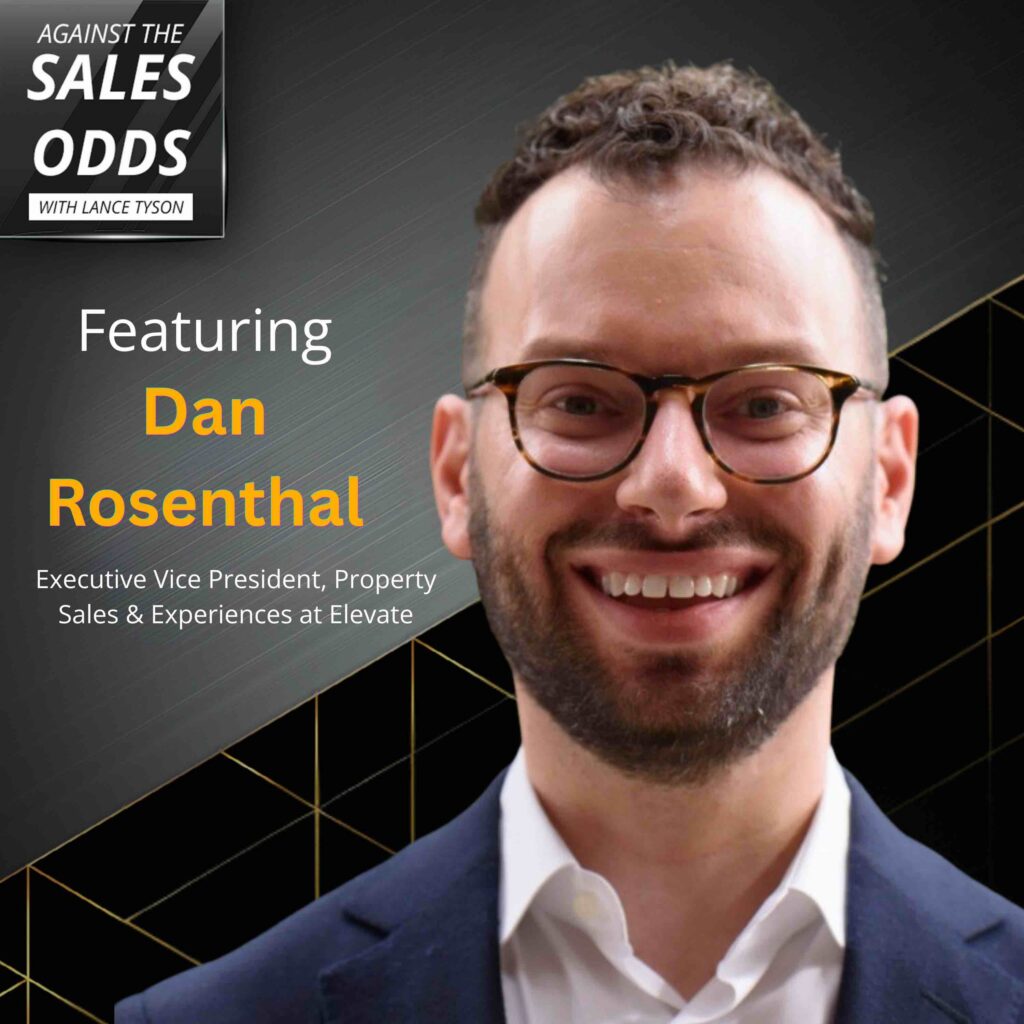
In this episode of Against the Sales Odds, Lance Tyson sits down with Dan Rosenthal, Executive Vice President, Property Sales & Experiences at Elevate, to discuss his journey through the Cleveland Cavaliers, New York Yankees, Madison Square Garden, NFL On Location, and beyond.
Dan shares how his sales philosophy evolved from activity and persistence to building relationships, understanding the customer’s business, and adapting his approach. They also explore leadership across different organizational cultures, building sales teams from the ground up, and the growing value of experiential hospitality.
In this episode:
- Building a career across NBA, MLB, NFL and entertainment
- Evolving from scripts to authentic sales conversations
- Selling to B2B decision-makers
- Building and restructuring sales teams
- Leadership and culture across different organizations
- The rise of premium experiential hospitality
- Lessons from NFL On Location and major global events
- Dan’s “inbox-first” approach to staying accountable and responsive
Tune in for a candid conversation about leadership, sales, adaptability, and what it really takes to build teams that perform.
Check out Tyson Group’s Open Enrollment Programs: https://www.tysongroup.com/openenrollment
Check out Lance’s Bestseller Books:
The Human Sales Factor – https://www.tysongroup.com/sales-resources/books/
Selling is an Away Game – https://www.tysongroup.com/sales-resources/books/
Download our playbooks: https://www.tysongroup.com/sales-resources/sales-playbooks/
Get in touch : https://www.tysongroup.com/contact-us/
Follow Lance across Social Media:
LinkedIn – https://www.linkedin.com/in/lancetyson/
Instagram – https://www.instagram.com/lance_tyson_1/
Love the show? Subscribe, rate, review, and share! https://podcasts.apple.com/us/podcast/against-the-sales-odds/id1602260518
—
Listen to the podcast here
From Selling Tickets To Selling Experiences: Dan Rosenthal On Building High-Value Sales Teams
The Evolution of Experiential Hospitality and Fan Access
About this episode of the show, I actually have an opportunity to introduce somebody who I’ve known for years. I feel since he started in business. I have Dan Rosenthal, EVP of Elevate. Dan, it’s been a long time coming. We were talking about the pregame.
Thank you so much for having me. Rare opportunity, and not a rare opportunity for us to talk, but to do it on camera, and excited to dive in.
No doubt. Now, we have been on camera a lot, especially over Coveted. I spent a lot of time coveting together and things like that. Dan, tell us a little bit about your role at Elevate. Tell everybody a little bit about Elevate because the audience is some in sports, some aren’t, so tell us a little bit about that in your role.
Elevate is a global agency that spans a ton of capabilities, everything from executive search to creative design to sponsorship sales and brand consulting. I lead our experiential hospitality group, where we partner with teams, leagues, events, and venues to create curated hospitality moments and unrivaled access for fans, which, in simple terms, means tickets that include some special access, behind-the-scenes tours, meet-and-greets, and trophy pictures.
We have partnered with some of the greatest rights holders in the world. Manchester United, the US Open tennis tournament, the Formula One US Grand Prix, the Country Music Awards, and a whole bunch of others. I have to say all the boring stuff that nobody likes to talk about, but in reality, somebody has to do it, and it might as well be me.
No doubt. Talk a little bit about the structure of it. My family has got the experience, the Country Music Awards. That experience of phenomenal tears in a row. We happen to be down in Nashville, and now it has become a little trip for us. It is wonderful. Talk about what reports up to you, how that works internally, and how you manage that.
There are a bunch of different teams. We have a dedicated team at the US Open, a dedicated team in Manchester United, and a dedicated team at One Times Square, which is an attraction here in New York City with the New Year’s Eve ball. I have a dedicated group that really sits across all of our core property experiences. Folks who are doing strategy and operations, and some folks who are doing some of the product development and procurement of those experiential assets.
We have a sales team as well on our core experiences team. We have an on-site guest services delivery and guest communications group. A bunch of different groups. I work closely with a whole bunch of folks internally across marketing, PR, data and insights, and CRM. I get to touch a lot of different groups internally beyond just my core things I am working on.
Your role from the way I understood it, and as we have talked about, part of your role is to identify these opportunities and then convince these opportunities that there could be an option to drive revenue and experience alternative revenue other than just macro tickets across the board. Talk a little bit about that sales process, because I would assume that is pretty long. It is an opportunity sale that is tied to revenue. I would think it is probably complex at some level.
All the above. It has been a fun journey in that regard because people will ask me all the time. What is my favorite thing to do? I always say all of them because every time I am working on a new experience, it is the first time it has ever been done. We are creating something that did not exist. As you said, I am building a business now within Elevate that is working on identifying events or leagues or teams where we believe there is incremental value that could be created by offering additional services beyond a ticket. There is a lot of convincing.
Why does a team, league, or event need to outsource this? Why should they provide access to paying customers or fans versus keeping it behind the black curtain or behind the cloak and dagger for a sponsor? Why should we provide this sacred access to the red carpet or to a locker room or to a trophy? There is a lot of convincing and a lot of being creative. Ultimately, too, it is trying not only to convince a team, league, or event that this is the right thing, but also that there is real commercial value. The other side is once you get that alignment, how do you convince somebody to pay for it?
In between, it is aligning with the operational folks and all ends to make sure it is a seamless experience. It is a fun challenge and something I really enjoy. It gets my creativity going and makes sure that we really are authentic to each of these events because we do not want to just repeat what we are doing at Formula One and bring that to NASCAR or bring something in NASCAR to a country music event. We want to take what is authentic to those specific events, and that is what makes those experiences really more meaningful.
What has always fascinated me about your career is that you definitely have an entrepreneurial side of you, which is why I think you have done so well with this. I have always known you can sell. We will get to the point where you started in sales. We have always known that. The project management, the coordination, the management, the leadership, and the strategy that has to go all the way through execution, there are four major things that take a lot.
I probably liken it a little bit to, like, you take a musical troupe or a troupe that does musicals off Broadway that has to go city to city, and they have to produce it. They have to do the orchestration, the choreography, and they have to execute. It is hard. There are probably some things that are the same, but there is, like you said, that authentic piece. It is an amazing thing. Can you give one example just for the audience of, like, maybe describe the CMAs or what you do at the US Open, just to make it blow some life into it for everybody?
One of the experiences I will start with is the US Open. It was the first experience we began offering, where the US Open is one of the pinnacle events on the sports calendar, and it has grown into one of the biggest sporting events globally. We have an experience where you can arrive and get picked up in the official US Open Cadillac. We will have a concierge meet you when you are on the grounds.
Crafting Unforgettable Moments at the US Open
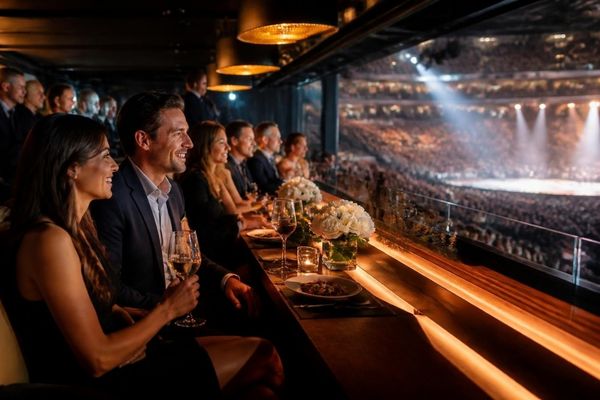
Navigate the crowds a bit so we can guide you through, almost like we are spreading the Red Sea or part of the Red Sea. We bring you to this exclusive hospitality space. We have premier food and beverage offerings. You go to your front-row seats on the baseline, which is the best seat in tennis. You watch some of the biggest names in sports. Most importantly, at least in tennis, you have in-seat service. That was the first experience we created.
The reason that some of those core elements, the convenience of the car service, the concierge on the grounds, the elevated hospitality, and most importantly, which sounds wild in most sporting venues, in-seat service is because in tennis, you cannot walk up and down the concourse or down the stairs back to your seat because it distracts the players. If you were to leave on your own, you would miss 15 to 20 minutes of tennis.
We solved that by bringing drinks and food to people. We were able to create a value that people were willing to spend significant dollars above what they would normally pay just for a ticket. Now we are doing things where you can play tennis with Andre Agassi and Arthur Ashe. You can have meet-and-greets with former players and champions, take pictures with a trophy. It has really exploded beyond just that core service-based experience.
I was thinking about what you were saying. Gone are the days of just a Richard Petty driving school where you could drive a NASCAR. Now it is all tied in. You are with it. It is amazing, right? Now where do you start off? Give everybody some idea of where you started in sports, where you started in business.
My first job out of college was in Cleveland, Ohio, with the Cleveland Cavaliers. When I was in college, going back to your entrepreneurial point, I was a junior in college and looking for a job, and I had been reading the industry trade magazine and newspaper. I knew I wanted to work in the NBA, and after a few internships, I knew I wanted to work in sales, which paid me a lot of money, maybe before some of my internships.
I used to say, “If you paid me a million dollars a year,” when I was a sophomore in college, and said, “We will give you a million dollars for life every year if you work in sales,” I would have said, “No, I am good. I want to work in marketing.” The next year I got an internship in ticket sales, and I learned exactly more about what sales was versus what I thought it was.
By the time I was ready to graduate, I was pretty focused on wanting to work in the NBA, and I wanted to work in ticket sales. I just started figuring out and guessing the email addresses of everybody who was on the chain of command I would ever want to work and be in their role. Team presidents and vice presidents, and conversations where I was looking for advice, but ultimately looking for a job.
I just asked for advice, and I got all these people, team presidents and executives to have a conversation with me in college. As I was talking to people about getting recruited for different jobs, I would get these sales pitches about how we can help you grow your career. I would find out who helped them grow their career. All those people were in Cleveland. I said, “If I want to be like you, I should go work for the people who helped train you and made you who you are.” That is what led me to Cleveland. I had never been there in my life.
Your audience is from New York, right?
I grew up in New York, just outside New York City, and went to college in Indiana. I was willing to go away from home. I moved to Cleveland sight unseen. It was a really formative experience for the rest of my career.
Where did you do your internships? I did not ask that.
Breaking Into Sports: Early Days and the Cleveland Cavaliers
I worked for the Brooklyn Cyclones, a minor league baseball team here in New York. I worked for the Indiana Pacers as well.
I did not think you worked for the Pacers there. You were there for a minute. Jake Vernon was probably there.
Jake Vernon, Doug Dawson, Ben Millsom.
There you go. Yeah. That was a good crew. You get to Cleveland and inside sales. You are a storied crew there. How is it working in inside sales for you? You come out of the gate. What does it look like? You are good, you are average.
I tell this story to this day. I was the worst salesperson in the history of the planet. The one thing I had going for me was that I would outwork everybody. I was the first in and last out. My desk was literally right in front of the doorway. When everybody walked in, from the team president to any of my colleagues, they would see me sitting at that desk. When they left, they would see me sitting at that desk.
That is what I had going for me is I would just make more phone calls than anybody else by a long shot. Eventually, I would find my way into a couple of sales just by straight luck. I started out really. I was the worst. Once I found my groove, I became pretty good. I ended up being, I think, one of the top sellers for four or five straight years.
You are in inside sales for how long?
Maybe eight months or so.
You got promoted to what? What was your next role?
Selling to an account executive role, selling season tickets and partial plans and some of the premium seating. Some of that was more B2B hospitality at the arena as well. That is like going to the big leagues. Getting inside sales is that grind. You do not know. I went there and said, “I am going to have one year. It is one year of my life sacrificed for one year. We will see what happens.” As I started to find my way and get promoted, it was like, “I have made it.” I thought that was it. I got the call to the big leagues. Little did I know there were a lot more levels to the journey.
No doubt. You said right away, I am in first, out last, you sound like a Marine. I am going to outwork everyone. What did you realize about your selling? What were you not great at when it came to sales? What was that group, just out of curiosity, because it probably is still true today at some level?
A lot of it was what I am not good at. Early on in my career, we had a script, and I was like, “I will read the script word for word.” What I realized, at least for me, was that a big part of growing up in my life was that I needed to understand the rhythm, and I needed to understand how to infuse some soul and some personality into my music or into my conversations. Really spending time, certainly a lot with you over the years, but early on in those formative years of life, let us take what I am trying to accomplish with the script or with the sales training I am getting, and what are the beats, the notes?
I can have some, for lack of a better term, freestyling in between, as opposed to trying to get this exact word. What really helped me was, as I said, one of my colleagues sat me down. We were at one of the senior sales reps, and we talked about my love of hip hop and music. He said, “You need to use that rhythm, just like you are dancing on a dance floor, in your personality.” That is literally what changed everything. It is like in music, a metronome, the rhythm and the beat, that changed everything. I could start to infuse my personality. It was a game changer for me.
I am thinking that when you were younger, I do know one thing about you, and this is probably your strength and is probably an area for improvement. You are a little bit of a literalist. When you probably got the script early on, you were like, “I am sticking to the script.”
This is the roadmap. Great. I am going to do exactly this. I remember I would call people, and the executive on the other end of the phone would say, “Are you reading a script?” I would say, “Definitely not.” How would you say that?
What did you get good at then? Was it out of your personality, and was it like letting loose a little bit?
It was a little bit letting loose. I think too. I was a student of business. Early on, I would spend a lot of my time, all of my free time early on was prospecting and researching businesses, reading the business trades in Cleveland. Again, I did not know anyone when I moved there. It was really just understanding business. That is how I became successful because I was selling to businesses. I felt much more comfortable doing that than selling to a fan because I did not grow up watching the Cleveland Cavaliers. I could not relate to that emotional connection, but I could relate to a more strategic, logical investment that someone would make from a business perspective.
It makes a ton of sense. You are there. You come out of inside sales in less than a year and become an account exec. I do recall, and you are just giving me recall thinking back, you got promoted to selling suites at some point.
Mastering B2B Sales and Transitioning to Premium Suites
At that point in my career, I really wanted to lead people. I was a mentor to so many of my colleagues whenever we would bring in potential new salespeople. I was one of the people they were meeting with to give them a sense of, think about, like a college athlete on the recruiting visit. I was one of the people who, in the Cavs days, was looked to help showcase what we are doing in Cleveland.
At that point in my career, I was like, “I am ready to go manage people. I am ready to go do this and be an inside sales manager.” Mike Andrako sat me down and said, “You need to go sell premium, and here is why it will be so good for you.” I said, “Great.” Had I not listened to that advice, I probably would not have had a lot of the opportunities later. I got moved over to the premium team, selling corporate hospitality, suites, luxury suites, and club seats and courtside seats for the Cavs.
I feel there was a blip there, though, at one point when you start to sell the other stuff. Was there not one time where you go, “I have arrived,” and then, I do not know, and you can yell at me later? I feel like maybe your activity went down a little bit. You had to work your way back out of it again.
A hundred percent. I went to premium, and now you are in the real big leagues in terms of selling at the highest level in ticket sales in that organization. I thought, “As you get more senior, you are supposed to make fewer phone calls.”
I just remember this conversation.
At the same time, I think I got bored, and I felt that I needed to figure out how to infuse that creativity into my process again. There were a number of people, including a person sitting across from me right now, who made sure it got back on track.
The reason I bring it up is that I think, through your career, one of your superpowers is, I think, a lot of people’s superpowers are their greatest strengths or their greatest weakness. You are relentless on yourself. Nobody is going to be harder on Dan than Dan is. Your ability to self-evaluate and self-assess is intense. It is amazing. At that point, that is when I realized it about you. That is why I brought it up, because you have always self-assessed yourself. You always said, “Let me self-inventory here.” This is one of the things that I got to do. You did not fight it. You just turned the wheel to it, which you remember very specifically.
That is where I started to think about how to sell. Instead of just trying to sell four club seats, how do I sell a full luxury suite? Instead of doing a one-year deal, how do I do a ten-year deal? Instead of just selling suites, how do I sell suites that include a corporate sponsorship? That was a big part of just trying to figure out A, myself, and B, and continue to find ways to challenge myself in a more intellectually difficult sale.
Which probably set you up for now, like just that comment has set you up now. You are in Cleveland. What is the next move? Do you get promoted there into leadership, or do you go somewhere else?
After four and a half years in Cleveland, I had an opportunity to move closer to home in New York, and I got an opportunity to finally get in that leadership role with the New York Yankees.
What was that role, what were you doing, and what was the opportunity?
Building an Outbound Sales Culture with the New York Yankees
The role was to manage and build and manage an inside sales team. The Yankees had never really had a full outbound sales culture, an outbound activity sales culture, prior to me getting there. Certainly there were folks who were selling some of the new stadium products. In 2009, when this new stadium opened, the economy crashed, and they had to change the way they did business. I was one of those folks brought in post the stadium opening, post the World Series run, to infuse a more outbound B2B sales environment and to add a lot more salespeople to the culture there. I was one of the folks who had to create one of those sales teams from scratch and hire an entry-level sales team at the Yankees.
They never had it before. Just to give everybody context, they built the new stadium. They are still moving things. You had the dance of the fallout, but they had never liked the NBA and had nothing to convince the sales team. Now this is your first chance to get really entrepreneurial and build something. I knew that was the next piece. What did you take from your sales philosophy? Now, you mentioned before, I was mentoring people, and I was helping them recruit people at the Cavs, and they were a machine to develop people.
You got great leaders there, like Mike Contraco and Chad Estes. They are building talent. You moved over with somebody to the Yankees. Was Troy Tutt? Troy’s responsibility was to go in and really right the ship, and he brought you along with him because you worked with him there too. It is six degrees of connection with people. When you look at your set, how you sold and led, what did you have to make an adjustment to? What was that philosophical adjustment you had to make?
As you said, I am lucky to work for Chad, Drake, Troy, and so many others in Cleveland. When I went to the Yankees, especially working for Troy. My thought was, “We will bring Cleveland to New York.” What I quickly learned was that the culture of the Yankees was very different from the culture of the Cavs. Back to what I mentioned earlier about being authentic, I had to really realize that and adjust that we could not rinse and repeat exactly the same playbook.
They had to bring it, take the elements of it, but make it authentic to the Yankees. Song in New York is also a bigger stage. Things that made me successful or make anyone successful in another market would make you successful in New York. There is a different spotlight here. Every sale you are making has a couple of extra commas in it.
The level of people that some of the power brokers of the country happen to be here in New York. Again, from your presentation skills, your polish, your business acumen needs to be leveled up significantly. The other thing, too, is I walked in the door in New York, and I thought I remembered walking into my boss’s office and I said, “I just hired the best sales team that has ever been assembled.” Lo and behold, it was not.
That is where I learned that hiring and evaluating talent and leading people is not as easy as I thought it was. I needed to make some mistakes in order for me to find my way. Very similar to how I was in my early sales days. I had to have enough swings in the batting cage in order for me to actually start getting on base. Same thing in hiring. I needed to have enough interviews and hire people and figure out what worked and did not work to get it right the next time.
You need to have enough swings in the batting cage to actually start getting on base. Same thing in hiring.
No doubt. I want to go back to something else you said. It probably has served you well now. You could not rinse and repeat what they were doing in Cleveland. The whole culture was about building talent. It was a revenue machine. The Yankees culture, a very successful culture, was different there. Maybe that culture was not as much in alignment with driving revenue and things like that. They have a storied brand. How is that? That was a little bit of a grind. It was just to get alignment. How has that served you here?
The Yankees were, I would say, a great commercial enterprise. That commercial enterprise was primarily driven by winning baseball games. When the dynamic needed to shift to create value and offer fans a little bit more equity or say in what is valuable to them. It is more of a two-sided, two-way street. That was a complex thing to work through internally and make sure that we were serving all the different stakeholders and fans, the baseball side, obviously, the ownership group, to accomplish all those objectives. That was not an easy needle to thread. Luckily, there were enough case studies, and I would say the Yankees are really now like, they have built a really robust sales culture that really started blossoming when I was there.
No doubt. What would you have to learn about politics there? Leadership in a bad way, because I think there are politics everywhere. I have a small company that has politics there. What did you learn about that from a leadership standpoint? You said, “Look, just because I hired these people does not mean I am going to execute.” When everybody is not in alignment, that makes it tougher. You have to play a level of communication or a level of politics. What did you learn?
How important it is to get buy-in across. Not just because one person is aligned does not mean that everybody is. Just because I believed it was the right thing does not mean that everybody else does. I think communication is important. Bringing people along for the ride and making sure that they understand and see the challenges and the roadblocks and how those impact other things and the waterfall effect. It was, again, a really formative experience in so many respects.
You are there for how many years?
I was at the Yankees for about 4 or 5 years as well.
Now you are a straight decade in two organizations. Got NBA, MLB. Yeah. When you left the Yankees, were you still in a similar role, more responsibility? What did that look like?
At the time I left the Yankees, I was overseeing premium seating, which is, again, that corporate or B2B revenue stream for the Yankees from a ticket sales perspective. All the seats behind home plate. Really important revenue stream. I was leading the most senior sales staff at the Yankees as well. I suppose you could say I was a consultant to the folks running the sales group. I was at a big scope when I left.
You got an opportunity where? What do you do?
I got an opportunity at Madison Square Garden.
One iconic brand to the next one, right?
Executive Leadership and Navigating Politics at Madison Square Garden
Yes. It has been a thread of my career, luckily for me, unfortunately. Madison Square Garden, the Mecca. To me, stepping into it now, I am really an executive, getting a big title. I was, I think, the youngest vice president in the company at the time. I was overseeing a nine-figure business that was pretty significant across the company and had a lot of eyeballs, a big spotlight, and not just having to focus on building and retaining that business, but also collaborating very closely with the sponsorship team, which is really an important element of my role, and then helping develop new programming across other venues in the Madison Square Garden company portfolio.
Step back for a second, and peer back to the Yankees, and think about how you sold. How did you coach, or what was your philosophy with your salespeople about how you wanted them to sell? What was that methodology? As you look at Madison Square Garden, more of what, less of what goes?
My philosophy was, early on when I got to the Yankees, here is the playbook, here is the offense we are going to run. Certainly, for an entry-level salesperson, it was very disciplined because I felt that if you are taught a lot of discipline, as you become more comfortable in the offense, you can audible or freestyle if you know the playbook. As I became more senior and had to manage the more senior team, I had to adapt and create clear lines of expectation and let people operate within those.
As I was leaving the Yankees, one thing that I was very proud of that I instituted was a business culture. We would meet once a week. We created a program called Wall Street Minute because I thought if these are twenty-something-year-old professionals who are dealing with some of the power brokers of industry, they need to understand the difference between private equity and venture capital. They need to understand what the stock market is and what the difference between the Dow Jones and NASDAQ is.
We would literally meet and go through it, like talking about that. We are not talking about sales techniques. We are literally talking about trends in economics and everything else. It had a material impact on our ability to drive business because now we are creating business professionals. I took that to the garden because I knew that now, when you are selling multi-million-dollar corporate hospitality packages on multi-year agreements. Now you are talking about very complex sales. You are talking to C-level executives at Fortune 500 companies. You need to be able to speak their language.
You incorporated that kind of culture of learning, the B2B culture, because you started to become an expert at that when you were younger. Pro sports are interesting because they could be B2B or B2C. You know what I mean? You became an expert there. From a political leadership angle, everything that is going on, what did you bring over in your leadership process from MSG, and what was the difference in culture? There are two iconic cultures, very different, though.
It’s a very different culture. The Yankees at the time, like the Cubs, were probably a 200 or 300-person private organization. The brands are big, but the companies are quite small. Madison Square Garden, a publicly traded company, probably had 5,000 or 10,000 employees, maybe more. Many times I would walk into a meeting room or conference room with coworkers, and I would be introducing myself to coworkers.
That was such an out-of-body thing for me because I had come from a small organization. I knew everybody. That is the life of working at a big company. That was a big adjustment for me. I always had built my career on just doing a good job with integrity, working hard, and executing. I thought that would be the way that it would translate to my success and how people recognize that. At MSG, the dynamics were quite different, and communication is really important. I will call it politicking and spending that time to make sure that people understand what you are doing, as opposed to just doing it.
No matter what the results were, it was probably more important than the results, and I definitely did not take that into account. I was too young and probably just naive to that fact, and especially at a place like MSG where you have to execute at the highest level. There is no room for error. You have to be very deliberate with your actions. I created some challenges for myself by not doing that, spending time communicating so that people knew, and getting creative to get air cover from a political perspective.
I did not mean to make that tough.
I will not see it again. All these stops were so formative and great for me, challenging. It was a great learning lesson in politics, communication, and leadership.
The reason I brought it up is that I think it is interesting. You look at how you have to operate now, and when you are younger in leadership, it is more about the people on the execution side, and you are not thinking in a three-dimensional way about all your peers, as you said. It is how your name on the back of your jersey is more important than the name on the front, and how you brand yourself. That is important, or at least knowing where the knives are coming from or what is going to help you or hurt you. It can be very Machiavellian. It can be very positive. It is just political. Not like we are talking about the news politically. It is just that humans are political.
A hundred percent. It took me a long time to learn that lesson.
You and I had so many conversations about that over the years. I am bringing that into that piece because what do you see? What are you seeing there?
At that point in my life, and I know this is probably where to go next, everything was a straight line. Everything is like, you believe in that, everything just goes up. Having to face some challenges and some adversity, I had four bosses in eighteen months. Having to adapt to different offenses or different styles or different leadership was quite challenging for me because I was used to so much stability before.
No, you are so right too. It is like I was coaching an executive MBA team yesterday, and she was super frustrated with the feedback she was getting from her boss. It sounded like what she was doing when a direct order was given. She was saying, have you thought about this? Thought about this? That is not a time for a green light. Your green lighting sounds like it is red lighting. I said, “You probably want to pull them aside and do that somewhere else.”
I said, “You are doing it in the wrong place.” You are right. Politically, it looks like you are an adversary, and I think the 48 Laws of Power say never outshine the master. It looks like you are probably outshining the master there a little bit. It is just kind of that. You do not realize that unless you can look backwards. You get your ass kicked a couple of times. That is the way it goes down. You are there for a little under two years, right?
Maybe 18 months. It felt like a lifetime. We did. It was an amazing experience because of all the things I got to see, award shows, the concerts, the Knicks, the Rangers, the Pope’s visit. It was pretty wild. In such a short time, it was only 18 months. It was a quick sprint compared to the other journey and stops I had.
Where did you go from there?
Scaling Startup Infrastructure for the Super Bowl
At that point, I had worked for a big company at MSG, some smaller companies, and I was really fascinated by earlier-stage companies. I was learning more about private equity and how it was coming into sports. There was a company that just spun out from the NFL called NFL On Location, backed by private equity. I had an opportunity to join at the early stage of the company to help build out the sales infrastructure to sell all the tickets, hospitality, and experiential events in and around the Super Bowl.
This is where strategy really comes in. I was talking about the other day with an MBA team. Really, if you are going to do business with anybody, any business is going to do business with pro sports teams. It comes down to three things. Saying thank you to good employees. This is all you. This is what you came up with. Saying thank you or taking care of your employees, taking care of customers, and winning new business. There are just three things at the end of the day. Maybe sometimes some vendors or friends and family, but I can remember that. If I ask you for it, you probably still have that PowerPoint slide. There is great energy there. You had to really come up with a message for that.
At so many parts of my career, I would think about people saying, “You worked for the Cleveland Cavaliers with LeBron James. How hard is that to sell tickets? Must be pretty easy. You worked for the New York Yankees with Derek Jeter. They just won the World Series. How hard can that be? You worked for Madison Square Garden. How hard can that be? You are now selling tickets for the Super Bowl. Is that a full-time job?” The answer to all those is, yes, it is hard.
If it were easy, they would not hire me. It is a different type of challenge than maybe selling something that is not as high in demand. We had to create a lot of strategies. Initially, the challenge was building something from a startup and selling nationally, and even to some extent internationally. Managing remote employees ten years ago, when that was not as much a part of the lexicon.

Selling an event, one-time events versus a season, creating urgency, trying to find and prospect for people and identify customers when you do not have a database. Selling a market like Minneapolis, which, if you have not been to Minneapolis, Minnesota in February, is not 75 degrees and sunny, which is a typical Super Bowl destination. Those are a lot of interesting, intellectually challenging moments in building that organization.
Did you inherit a sales team, or did you have to build out the sales team also?
We had nobody.
Once again, just like at the Yankees, you are hiring talent, you are creating the messaging, and you are really now doing something you have not done. As you said, it is a one-time event. This is where you start to understand this experiential side of things, correct?
Yes. I would actually rewind it a bit. The things that led me to On Location, I loved being on the big stage. I realized I loved being on the big stage, like I was at the Yankees, the Cavs, and the Garden. I loved, most importantly, working for the great people and great leaders, and I have had those at every stop. In that particular case, I loved the high growth potential of On Location. When I was at Madison Square Garden, we would have all these concerts, U2 for eight nights, Billy Joel once a month, or Bruce Springsteen, and our suite holders would have all these requests for tickets.
I would say, “Great, that is why you have a suite.” They would say, “We need more.” We were able to take advantage of the fact that the Knicks and Rangers were on the road during a concert. Cannot play hockey or basketball when there is a concert going on. We used the Knicks and Rangers locker room and packaged it with hospitality. We had a Knicks or Rangers former legend come by, sign some autographs, and take some pictures. You are in this amazing space, custom Knicks or Rangers jerseys.
You have these amazing seats out in the seating bowl for the concert, and that is when I realized people are willing to pay a lot of money for the right experience. We went to On Location in the Super Bowl. I used to think when I went from the Cavs to the Yankees, I was like, “I have seen real money.” When I got our first renewal, someone sent us a renewal check for six figures for season tickets. I was like, “That is a lot of money.” I went and started selling million-dollar luxury suites at the Garden. I was like, “That is real money.”
People are willing to pay a lot of money for the right experience.
I started selling hospitality at the Super Bowl for one day, one weekend. I was like, “How much money people were spending in two days.” I was like, “That is real money.” We got to see so many different things in terms of how the biggest companies in the world, the business elites, entertain and host and engage. It is not just in the stadium. It is the full program of dinners and transportation and entertainment and concerts and nightlife and how you can program that together and be creative and create these unique experiences. That is where it all came together, for sure.
You probably start to see too that, as it relates to business, the value companies put on different experiences or different things almost could be endless, or it is open to possibility. You take the blinders off, and you start to see, and that probably starts lending into your entrepreneurial side. You start to really see the field. You are there, and you start to understand the side of business. How long are you there, and what is the next move? We got a couple of moves before we landed at Elevate again.
I was at On Location for two years. The company went through some M&A and was acquired by Endeavor, a big talent agency, and I left as part of the acquisition. Again, a different approach. I was at the Yankees. We were not thinking every day that the company was going to get sold tomorrow. The whole goal of On Location was to build the company up to get it sold. That is what private equity does. That was quite an interesting evolution. We were successful in that mission. The company has gone on to do a lot since.
I just did the World Cup.
Joining Elevate and Shaping the Future of Sports Agencies
After On Location, I was on two longer journeys with the Cavs and the Yankees and two sprints with MSG and On Location. I kept coming back to what are the things I value the most? I value working for great people. I value early-stage companies where I have the chance to grow and be a part of hyper growth. I value being on the big stage. I value being in a sales leadership position, and I value the opportunity, again, to be entrepreneurial and in a building stage. At that time, Elevate had just started, and they were on my radar. That is how I just started to network. I did not really know a lot of the folks at Elevate, and they started networking, and an opportunity came online for me to join in 2020.
You did have a little tiny. How could you forget? You did. You had a short little turn. A small, little tiny company before Elevate.
That is true. How could I forget, and forgive me?
I just thought I would get a little plug in there, but the story is so fascinating.
It is important because when I left On Location, the first phone call I got was from Lance Tyson. We have worked together for so many years, been a mentor and a friend and a trainer in so many respects. Now it was like, “Let us team up. It was a different dynamic, and I was taking it back.” While I was trying to figure out my next move, it was an amazing landing spot for me, because I got to see.
It was like when we see coaches who are not working. They observe practice, and they get to take notes and understand the changing landscape of their particular sport. I got to do the same thing. I had to go work with the LA Clippers and the Los Angeles Rams at their various new venues. I got to work with the Islanders as they were transitioning to a new venue. It was different to see different cultures and to see different sales leadership, and obviously working more closely with you was an amazing experience for me.
I thought I would throw it in so we got a short stick together.
The reason maybe I should not overlook it.
It was a cup of coffee.
I was there for a short spin, and I wish it was longer.
No doubt, I am always proud of that. We got, like you said, that because we did team up for a little bit there, and then you landed at Elevate. Since you have been at Elevate, you have just exploded with responsibility and have been creating new markets. I could not be more proud to stand on the side and cheer you on as you go on. It has been a great journey. I still think of the days when you started in inside sales, and you would ask me a ton of questions, and you would challenge me, and I would have to explain it to you because you always wanted to know the what, the why, and the how behind everything, which is always awesome.
As we bring this home, a couple of things come in. I hope everybody in the audience sees this. It is a journey of learning how to sell and then integrate those sales into a philosophy of leadership. It is a leadership of learning, but also a strategy for how to create markets and opportunities. There is so much of that in leadership. We always think it is more on the people’s side, but Dan has shown an ability to see opportunity and understand the market and then how to create and sell it, convince people to do it, and ultimately execute.
It is just a phenomenal story that you have written for yourself and your own personal brand. A couple of quick questions. You are one of the busiest people I know. You never seem to miss a text from me or whatever, and I appreciate that. What is that daily time management hack, that routine thing you do every day to spin all these plates that you have in the air? What is that move?
Time Management, Mentorship, and Defining Success
Maybe it is the inbox zero philosophy, which is if someone reaches out to me, I respond to it. Text, email, FaceTime call. I feel that is the right thing to do. I do not know if I have good time management skills. Besides, if it is on my calendar, it is getting done.
The inbox zero philosophy: if someone reaches out, respond to it.
I have never heard that because that is not me. That is, I write every day. This constant moving thing. Maybe I can adopt that myself. That is good.
It is not easy. I try to really get that in my inbox as effectively as I do with my to-do list. It is trying to have as many unread and as many responses as I can every day, no matter what time of day.
That is great coaching from you know what? I actually need to hear that. Second question. You have done a ton of the big deals that you read off, CMA, Manchester United, US Open. You are going to close that big deal or go for that big pitch. What song are you playing? I know you love music. What are you in your head? What is that song?
Look, if you know me, I love rap music. It is part of my family’s DNA for some reason. I would say Jay-Z’s “Public Service Announcement.” He starts off by allowing me to reintroduce myself so I can let people know who I am.
I love that. If you have to gift a book besides mine, of course, what book are you gifting?
There are a few I would say. One that has been really impactful for me lately is Unreasonable Hospitality is a fantastic book.
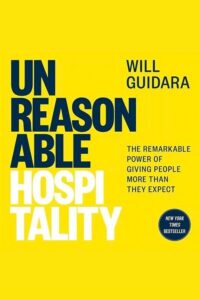
Who wrote that? Do you remember who wrote that? That is the second time in the last three minutes I have read that book.
Now I am going blank. You got me on the spot.
I am trying to think where the guy worked too, because it just came up. It just came up again, I swear. I got to read the book.
He used to work at Eleven Madison Park. I am going blank on his name, and now I am embarrassed.
Do not worry about it. I am sorry.
His name is Will Guidara. That is what it is. He is an amazing entrepreneur who was a business operator on the side of hospitality, and he built a philosophy around how he does business. Incredible book. Also, the other one I would say is a book by Ben Horowitz of Andreessen Horowitz, a big venture capital firm in the Bay Area. That book is called The Hard Thing About Hard Things.
I love those things. Last question. Great interview. You got a niece or nephew, 6 or 7 years old. They say, you are at the edge of a dock, both just sitting on the edge of the dock with them. They look up at you, and they go, Dan, 6 or 7, what does it mean to be successful? What does that mean?
Get the job done. Be happy along the way. Enjoy the love. I love it. Just do it the right way.
Enjoy the ride. I love it. I have enjoyed the ride with you, man. It has been an honor. It definitely is an honor. I am glad we finally got this done, man. I do not do it in front of interviews either. That guy.
This has been fun. Thank you so much.
I love it.
Important Links
- Dan Rosenthal on LinkedIn
- Elevate
- On Location
- Unreasonable Hospitality
- Andreessen Horowitz
- The Hard Thing About Hard Things
- Lance Tyson on LinkedIn
- Lance Tyson on Instagram
- Lance Tyson on X
- Subscribe to our Newsletter
- The Human Sales Factor
- Selling is an Away Game
- Download our Playbooks
- Schedule a call with one of Tyson Group’s member
- Check out Tyson Group’s Open Enrollment Programs